𝐒𝐢𝐥𝐯𝐞𝐫 𝐏𝐡𝐨𝐬𝐩𝐡𝐚𝐭𝐞 — 𝐂𝐡𝐞𝐦𝐢𝐜𝐚𝐥 𝐂𝐨𝐦𝐩𝐨𝐮𝐧𝐝 𝐚𝐧𝐝 𝐌𝐨𝐥𝐞𝐜𝐮𝐥𝐚𝐫 𝐒𝐭𝐫𝐮𝐜𝐭𝐮𝐫𝐞 — 𝐃𝐞𝐞𝐩 𝐄𝐝𝐮𝐜𝐚𝐭𝐢𝐨𝐧𝐚𝐥 𝐒𝐮𝐦𝐦𝐚𝐫𝐲.
Silver phosphate, chemically denoted as Ag₃PO₄, is an inorganic compound composed of silver ions and the phosphate anion. It appears as a bright yellow crystalline solid with a distinctive colour that sets it apart from most other silver salts. Despite its simple chemical formula, silver phosphate exhibits highly significant structural and electronic characteristics that shape its behaviour across analytical chemistry, photochemistry, solid‐state physics, and catalysis. It occupies an important place in educational chemistry because it illustrates how ionic combinations and lattice formation control solubility, colour, photoreactivity, and chemical function. Unlike many silver-containing salts such as silver chloride or silver carbonate, silver phosphate is not strongly photosensitive in the traditional photographic sense, yet it interacts with light in a manner that reveals important principles of semiconductor chemistry and electron transitions. Its structure provides a window into the relationship between ionic architecture and macroscopic properties, making Ag₃PO₄ not only a useful compound in practice but also a valuable conceptual teaching tool.
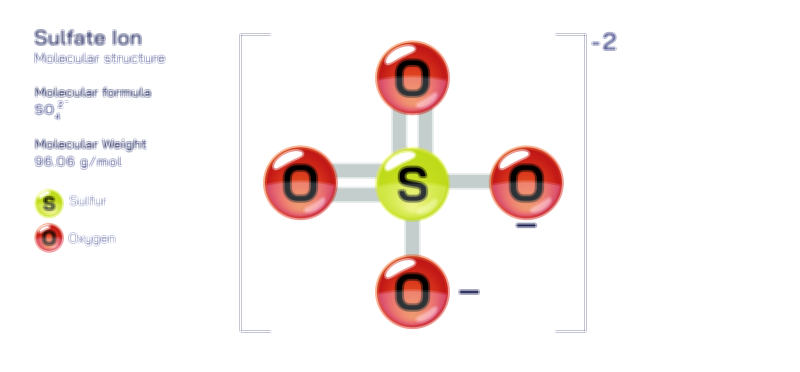
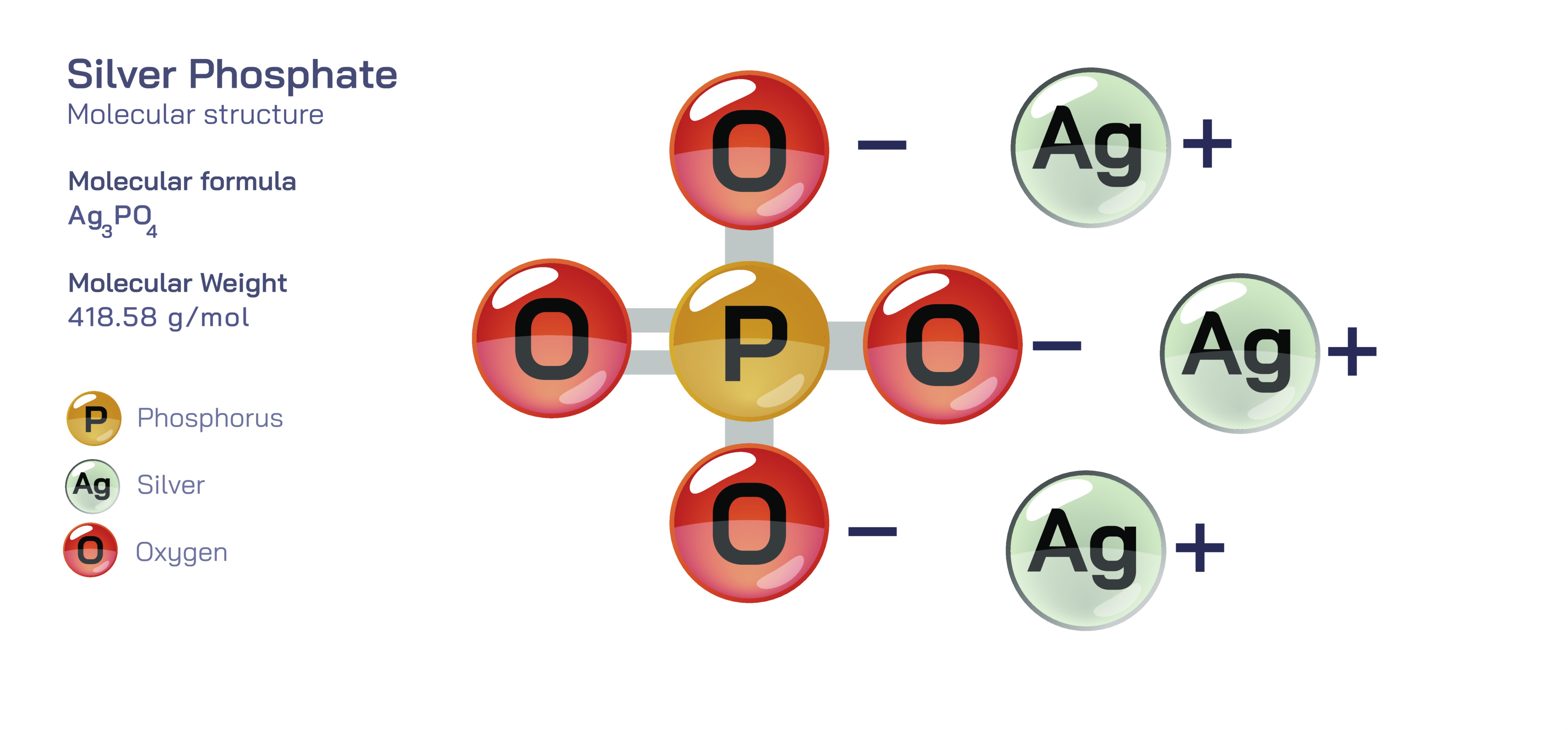
Structurally, silver phosphate consists of three monovalent silver ions (Ag⁺) electrostatically bound to the tetrahedral phosphate anion, PO₄³⁻. The phosphate species includes one phosphorus atom bonded covalently to four oxygen atoms, arranged in a tetrahedral geometry stabilized by resonance. In this polyatomic anion, electron density is distributed across the P–O bonds, generating a highly symmetric structure that is energetically stabilized. Within the crystalline lattice of Ag₃PO₄, phosphate ions act as negatively charged nodes that coordinate silver ions in three-dimensional arrangements, while Ag⁺ ions occupy positions that maximize Coulombic attraction to the PO₄³⁻ units. Unlike covalent molecules, silver phosphate does not exist as separate Ag₃PO₄ units clustered together; instead, the entire solid is an ionic network in which phosphate tetrahedra interlock with silver cations to form a repeating lattice. This network arrangement explains the compound’s stability as a solid and its relatively low solubility in water. Hydration energy released when silver ions and phosphate ions attempt to dissolve is not sufficient to overcome lattice energy, meaning silver phosphate remains mostly undissolved in aqueous environments—making it a useful reagent for precipitation tests.
Solubility behaviour plays a central role in analytical chemistry. Silver phosphate is used in the detection of phosphate ions in solution because of its low solubility and intense yellow colour. When a solution containing phosphate ions is treated with silver nitrate, silver phosphate precipitates immediately. The appearance of the characteristic yellow solid confirms the presence of phosphate. This precipitation reaction is more than an analytical tool; it represents a structural principle: silver salts of highly charged anions such as phosphate form extremely stable ionic lattices that water cannot disrupt. In educational laboratories, the formation of silver phosphate is also used to introduce gravimetric determination, in which the mass of the precipitate is measured to calculate the original phosphate concentration. This method demonstrates how quantitative analysis can be performed based on lattice stability and stoichiometric relationships.
The colour of silver phosphate reflects deeper structural and electronic factors. The striking yellow hue results from the way electrons in the silver–oxygen–phosphorus lattice absorb and reflect visible light. Certain wavelengths are absorbed to promote electronic transitions between energy bands in the solid, while others are reflected, producing the perceptible colour. These electronic transitions reveal that silver phosphate behaves partly like a semiconductor, absorbing energy and generating electron–hole pairs. Because of this semiconductor behaviour, silver phosphate has attracted attention as a photocatalyst in environmental chemistry. In the presence of light, the compound can promote oxidation reactions, including the breakdown of pollutants and organic contaminants in water. Its efficiency arises from the ability of Ag₃PO₄ to create electron–hole pairs that migrate to the surface of the crystal and interact with adsorbed molecules. Oxygen-containing radicals produced on the particle surface can degrade complex organic compounds into simpler species. Thus, the same electron transitions that produce the compound’s colour provide the mechanism for its photocatalytic activity.
Silver phosphate also plays a role in areas of material science and photonics. Its semiconductor nature means it can interact with light in ways that allow charge separation, although its stability under prolonged irradiation is limited by partial reduction of silver ions to metallic silver. During photocatalysis, metallic silver nanoparticles may gradually form on the surface of the crystal, altering its optical properties and reducing catalytic activity. This phenomenon illustrates a feedback relationship between structure and reactivity: the compound’s semiconductor function generates conditions that transform the material itself. Yet, researchers have used this behaviour advantageously by designing composite materials in which silver phosphate is stabilized with supporting matrices, increasing its durability in repeated catalytic cycles. Such design approaches show that understanding atomic structure enables chemists to engineer new materials by manipulating electron mobility.
The chemical reactivity of silver phosphate extends beyond photochemistry. In displacement and precipitation reactions, the phosphate ion can be substituted under the right chemical conditions, driving the formation of other silver salts. For example, when silver phosphate contacts chloride, bromide or iodide ions, the corresponding silver halides form instantly due to their even lower solubility, followed by the release of phosphate into solution. This displacement tendency follows a predictable pattern: silver ions preferentially form insoluble compounds with anions capable of producing the most stable ionic lattices. The phosphate ion itself is a moderately strong base capable of participating in proton transfer under acidic conditions. In acidic media, the phosphate anion becomes protonated, which weakens the ionic interactions with Ag⁺ and causes the dissolution of the compound. These reactions demonstrate that solubility is not fixed but dependent on ionic equilibria and pH environment.
Thermally, silver phosphate decomposes when heated strongly, producing metallic silver and oxygen-containing phosphorus species. The decomposition pathway shows that silver ions are readily reduced to metallic silver when energy input is available—an attribute shared with other silver compounds. The appearance of metallic silver during decomposition reveals the compound’s latent redox nature: the Ag⁺ ions in the lattice accept electrons under sufficient thermal or photonic energy, leaving phosphate to fragment into P-containing oxides. These transitions highlight the delicate balance between the ionic solid and elemental silver, reinforcing that silver chemistry is deeply shaped by redox-driven phase shifts.
Although silver phosphate is chemically useful, it must be handled with awareness of toxicity and environmental impact. Like other silver compounds, Ag₃PO₄ can release small amounts of Ag⁺ in certain media, and silver ions are toxic to microorganisms and aquatic species. For this reason, laboratory and industrial processes involving the compound require proper recovery and recycling protocols. Fortunately, silver can be reclaimed easily by chemically reducing silver phosphate to metallic silver through appropriate reducing agents. Because silver metal is valuable, such recycling practices are economically viable as well as environmentally important.
The scientific value of silver phosphate lies not only in its applications but in what it teaches about structure–function relationships. The yellow colour demonstrates how lattice electrons interact with visible light; the low solubility illustrates how ionic charge and geometry influence dissolution; the semiconductor behaviour reveals how inorganic solids can participate in photocatalysis; the precipitation reaction shows how analytical chemistry leverages lattice stability; and the thermal decomposition highlights the transition between ionic and metallic phases. Each behaviour is governed by the positions and charges of ions within the crystal, showing that understanding microscopic molecular structure enables prediction of macroscopic behaviour.
In conclusion, silver phosphate is a compound where structure determines identity and function. The three silver ions coordinated to the tetrahedral phosphate group create a lattice of remarkable rigidity, optical activity and controlled reactivity. This structure enables the compound to serve as an analytical reagent, a photocatalytic material, a semiconductor-like solid and a conceptual model in chemistry education. Although chemically simple by composition, Ag₃PO₄ contains within its architecture a powerful illustration of how the arrangement of atoms, electrons and charges defines the role a material plays in science, technology and environmental systems.