Nitrogen Monoxide — Molecular Structure and Chemical Behavior
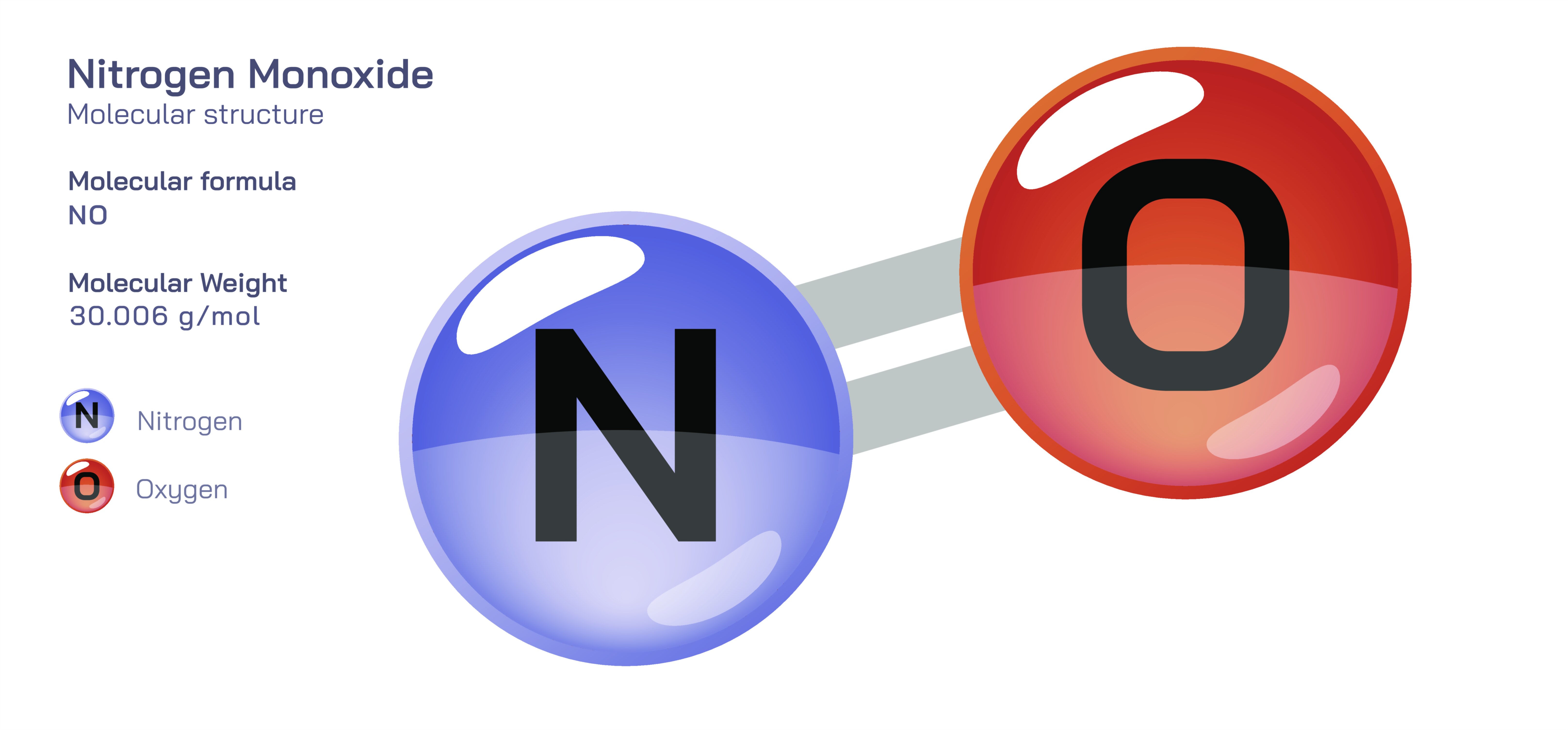
Nitrogen monoxide, also known as nitric oxide and abbreviated as NO, is one of the simplest yet most influential diatomic molecules in modern chemistry, atmospheric science, industrial processes, and biological signaling. Its scientific importance originates in something that is not immediately obvious when looking at it superficially: a molecule composed of just one nitrogen atom and one oxygen atom behaves in ways far more complex than would be expected from its size. A vector illustration of nitrogen monoxide typically shows two atoms connected by a bond, sometimes with notations that indicate the presence of an unpaired electron on the nitrogen. That small detail reveals the key to the molecule’s reactivity and its unusual properties. Nitrogen monoxide is a free radical, meaning it possesses an unpaired electron, and that unpaired electron gives the molecule a paramagnetic nature and a tendency to participate in reactions that involve rapid electron transfer, radical propagation, and redox cycling. In chemical diagrams, this electron is sometimes represented as a dot near the nitrogen atom or within the N–O bond, emphasizing that even though the molecule is electrically neutral overall, the distribution of electrons makes it highly reactive. The N–O bond itself has partial double-bond character, and resonance representations show the electron density shifting between the atoms. This delicate internal configuration is the reason nitrogen monoxide interacts easily with oxygen, metals, metalloproteins, free radicals, atmospheric oxidants, and transition-state intermediates in both living systems and combustion environments.
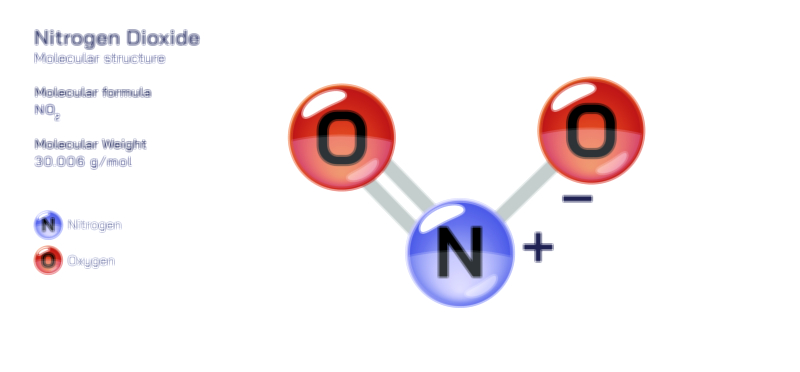
One of the most revealing aspects of nitrogen monoxide is that its behavior shifts dramatically depending on the context in which it appears. In the atmosphere and industrial combustion, NO is often regarded as a pollutant precursor; in biology, it is an essential signaling molecule; in chemical engineering, it participates as both a product and a reagent in redox systems that sustain enormous industries. In combustion environments such as engines, power plants, ships, aircraft, and industrial heaters, high temperatures trigger the reaction between atmospheric nitrogen and oxygen to form nitrogen monoxide. This NO does not remain isolated for long, because the unpaired electron makes it readily oxidizable. As soon as NO interacts with atmospheric oxygen, it produces nitrogen dioxide (NO₂), and this NO–NO₂ interconversion lies at the heart of nitrogen oxides (NOₓ) pollution. Through a chain of sunlight-driven reactions, nitrogen monoxide also participates in the formation of ground-level ozone, a major component of photochemical smog. During the day, sunlight breaks nitrogen dioxide into nitrogen monoxide and atomic oxygen; the atomic oxygen binds with O₂ to form ozone; and without volatile organic compounds present, nitrogen monoxide eventually destroys ozone by recombining with it and regenerating nitrogen dioxide. When hydrocarbons trap nitrogen dioxide in oxidation cycles, nitrogen monoxide can no longer reverse ozone accumulation, leading to harmful ozone buildup that irritates respiratory tissues, hurts vegetation, reduces crop yields, and degrades air quality. The ability of nitrogen monoxide to oscillate between different oxidation states makes it a molecular switch in atmospheric chemistry, driving pollution cycles when it is formed in excess through human activity. A simple N–O vector illustration therefore hides a deeper truth: the molecule regulates the chemistry of polluted air not through size, but through the electronic structure that determines how it reacts when exposed to sunlight and other pollutants.
Although nitrogen monoxide is widely discussed as a combustion byproduct and air pollutant, the molecule occupies a completely different role inside living organisms, where it becomes one of the most important biochemical messengers in human physiology. In biological systems, nitric oxide is produced by nitric oxide synthase (NOS) enzymes using the amino acid L-arginine and oxygen, and unlike traditional hormones or neurotransmitters, it does not travel through the bloodstream bound to carrier proteins. Instead, it diffuses directly through cell membranes and acts immediately on nearby tissues because of its small size and reactivity. One of its most vital roles is vascular regulation: nitric oxide signals smooth muscle cells surrounding blood vessels to relax, an action that widens blood vessels and improves blood flow. This natural vasodilation mechanism controls blood pressure, enhances oxygen delivery, and supports metabolic needs during exercise and stress. Nicholae Ignarro, Robert Furchgott, and Louis Ignarro shared the Nobel Prize for demonstrating that nitric oxide produced by endothelial cells is the long-sought “endothelium-derived relaxing factor,” proving that a reactive gas acts as a signaling molecule in the cardiovascular system. The idea that a molecule associated with smog and combustion also protects human tissues by maintaining circulation reflects the dual nature of NO: whether it is beneficial or harmful depends entirely on the setting in which it is formed.
Within the nervous system, nitric oxide serves as an unconventional neurotransmitter that supports neural plasticity, learning, and memory. Unlike classical neurotransmitters that are stored and released by synaptic vesicles, NO is synthesized on demand in response to neuronal activity and diffuses freely through synaptic spaces, influencing multiple surrounding neurons. Its involvement in long-term potentiation — the strengthening of synaptic connections that allows memory formation — illustrates how a free radical gas becomes a tool for neural adaptation. Nitric oxide also participates in immune defense by acting as a cytotoxic agent produced by macrophages to kill invading pathogens through oxidative stress. In these contexts, the same radical reactivity that contributes to urban pollution becomes a controlled mechanism for destroying bacteria, viruses, and parasites inside the body. This does not mean that nitric oxide is universally healthy or safe; rather, it illustrates that biological systems harness reactive molecules strategically. When NO is produced in excess — especially during chronic inflammation — it can form highly reactive nitrogen species capable of damaging DNA, proteins, and lipids. The body therefore maintains precise regulatory control, balancing nitric oxide production between physiological support and oxidative risk, once again demonstrating that the molecule’s radical nature defines both benefit and danger.
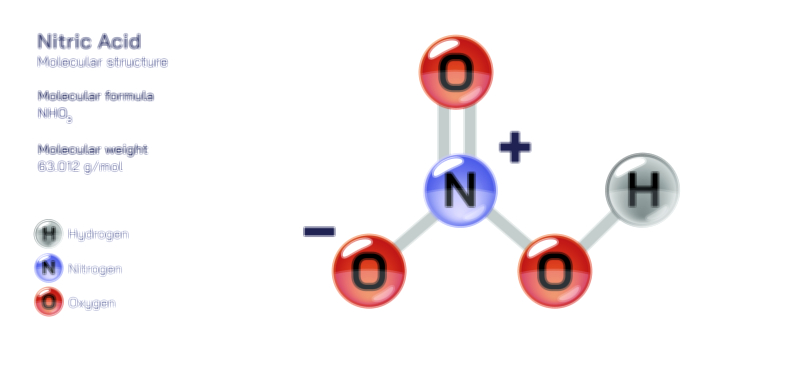
In industrial chemistry, nitrogen monoxide is both a goal and a stepping stone. NO is essential to the manufacture of nitric acid through the Ostwald process, a global-scale industrial reaction that supports fertilizer production, explosives manufacturing, chemical synthesis, and countless downstream technologies. In this process, ammonia is catalytically oxidized to nitrogen monoxide, which is then further oxidized to nitrogen dioxide and ultimately absorbed in water to form nitric acid. This series of transformations relies on NO’s electron dynamics, because its unpaired electron allows oxidation to proceed at high rates in the presence of metal catalysts. Without nitric oxide as the intermediate, the industrial production of nitric acid — and therefore the mass production of nitrogen fertilizers — would not function. The molecule also plays a role in metallurgical chemistry and gas treatment systems. In some metal refinery operations, nitrogen monoxide participates in selective catalytic reduction, where NO and NO₂ are converted into harmless nitrogen and water using ammonia or urea in the presence of catalysts. This technology is now standard in automotive catalytic converters, diesel particulate systems, industrial exhaust treatment, and power plant emissions control. Again, the core of these transformations lies in the electron configuration depicted in a structural diagram: the radical nature of NO enables rapid conversion into new species under catalytic influence, without which pollution control strategies would be far less effective.
Nitrogen monoxide’s dual identity as both a product and a reactant also places it in the center of redox reactions across laboratory chemistry. In coordination chemistry, NO forms a wide range of nitrosyl complexes with transition metals, displaying fascinating changes in color, magnetic behavior, and oxidation state depending on whether the nitrosyl ligand binds through nitrogen or oxygen and whether it donates or accepts electrons during complex formation. These complexes have driven major discoveries in organometallic chemistry and catalysis, and they continue to shape research on electron-transfer mechanisms. In organic synthesis, NO participates in nitrosation reactions that introduce nitroso functional groups into molecular frameworks, enabling the formation of materials ranging from elastomeric polymers to pharmaceutical intermediates. In spectroscopic and kinetic research, nitrogen monoxide is used as a probe and tracer because its radical properties make it easy to track through reaction pathways. Its ability to combine with radicals such as alkoxy or peroxy species makes it a valuable tool for studying radical-chain reaction mechanisms that influence everything from combustion efficiency to polymer curing.
Environmental chemistry also depends heavily on understanding nitrogen monoxide because its concentration determines the boundary between clean and polluted air. Natural processes including lightning strikes, forest fires, and soil microbial activity produce modest levels of NO that ecosystems are equipped to absorb. Problems arise when human activity generates nitrogen monoxide at scales that exceed the natural buffering capacity of the atmosphere. In such cases, NO becomes not merely a molecule but a catalyst of chain reactions that lead to ozone accumulation, particulate formation, and acid precipitation. Satellite mapping of atmospheric nitrogen monoxide concentrations reveals distinct hotspots over densely industrialized regions and high-traffic corridors, highlighting how the molecule becomes a quantifiable signal of urbanization and energy consumption. Its presence indicates more than air chemistry — it traces infrastructure, policy decisions, economic development patterns, and technological choices regarding transportation and power generation.
Through every one of these roles — atmospheric, industrial, biological, and environmental — the behavior of nitrogen monoxide can be traced back to the vector illustration of its molecular structure. The bond between nitrogen and oxygen, the distribution of electron density, and especially the solitary unpaired electron shape every aspect of the molecule’s identity. Nitrogen monoxide shows that chemical behavior is not a philosophical abstraction but a direct consequence of specific atomic arrangements. A single missing electron in a diatomic molecule becomes the source of catalytic cycles in smog production, vasodilation in the human body, oxidation pathways in industrial synthesis, neural plasticity in the brain, and free radical chemistry in combustion, evolution, and immune defense. It reminds us that molecules do not choose to be good or bad; they simply behave according to the physical laws embedded in their structure. Whether nitrogen monoxide acts as a pollutant, a therapeutic signal, an industrial intermediate, or a component of atmospheric equilibrium depends entirely on where it is produced, how much accumulates, and what surrounding molecules are available to interact with it. The structural sketch may seem modest, but within it resides the logic that links chemistry to air quality, technology, environmental stewardship, biological regulation, and the health of ecosystems and human bodies alike.