Calcium Nitrate — Understanding the Structure and Behavior of an Inorganic Salt Compound
The Fundamental Identity of Calcium Nitrate as an Inorganic Salt
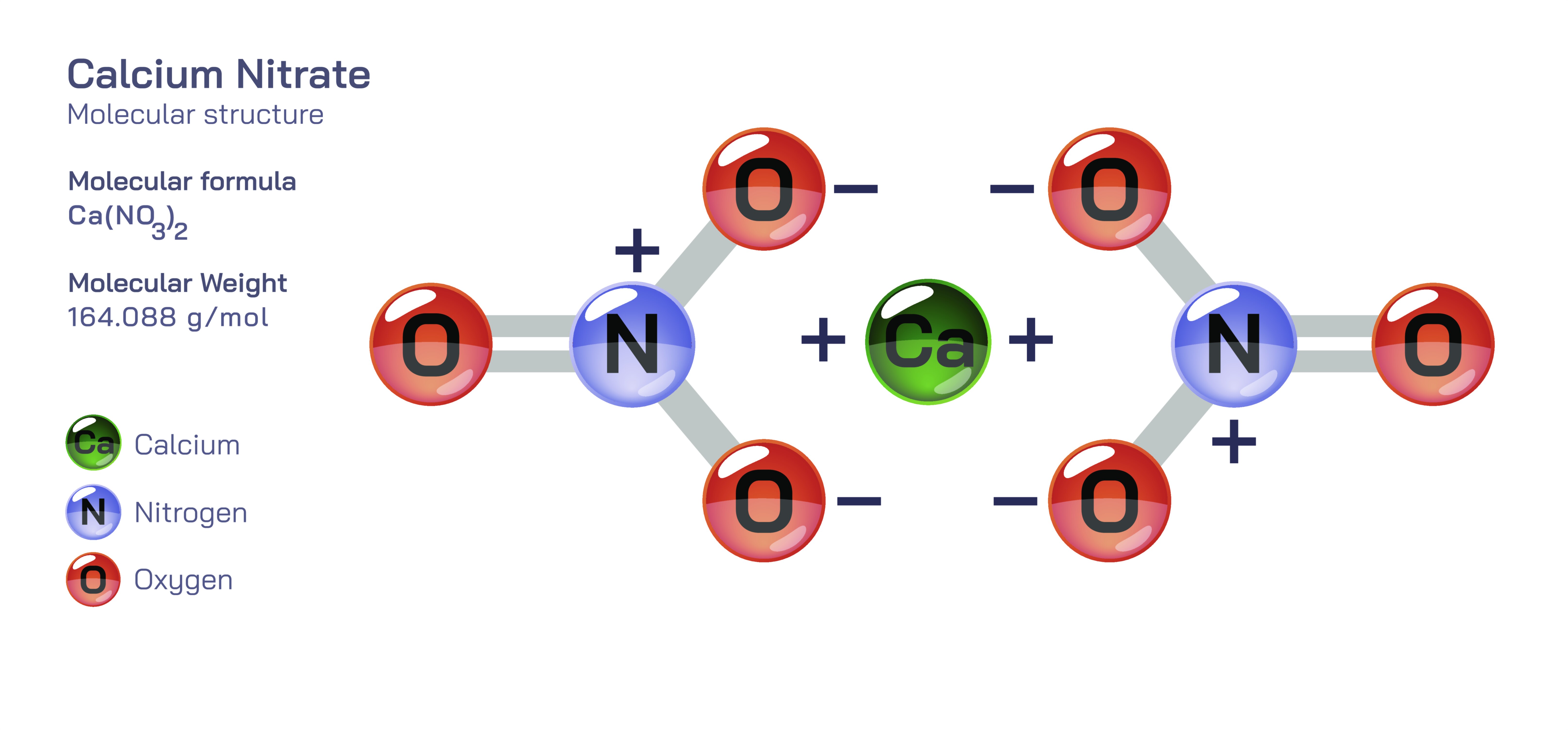
Calcium nitrate is a widely used inorganic salt compound recognized for its high solubility, its ability to supply essential nutrients, and its versatility across agricultural, industrial, and chemical applications. Appearing as a white, crystalline solid, calcium nitrate forms when calcium ions combine with nitrate groups in a stable ionic arrangement. The compound is known for absorbing moisture from the air due to its hygroscopic nature, often forming a hydrated solid that reflects its strong attraction to water. Its structure and behavior illustrate the principles of ionic bonding, where a metal ion and a complex anionic group come together to create a stable, easily dissolvable material. As one of the most important nitrate-based fertilizers and industrial chemicals, calcium nitrate’s properties highlight how simple ionic interactions can shape crucial materials used across modern systems.
How Calcium Nitrate Forms and Gains Its Stability
The formation of calcium nitrate occurs when calcium, a reactive alkaline earth metal, interacts with nitric acid or nitrates from other sources. Calcium readily forms positively charged ions, while the nitrate group is a stable cluster of atoms that carries a strong negative charge. When these two components meet, they bond through strong electrostatic forces, forming a firm and ordered ionic structure. This arrangement is flexible enough to incorporate water molecules, which explains why calcium nitrate often exists in hydrated forms. The compound’s stability arises from the balance between these charged components, creating a solid that resists decomposition and dissolves effortlessly when introduced into water.
High Solubility and Behavior in Water
One of the defining characteristics of calcium nitrate is its remarkable solubility in water. When added to water, the solid readily breaks apart into freely moving ions, allowing it to disperse rapidly and interact with other components in the solution. This ability to dissolve so easily makes it especially valuable in agriculture, where it can be delivered directly to plant roots through irrigation systems. The dissolved calcium and nitrate ions remain stable and active, supporting processes in soil and plant tissues. This solubility also makes calcium nitrate useful in various chemical reactions, laboratory preparations, and industrial processes that require quick-dissolving salts with predictable behavior.
Agricultural Value and Nutrient Delivery
Calcium nitrate is best known for its essential role as a fertilizer, providing both calcium and nitrogen—two nutrients that are critical for plant development. Calcium supports the strength and structure of plant cell walls, helping crops resist disease and physical stress, while nitrate delivers one of the most accessible forms of nitrogen, fueling growth, leaf development, and overall productivity. Because the compound dissolves thoroughly in water, it can be applied through drip irrigation, foliar sprays, or direct soil treatment, allowing precise control of nutrient delivery. Calcium nitrate is especially valuable for preventing nutrient imbalances such as blossom-end rot in tomatoes or tip burn in leafy greens, conditions linked to insufficient calcium movement within plant tissues.
Industrial and Environmental Uses Beyond Agriculture
Beyond its agricultural importance, calcium nitrate serves a variety of industrial and environmental purposes. In wastewater treatment, it is used to reduce unpleasant odors by supporting bacterial processes that minimize the formation of foul-smelling compounds. In concrete and construction, calcium nitrate acts as an accelerator, helping cement mixtures harden and strengthen more quickly, especially in cold weather. Its reliable ionic structure also makes it useful in producing explosives, where nitrate salts contribute oxygen for controlled reactions. These applications show how a single inorganic compound can support fields as diverse as sanitation, structural engineering, and chemical manufacturing.
Physical Characteristics Influenced by Ionic Structure
The ionic structure of calcium nitrate shapes its appearance and handling characteristics. The compound often forms crystalline granules that feel slightly moist because of their tendency to attract water from the atmosphere. This hygroscopic behavior reflects the attraction between water molecules and the ions within the compound, which makes proper storage important in industrial and agricultural settings. Despite absorbing moisture easily, calcium nitrate remains stable and does not degrade under normal conditions. Its white, salt-like crystals dissolve cleanly without leaving residue, reinforcing its usefulness in applications requiring clarity, precision, and controllable effects.
Safety Considerations and Proper Handling
While calcium nitrate is widely used and generally safe when handled properly, it must be managed with care due to its reactivity and its nitrate content. As an oxidizing compound, it can intensify combustion if stored improperly near flammable materials. In agricultural and industrial environments, users handle it with protective equipment to avoid irritation from dust or concentrated solutions. Proper storage in dry, well-ventilated areas ensures that the compound maintains its quality and reduces the risks associated with moisture absorption. Understanding its chemical nature allows users to take advantage of its benefits while minimizing hazards.
Why Calcium Nitrate Remains an Essential Inorganic Salt
Calcium nitrate’s importance stems from its combination of structural simplicity and functional versatility. Its ionic framework provides stability, its solubility enables rapid and effective use, and its dual nutrient value makes it indispensable in modern agriculture. In industry, it supports processes that rely on predictable oxidation or acceleration, while in environmental applications it contributes to cleaner, more efficient systems. Its behavior demonstrates how inorganic salts derived from fundamental chemical interactions can have wide-reaching impacts on food production, construction technology, environmental management, and chemical processing. Calcium nitrate remains a testament to how basic principles of ionic bonding produce materials essential to modern life.