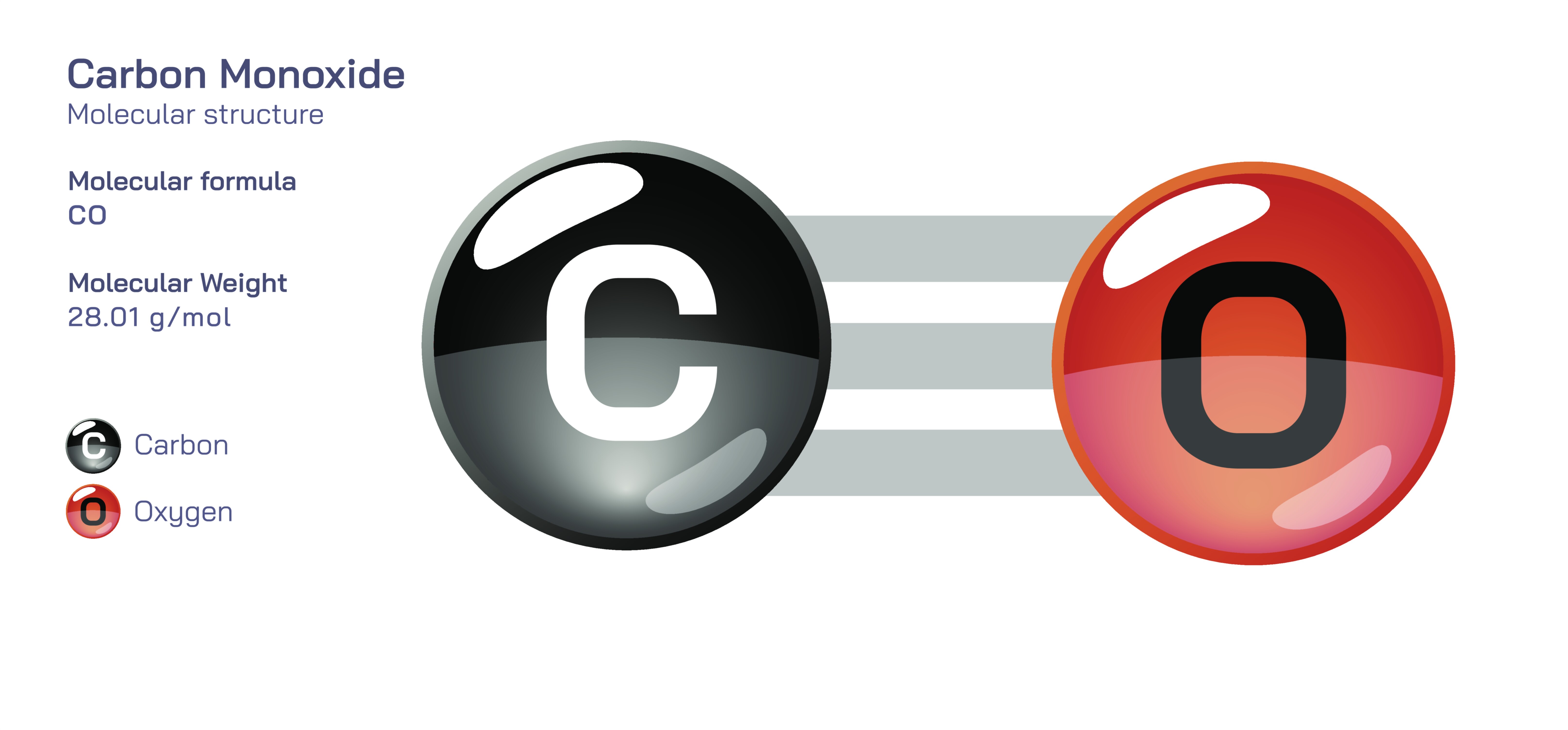
Carbon Monoxide — Toxic Gas Molecular Structure
Carbon monoxide is one of the most dangerous yet deceptively simple molecules in nature, known for its colorless, odorless, and tasteless characteristics that make it extraordinarily difficult to detect without proper instruments. Despite its invisible presence, carbon monoxide poses severe risks to human health because of the way its molecular structure interacts with the biological systems responsible for transporting oxygen. Its toxicity has been recognized for centuries, but the full understanding of its molecular behavior continues to shape modern approaches to safety, medicine, environmental science, and industrial management. The danger it presents hinges on both its chemical stability and its structural affinity for binding to critical biological molecules, demonstrating how even a small, uncomplicated molecule can exert profound effects on living organisms and natural processes.
At the molecular level, carbon monoxide is composed of one carbon atom bonded to one oxygen atom in a linear configuration. The two atoms share a tightly bound connection that gives the molecule strong internal stability. Unlike carbon dioxide, which contains two oxygen atoms and exhibits a symmetrical structure, carbon monoxide possesses an asymmetric electronic distribution that affects the way it interacts with surrounding molecules. This asymmetry contributes to its ability to insert itself into reactive environments and bind strongly with metals, especially iron-containing complexes. The linear geometry also means that carbon monoxide has a compact shape capable of entering active sites of enzymes and proteins that normally bind oxygen. The molecule’s size and bond arrangement allow it to exist long enough in the atmosphere to travel and disperse, yet reactive enough to interfere with biological pathways essential for life.
In the human body, carbon monoxide’s danger arises primarily from its interaction with hemoglobin, the oxygen-carrying protein found in red blood cells. Hemoglobin normally binds oxygen in the lungs and delivers it to tissues throughout the body. However, carbon monoxide binds to hemoglobin far more tightly than oxygen does, forming a stable complex that prevents hemoglobin from carrying oxygen efficiently. The presence of carbon monoxide not only reduces the availability of hemoglobin for oxygen transport but also alters hemoglobin’s behavior, making it less willing to release whatever oxygen it still holds. This dual effect leads to cellular hypoxia, where tissues become deprived of the oxygen necessary for energy production and metabolic processes. The brain and heart are among the first organs to suffer damage because of their high oxygen demand. Symptoms of carbon monoxide poisoning can develop gradually or suddenly, ranging from headaches, dizziness, and confusion to loss of consciousness, cardiac complications, and death if exposure continues.
The dangers associated with carbon monoxide are amplified by its invisibility and lack of sensory indicators. Humans cannot taste or smell the gas, so its presence often goes unnoticed until symptoms appear. Many exposures occur in enclosed or poorly ventilated spaces where combustion processes release carbon monoxide into the air. Common sources include malfunctioning heaters, stoves, furnaces, fireplaces, vehicle exhaust systems, generators, and industrial equipment. Incomplete combustion of carbon-based fuels is the primary cause of carbon monoxide formation, reflecting the molecule’s position as an intermediate step between carbon and carbon dioxide. Modern safety protocols emphasize the importance of carbon monoxide detectors in homes and workplaces, precisely because relying on human senses provides no protection. These detectors monitor air concentrations continuously, triggering alarms when levels rise to dangerous limits, offering one of the few effective early warning systems.
In environmental contexts, carbon monoxide plays a significant role in atmospheric chemistry. Although concentrations in open outdoor environments are usually low, carbon monoxide interacts with sunlight, atmospheric oxygen, and hydroxyl radicals in ways that influence pollutant cycles. It contributes indirectly to the formation of ground-level ozone and affects the atmosphere’s ability to break down methane and other long-lived greenhouse gases. Because carbon monoxide can react with atmospheric radicals that would otherwise degrade harmful pollutants, excessive emissions may reduce the natural cleaning capacity of the atmosphere. This interplay highlights how carbon monoxide, despite being relatively short-lived compared to other atmospheric gases, can shape broader environmental and climatic processes. Monitoring outdoor levels becomes particularly important in urban centers, where high traffic volume and industrial activity can elevate concentrations.
Carbon monoxide is also produced naturally, albeit in smaller quantities, through biological and geological processes. Forest fires, volcanic activity, and the oxidation of organic materials in soil can release the gas, integrating it into natural atmospheric cycles. Some plants, microorganisms, and even human cells generate trace amounts of carbon monoxide as a byproduct of metabolic reactions. Interestingly, at very low concentrations, carbon monoxide participates in cellular signaling pathways, influencing inflammation and vascular functions. These biological roles contrast sharply with the molecule’s toxicity at higher concentrations, illustrating the delicate balance between beneficial and harmful interactions. This duality mirrors several other biological compounds that exhibit essential roles at micro levels but become detrimental in excess.
Industrial and chemical applications of carbon monoxide further underline its importance. The molecule plays a significant role in metal refining, organic synthesis, and fuel production. In metallurgy, carbon monoxide helps remove oxygen from metal ores through reduction reactions, contributing to processes such as iron production in blast furnaces. In organic chemistry, carbon monoxide participates in reactions that create a wide variety of industrial chemicals, including acetic acid, methanol, and complex organic intermediates. Its reactivity with metal catalysts makes it a key participant in carbonylation processes, where organic compounds gain new functional groups. While these industrial uses are valuable, they also underscore the importance of strict safety protocols to prevent accidental exposure among workers.
Carbon monoxide’s presence in automotive emissions has shaped decades of environmental legislation and technological innovation. Catalytic converters in vehicles use metal catalysts to convert carbon monoxide into less harmful carbon dioxide, dramatically reducing emission levels from internal combustion engines. This advancement, coupled with fuel efficiency improvements and regulatory controls, has significantly reduced the amount of carbon monoxide released into the environment in many parts of the world. Still, older vehicles, poorly maintained engines, and certain industrial operations continue to emit carbon monoxide, sustaining the need for monitoring and regulation.
One of the more subtle aspects of carbon monoxide chemistry reveals itself in how the molecule interacts with transition metals. In coordination chemistry, carbon monoxide forms stable complexes with metals such as iron, nickel, and cobalt. These metal–carbon monoxide complexes have contributed profoundly to the development of organometallic chemistry and catalysis. They help scientists understand how electrons flow between atoms, how bonds form and break, and how catalysts can be designed for efficiency and selectivity. In this sense, carbon monoxide serves not only as a toxic gas but also as a tool that deepens our understanding of chemical bonding and industrial catalyst design.
Understanding carbon monoxide also means recognizing the human and historical impact associated with the compound. Countless accidental poisonings throughout history have led to increasing awareness, improved building codes, and advancements in public safety technology. Education campaigns stress the importance of ventilation, regular maintenance of heating systems, and the use of detectors, especially during colder months when heating appliances are used more frequently. These measures underscore that carbon monoxide, though structurally simple, requires ongoing vigilance to prevent tragedies and protect health.
Ultimately, carbon monoxide’s molecular structure—small, linear, and deceptively straightforward—belies the magnitude of its influence. Its ability to bind tightly and selectively to metals gives it both industrial value and biological danger. Its formation through incomplete combustion makes it a pervasive byproduct of human activity. Its presence in the atmosphere contributes to complex environmental chemistry. And its behavior within the body reveals how fragile the balance of oxygen transport truly is. Carbon monoxide stands as a striking example of how a simple molecule can wield profound effects across ecosystems, industries, and living organisms. Understanding its structure and properties is essential for appreciating both the utility it provides and the danger it represents, reminding us that chemical simplicity can coexist with extraordinary impact.
Carbon Monoxide — Toxic Gas Molecular Structure Vector Illustration
Carbon monoxide vector illustration showing molecular bonding between carbon and oxygen atoms for chemistry, environmental, and educational use.
Summary
Related Images








File Details
File Type
-
EPS
File Size
-
7.29 MB
File Dimension
-
Scalable vector file
Your contribution helps us create more resources, but please support only if it's comfortable and affordable for you.❤️️
