Carbon Dioxide — Molecular Gas Structure
Carbon dioxide is one of the most significant and structurally elegant molecules in both natural and human-influenced systems, serving as a central participant in atmospheric chemistry, biological metabolism, geological cycles, and industrial processes. Even though it is often associated with discussions about climate change, plant respiration, or combustion, its importance extends far beyond these commonly cited roles. Understanding carbon dioxide begins with its molecular structure, which determines its physical behavior, chemical reactivity, environmental influence, and participation in the cycles that support life. Although the molecule itself is invisible to the human eye, it shapes ecosystems, regulates planetary temperatures, fuels biological processes, and influences the chemistry of oceans, soils, and living cells. Its simple structural arrangement belies its profound impact on Earth’s interconnected systems.
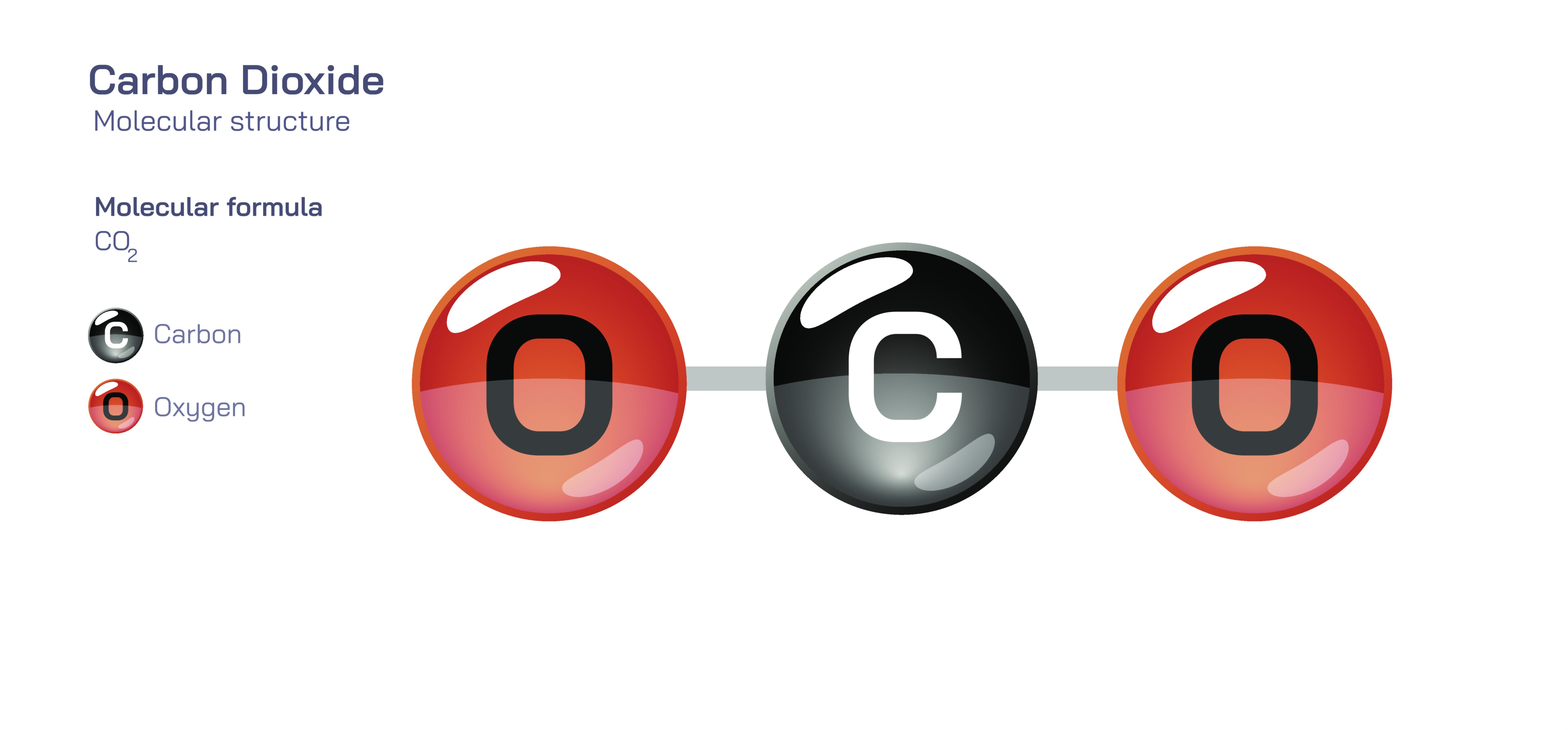
At the molecular level, carbon dioxide consists of one carbon atom bonded symmetrically to two oxygen atoms in a linear arrangement. This straight-line geometry results from the balance of electron pairs around the central carbon atom and the equal pull of the two oxygen atoms. Because of this symmetry, the molecule exhibits no permanent electric dipole, which explains several of its physical properties, including its relatively low reactivity in everyday conditions and its inability to absorb certain types of electromagnetic radiation. The linear shape also contributes to carbon dioxide’s role as a greenhouse gas; although it is symmetrical, it can absorb and re-emit infrared radiation through vibrational modes that temporarily disturb this symmetry. These vibrational transitions are the reason carbon dioxide plays a major part in controlling the thermal energy balance of Earth’s atmosphere.
In terms of physical behavior, carbon dioxide exists naturally as a gas at room temperature and normal pressure, though it can transform into a solid—commonly known as dry ice—when cooled below its sublimation point. Unlike many substances, solid carbon dioxide does not melt under normal atmospheric pressure but transitions directly from solid to gas. This property makes dry ice useful in refrigeration, shipping, and various industrial processes. As a gas, carbon dioxide is heavier than air, allowing it to accumulate in low-lying areas or confined spaces. It dissolves readily in water, forming carbonic acid, a weak acid that plays a vital role in regulating blood pH in animals, buffering systems in natural waters, and the global carbonate–bicarbonate balance that influences ocean chemistry.
Carbon dioxide is generated continuously by biological and physical processes. Living organisms release it as a result of cellular respiration, the metabolic pathway where glucose is broken down to release energy. Every breath taken by a human or animal results in the exchange of oxygen for carbon dioxide, linking respiration directly to atmospheric chemistry. Similarly, microorganisms in soil release large amounts of carbon dioxide as they break down organic matter, making soils one of the planet’s most active carbon exchangers. Plants, algae, and certain bacteria absorb carbon dioxide during photosynthesis, using it as a raw material to produce glucose and releasing oxygen as a byproduct. This exchange forms the basis of the global carbon cycle, the ongoing exchange of carbon among the atmosphere, biosphere, hydrosphere, and geosphere. Without carbon dioxide, photosynthesis could not occur, food chains would collapse, and atmospheric composition would shift drastically.
Geologically, carbon dioxide appears in volcanic emissions, geothermal vents, and mineral transformations. Rocks rich in carbonate minerals can release carbon dioxide when subjected to heat and pressure deep within Earth’s crust. Conversely, carbon dioxide can be trapped for millions of years in limestone, dolomite, and other minerals formed through sedimentation in oceans and lakes. These long-term geological processes act as massive reservoirs within the global carbon cycle, influencing atmospheric carbon dioxide concentrations over geological timescales. Human activities have disrupted this balance by releasing large amounts of carbon dioxide stored in fossil fuels—coal, oil, and natural gas—into the air in relatively short periods, altering atmospheric composition and contributing to climate change.
Carbon dioxide’s solubility in water allows it to shape ocean chemistry. When carbon dioxide dissolves in seawater, it forms carbonic acid, which partially dissociates into bicarbonate and carbonate ions. This equilibrium is essential for marine ecosystems, as many organisms—such as corals, mollusks, and plankton—use carbonate to build shells and skeletons. However, increased atmospheric carbon dioxide leads to higher dissolution in oceans, reducing pH and altering carbonate availability. Such changes affect marine biodiversity, food webs, and the long-term stability of oceanic carbon storage. These biological and chemical processes illustrate how a simple molecular structure can influence life at multiple levels, from cellular function to global climate regulation.
In industrial applications, carbon dioxide serves numerous purposes. It is used in carbonation of beverages, providing the characteristic fizz in soft drinks and sparkling water. It acts as a shielding gas in welding, preventing unwanted reactions during metal fusion. In agriculture, it enhances plant growth in controlled environments like greenhouses, where elevated carbon dioxide levels improve photosynthetic efficiency. Carbon dioxide also plays a critical role in chemical manufacturing, fire suppression systems, and medical practices such as respiratory therapies and anesthesia procedures. Its solid form, dry ice, allows for cold storage, rapid freezing, and the creation of theatrical fog effects due to its sublimation properties.
In the human body, carbon dioxide is not merely a waste product but an essential component of physiological homeostasis. Blood carries carbon dioxide from tissues to the lungs, where it is expelled through exhalation. The regulation of blood carbon dioxide levels is vital for maintaining acid–base balance, as changes in concentration can shift blood pH and influence enzyme function, respiration rate, and neurological activity. Specialized receptors in the brainstem monitor carbon dioxide levels closely, adjusting breathing depth and frequency to keep the body in equilibrium. This delicate balance reinforces carbon dioxide’s importance as more than just an atmospheric gas—it is a key player in sustaining life.
Ultimately, carbon dioxide demonstrates how a molecule with a simple linear structure can become central to the functioning of ecosystems, the shaping of climate, the dynamics of geological formations, and the functioning of living organisms. Its symmetric arrangement and chemical stability allow it to participate in large-scale cycles, while its reactivity under specific conditions enables it to contribute to diverse biological and industrial processes. Understanding carbon dioxide means understanding not only its molecular geometry but also its role in the interconnected systems that support life, regulate climate, and shape the Earth over time.
Carbon Dioxide — Molecular Gas Structure Vector Illustration
Carbon dioxide vector illustration showing linear molecular structure and bonding of carbon and oxygen atoms for chemistry and educational use.
Summary
Related Images








File Details
File Type
-
EPS
File Size
-
6.87 MB
File Dimension
-
Scalable vector file
Your contribution helps us create more resources, but please support only if it's comfortable and affordable for you.❤️️
