Magnifying Glass and Sun Heat Concentration Experiment
The classic experiment where a magnifying glass is used to concentrate sunlight onto a small point and generate intense heat is one of the simplest yet most powerful demonstrations of how light and energy can be controlled through basic optics. At first glance it looks almost magical: a harmless beam of sunlight, when brought to a sharp focus, suddenly becomes hot enough to burn paper, dark leaves, or small pieces of wood. Yet behind this familiar childhood experiment is a rich combination of physical principles involving the nature of light, the geometry of curved glass, the concept of a focal point, and the transformation of solar energy into localized heat. Understanding this experiment in depth reveals why it works, what factors make it more or less effective, and why the same principles can scale from tiny magnifying glasses all the way up to giant solar power plants.
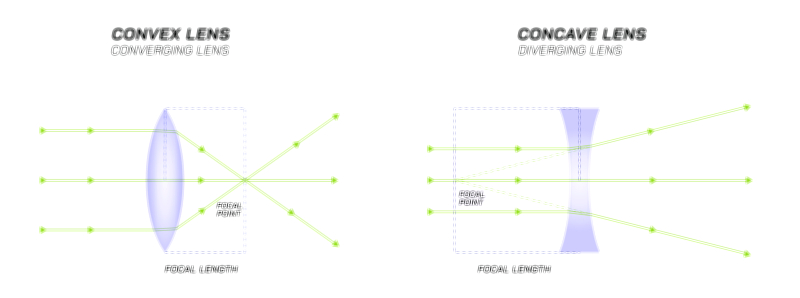
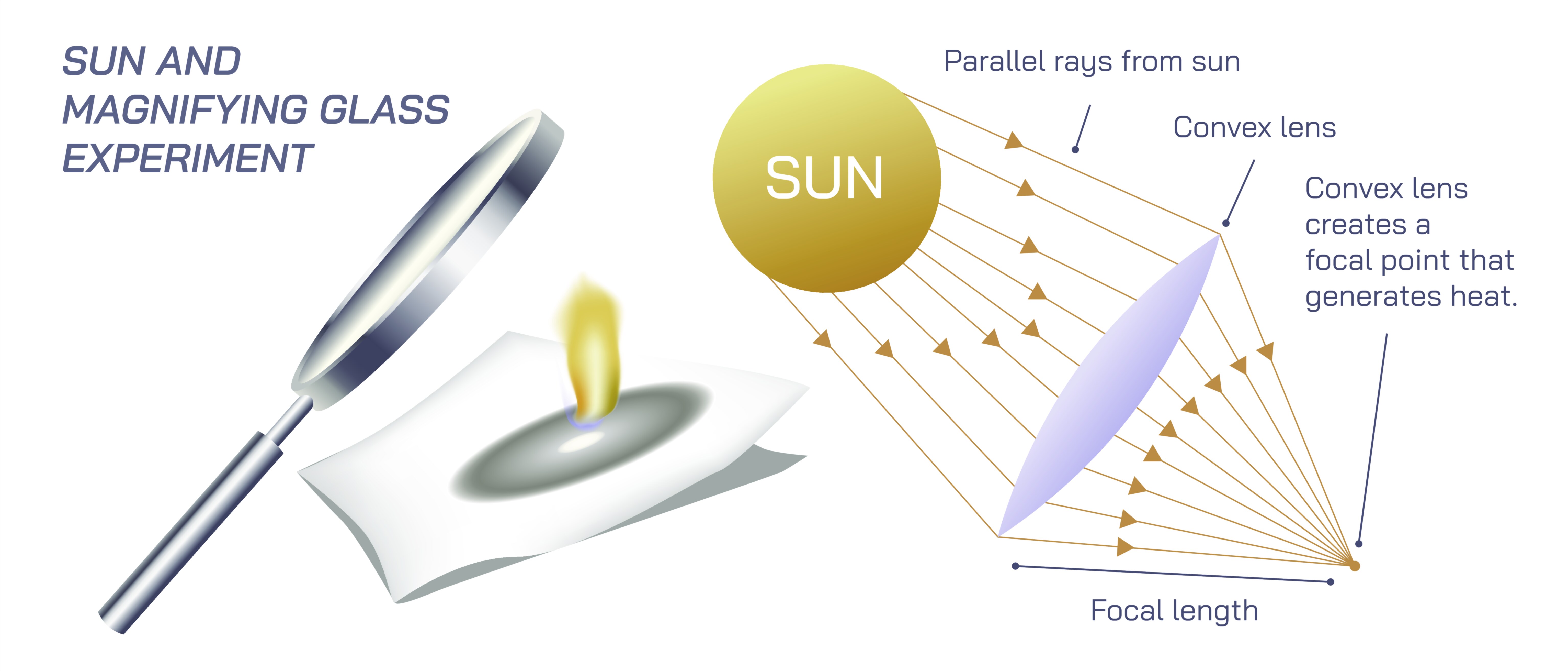
At the heart of the experiment is the magnifying glass itself, which is a simple converging lens. Its surfaces are curved in such a way that incoming rays of sunlight, which are effectively parallel when they reach Earth from the distant Sun, are bent toward one another as they pass through the glass. This bending happens because light travels at different speeds in different materials; when light enters glass from air, it changes speed and direction at each surface. The lens is shaped so that all these bent rays are redirected toward a common region in space, known as the focal point. In everyday use, we hold a magnifying glass so that this focal point is just beyond the object we are looking at, making the object appear larger. In the heat concentration experiment, we deliberately place the focal point on a small, absorbent surface like black paper or a dried leaf so that the concentrated light energy heats that tiny area very quickly.
The distance between the magnifying glass and the surface matters a great deal, because the focal point is not at an arbitrary location but at a specific distance from the lens that depends on its curvature and material. When you move the lens closer or farther away from the target, you can see the bright circular patch of sunlight changing size. At some positions the circle is large and dim; at one particular distance it becomes the smallest and brightest possible spot. That smallest, sharpest spot corresponds to the point where the light rays are most strongly concentrated. The experiment is essentially about finding that precise distance. Once found and kept steady, the sunlight that previously covered a wide area is now focused onto a very small spot, meaning the same amount of power is hitting a much smaller surface. Energy that was once spread out over, say, a region the size of your hand is now focused onto an area only a few millimeters wide, dramatically increasing the energy density in that location.
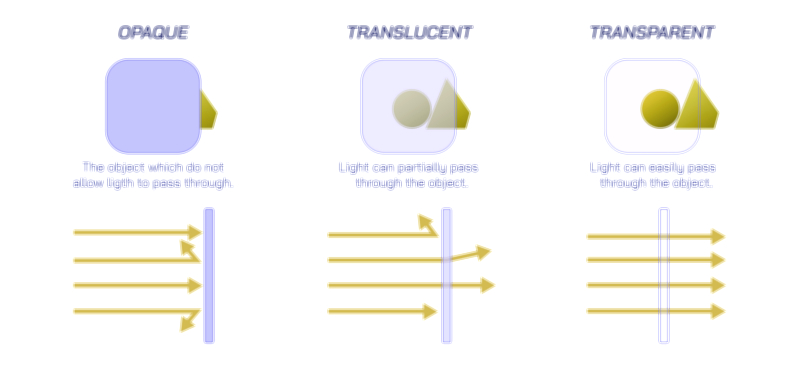
The way this increased energy density turns into heat is tied to how materials interact with light. When the focused sunlight hits the surface of a dark object, the pigment and structure of that object absorb a large portion of the light instead of reflecting it. Absorbed light energy is converted into internal energy of the material, which manifests as an increase in temperature. This is why most demonstrations are done with dark-colored surfaces: black paper, charred wood, or dried brown leaves absorb far more energy than white paper or shiny metal. As the temperature rises, the material may reach the point where it begins to degrade, char, or ignite. This burning is not due to the magnifying glass creating new energy; instead, the lens simply redirects and compresses the existing solar energy into a small region where it becomes intense enough to trigger chemical reactions associated with combustion.
A key part of this experiment is the alignment of the magnifying glass with the Sun. Because sunlight arrives from a specific direction, you must tilt and orient the lens so that the full face of the glass receives sunlight evenly. If the lens is off-angle, only part of its surface contributes to the focused spot, and the energy concentration is reduced. People often notice that the bright spot appears to “wander” when their hand shakes or when they tilt the glass slightly, because the focal point moves accordingly. For a strong heating effect, the lens must be held steadily and oriented so that you are using as much of its area as possible. Larger lenses, which have greater collecting area, can gather more sunlight and therefore concentrate more power into that small focal spot, sometimes generating surprisingly high temperatures under ideal conditions.
The environment plays an important role in how well the experiment works. Clear skies provide the strongest direct sunlight, while haze, cloud, or pollution scatter and weaken the light, reducing the maximum temperature that can be achieved. The angle of the Sun in the sky also matters; at midday when the Sun is high, light passes through less atmosphere and is generally stronger compared to early morning or late afternoon. Temperature and wind influence the outcome as well. A gentle breeze can carry heat away from the targeted spot, cooling it and prolonging the time required to reach ignition. At the same time, very dry conditions and dry materials make ignition easier because less energy is needed to evaporate moisture and bring the material up to its ignition temperature. This is why the same basic setup may ignite dry brown leaves quickly in summer but fail to light damp green leaves on a cool, windy day.
One of the subtle but important aspects of the magnifying glass experiment is the role of time. Many people expect instantaneous dramatic results, but the process of heating involves steady energy accumulation. The surface being illuminated must absorb enough energy to overcome losses to the surrounding air and to its own interior, as well as to drive off any moisture that is present. When the lens is held in the correct position and the bright spot is kept motionless, the temperature at that tiny point gradually climbs. First the object may simply warm up, then it can begin to smoke as organic material breaks down, and only after enough thermal energy has been accumulated will a visible flame sometimes appear. This progression teaches an important lesson in energy transfer: power tells you how fast energy is delivered, while time dictates how much energy accumulates in the system. The magnifying glass provides a constant flow of energy; your task is to maintain stable conditions long enough for that energy to add up.
The experiment is also a vivid demonstration of why safety is essential whenever concentrated sunlight is involved. Even small magnifying glasses can produce temperatures capable of burning skin, damaging eyes, or starting unintended fires. Looking at the bright focal spot directly, especially through the lens, can be harmful because the eye’s own focusing system can further concentrate light onto the retina. Responsible use requires avoiding staring into the bright spot, keeping the experiment far from flammable surroundings, and making sure that no smoldering material is left unattended afterward. The same principle that allows a child’s experiment to light a small leaf can, on a larger scale, explain accidental fires caused by glass ornaments, bottles, or even certain shapes of windows that act like lenses and concentrate sunlight onto nearby objects.
When you consider how this simple setup connects to large-scale technology, the experience becomes even more meaningful. Solar cookers, for example, often use reflective dishes or arrays of mirrors shaped to focus sunlight onto a cooking pot or absorber plate, just as a magnifying glass focuses light onto a tiny spot. Concentrated solar power plants use huge mirrors or lenses to direct sunlight onto a central receiver where fluid is heated to very high temperatures, driving turbines to generate electricity. These systems are essentially giant versions of the same experiment, designed with high precision and controlled automatically, but guided by the identical underlying principle: collect sunlight over a wide area and concentrate it into a smaller region to increase the energy density and thus the temperature.
On a more conceptual level, the magnifying glass experiment illustrates the distinction between brightness and total energy. When the Sun shines on an open field, the energy is widely distributed and the ground warms slowly. When that same sunlight is concentrated onto a small area, the brightness at that point greatly increases, and materials respond differently. People sometimes imagine that the magnifying glass “creates” extra heat, but in reality it simply redistributes energy that was already present. This redistribution is possible because light can be redirected, concentrated, or spread out depending on how it passes through optical elements. The experiment therefore connects optical geometry to thermal effects in a very hands-on way, making it an excellent introductory activity for understanding energy conservation: the total energy remains the same, but its distribution in space has been altered.
The choice of target materials in this experiment further deepens appreciation of how different substances interact with light and heat. Dark, matte surfaces absorb more radiant energy and convert it to heat efficiently, while shiny or light-colored surfaces reflect more incoming energy and therefore heat up more slowly under the same conditions. Some materials, such as thin dry paper, reach high temperatures quickly because they have low thermal mass and weak internal bonding, so the energy concentrated by the magnifying glass can quickly break molecular structures and lead to visible burning. Other materials, such as thick wood or metal, may only char or merely warm because their higher thermal mass spreads the heat over a larger internal volume and their ignition conditions are more difficult to reach. Observing these differences offers a practical introduction to concepts like absorption, reflectivity, thermal conductivity, and specific heat, even without explicitly using those technical terms.
Performing the experiment carefully and repeatedly gives a sense of how precise small changes in distance and alignment must be to achieve the strongest effect. As you move the lens slightly closer to the paper, you may see the focused spot become a bit larger and dimmer; moving it slightly away might again blur the point. This sensitivity teaches that optical systems have preferred configurations where they perform best, and that real experiments require adjustment and patience. It also hints at how scientists and engineers must calibrate lenses, mirrors, and detectors in devices like cameras, telescopes, microscopes, and solar instruments. The same disciplined process of adjusting distance, observing brightness, and seeking a sharp focus lies behind many optical technologies in daily life.
From an educational perspective, the magnifying glass and Sun experiment is powerful precisely because it engages multiple senses and disciplines at once. Visually, you see the bright spot. Tactilely, you feel the warmth. Intellectually, you connect the observed behavior with ideas about light, energy, and matter. It becomes a gateway to discussing how the Sun continuously delivers energy to Earth, how humans can harness that energy, and why the distribution of energy in space and time matters so much for everything from climate to technology. It also illustrates the inseparable link between observation and theory: you see something simple, ask why it happens, and gradually uncover layers of explanation from basic refraction to large-scale solar engineering.
In everyday life, the principle demonstrated by this experiment encourages both creativity and caution. On one hand, it suggests possibilities for simple solar-based tools, such as low-cost fire starters, compact solar cookers for outdoor use, or emergency heating methods that rely on nothing more than sunlight and a lens or reflective surface. On the other hand, it reminds us to respect sunlight as a real source of concentrated power. Car dashboards, glass bottles left in dry grass, decorative crystals hung in windows, or architectural features that act accidentally as focusing elements can all recreate the same conditions that ignite materials under a magnifying glass. Understanding the experiment therefore helps people design safer spaces and handle reflective or transparent objects wisely.
In the end, the magnifying glass and Sun heat concentration experiment is much more than a simple trick to burn paper. It is a compact demonstration of the path light takes through a curved medium, the way energy can be gathered and concentrated, and the delicate balance between absorption and reflection that governs whether an object warms, smolders, or catches fire. By exploring the setup with patience, noticing how lens size, distance, angle, material, and weather influence the result, and connecting those observations with broader ideas about optics and energy, one can appreciate how a small handheld lens mirrors the same fundamental processes used in advanced solar technologies. Through this small window of glass, the invisible flow of solar power becomes visible, tangible, and understandable, turning a simple experiment into a vivid lesson in the science of light and heat.