Young’s Modulus — Elasticity, Stress, and Strain Relationship
Fundamental Meaning of Young’s Modulus in Material Elasticity
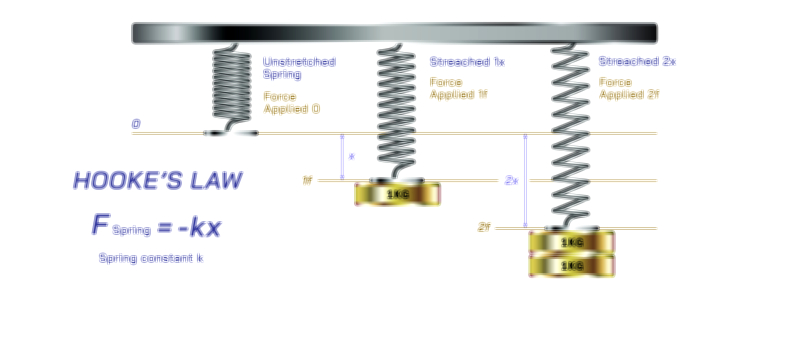
Young’s Modulus, often symbolized as E, stands as one of the most essential mechanical constants in materials science and structural engineering because it quantifies how stiff or elastic a material is when subjected to an external force. It describes the relationship between stress, which is the force applied per unit area, and strain, which is the resulting deformation or change in length relative to the original length. When a material is stretched or compressed within its elastic limit, it deforms proportionally to the load applied—meaning that the material obeys Hooke’s Law. Young’s Modulus is the constant of proportionality that defines this linear relationship, revealing how much a material resists deformation under an applied load. A high value indicates a stiff and rigid material such as steel, while a low value corresponds to more flexible materials such as rubber. The concept is foundational not only to mechanical design but also to understanding how natural structures, manufactured components, and complex systems respond to forces without being permanently altered.
Stress, Strain, and the Elastic Region Explained
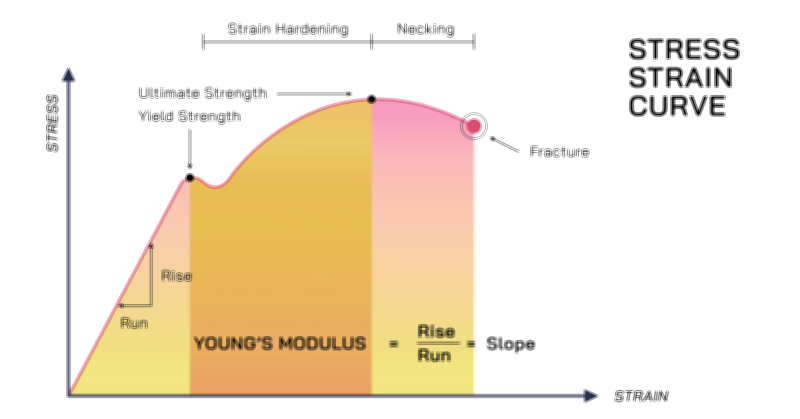
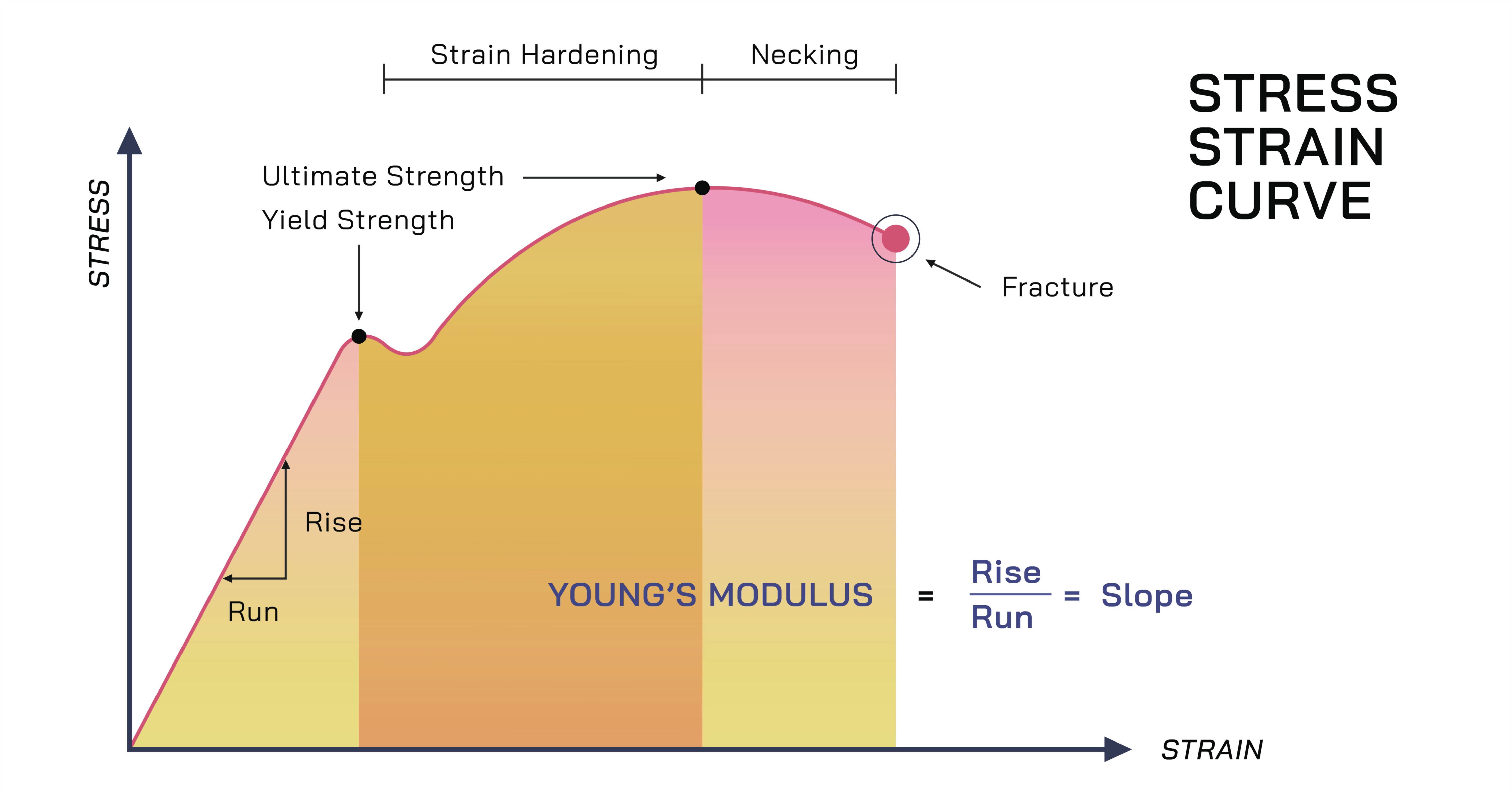
To understand Young’s Modulus thoroughly, it is important to examine stress and strain as physical quantities that work in unison. Stress arises when a material experiences an external load, creating internal forces distributed over the material’s cross-sectional area. Strain, on the other hand, reflects how much the material elongates or compresses as a result of this load. The linear proportionality between stress and strain exists only in the elastic region of the material—where atoms and molecular structures move slightly from their equilibrium positions but remain capable of returning once the force is removed. This reversible deformation ensures that the material goes back to its original size and shape when unloaded. Young’s Modulus encapsulates the slope of this linear stress–strain relationship, meaning that within the elastic zone the ratio of stress to strain remains constant. This linear region is extremely important in engineering because it defines the safe loading range for constructing machines, buildings, bridges, medical implants, and all mechanical components that undergo routine forces.
Atomic and Molecular Interpretation of Elasticity
Young’s Modulus also has a deep connection to the microscopic interactions within materials. Atoms in a solid are arranged in an orderly lattice or network, connected by chemical bonds that resist stretching and compression to varying degrees depending on the type of material. When a tensile or compressive force is applied, these atomic bonds act like tiny springs—stretching slightly but working to return to equilibrium. A material with strong, tightly packed atomic bonds, such as those found in metals or ceramics, exhibits a high Young’s Modulus because breaking or stretching these bonds requires significant energy. Conversely, materials with more flexible bonding arrangements, such as polymers or elastomers, display lower values because their molecular chains can uncoil, rotate, or reorient under load with less resistance. This molecular-level perspective links the macroscopic behavior of materials to the strength and configuration of their internal bonds, helping scientists design advanced materials for aerospace, electronics, biomechanics, and structural engineering.
Importance of Young’s Modulus in Mechanical and Structural Design
In practical engineering, Young’s Modulus is a decisive factor in determining how structures behave when subjected to operational loads. It influences deflection in beams, deformation in columns, stiffness of springs, and vibration characteristics of mechanical parts. For example, in constructing a bridge, engineers choose materials with a high Young’s Modulus to minimize bending under the weight of vehicles. In contrast, flexible materials with lower modulus values are chosen for products such as rubber seals, shock absorbers, or wearable devices where elasticity and deformation are beneficial. Young’s Modulus also helps predict potential failures by allowing designers to calculate stress–strain response under anticipated loads, ensuring that structural elements never exceed their elastic limits. It plays a crucial role in aerospace design, where lightweight yet stiff materials must simultaneously withstand aerodynamic forces. Even everyday items—such as metal fasteners, plastic containers, or electronic casings—depend on material stiffness determined through Young’s Modulus to balance strength and flexibility.
Applications in Science, Medicine, Construction, and Material Testing
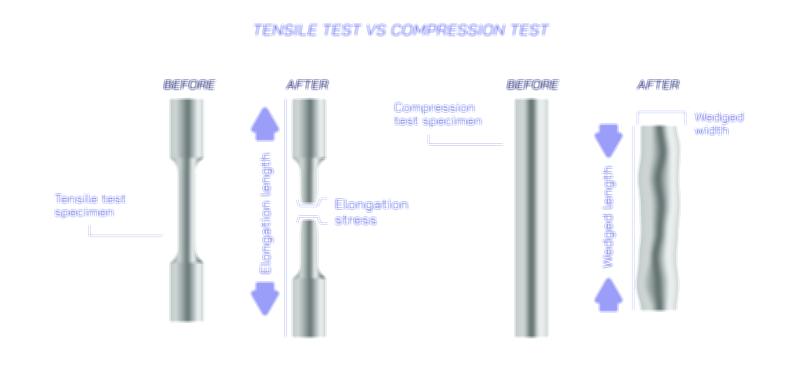
Young’s Modulus is used across countless disciplines beyond classical mechanical engineering. In materials testing, it is one of the first parameters measured during tensile testing, guiding quality control and standardization. In civil engineering, determining settlement and deformation of soils involves analyzing soil modulus values that affect foundation stability. In medicine, the modifier is essential in designing prosthetics, dental implants, and orthopedic devices, which must mimic the elasticity of human tissues or bones to function correctly without causing stress concentrations. In electronics and microfabrication, modulus values help predict how thin films, semiconductor layers, and microstructures behave under thermal or mechanical stress. In environmental and geological sciences, the modulus helps in analyzing rock stiffness, seismic wave propagation, and the structural integrity of the Earth’s crust. Through all these applications, Young’s Modulus serves as a universal indicator of mechanical behavior, guiding the design and optimization of both natural and artificial structures.
Illustrating Stress, Strain, and Young’s Modulus Through Vector Graphics
A vector illustration of Young’s Modulus typically features a stress–strain curve, emphasizing the initial straight-line region where stress increases proportionally with strain. The slope of this line visually represents Young’s Modulus, helping viewers understand how stiffness varies among materials. Illustrations may compare steep slopes (stiff materials like steel) with gentle slopes (flexible materials like rubber), showing the contrasts in elasticity. Additional vector elements may show atomic spring-like behavior within materials, a bar under tension that elongates slightly while still returning to its original length, or different structural elements deforming in response to applied forces. These visual representations provide clarity in grasping the concept of elasticity, making it easier to connect mathematical relationships with real-world mechanical behavior.