Electric Potential — Work and Charge Relationship
Electric potential is one of the most important conceptual foundations in the study of electricity, offering a way to understand how charges interact, how energy is transferred within electric systems, and how forces act across space without physical contact. Although it is often introduced in mathematical form, its essence can be explained fully through descriptive reasoning, imagery, and conceptual depth without relying on formal equations. At its core, electric potential describes the energy landscape that surrounds electric charges and governs how much effort is required to move another charge within that landscape. It embodies the relationship between work and charge by connecting the physical effort needed to move a charge with the position it occupies in an electric field. By examining the meaning of this relationship, the physical intuition behind it, and the ways it manifests in natural and engineered systems, electric potential becomes a vivid and comprehensible idea rather than an abstract technical term.
To understand electric potential, it helps to imagine the space around an electric charge as containing an invisible tension or directional influence. Just as a hill creates a landscape where rolling a ball uphill requires effort while rolling it downhill adds energy to the ball, an electric charge creates a field in which moving another charge requires or releases effort depending on direction. This “effort” takes the form of work—an energy transfer resulting from moving something against a force. In the electric context, this work depends not simply on the amount of force present but on how the force changes with position and how much charge is being moved. Electric potential provides a way to describe the energetic condition of each point in the field by answering a simple question: how much work would be required to move a small, positive charge to that point from a reference location? If the point lies in a region where the electric force assists the movement, little or no work is required. If the point lies in a region where the electric force opposes the movement, more work must be done. In this way, electric potential offers a map of energy levels, showing which regions of space require greater effort for moving charges and which regions naturally encourage charge movement.
This energy-based viewpoint emphasizes that electric potential is not a force itself but a way to express how the environment created by charges influences the motion of other charges. A location with high electric potential is one where a positive charge carries more stored energy, because reaching that position required work against the electric field. A location with low electric potential is one where the environment naturally pulls a positive charge, meaning a charge placed there will have less stored energy and may release energy if allowed to move freely. This difference in potential between two points is what drives charge movement. Just as water flows from higher ground to lower ground, electric charges “flow” from regions of higher potential to regions of lower potential when given a pathway, releasing energy in the process. This flow of charge is what humans recognize as electric current.
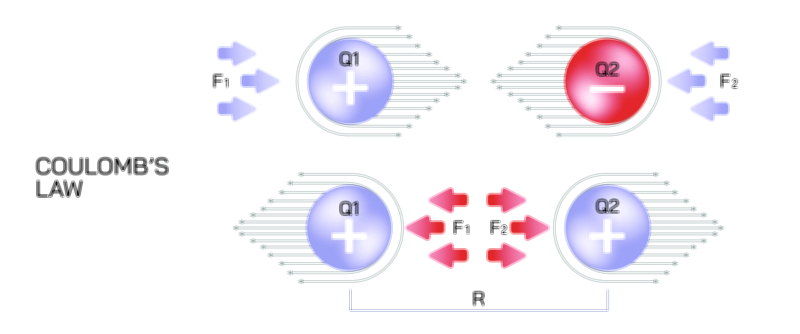
The connection between electric potential and work also sheds light on the behaviour of opposite charges. A positive charge and a negative charge experience forces in opposite directions within the same potential landscape. Consider again the analogy of a hill: if a positive charge is like a ball pushed uphill, a negative charge is like a balloon that wants to rise in the opposite direction. Both experience the same landscape but respond in opposite ways because of their differing inherent properties. A region of high potential for a positive charge represents a region of low potential for a negative charge, making electric potential an inherently relative measure shaped by the type of charge being considered. Nevertheless, the potential itself depends only on the environment created by other charges, not on the charge being moved. It describes the landscape, not the traveler.
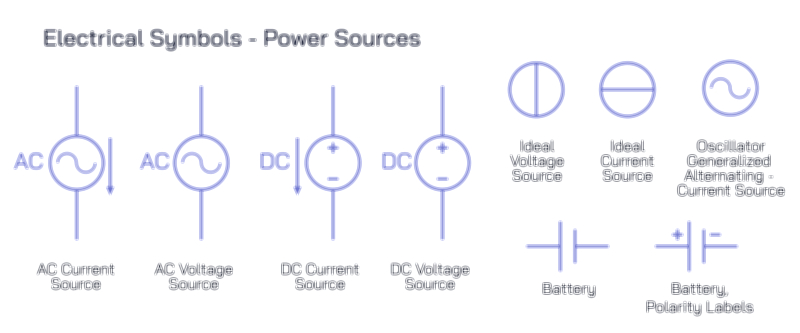
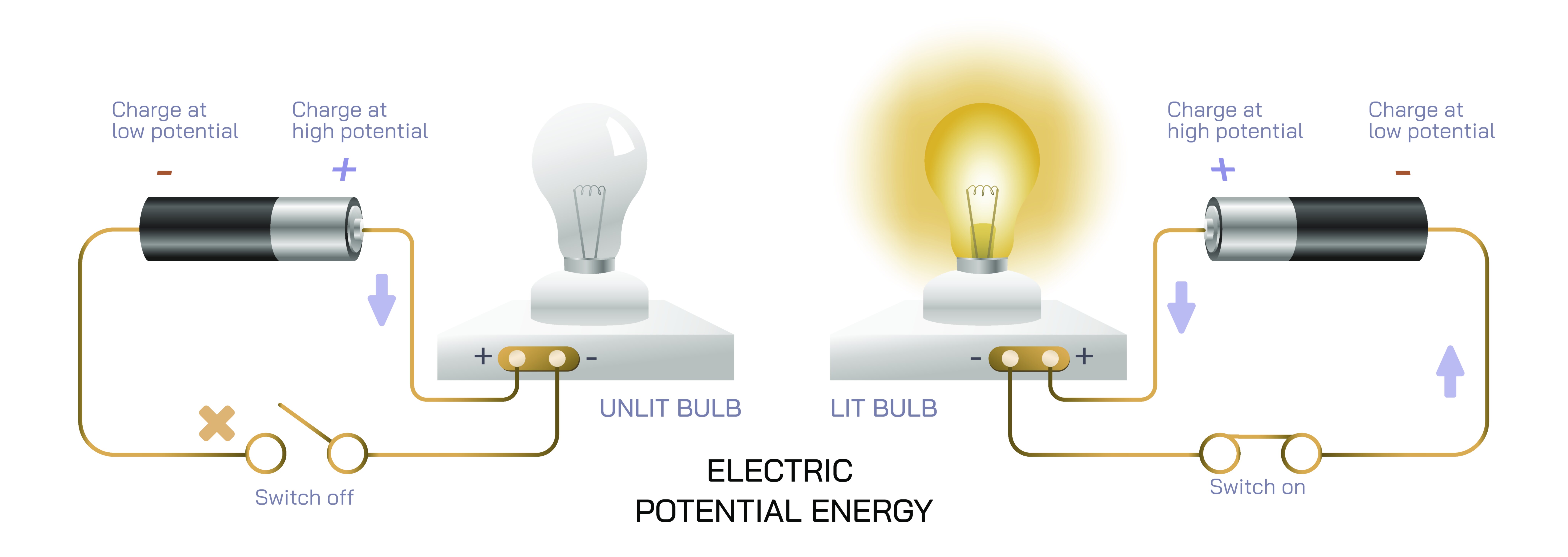
Electric potential also provides an intuitive way to understand electric circuits. In a simple circuit, a power source such as a battery creates two regions with different electric potentials. One terminal of the battery establishes a higher potential, while the other establishes a lower one. Connecting the two terminals with a conducting material creates a path through which charges flow naturally from high to low potential. The battery performs work internally to maintain this separation of charges, much like continually pumping water uphill to maintain a height difference in a fountain system. Without this continual energy input, the potential difference would equalize, and the movement of charges—current—would cease. Light bulbs, motors, and electronic devices operate by harnessing the energy released as charges move from higher to lower potential, converting this energy into light, motion, or other useful forms. In this way, electric potential becomes not just a theoretical description but a practical concept that powers nearly every technological system in the modern world.
The usefulness of electric potential extends beyond circuits into an understanding of how energy is stored in electric systems. When two charges are brought closer together or farther apart in a way that opposes the electric force, work is done, and energy is stored in the system. For example, bringing two like charges close together requires effort because the charges repel. The work performed to push them together becomes stored energy, creating a higher potential region for either charge. On the other hand, bringing opposite charges closer releases energy, lowering the potential. Capacitors—devices that store electric energy—operate on this principle, using separated charges held at different potentials to store energy that can later be released in brief bursts. The electric potential difference between the separated charges forms the basis of this energy reservoir.
Electric potential also helps explain lightning, one of the most dramatic natural displays of electrical energy. Within storm clouds, rising and falling air currents separate charges, creating regions with vastly different electric potentials. As this separation grows, so does the stored energy within the cloud. When the potential difference between the cloud and the ground or between two regions within the cloud becomes overwhelming, the air can no longer insulate against the electric forces. The energy is suddenly released in a lightning bolt, rapidly equalizing the potential difference. This spectacular phenomenon illustrates how crucial electric potential is in storing and releasing energy on a grand scale.
In biological systems, electric potential plays an essential role in the nervous system. Nerve cells maintain different electric potentials across their membranes through the careful distribution of charged particles. These potential differences allow neurons to send signals as rapid changes sweep along the cell membrane, transmitting information efficiently throughout the body. The movement of muscle fibers, the rhythm of the heart, the transmission of sensory information, and countless physiological processes depend on electric potential differences that exist on microscopic scales. Even though these potentials are small compared to those in power lines or static electricity, their role in life processes is no less profound.
Electric potential also shapes the behaviour of charged particles in space and in technological applications. In particle accelerators, scientists use electric potential differences to impart enormous amounts of energy to tiny charged particles, propelling them to speeds approaching that of light. In plasma physics, electric potentials influence how charged gases move and interact, shaping everything from auroras to fusion reactions. In electronics, tiny potential differences guide electrons through microscopic pathways etched into semiconductor materials, forming the basis of computation, communication, and digital technology. Every signal processed in a computer, every image displayed on a screen, and every data transmission through a cable depends on the controlled manipulation of electric potentials.
Understanding electric potential also encourages a more intuitive grasp of electric fields. An electric field describes the force a charge would experience at a given location, while electric potential describes the energy associated with placing a charge at that location. The potential provides a scalar, or directionless, representation of the same environment that the electric field describes directionally. In other words, the electric field reveals which way a charge will move, while the electric potential reveals how much energy is involved in that movement. Just as a topographical map can represent hills and valleys without showing the actual gravitational forces acting on an object, electric potential provides an energy “map” of space that complements the directional information given by electric fields.
Ultimately, electric potential offers a deeply meaningful way to understand how energy is stored, transferred, and transformed in electric systems. It bridges the gap between the forces charges exert on one another and the energetic consequences of moving charges within an electric environment. Through its connection to work, energy, and motion, electric potential explains everything from the gentle flow of current through a wire to the dramatic discharge of lightning in the sky. By viewing electric potential as an energy landscape shaped by the arrangement of charges, the concept becomes not only accessible but profoundly illuminating, revealing the invisible architecture that governs the behaviour of the electric world.