Convection — Heat Transfer Mechanism
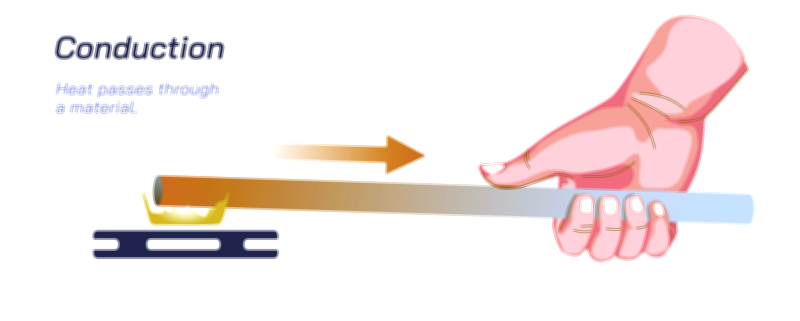
Convection is one of the three fundamental modes of heat transfer and stands out as the most dynamic, visually perceptible, and naturally occurring mechanism through which thermal energy moves in fluids. Unlike conduction, which relies on molecular collisions, or radiation, which travels through electromagnetic waves, convection depends on the collective motion of particles within liquids and gases. This motion arises when temperature differences within the fluid create density variations, causing warmer, lighter regions to rise while cooler, heavier regions sink. As this movement continues, it sets up circulating patterns that carry heat from one location to another. Convection is not only responsible for everyday phenomena like boiling water or warm air rising in a room, but also for large-scale natural processes such as atmospheric circulation, ocean currents, plate tectonics, and the transfer of energy inside stars. The mechanism demonstrates how heat and motion intertwine to shape patterns of flow, distribution, and equilibrium across systems big and small.
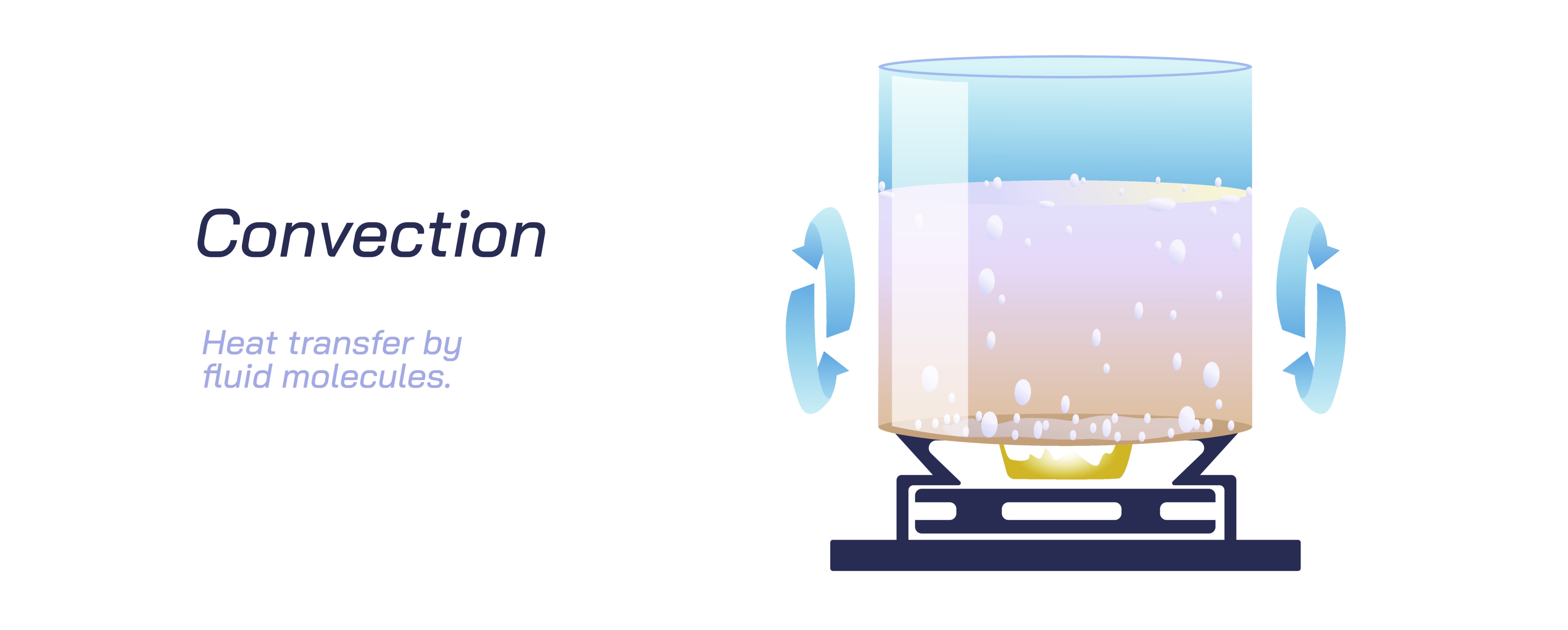
At the heart of convection lies the principle that heating a fluid reduces its density, causing it to become buoyant compared to the surrounding cooler fluid. When a region of water or air is heated, the molecules gain energy, move more vigorously, and spread apart. This expansion reduces the density of the warmed region, making it rise. Meanwhile, cooler, denser fluid moves in to take its place, creating a fluid cycle that transfers heat upward or outward. This simple but powerful process is essential for distributing thermal energy naturally and efficiently. In a pot of boiling water, the bottom layer closest to the flame heats first, becoming lighter and rising to the top, where it cools and sinks again. This cyclic movement forms convection currents visible as swirling patterns in the water. In the atmosphere, sunlight heats the Earth’s surface unevenly, causing warm air masses to rise and cooler air to descend, generating winds and driving weather patterns. This interplay between temperature, density, and motion defines convection and makes it one of the most influential forces shaping physical systems.
Convection can occur in two distinct modes: natural convection and forced convection. Natural convection arises spontaneously when density differences alone produce fluid movement. This type explains everyday phenomena such as the rising of hot air in a room, the upward movement of smoke from a fire, or the gentle circulation of air near a radiator. Natural convection is often subtle but incredibly important in regulating temperatures in enclosed spaces. Even without fans or external forces, air in a room constantly circulates due to slight temperature differences between walls, windows, floors, and heaters. In lakes, seasonal temperature shifts cause warm surface water to rise or sink, driving nutrient cycles essential for aquatic ecosystems. Natural convection therefore ensures that temperature gradients do not remain static but instead generate circulating flows that equalize thermal energy across the fluid.
Forced convection, on the other hand, involves external means of motion such as fans, pumps, blowers, or mechanical stirring. By actively driving fluid motion, forced convection dramatically enhances heat transfer rates and enables precise control over temperature distribution. Everyday technologies depend heavily on forced convection: cooling fans in computers, air conditioners, heaters with blowers, automotive radiators, and industrial heat exchangers all rely on externally driven fluid flow. In a refrigerator, for example, forced convection ensures that cool air circulates evenly so that every part of the compartment maintains the desired temperature. In engines, pumps circulate coolant to prevent overheating, ensuring that thermal energy is rapidly carried away from hot components. Forced convection allows engineers to manipulate heat transfer intentionally, making it indispensable in modern design and manufacturing.
Understanding convection also requires appreciating how fluid properties influence the process. Viscosity, thermal conductivity, density, and specific heat all affect how quickly and efficiently a fluid responds to temperature differences. For example, gases, which are less dense and more compressible, show dramatic convection patterns with rapid movement, while liquids often develop smoother, slower currents. The fluid’s ability to expand with temperature changes also affects buoyancy-driven motion. A fluid with a high expansion coefficient undergoes stronger density changes when heated, strengthening natural convection currents. In contrast, fluids with lower expansion rates require larger temperature differences to generate noticeable motion. These material properties help explain why some substances mix readily under heating while others remain relatively still.
Convection plays a key role across the natural world. In Earth’s atmosphere, convection drives the formation of clouds, storms, and global circulation patterns. Warm air near the equator rises and moves toward the poles, while cooler air sinks, setting up massive convective cells that influence winds, climate zones, and precipitation patterns. Thunderstorms and hurricanes originate from powerful convection within warm, moist air masses. As warm air rises rapidly, it cools and condenses, releasing heat that further fuels upward motion. This creates towering clouds and intense weather systems shaped by convective uplift. Even gentle breezes along coastlines are the result of convection: during the day, land heats faster than water, causing warm air to rise over the land and pull cooler sea air inland in what is known as a sea breeze. At night, the process reverses, creating land breezes. These cycles illustrate how convection regulates temperature, airflow, and weather across vast regions of the planet.
In the oceans, convection works in tandem with salinity, temperature, and density to drive thermohaline circulation—one of Earth’s most important climate-regulating mechanisms. When surface water cools or increases in salinity, it becomes denser and sinks, creating deep ocean currents that flow across the globe. These currents redistribute heat, transport nutrients, and influence temperature patterns across continents. The Gulf Stream, for instance, carries warm water from the tropics toward Europe, helping moderate regional climate conditions. Without convection-driven circulation, oceans would become thermally stratified and stagnant, greatly altering global climate and marine life. Thus, convection is essential not only for atmospheric behavior but also for oceanic stability and ecological balance.
Inside Earth itself, convection plays a defining role in geological activity. The mantle—although solid on short timescales—flows slowly over millions of years due to heat from the planet’s core. This slow, convective movement drives plate tectonics, causing continents to drift, mountains to rise, and oceans to open or close. Hot material rises toward the crust, cools, and sinks back toward the interior, generating convection cells that transport thermal energy. These currents move tectonic plates, create volcanoes, and trigger earthquakes. The dynamic nature of Earth’s surface owes much to this deep internal convection, demonstrating that the mechanism operates not only in fluids like air and water but also in solid materials capable of slow deformation.
Even stars depend on convection to transport energy from their hot cores outward. In the Sun, for example, convection zones form where heated plasma rises, cools near the surface, and sinks again. These convective motions create granulation patterns visible on the solar surface and influence magnetic activity. The constant churning of hot plasma transports energy outward and shapes solar dynamics that affect planetary environments. Without convection, stars would not distribute energy effectively, altering their lifespan, structure, and the radiation they emit into space.
In engineering and technology, convection is central to solving modern challenges involving temperature control, energy efficiency, and thermal management. Heat exchangers enable power plants, chemical industries, and refrigeration systems to transfer heat between fluids using controlled convection. Electronics rely on convection to prevent overheating, with heat sinks and airflow systems designed to promote efficient heat dissipation. In buildings, architects and engineers design ventilation systems to ensure healthy air circulation, regulate temperature, and reduce energy consumption. By understanding and manipulating convection, engineers can achieve optimized thermal performance in devices ranging from smartphones to industrial reactors.
Convection also plays a role in everyday life in ways we may not consciously notice. The warming of a room as heated air circulates upward from a heater, the cooling effect of a ceiling fan, the airflow that rises from a hot stovetop, or the swirling currents in a bathtub all reflect convective behavior. Even the way scent spreads from a candle or food disperses through the air relies subtly on convection currents carrying warm molecules upward and outward. These familiar experiences help us intuitively understand the mechanism long before we learn its scientific description.
One of the most profound conceptual insights about convection is that it demonstrates how nature responds to imbalances. When one region becomes warmer than another, convection acts to redistribute thermal energy until equilibrium is approached. This self-organizing behavior ensures that heat does not remain confined but spreads across the system through fluid motion. It highlights the adaptive, responsive nature of physical systems and illustrates how the interplay between energy and motion creates order, patterns, and stability.
Ultimately, convection is much more than a method of heat transfer—it is a driving engine behind many of the dynamic processes that shape the physical world, from weather and ocean currents to geological motion and technological design. Its beauty lies in its universality: wherever fluids exist and temperature differences arise, convection naturally emerges to restore balance, circulate energy, and shape the behavior of systems on scales ranging from microscopic to planetary.