Coulomb’s Law — Electrostatic Force Between Charges
Coulomb’s Law represents one of the most foundational ideas in physics, describing how electric charges interact with one another through the invisible yet powerful influence of electrostatic force. At its heart, the law expresses a simple truth: charged objects exert forces on each other, attracting or repelling depending on their nature, and the strength of that interaction depends on both the amount of charge they hold and the distance that separates them. Although the mathematical form of the law is well known in scientific contexts, the deeper meaning of Coulomb’s Law extends far beyond mere numerical expression. It provides insight into how matter organizes itself, how energy flows, how atoms and molecules bind, how electrical devices function, and how forces at microscopic scales give rise to the macroscopic behavior of materials, technology, and biological systems. Understanding Coulomb’s Law conceptually illuminates the invisible architecture of the physical world, revealing how electrostatic forces shape the structure of matter, guide chemical interactions, govern atmospheric phenomena, and influence every process that depends on electrical behavior.
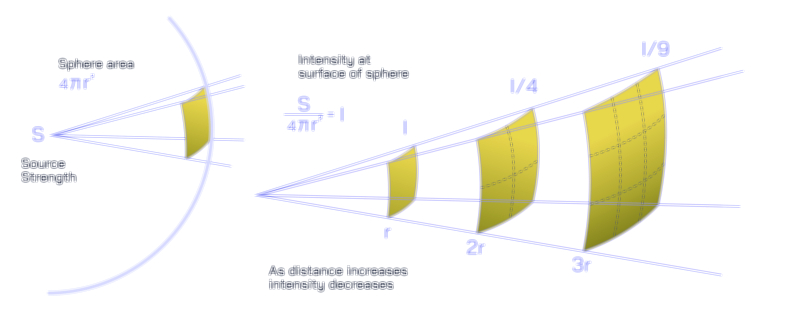
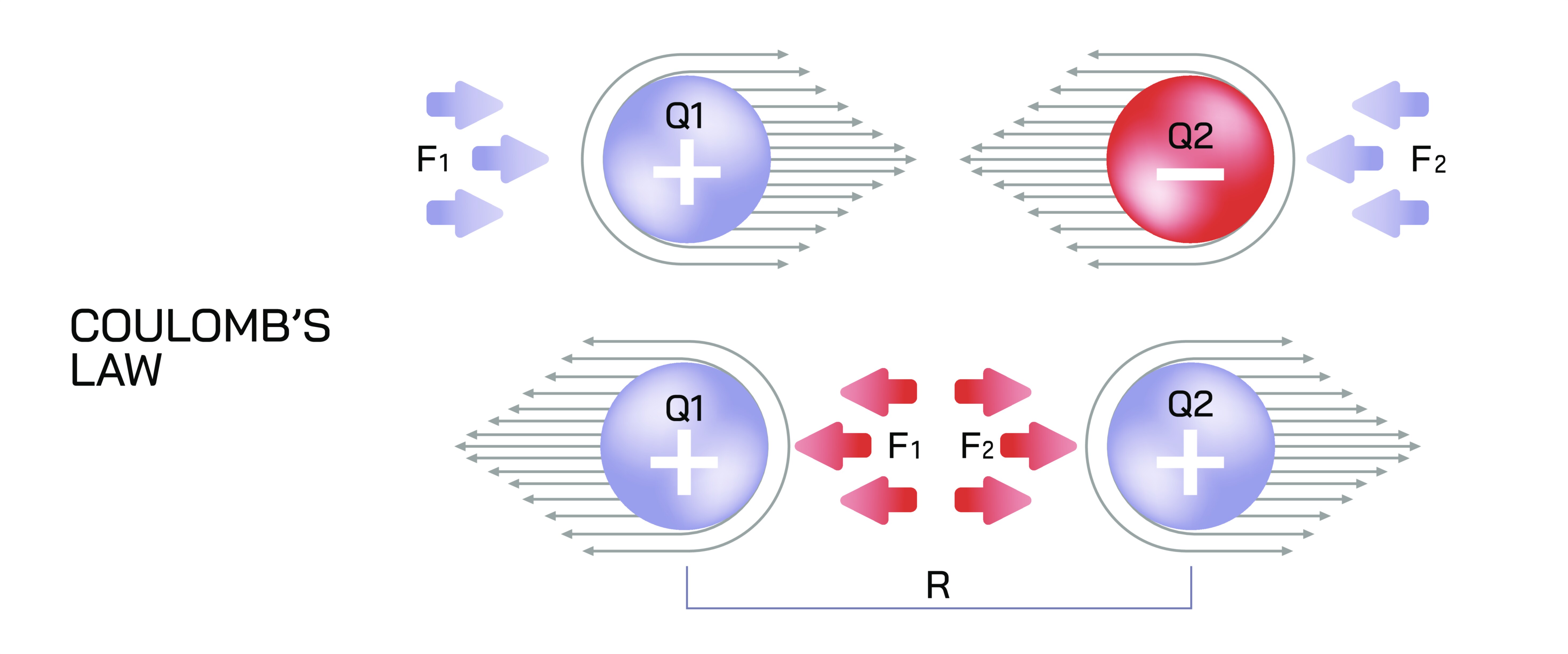
To appreciate Coulomb’s Law in a conceptual, non-mathematical way, imagine two small charged objects separated by empty space. Even though nothing visible connects them—no string, no air current, no physical barrier—each object somehow “feels” the presence of the other. One may be pushed away; the other may be pulled closer. This invisible influence is the electrostatic force, a fundamental interaction rooted in the intrinsic property called electric charge. Positive and negative charges behave as complementary partners: unlike charges attract, pulling toward each other, while like charges repel, pushing each other apart. This simple but profound behavior sets the stage for nearly every physical phenomenon involving electricity. When Coulomb first studied these interactions in the eighteenth century, he discovered that the magnitude of the force depended upon how strongly each object was charged and how far apart they were. Stronger charges produced stronger forces, and greater distances weakened the interaction. The force did not fade suddenly but diminished smoothly as separation increased. This behavior mirrors patterns found in nature across many types of interactions, including gravity, magnetism, and light. Coulomb’s discovery provided the first quantitative foundation for understanding electric forces, offering a unified rule that applies to everything from electrons in atoms to sparks in thunderstorms.
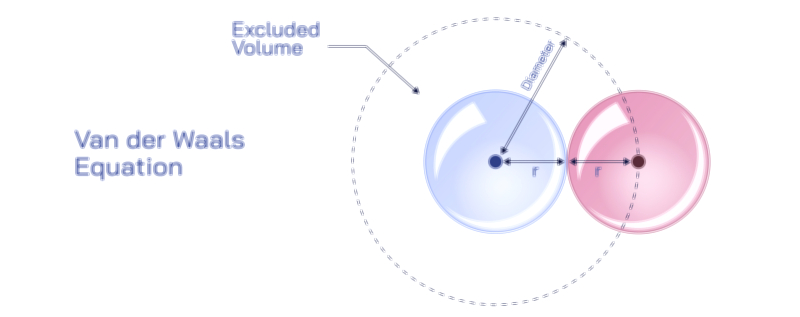
The importance of Coulomb’s Law becomes clearer when considering that electrostatic interactions are responsible for binding atoms together. Within an atom, the positively charged nucleus attracts negatively charged electrons. Even though the nucleus is tiny and the electrons are extremely light, the attraction between them creates the stable structure that forms the basic building block of all matter. Without such attraction, electrons would drift away and atoms could not exist in any recognizable form. When atoms bond together to form molecules, electrostatic forces also play a defining role. The sharing or transfer of electrons between atoms is essentially driven by the way charges seek stable arrangements through attractive forces. Whether forming simple diatomic gases or complex biological molecules, electrostatic interactions determine the geometry, stability, and function of chemical structures. In this sense, Coulomb’s Law underlies chemistry itself. It dictates how electrons position themselves around nuclei, how bonds angle and twist, and how molecules interact with one another in processes like hydrogen bonding, ionic attraction, and van der Waals forces. All these behaviors reflect the fundamental tendency of charges to respond to attraction and repulsion—exactly the pattern expressed by Coulomb’s Law.
The reach of electrostatic forces extends into everyday experiences in ways that often go unnoticed. When a plastic comb rubbed against hair attracts small bits of paper, or when clothing sticks together after tumbling in a dryer, these familiar effects arise from the unbalanced charges accumulated on surfaces. Coulomb’s Law governs how strongly these charges attract or repel one another. Static shocks felt when touching a metal doorknob after walking across a carpet are similarly explained: the buildup of charge on the body creates an imbalance that seeks neutralization when contact with a conductive surface is made. Weather phenomena, such as lightning, also depend on electrostatic interactions. Within storm clouds, collisions between ice particles create charge separation, leading to intense electric fields. Once the electrostatic force between charged regions becomes strong enough to overcome the insulating properties of air, a sudden discharge occurs, forming a lightning bolt. Although vastly larger in scale than the static electricity of daily life, the principle remains the same: electric charges exert forces on one another, sometimes with dramatic effects.
On technological fronts, Coulomb’s Law influences nearly every electrical device. Capacitors, which store electrical energy, rely on the attraction and repulsion of charges on metal plates separated by insulating material. The operation of transistors—fundamental components of computers and electronic circuits—depends on the movement of charges through semiconductor materials, controlled by electrostatic forces. Touchscreens respond to the slight changes in electric fields caused by a fingertip. Printers deposit charged ink particles onto paper using electric fields shaped by Coulomb’s principles. Even the behavior of modern batteries, where charged ions move between electrodes to provide electrical power, embodies the interplay of electrostatic attraction and repulsion. These applications work because designers understand how charges behave under varying conditions and how to harness their interactions to achieve controlled behavior. Coulomb’s Law acts as a guiding principle, helping engineers predict how fields will form, how charges will distribute themselves, and how forces will act within the components of an electronic system.
In many physical systems, Coulomb’s Law works hand in hand with other forces, helping create balance within matter. For example, within atoms, the attractive electrostatic force pulls electrons toward the nucleus, but their high-speed motion prevents them from collapsing inward. This delicate balance between attraction and motion produces the stable shell structures of atoms. In plasma—the state of matter found in stars—electrostatic forces play a vital role in organizing charged particles into collective behaviors that influence fusion, radiation transport, and magnetic fields. Even in solid materials, such as crystals and metals, the arrangement of atoms is dictated by electrostatic interactions. Positive and negative ions arrange themselves in regular patterns to minimize repulsion and maximize attraction, creating stable crystalline structures that determine hardness, melting point, thermal conductivity, and other material properties. In metals, the presence of mobile electrons interacting with positively charged atomic cores results in unique behaviors like electrical conductivity and metallic bonding. All of these phenomena stem from the basic principle that charges exert forces according to the rules summarized by Coulomb’s Law.
Electrostatic interactions also shape biological systems in essential ways. Proteins fold into complex three-dimensional shapes partly due to the attractions and repulsions among charged amino acids. The stability and function of DNA rely on electrostatic interactions between its phosphate backbone and surrounding molecules. Cellular membranes maintain electrical potentials that allow nerve signals to travel, muscles to contract, and ion channels to function. The communication between neurons depends on ions moving across membranes, creating voltage changes that enable rapid transmission of signals. These electrochemical processes, although complex, are rooted in the same fundamental principle: charged particles exert forces over distances, influencing structure, motion, and interaction. Without Coulomb’s Law, the electrical basis of life would simply not function, and biological complexity as we know it could not exist.
One of the most conceptually powerful aspects of Coulomb’s Law is that it applies regardless of scale. The same rule that describes the attraction between a comb and bits of paper also applies to the forces between electrons and nuclei. The consistency of this law highlights the unity of physics: different phenomena arise not from different rules but from the same principle acting under different conditions. At microscopic scales, electrostatic forces dominate because gravitational forces are negligible in comparison. At macroscopic scales, electrostatic forces often cancel out because most objects contain equal amounts of positive and negative charge. The neutrality of most matter at large scales explains why everyday objects do not constantly attract or repel one another despite containing enormous numbers of charged particles. Only when charges become unbalanced—as in storms, frictional charging, or engineered systems—do these forces manifest strongly enough to be felt or observed. Even then, the behavior follows the same principle: attraction or repulsion governed by the nature and separation of charges.
Another profound insight provided by Coulomb’s Law lies in its influence on electric fields. When a charge exists in space, it generates an electric field that extends outward, shaping the space around it and influencing other charges that enter that region. This field-based perspective helps explain how charges act over distance without physical contact. Instead of imagining invisible “pulls” and “pushes,” one can imagine that each charge changes the environment around it, and other charges simply respond to that environment. The field concept becomes extremely useful in understanding complex electrical systems, such as those found in electronics, plasma physics, atmospheric electricity, and electromechanical devices. Electric fields produced by charges guide the behavior of objects within them, and the shape and strength of these fields are determined by the principles embedded in Coulomb’s Law. This shift in perspective—from force to field—forms the foundation for more advanced ideas like electromagnetism, electromagnetic waves, and electric potential.
Coulomb’s Law also provides insight into why certain materials behave as insulators while others act as conductors. In insulating materials, the charges are bound tightly to atoms or molecules, so they cannot move freely in response to external electric forces. In conductors such as metals, charges—particularly electrons—are mobile and respond quickly to electrostatic forces, redistributing themselves across surfaces or through the interior of the material. This redistribution follows the same rule: like charges repel and spread out to minimize their mutual repulsion, while opposite charges attract and accumulate. Understanding this behavior is essential for predicting surface charge distributions, preventing electrical breakdown, controlling static discharge, and designing electrical shielding systems. Again, the underlying mechanism is rooted in Coulomb’s fundamental principle that the force between charges depends on their quantity and distance.
Ultimately, Coulomb’s Law provides a conceptual anchor for understanding the electrical nature of the universe. It reveals the symmetry and order underlying the interactions between charged particles and demonstrates how simple rules give rise to complex behavior. Whether describing atomic structure, chemical bonding, static electricity, lightning, electronic devices, neural communication, or material properties, Coulomb’s Law acts as a unifying principle that connects diverse fields of science. Its effects are subtle at times and dramatic at others, but always present, shaping the architecture of matter and the flow of energy. Through this law, one gains deeper appreciation for how charges interact, how forces propagate, and how the invisible realm of electrostatic influence governs phenomena across all scales of existence.