Properties of Magnet — Magnetic Field and Polarity Concept
Magnets possess a set of fundamental properties that make them essential to both the natural world and modern technology, and understanding these properties requires exploring how magnetic fields arise, how polarity governs magnet behavior, and how the invisible influence of magnetism shapes interactions in both simple and complex systems. A magnet may appear to be a simple piece of material, but within it exists a highly organized structure in which countless microscopic regions align to produce a unified force that acts across space. By examining the nature of magnetic fields, the importance of polarity, the interactions between magnets, and the broader implications of magnetic behavior, the concept of magnetism becomes clearer, revealing how deeply it is woven into daily life, scientific discovery, and technological advancement.
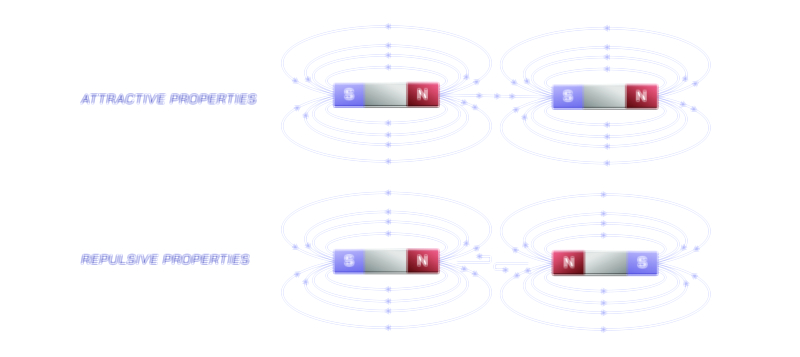
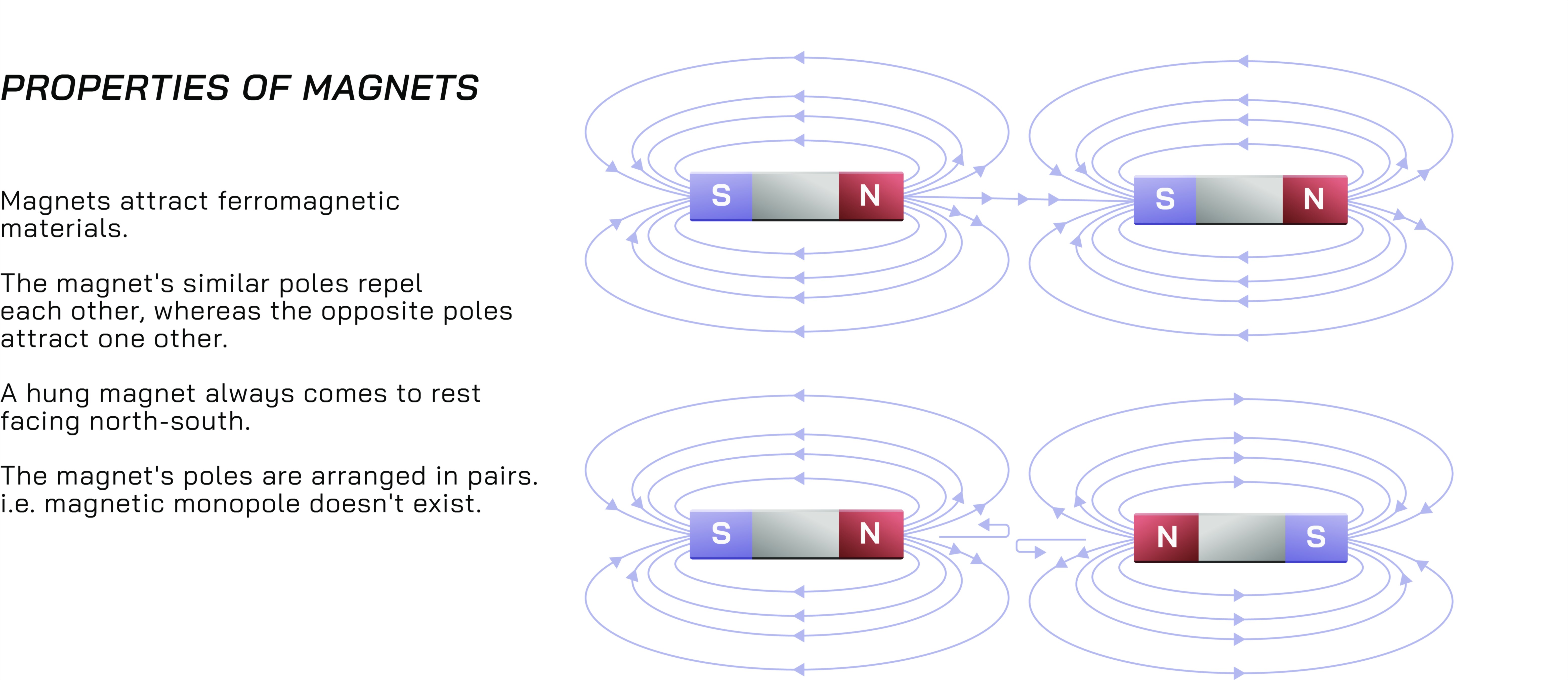
At the core of magnetism lies the idea of a magnetic field, an invisible region surrounding a magnet in which magnetic forces can be felt. Although the field itself cannot be seen directly, its presence becomes obvious through its effects: it can attract or repel other magnets, influence objects made from certain metals, produce directional forces, and create detectable patterns when interacting with iron filings or magnetic sensors. The magnetic field emanates outward from the magnet in a structured manner, forming loops that extend from one end of the magnet to the other and curve through the surrounding space before re-entering the magnet. This looping pattern illustrates that the field is continuous, wrapping around the magnet to form a complete closed system of influence. Even though the field is intangible, it is one of the most important features of a magnet, because it defines how a magnet interacts with its environment and how it exerts force without direct contact.
Central to the structure of a magnetic field is the concept of polarity. Every magnet has two poles — commonly labeled north and south — and these poles represent the regions where the magnetic field is strongest. They govern the fundamental rule of magnetic interaction: like poles repel each other, and unlike poles attract. If two magnets are brought close together, their poles dictate whether they pull toward one another or push apart. This simple yet powerful rule arises from the alignment of magnetic fields. When two magnets have opposite poles facing each other, their field lines merge smoothly, allowing the fields to reinforce one another. When like poles face each other, the field lines bend outward in opposition, creating a region of resistance that pushes the magnets apart. This interplay of attraction and repulsion forms the basis for countless devices, from simple magnetic latches to advanced electric motors.
The concept of polarity also explains why magnets always form in pairs of poles. Even if a magnet is cut into smaller pieces, each piece forms its own pair of north and south poles. This happens because magnetism originates from the alignment of microscopic magnetic regions within the material. These regions, called domains, each contain countless atoms whose tiny magnetic moments point in the same direction. When many domains align collectively, their combined effect produces a macroscopic magnetic field. Cutting a magnet simply divides these domains into smaller groups rather than isolating a single pole. This reveals that the dual nature of magnetism is inseparable; a single isolated north or south pole does not occur in normal materials, a feature that distinguishes magnetism from electric charge distributions where separate positive and negative charges can exist independently.
Another essential property of magnets is their ability to attract certain materials. Not all metals respond to magnets; only specific types, such as iron, cobalt, nickel, and some of their alloys, can be magnetized or strongly influenced by magnetic fields. These materials possess atomic structures that allow their magnetic moments to align more easily when exposed to a magnetic force. When such a material comes near a magnet, the magnetic field induces partial alignment of the material’s internal domains, creating a temporary magnetic effect that allows it to be drawn toward the permanent magnet. This phenomenon is why iron filings cluster around a magnet in visible patterns, outlining the shape of the magnetic field. The filings themselves become miniature magnets under the influence of the larger magnet, revealing the direction and curvature of the field lines with remarkable clarity.
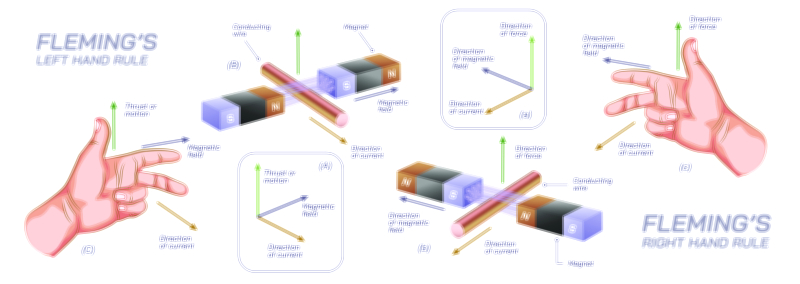
Magnetic fields also interact with electric currents in deeply significant ways. When electric charges move through a conductor, they generate a magnetic field around the wire, and this relationship between electricity and magnetism forms the foundation of electromagnetism — one of the most important principles in physics. A wire carrying an electric current can behave like a magnet, attracting or repelling other magnets or even producing mechanical motion if placed within a magnetic field. This interaction is utilized in electric motors, where magnetic forces convert electrical energy into rotational motion. Conversely, moving a conductor through a magnetic field can generate an electric current, enabling devices like generators and transformers to function. These principles expand the significance of magnetism beyond permanent magnets, linking it to the flow of electricity and the behavior of technological systems.
Understanding magnetic properties also requires recognizing the stability and variability of magnetism. Some materials retain their magnetization for long periods, forming strong permanent magnets that maintain their strength under normal conditions. Others exhibit magnetism only temporarily while exposed to an external field. The strength of a magnet can change with temperature, shock, or environmental influences. Heating a magnet, for example, can disrupt the alignment of its domains, weakening its magnetic field. Cooling it can enhance stability. These behaviors show that magnetism is not a rigid property but a delicate balance of atomic structure, environmental influence, and material composition.
Magnetic field strength varies with distance, becoming strongest near the poles and weakening as it moves outward into space. This gradient explains why magnets may strongly attract nearby objects but fail to influence objects farther away. The range and intensity of magnetic effects depend on the size, shape, and material of the magnet, as well as the alignment of its domains. Large magnets with well-aligned domains produce stronger fields, while smaller or irregularly aligned magnets exhibit weaker effects. The predictability of this weakening allows for precise control of magnetic interactions in engineering applications, from small sensors to powerful industrial lifting magnets.
Beyond simple attraction and repulsion, magnets influence motion in more dynamic ways. Charged particles moving through space follow curved paths when subjected to magnetic fields. This property is crucial in technologies such as particle accelerators, where magnetic fields bend and control beams of charged particles for experiments in physics. The Earth itself acts as a giant magnet, creating a planetary magnetic field that surrounds the globe. This field shields the planet from harmful solar radiation and helps guide migratory animals, whose sensory systems detect subtle variations in magnetic strength and orientation. Compasses function by aligning with Earth’s field, providing a reliable reference direction that has guided navigation for centuries.
Magnets also play a subtle yet profound role in the functioning of modern digital storage. Devices such as hard drives use tiny magnetic regions to represent digital information in the form of aligned or misaligned magnetic domains. These domains retain their orientation even without power, allowing data to be stored securely until intentionally modified. Understanding the behavior of magnetism on these microscopic scales exemplifies how the fundamental properties of magnetic fields and polarity translate into advanced technology.
Even simple magnets used in everyday life reveal these principles. Refrigerator magnets cling to metal surfaces because the field generated by the magnet interacts with the magnetic properties of the metal beneath the surface. Magnetic clasps use carefully aligned poles to provide secure closure while still allowing easy separation. Children’s toys that connect magnetically demonstrate the interplay between like and opposite poles, teaching through hands-on interaction the same principles that govern complex machinery.
Ultimately, the properties of magnets — magnetic fields, polarity, attraction, repulsion, domain alignment, and interaction with electric currents — form a rich, interconnected system of behaviors that extend from the atomic scale to the planetary scale. These properties underlie an enormous range of natural phenomena and human innovations, from the guidance of migratory species to the operation of electric motors, communication devices, scientific instruments, and navigation tools. By understanding how magnetic fields extend through space and how polarity defines the direction and nature of magnetic interactions, one gains a clearer view of magnetism as a dynamic, powerful force woven into the fabric of the physical world.