V-Groove Single and Double Welding — Joint Design and Welding Technique
V-groove welding represents one of the most fundamental and widely used joint preparation methods in structural fabrication, pipeline construction, heavy engineering, pressure vessel manufacturing, and general metalwork, because it allows full penetration welds, strong bonding between metal plates, and reliable load-carrying capacity in demanding applications. At its core, a V-groove joint is created by beveling the edges of two metal plates so that the meeting edges form a “V” shape, which the welder then fills with weld metal. This geometry ensures deeper penetration, improved fusion between the root and face of the weld, and enhanced structural integrity. Within the broader category of V-groove welding, two principal designs dominate practice: the single-V groove and the double-V groove, each chosen based on material thickness, accessibility, project requirements, and cost considerations. Although the basic idea may seem simple—shape edges like a V and weld them together—the implications for heat input, distortion control, welding sequence, filler metal volume, and joint strength reveal a deeper engineering logic. Understanding both single and double V-groove welding therefore requires examining not only the geometry but the metallurgical, mechanical, and practical factors that define each technique.
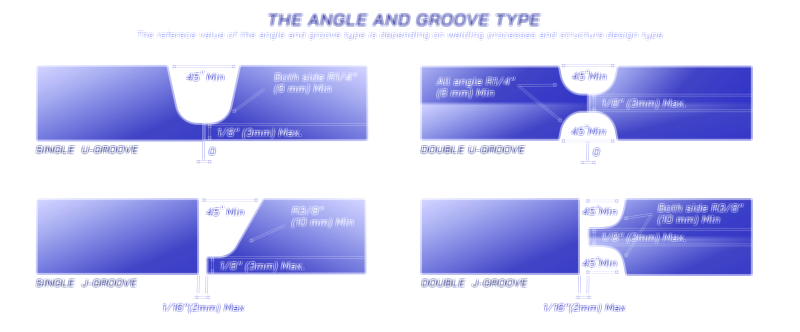
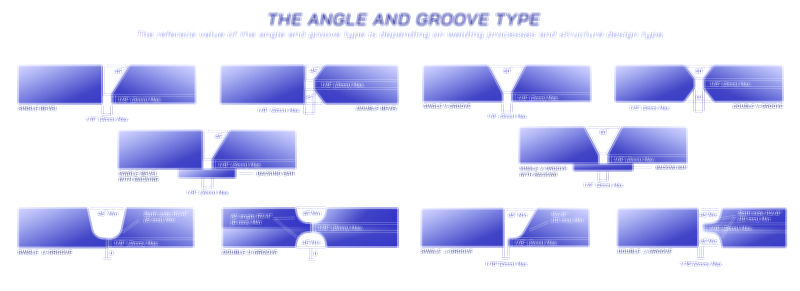
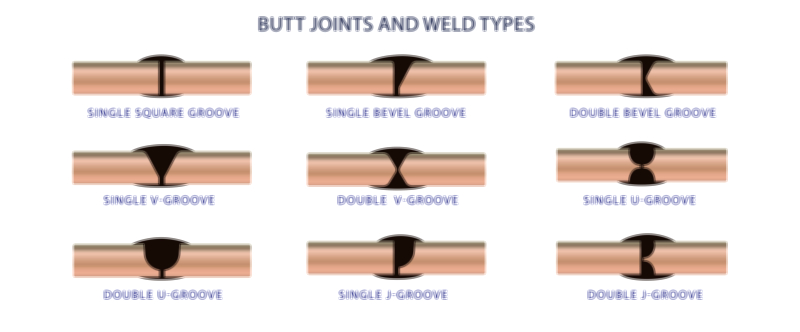
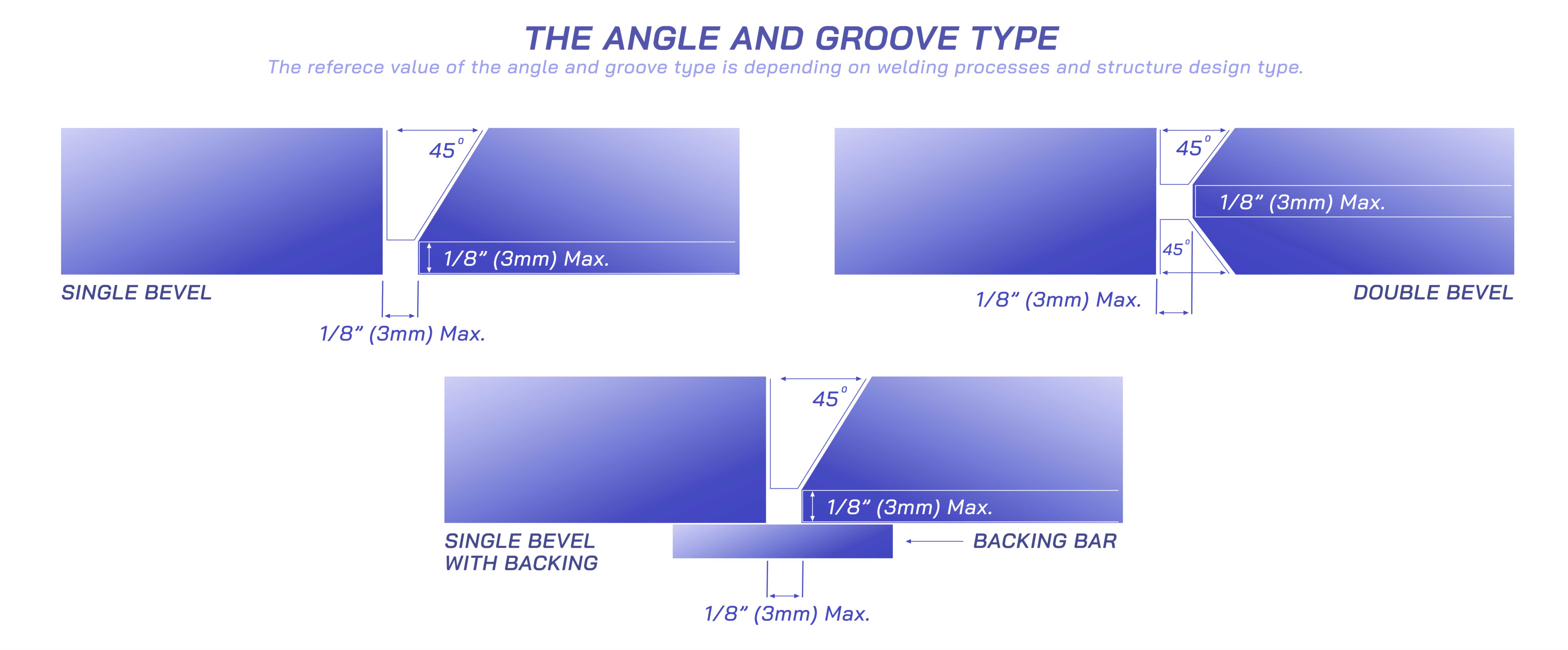
A single V-groove weld is characterized by bevel preparation on only one side of the plates being joined. The two edges are cut or ground so that when placed together, the gap at the top resembles a V shape, typically with bevel angles ranging from 30° to 45°, depending on the welding code or industry requirement. The preparation may involve machining, oxy-fuel cutting, plasma cutting, or grinding, and the bevel must maintain consistent dimensions to ensure predictable weld penetration and filler metal distribution. The welder generally begins with the root pass at the bottom of the V, ensuring full fusion between the plate edges and the root opening. Subsequent layers are added progressively until the entire groove is filled, forming a solid weld with uniform reinforcement. The single V-groove is particularly efficient for medium-thickness plates where one-sided access is sufficient, such as structural members, ship components, or welded frames. Its straightforward preparation and relatively simple welding sequence make it popular for fieldwork and shop fabrication alike.
However, the single V design requires careful attention to several engineering considerations. A major factor is weld metal volume, because a single wide V shape demands a significant amount of filler metal, especially when working with thick plates. More filler means more heat input, which in turn increases the risk of distortion, residual stresses, and shrinkage. If the plate thickness exceeds certain limits—often around 20–25 mm, depending on material—continuing with a single V configuration may become inefficient or impractical. Excessive heat from filling the groove entirely from one side can cause angular distortion, pulling the workpieces out of alignment. In addition, the deeper the groove, the more difficult it becomes to control penetration from a single direction, increasing the risk of incomplete fusion or slag entrapment near the root. Welders must use correct parameters, proper interpass temperatures, and well-controlled techniques to preserve weld soundness. Despite these limitations, single V-groove welding remains a foundational technique because of its simplicity, accessibility, and consistent results when applied under the right conditions.
The double V-groove weld, in contrast, incorporates bevel preparation on both sides of the plates, creating a symmetrical groove that resembles an hourglass shape when viewed from the cross section. Rather than filling a V from just one side, welders alternately weld from both sides, creating balanced fusion and distributing heat input more evenly. This design becomes especially advantageous for thicker materials where a single V would require excessive filler metal. The double V reduces filler consumption dramatically because each side of the groove is only half as deep as a full single V. This reduction in filler not only saves material costs but also lowers labor time, heat input, and the potential for severe distortion. Metal structures such as bridges, heavy frames, large diameter pipes, pressure vessels, and high-load components often use double V-groove welding because of its superior mechanical performance and economic efficiency in thicker applications.
One of the most notable benefits of the double V design is distortion control. Welding from both sides of the joint allows the shrinkage forces to balance each other, preventing the welded plates from bending or pulling toward one side. This symmetrical welding approach helps maintain alignment and dimensional accuracy, which is critical for assemblies requiring tight tolerances. Additionally, welding from both sides ensures better penetration and fusion throughout the entire joint thickness. By allowing access to the joint from both sides, the welder can address any incomplete penetration or voids by welding the opposite side, enhancing overall joint quality and reducing defects. This is particularly important in applications subject to dynamic loads, fatigue stresses, high pressure, or high temperature service, where weld integrity must be uncompromised.
Despite its advantages, double V-groove welding requires greater preparation and accessibility than single-side welding. The workpiece must be positioned or accessible in a way that allows welding on both faces, which may not always be possible in field installations, confined spaces, or fixed-position structures. Additionally, the weld sequence in double V-groove welding must be planned carefully. Typically, the welder fills the first side partially, flips the workpiece (if applicable), welds the opposite side, and alternates passes as necessary. This sequencing ensures the proper buildup of the weld and minimizes internal shrinkage stresses. The increased complexity of preparation and the need for precise alignment often require skilled welders and controlled shop environments. Nevertheless, when conditions permit, the double V approach provides superior mechanical performance and more efficient welding of thick materials.
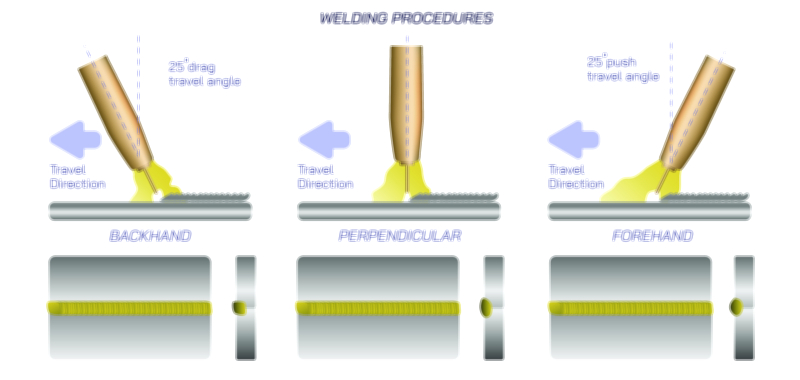
Beyond the structural and metallurgical reasons behind the joint selection, the different V-groove designs significantly influence welding technique. In a single V joint, controlling the root pass is critical because it establishes the foundation for the entire weld. The welder must maintain proper travel speed, electrode angle, and heat input to ensure the root fully fuses with the bevel base. Any flaw at the root becomes trapped as subsequent layers are added, potentially compromising the entire weld. In the double V configuration, the root weld on the first side is still critical, but the second welding side provides an opportunity to inspect and correct issues through back gouging or grinding before applying the second set of weld layers. This practice enhances reliability in critical applications such as pipelines, boilers, and structural connections, where inspection requirements are stringent.
Another key factor in choosing between single and double V-groove welding is the type of welding process being used. Techniques such as Shielded Metal Arc Welding (SMAW), Gas Tungsten Arc Welding (GTAW), Gas Metal Arc Welding (GMAW), Flux-Cored Arc Welding (FCAW), and Submerged Arc Welding (SAW) all have slightly different penetration profiles, deposition rates, and heat distribution characteristics. For instance, high-penetration processes like SAW or GMAW may reduce the need for larger bevel angles in single V joints. Meanwhile, processes like GTAW, known for precision and control, are often used for root passes in both single and double V welds to ensure fusion quality before switching to higher deposition processes for fill and cap passes. Each process interacts differently with joint geometry, influencing preparation angles, root openings, and filler requirements.
Inspection and quality control also tie closely to the joint design. Non-destructive testing (NDT) methods such as radiography, ultrasonic testing, magnetic particle testing, or dye penetrant inspection rely heavily on joint geometry to detect flaws. Double V joints often facilitate easier detection of root defects because both sides can be accessed and prepared. In critical applications requiring full penetration and zero defects beyond allowable limits, the ability to back-gouge and re-weld from the opposite side provides confidence that the final weld is structurally sound.
From a long-term performance perspective, the choice between single and double V-groove directly influences how the welded component behaves under load. Single V welds concentrate heat and filler toward one side, which may produce asymmetrical residual stresses unless carefully controlled. Double V welds distribute stresses more evenly, enhancing fatigue resistance and reducing the likelihood of distortion or cracking over time. In dynamic or high-pressure applications, these seemingly small differences become crucial in ensuring safety, durability, and compliance with engineering standards.
Ultimately, the comparison between single and double V-groove welding highlights the interconnected nature of joint design, material behavior, weld technique, and engineering performance. Single V-groove welding offers simplicity, accessibility, and efficiency for medium-thickness materials, providing strong, reliable joints when applied with proper technique. Double V-groove welding, although more complex in preparation and execution, offers superior results for thick materials, reducing filler usage, controlling distortion, enhancing structural balance, and improving weld quality. Together, these two designs form a cornerstone of welded fabrication, demonstrating how thoughtful joint preparation shapes the strength, durability, appearance, and safety of welded structures across industries.