Types of Load — Structural Engineering Forces
In structural engineering, the concept of loads lies at the heart of every design decision, every calculation, and every built structure that must safely withstand the forces acting upon it throughout its lifetime. Loads represent the various external forces, pressures, and influences that a structure must resist without failing, deforming excessively, or losing stability. Understanding the types of loads is not a matter of simple categorization; it reveals the deeper principles of how matter responds to forces, how buildings interact with their environment, and how safety, durability, and functionality depend on predicting the stresses a structure may face. The types of loads encountered in structural engineering demonstrate the interplay between physics, material science, environmental patterns, human activity, and architectural intent. Each load behaves differently in magnitude, duration, predictability, and direction, requiring engineers to develop strategies that ensure the structure performs reliably under all conditions. Examining the major categories of structural loads reveals how forces shape the built environment and how thoughtful engineering transforms abstract physical principles into resilient, long-lasting structures.
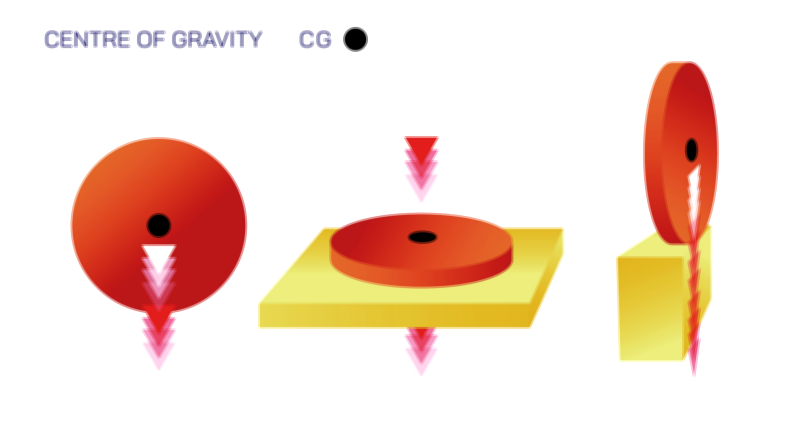
One of the fundamental categories of loads is the dead load, representing the permanent and unchanging weight of a structure itself. Dead loads include the mass of construction materials such as concrete, steel, brick, stone, flooring, roofing, reinforcement, and all fixed components that remain part of the building throughout its lifespan. Because these loads do not vary significantly over time, they form the baseline against which all other loads must be evaluated. Dead loads exert continuous downward force due to gravity, and their magnitude depends on density, thickness, and the volume of materials used. Engineers must calculate dead loads meticulously, understanding that underestimating them can undermine structural stability, while overestimating can lead to inefficient and unnecessarily heavy designs. The predictability of dead loads makes them relatively straightforward to analyze, yet their significance cannot be overstated: every other load interacts with this constant foundational weight, shaping how beams bend, how columns compress, and how foundations distribute forces into the ground.
Complementing the dead load is the live load, a dynamic and variable category representing the weight of occupants, furniture, vehicles, movable equipment, and any temporary forces that change with time. Live loads reflect human activity and usage patterns, making them less predictable than dead loads. Buildings intended for different functions—residential, commercial, industrial, or public—require distinct live load considerations. A residential floor experiences very different live loads compared to a crowded auditorium or warehouse storing heavy goods. Engineers rely on building codes to specify minimum live load requirements, ensuring that structures can safely accommodate expected occupancy and usage fluctuations. Live loads highlight the relationship between human behavior and engineering design, illustrating how structures must adapt not only to physical forces but to the dynamic activities that take place within them.
Environmental loads form another essential category that profoundly influences structural design. Among these, wind loads are one of the most significant, especially for tall buildings, towers, bridges, and coastal structures. Wind does not simply blow uniformly against a surface; it creates complex pressure variations, suction effects, uplift forces, and oscillations that depend on building geometry, height, exposure, terrain, and atmospheric behavior. Wind loads can fluctuate rapidly, producing dynamic responses that require sophisticated analysis to ensure structural stability. Tall structures may experience swaying or vortex shedding effects that can cause discomfort or structural stress. Engineers must design buildings to channel and resist wind forces while maintaining rigidity and comfort for occupants. The study of wind loads introduces a deeper appreciation of the invisible yet powerful interaction between structures and natural forces.
Snow loads, another environmental category, affect regions with cold climates where accumulation on roofs can impose substantial weight. Snow loads vary depending on local climate, roof shape, slope, material, exposure, and drifting patterns created by wind. Flat or low-slope roofs experience higher snow accumulation, while steep roofs shed snow more easily but may impose concentrated loads at certain points. Ice loads may occur when snow melts and refreezes or when freezing rain accumulates. These loads require engineers to anticipate seasonal variations and extreme weather events, ensuring that roofs and supporting structures remain safe even under heavy snowfall. The presence of snow loads illustrates how engineering must adapt to environmental cycles, integrating local climate knowledge into design standards.
Earthquake loads represent one of the most complex and powerful structural forces encountered in engineering. Unlike other loads that act in predictable directions, seismic forces create multidirectional, rapid, and often violent ground motions that transfer energy into the building. Earthquake loads do not simply push structures sideways; they induce inertia forces within the building itself. As the ground moves, the structure lags behind due to its mass, creating internal forces that must be resisted by walls, beams, columns, and foundations. Earthquake loads depend on soil conditions, building mass, stiffness distribution, height, geometry, and dynamic characteristics. Engineers use seismic design principles such as base isolation, ductility enhancement, energy dissipation, and braced frames to allow structures to withstand shaking without collapsing. Earthquake loads illustrate how deeply engineering must engage with unpredictability, designing not to eliminate movement but to manage and survive it.
Impact loads represent sudden, short-duration forces caused by collisions, drops, explosions, or abrupt contact events. For example, a vehicle crashing into a barrier, machinery dropping accidentally, or objects falling onto a floor create instantaneous forces much higher than static loads. Impact loads require structures to possess toughness and energy-absorbing capacity. They illustrate how the rate of loading profoundly affects material response, highlighting the importance of dynamic behavior, structural damping, and fracture resistance. Engineers evaluate impact loads using principles of momentum, impulse, and dynamic amplification, recognizing that even small objects can produce substantial forces when moving at high speed.
Thermal loads arise from temperature changes that cause materials to expand or contract. Although these loads may seem subtle compared to dramatic forces like earthquakes or wind, they significantly influence long-term structural behavior. Differential expansion between materials or between different parts of a structure can cause cracks, deformation, or internal stresses. Bridges, long pipelines, and large concrete surfaces require expansion joints to accommodate thermal movement. Buildings in hot climates must withstand daily temperature fluctuations, while structures in cold regions must endure freeze–thaw cycles. Thermal loads exemplify how forces can arise not from weight or motion but from temperature itself, demonstrating how environmental physics permeates structural design.
Settlement loads occur when foundations shift due to soil compression, moisture changes, or uneven bearing capacity. When soil beneath a structure moves, the load distribution changes, causing differential settlement that may crack walls, distort beams, or misalign floors. Engineers analyze soil properties, perform geotechnical investigations, and design foundations to minimize uneven settlement. Settlement loads reveal the intimate relationship between a structure and the ground beneath it, showing that stability depends as much on earth behavior as on the building above.
Hydrostatic and water-related loads also play crucial roles, especially in structures near water bodies or below ground. Water exerts pressure on retaining walls, basements, dams, and underground tanks. This pressure increases with depth, creating forces that can push or seep into structures if not properly resisted. Hydrodynamic loads, occurring during floods or fast-moving water, can exert additional lateral forces. These loads demonstrate the interplay between fluid mechanics and structural engineering, requiring robust waterproofing, drainage, and reinforcement strategies.
Moving loads represent another essential category, especially in bridges, highways, railway tracks, and industrial structures. Unlike static loads, moving loads shift position over time, creating changing stress patterns. A truck crossing a bridge does not impose uniform pressure but loads different structural components sequentially. Engineers analyze these loads through influence lines, dynamic load factors, and fatigue considerations. Moving loads highlight the dynamic relationship between structures and the forces that traverse them.
Creep and long-term loads, though less dramatic, affect materials under sustained loading over extended periods. Concrete, for example, slowly deforms under constant load, a phenomenon known as creep. This long-term behavior must be considered in beams, columns, and prestressed structures to prevent excessive deflection. These time-dependent loads remind engineers that structural behavior evolves over years, not just at the moment of construction.
The study of load types ultimately reveals the multidimensional nature of structural engineering. Structures are never subjected to a single force; instead, they experience combinations of dead, live, wind, snow, thermal, seismic, impact, and other loads simultaneously or sequentially. Engineers must evaluate worst-case scenarios, code requirements, safety margins, and failure mechanisms to ensure resilience. Materials respond differently to tension, compression, bending, shear, and torsion, and different loads produce different stress patterns. The design of beams, columns, trusses, slabs, foundations, and connections depends on accurately understanding how forces flow through the structure.
Ultimately, the types of loads in structural engineering represent far more than simple categories. They embody the complex relationship between human-made structures and the natural and human forces that act upon them. Through understanding these loads, engineers craft buildings that endure earthquakes, storms, daily usage, temperature fluctuations, and the passage of time. They create safe environments that protect occupants, support communities, and advance architectural ambition. The concept of loads reflects the essence of structural engineering: the continuous effort to harmonize scientific principles, practical constraints, and the unpredictable forces of nature to build structures that are not only functional but enduring.