Advantages of Deformed Rebars — Reinforcement Steel Bars
Deformed rebars represent one of the most transformative developments in the field of reinforced concrete construction, significantly improving the way steel and concrete interact to form strong, durable, and resilient structural members. These bars, characterized by ribs, lugs, or ridges rolled or formed onto their surfaces, replaced older smooth bars because engineers recognized that concrete alone could not resist tensile forces and that smooth steel offered insufficient mechanical interlock. Deformed bars create enhanced bonding between concrete and steel, allowing the two materials to act as a unified composite rather than separate components. This shift marked a major milestone in structural engineering, leading to safer buildings, stronger bridges, deeper foundations, and more reliable infrastructure across the world. The advantages of deformed rebars extend far beyond simple improvements in grip; they influence nearly every dimension of reinforced concrete performance—strength, ductility, durability, crack control, structural safety, and long-term resilience. Understanding these advantages reveals why deformed rebars have become the global standard for reinforcement steel.
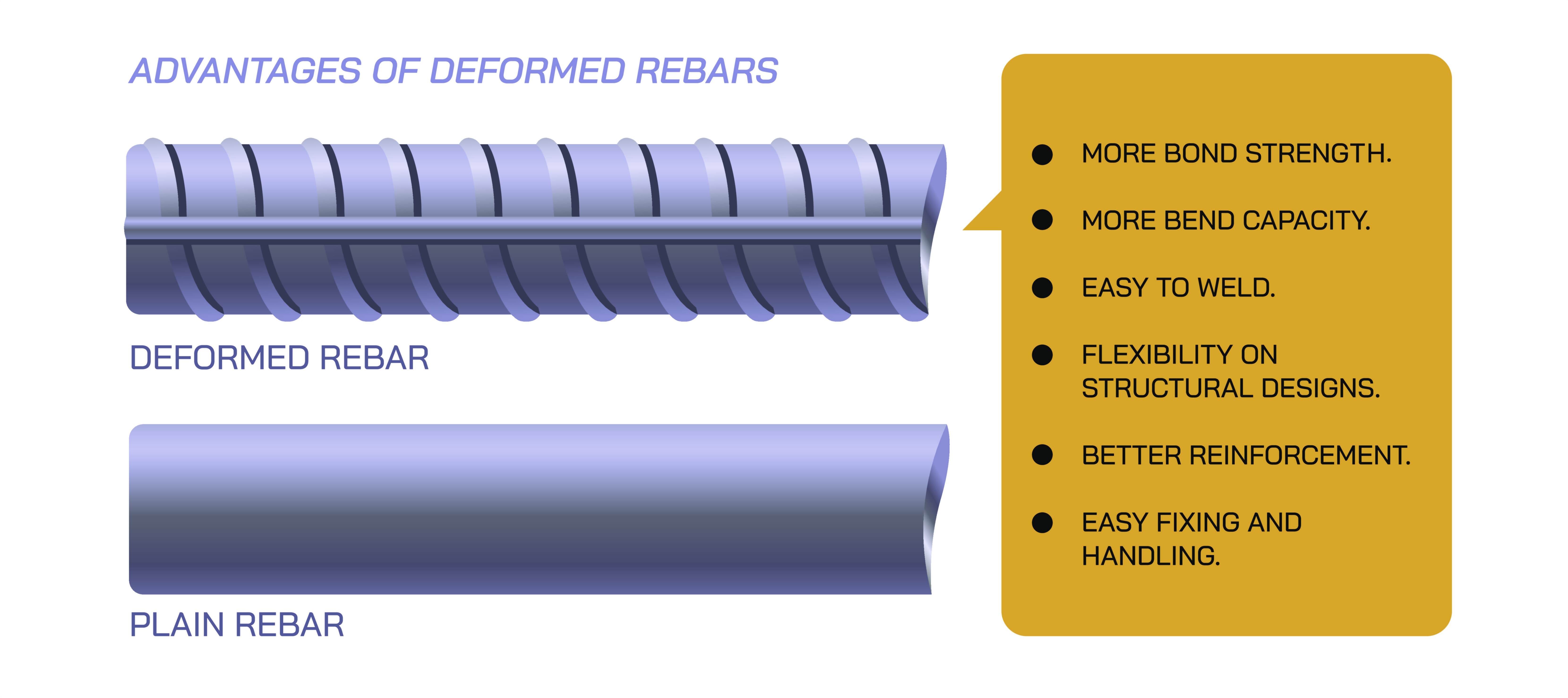
One of the most important advantages of deformed rebars is their significantly improved bonding strength with concrete. The ribs and deformations on the bar’s surface create a mechanical interlock with the surrounding concrete, allowing tensile forces to be transferred more efficiently. This interlock minimizes slippage between steel and concrete, ensuring that reinforcement participates fully in resisting tension when a beam bends, a column compresses, or a slab flexes under load. Smooth bars rely primarily on frictional forces for bonding, limiting their effectiveness and often requiring hooks or special anchorage to prevent pullout. Deformed bars eliminate this dependency by embedding themselves physically into the concrete matrix. This enhanced bond is especially crucial in high-stress zones such as beam–column joints, seismic regions, and areas experiencing heavy bending or shear forces. With stronger bonding, concrete members remain more stable, load transfer becomes more predictable, and overall structural integrity increases.
Another major advantage of deformed rebars lies in their ability to reduce crack widths and improve crack control. Cracks in reinforced concrete are inevitable due to shrinkage, temperature variations, and tensile stresses that exceed concrete’s limited tensile capacity. The role of reinforcement, however, is to limit the width and propagation of these cracks, preserving both durability and structural performance. The mechanical grip between deformed bars and concrete disperses tensile stresses more effectively across the member. This helps distribute small cracks rather than allowing one large crack to form. Such crack distribution improves durability because narrower cracks reduce the penetration of harmful agents such as water, oxygen, and chlorides that can corrode reinforcement over time. Improved crack control also enhances the aesthetic quality of structural elements and helps prevent long-term maintenance issues. Thus, deformed rebars directly contribute to extending the life of concrete structures.
Deformed rebars also significantly enhance the load-carrying capacity of reinforced concrete elements. Modern structural design depends on the composite action between steel and concrete to resist complex forces, including bending, shear, torsion, and axial loads. The deformations on steel bars ensure that stresses developed in the steel under tension transfer efficiently into the concrete and vice versa. This allows reinforced concrete members to withstand much higher loads than they could with smooth bars. In beams, the improved tensile engagement of deformed bars results in greater moment capacity and increased resistance to deflection. In columns, the strong bond prevents premature buckling and supports compressive strength more effectively. The result is not just stronger individual members but safer and more robust structural systems—whether in buildings, bridges, retaining walls, or foundations.
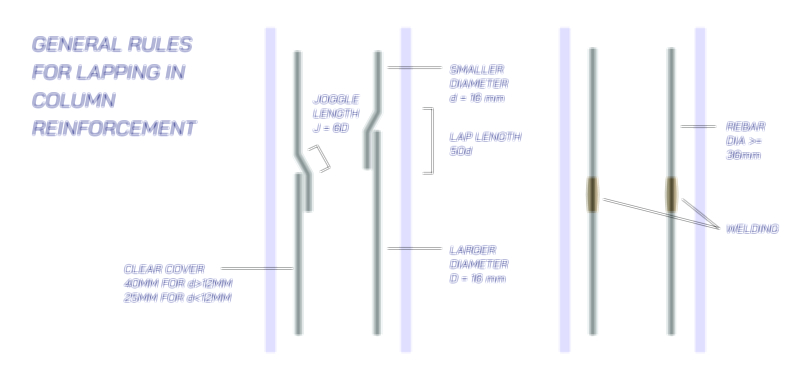
Because deformed rebars provide superior bonding, engineers are able to use shorter anchorage lengths and lap lengths compared to smooth bars. Anchorage zones are critical because they are where stresses transfer from bars into the concrete. Smooth bars require much greater lengths to achieve full anchorage due to limited frictional grip. Deformed rebars, however, achieve full strength over shorter lengths due to mechanical interlocking. This advantage translates to more efficient detailing, reduced congestion, and improved constructability. In lap splicing, where bars must overlap to maintain continuity, shorter lap lengths mean fewer congestion issues, particularly in columns, heavily reinforced beams, and pile caps. Shorter anchorage and lap lengths reduce the amount of steel required, optimize space, and allow concrete to flow and compact more easily.
Deformed bars offer significant advantages in seismic performance. During earthquakes, structural members undergo rapid cycles of tension and compression. Smooth bars tend to slip under cyclic loading, which can compromise the ductility and energy dissipation capabilities of reinforced concrete. Deformed rebars, however, maintain strong bonds even under repeated reversals of stress, ensuring that the reinforcement remains engaged throughout the shaking. The improved bond strength allows structural members to form ductile hinges, redistribute stresses, and dissipate energy through controlled deformation instead of brittle failure. This is critically important in seismic-resistant design, where structures must be able to withstand extreme dynamic forces without collapsing. Deformed rebars support this behavior by preventing slip, maintaining confinement, and allowing reinforcement to work at full capacity throughout the seismic event.
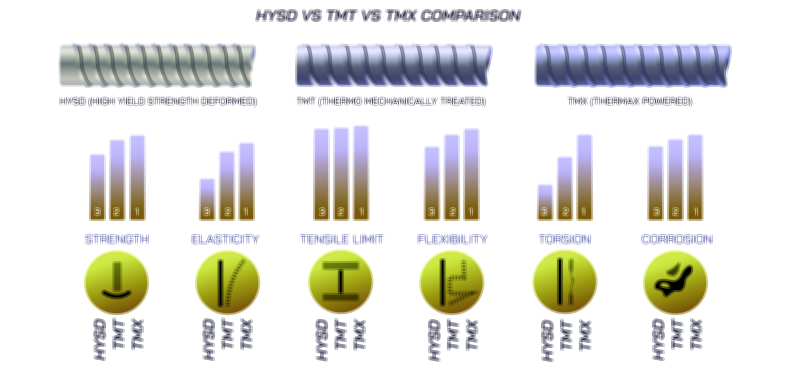
Durability is another major area where deformed rebars excel. Because they achieve stronger bond with concrete, they reduce the chances of micro-cracking at the steel–concrete interface. Micro-cracks are often early pathways for moisture and aggressive chemicals to reach the steel surface. By minimizing slippage and distributing stresses more evenly, deformed bars limit such vulnerabilities. When paired with adequate concrete cover, deformed rebars help form a more impermeable composite structure that resists corrosion over decades. Moreover, modern deformed rebars such as TMT and TMX bars come with enhanced corrosion resistance due to better metallurgical properties and surface uniformity, further extending their durability in aggressive environments such as coastal regions, industrial yards, wastewater plants, and marine structures.
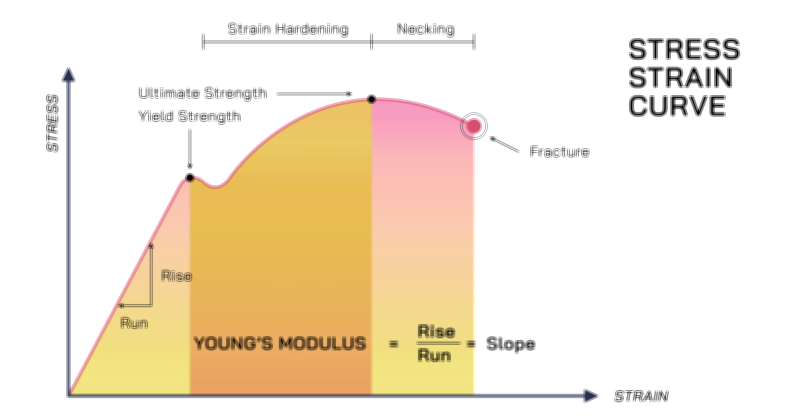
The ease of handling and fabrication also contributes to the advantages of deformed rebars. Their strong bond prevents the need for excessive hooks, bends, or special anchorage devices, simplifying reinforcement detailing. Contractors and steel fixers can cut, bend, tie, and assemble deformed rebars efficiently using standard tools and techniques. Their predictable mechanical properties ensure that they behave consistently during bending and placement, reducing the chances of breakage or accidental deformation. This not only improves construction speed but also reduces labor costs and enhances the quality of workmanship on site. Because deformed bars have a well-defined yield strength and predictable stress–strain curves, engineers can design confidently, and contractors can follow detailing drawings with clarity.
Deformed rebars also support thinner structural members by enabling efficient reinforcement placement. Because anchorage lengths are shorter and bond strength is higher, beams and slabs can be designed with reduced depths without compromising strength. This advantage becomes important in architectural settings where floor height, ceiling space, or overall building height are design constraints. Thinner slabs and beams also reduce dead loads, which in turn reduce the loads transferred to columns and foundations. The cumulative effect is a more efficient and economical structure, made possible by the enhanced mechanical behavior of deformed bars.
In addition to structural and durability-related advantages, deformed rebars contribute to sustainability by supporting efficient material usage. Their superior mechanical interlock ensures that a given structural capacity can be achieved using less steel than would be required with smooth bars. Reduced steel consumption lowers construction costs and decreases the environmental footprint of mining, manufacturing, transporting, and installing steel. Because deformed bars help prevent premature failures and extend the life of structures, they indirectly reduce the need for repairs, retrofitting, and reconstruction—all of which contribute to sustainability goals and long-term resource conservation.
The improvements offered by deformed rebars extend across all types of structures. In multi-storey buildings, they ensure that beams, slabs, and columns perform well under gravity and lateral loads. In bridges, they strengthen decks, girders, piers, and foundations exposed to dynamic loads and harsh climates. In water-retaining structures such as tanks, dams, and reservoirs, deformed bars provide tight crack control essential for water tightness. In pavements and industrial floors, they resist heavy and repeated loads. In retaining structures, their enhanced grip helps resist soil pressures. Across all these applications, deformed bars provide the strength and reliability that modern infrastructure demands.
Ultimately, the advantages of deformed rebars reflect a deep understanding of how steel and concrete must work together to achieve structural performance. By providing improved bond strength, enhanced crack control, superior ductility, increased load capacity, better seismic performance, improved durability, and more efficient designs, deformed bars have fundamentally reshaped reinforced concrete construction. Their role extends from high-rise buildings to small residential structures, from advanced industrial facilities to ordinary civic infrastructure. Deformed rebars are not merely steel elements embedded in concrete; they are critical partners in a composite system that defines strength, safety, and reliability in the built environment. Their development stands as one of the most important achievements in structural engineering and continues to support the creation of durable, resilient, and efficient structures around the world.