Data — Definition, Types, and Importance in the Digital World
Understanding the Fundamental Meaning of Data in Modern Systems
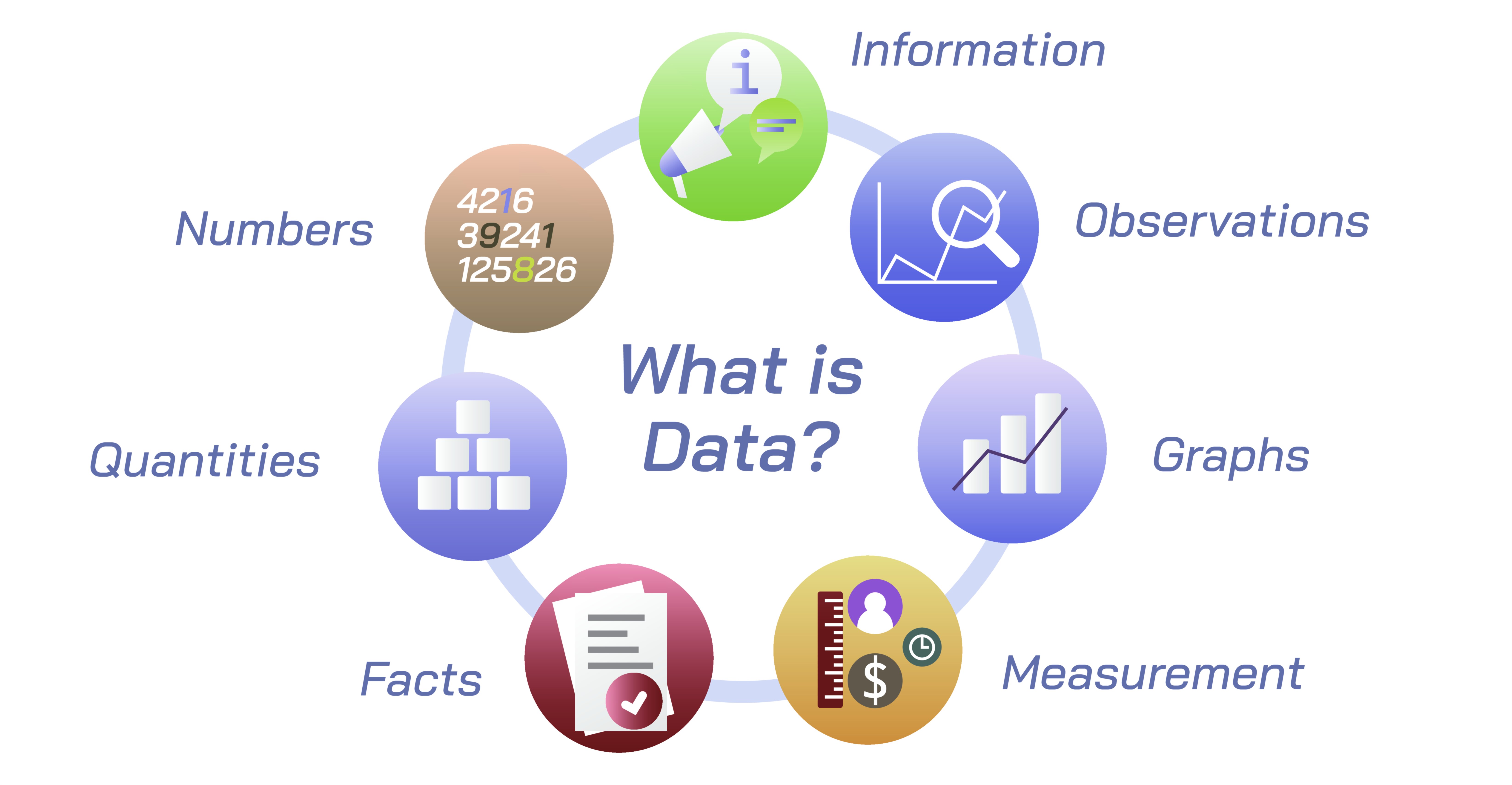
Data represents the raw, unprocessed facts, figures, symbols, or observations that hold potential meaning once they are interpreted or structured. In the modern digital world, data exists as the foundational element that fuels computing, communication, and intelligent decision-making. It can appear in various forms—numerical values, text, images, sound waves, sensor readings, behavioral logs, or binary strings—each capturing a fragment of information about a process, environment, event, or user interaction. What distinguishes data from knowledge is that data alone lacks context until it undergoes analysis, transformation, or correlation. Once processed, data evolves into information and eventually into insight, enabling digital systems to learn patterns, predict outcomes, and automate actions. As technology advances, the definition of data expands continuously, encompassing structured and unstructured elements generated by humans, machines, algorithms, and networks. This broadening scope makes data not only a technical asset but also a strategic resource that shapes business strategy, governance, scientific exploration, and societal intelligence.
Types of Data in the Digital Ecosystem and Their Functional Roles
The digital world categorizes data into several types based on structure, origin, and usage. Structured data includes neatly organized information stored in tables or databases—such as customer records, financial transactions, or inventory lists—allowing fast querying and efficient management. Unstructured data, on the other hand, comes from more fluid sources including emails, documents, social media posts, images, videos, and audio recordings. These forms lack predefined organization and require advanced tools like natural language processing or machine learning to derive meaningful insights. Semi-structured data occupies a middle ground, using tags or metadata to impose partial organization, as seen in JSON files, XML documents, or web server logs.
Other distinctions emerge in real-time versus batch data processing. Real-time data flows continuously from sensors, IoT devices, financial markets, or live monitoring systems, enabling immediate responses and dynamic decision-making. Batch data involves large sets processed at intervals, commonly used in analytics, reporting, and historical reviews. Machine-generated data—from servers, applications, industrial equipment, and automated logs—forms a massive and growing share of the digital universe, offering accurate, high-frequency insights that humans cannot manually produce. Human-generated data, meanwhile, encompasses online interactions, digital content, personal communications, and behavioral footprints, playing a crucial role in personalization systems, user analytics, and social intelligence. The diversity of these data types reflects the multi-layered nature of the digital world, where every system, device, and user contributes continuously to an expanding data landscape.
How Data Is Collected, Stored, and Managed in Digital Systems
The journey of data within digital infrastructure begins with collection, which can occur through user input, automated sensors, online interactions, surveillance systems, financial transactions, or communication networks. Once collected, data must be stored in systems capable of handling its scale and complexity. Traditional relational databases manage structured data with efficiency and integrity, while modern systems like NoSQL databases, data lakes, and distributed storage clusters accommodate massive, heterogeneous datasets produced by social media, mobile devices, enterprise systems, and global networks.
Data management extends beyond simple storage. It involves cleaning, normalizing, indexing, securing, and cataloging data to make it discoverable, usable, and trustworthy. Advanced architectures such as cloud computing, edge computing, and hybrid environments allow organizations to distribute storage and processing tasks across global infrastructures, ensuring speed, reliability, and scalability. Data pipelines orchestrate how data flows from one system to another, integrating it in ways that support analytics, automation, artificial intelligence, and business intelligence platforms. Effective data management practices ensure that large-scale digital ecosystems remain functional, efficient, and capable of deriving value from millions of continuously changing data streams.
The Importance of Data in the Digital World and Its Growing Influence
Data has evolved into a cornerstone of the modern digital economy, guiding industries, technologies, and decision-making processes. It plays a central role in artificial intelligence and machine learning, where algorithms learn patterns, behaviors, and system dynamics by analyzing vast volumes of information. Data enables personalized user experiences, powering recommendation systems on streaming platforms, e-commerce websites, and social networks. It supports scientific research by enabling simulations, predictive models, and large-scale experimentation that were once impossible.
In business, data analytics helps companies optimize operations, forecast demand, reduce costs, detect fraud, and improve customer satisfaction. Governments rely on data to manage urban infrastructure, healthcare systems, transportation networks, and economic planning. In cybersecurity, real-time threat detection depends on analyzing network data to identify patterns of malicious activity. Even in everyday life, data influences navigation apps, smart home systems, wearable health trackers, and digital assistants. As global connectivity expands and digital systems integrate deeper into society, the importance of data grows not only as an informational resource but as a critical driver of innovation, growth, and human advancement.
Challenges, Ethical Considerations, and the Future of Data Use
With the increasing reliance on data, new challenges arise related to privacy, security, governance, and ethical use. Personal data, if mismanaged, can lead to breaches, surveillance concerns, or misuse in ways that affect individual rights and societal trust. Organizations must therefore establish strong data protection practices—encryption, access controls, audit trails, and responsible governance frameworks—to ensure that data is used safely and ethically. Transparency in data collection, user consent, and fair algorithmic use is crucial to maintaining public confidence in digital systems.
Looking to the future, data will continue to fuel advancements in AI, automation, robotics, biotechnology, and global communication. Technologies like quantum computing, advanced analytics, and edge-AI will unlock new ways to process and interpret data, pushing the boundaries of what modern systems can achieve. As the digital world grows more interconnected, data will remain at the center of innovation, shaping the evolution of industries, the behavior of societies, and the intelligence of future machines.