The story of the universe begins with the Big Bang, a scientific model that explains the origin and evolution of everything that exists. Rather than describing an explosion in space, the Big Bang represents the rapid expansion of space itself from an extremely hot and dense initial state. This moment marked the beginning of spacetime, energy, and the fundamental building blocks of nature. Understanding the Big Bang and the cosmic ages that followed allows us to trace how the universe transformed from a featureless beginning into a vast cosmos filled with stars, galaxies, and complex structures.
In the earliest instant after the universe came into existence, all matter and energy were concentrated in an unimaginably dense condition. Space and time were not separate entities but emerged together as expansion began. During this primordial phase, the universe was dominated by extreme temperatures and energies, far beyond anything observable today. The laws of physics as we understand them began to take shape as the universe expanded and cooled, setting the foundation for all future cosmic development.
One of the most critical early stages was the inflation phase, a brief period of extraordinarily rapid expansion. During this time, the universe grew dramatically in size, smoothing out irregularities and distributing energy almost uniformly. Inflation explains why the universe appears nearly the same in all directions and why distant regions share similar properties. Tiny variations created during this stage later became the seeds from which galaxies and large-scale structures would grow.
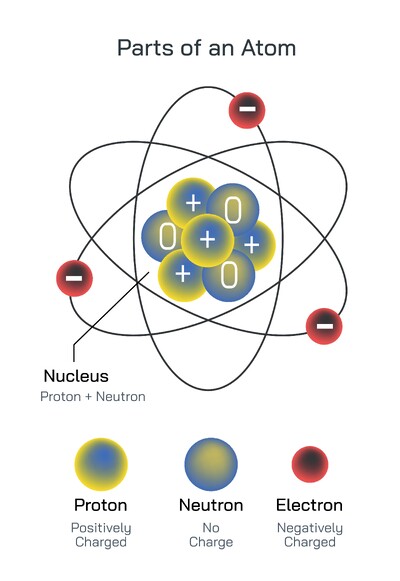
As expansion continued, the universe entered an era dominated by radiation. Energy in the form of light-like particles controlled cosmic behavior, and matter could not yet form stable structures. Over time, cooling allowed fundamental particles to combine, leading to the formation of protons and neutrons. Eventually, these particles joined to create the nuclei of simple elements. This marked a major turning point, as matter began to take a lasting form rather than existing only as high-energy fragments.
The next cosmic age saw the creation of neutral atoms. Electrons bonded with nuclei, forming stable hydrogen atoms throughout the universe. With fewer free particles to scatter light, space became transparent for the first time. Light released during this period continues to travel across the cosmos today as a faint background glow, providing a snapshot of the universe during its early youth. This relic radiation is one of the strongest pieces of evidence supporting the Big Bang model.
Following atomic formation, the universe entered a long period known as the cosmic dark ages. During this time, there were no stars or galaxies to produce visible light. Although darkness prevailed, gravity was quietly shaping the future. Regions with slightly higher matter density gradually pulled in surrounding material, growing stronger over millions of years. These invisible structures laid the groundwork for the first luminous objects.
The end of cosmic darkness came with the birth of the first stars. As dense regions collapsed under gravity, temperatures rose high enough to ignite nuclear fusion. These early stars were massive, bright, and short-lived, but their impact was profound. They illuminated the universe for the first time and produced heavier elements through fusion and explosive deaths. These elements became the raw materials for later generations of stars, planets, and eventually life.
As stars grouped together, the first galaxies began to form. Protogalaxies merged and evolved, guided by gravity and influenced by invisible matter that acted as a structural framework. Over time, galaxies developed diverse shapes, including spiral systems with rotating arms and elliptical forms dominated by older stars. Interactions and collisions between galaxies played a major role in shaping their structure and triggering bursts of star formation.
The cosmic age of galaxies marked a period of increasing complexity. Stars lived out their life cycles, exploding as supernovae and enriching space with heavy elements. These materials collected into clouds that formed new stars and planetary systems. In some regions, stable environments allowed planets to form around long-lived stars, creating the conditions necessary for complex chemistry and, eventually, biological processes.
On the largest scales, matter organized itself into a vast cosmic web. Galaxies clustered along filaments surrounding enormous voids, creating a sponge-like structure across the universe. This arrangement reflects the influence of dark matter, an unseen component that does not emit light but exerts strong gravitational effects. Dark matter acts as an invisible scaffold, guiding galaxy formation and maintaining large-scale order.
In the more recent cosmic era, expansion has begun to accelerate. This behavior is attributed to dark energy, a mysterious influence that counteracts gravity on the largest scales. Dark energy affects the future evolution of the universe, determining whether galaxies drift farther apart indefinitely. Despite this acceleration, local systems such as galaxies and clusters remain bound by gravity.
Today’s universe is approximately shaped by all these cosmic ages combined. Modern galaxies continue to evolve, stars are still being born and destroyed, and cosmic expansion carries distant regions farther away. Observations using advanced telescopes allow scientists to look deep into space and time, revealing galaxies as they existed billions of years ago. Each discovery adds detail to the universal timeline that began with the Big Bang.
The story of the universe does not end with the formation of galaxies and stars; in many ways, that is only the midpoint of a much larger and still-unfolding cosmic narrative. To truly understand the Big Bang and the cosmic ages, it is important to look not only at what happened, but also at how scientists know these events occurred and why this knowledge continues to evolve.
One of the most powerful aspects of the Big Bang model is that it is supported by multiple, independent lines of evidence. The expansion of the universe was first discovered when astronomers observed that distant galaxies are moving away from us, and that more distant galaxies recede faster than closer ones. This observation revealed that space itself is stretching, meaning the universe must have been smaller, denser, and hotter in the past. Tracing this expansion backward naturally leads to a beginning state where all distances shrink toward zero, which is the foundation of the Big Bang concept.
Another crucial piece of evidence comes from the faint background radiation that fills all of space. This radiation is not associated with any star or galaxy but instead comes from the early universe itself. Its uniform temperature and subtle variations match precise predictions made by Big Bang theory. These tiny temperature differences are especially important because they correspond to the small density fluctuations that later grew into galaxies and clusters. In this way, the universe’s present structure is directly connected to minute irregularities from its earliest moments.
As the universe expanded and cooled, it followed a predictable sequence of physical transitions. These transitions are known as cosmic ages because each one reflects a dominant physical process shaping the universe at that time. The earliest ages were governed by extreme energies where particles formed and transformed rapidly. As cooling continued, the universe crossed thresholds that allowed stable matter to emerge, first as atomic nuclei and later as full atoms. Each step reduced complexity at the microscopic level while enabling greater complexity at larger scales.
Gravity plays a central role throughout all cosmic ages. Even when the universe was nearly uniform, gravity amplified tiny differences in density. Over immense periods, these small imbalances grew stronger, pulling matter together into clouds, stars, and galaxies. Gravity is slow but relentless, and its influence becomes more pronounced over time. Without gravity acting continuously across billions of years, the universe would remain a diffuse fog of particles rather than a richly structured cosmos.
The formation of the first stars marked a turning point not only visually but chemically. Early stars transformed simple elements into heavier ones through nuclear fusion. When these stars ended their lives, they scattered those elements into space. This process fundamentally changed the universe’s composition. Elements such as carbon, oxygen, silicon, and iron were created inside stars and later became essential components of planets and living organisms. In this sense, cosmic history is directly linked to the material makeup of everything familiar today.
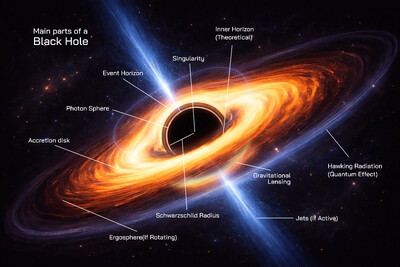
Galaxies themselves are not static objects but dynamic systems shaped by interactions, mergers, and internal evolution. Over time, galaxies grow by absorbing smaller neighbors and reorganizing their stars and gas. Spiral arms form through gravitational patterns, while elliptical galaxies often result from major collisions. Black holes at galaxy centers influence star formation and energy flow, showing that even compact objects can shape vast regions of space.
As cosmic time advances, the large-scale structure of the universe becomes increasingly apparent. Galaxies trace out filaments that span hundreds of millions of light-years, while enormous voids contain relatively little matter. This arrangement reflects the balance between expansion, gravity, and the unseen influence of dark matter. Dark matter does not interact with light, but its gravitational presence is essential for explaining why galaxies rotate as they do and why large-scale structures formed efficiently.
In more recent cosmic ages, dark energy becomes increasingly important. Unlike gravity, which pulls matter together, dark energy appears to drive space apart. Its influence grows as the universe expands and matter becomes more spread out. This acceleration changes the future trajectory of the universe, affecting how galaxies move relative to one another on the largest scales. While gravity dominates locally, dark energy shapes the universe’s ultimate fate.
Modern astronomy allows scientists to observe many cosmic ages at once. Because light takes time to travel, looking far into space is equivalent to looking back in time. Nearby galaxies show the universe as it is now, while distant galaxies reveal earlier stages of development. This natural time machine enables researchers to test models of cosmic evolution and refine their understanding of how the universe changes over billions of years.
The Big Bang model does not claim to explain everything. Questions remain about what caused the initial expansion, what dark matter and dark energy truly are, and whether other cosmic phases preceded the Big Bang itself. Rather than weaknesses, these open questions drive scientific progress. Each new observation adds clarity while revealing deeper layers of mystery.
Ultimately, the Big Bang and cosmic ages describe a universe that is not static or finished, but dynamic and evolving. From an almost featureless beginning emerged complexity, structure, and diversity on unimaginable scales. Stars, galaxies, and even life are not accidents but natural outcomes of physical laws acting over immense time. Understanding this story provides not only scientific insight but also perspective, reminding us that every atom, every star, and every moment is part of a vast cosmic journey that began billions of years ago and continues to unfold.
The history of the universe is not a sequence of isolated events, but a continuous unfolding of physical processes that transformed an almost incomprehensible beginning into the structured cosmos we observe today. Each cosmic era represents a shift in what dominated the universe’s behavior—energy, particles, matter, gravity, or dark energy—and each transition left permanent imprints that modern astronomy can still detect.
The very first moment we can meaningfully discuss is known as the Planck Era, lasting from time zero to an unimaginably tiny fraction of a second after the Big Bang. During this era, the universe was so hot and dense that space and time themselves behaved in ways that current physics cannot fully describe. All fundamental forces—gravity, electromagnetism, and the nuclear forces—are believed to have been unified into a single interaction. Temperatures were so extreme that the familiar concepts of particles, fields, and even spacetime geometry lose their usual meaning. This is the edge of scientific understanding; beyond this point, our equations break down. The Planck Era is important not because we know what happened, but because it defines the boundary of what can currently be known.
As the universe expanded and cooled slightly, it entered the Grand Unification Era. Gravity separated from the other fundamental forces, allowing spacetime to behave more predictably. The remaining forces were still unified at incredibly high energies, and the universe was filled with exotic particles that no longer exist today. These particles were unstable and short-lived, but they played a crucial role in shaping the universe’s earliest asymmetries. Even here, the universe was still far too hot for familiar matter to exist, but the framework of physical law was beginning to solidify.
Shortly afterward came one of the most dramatic events in cosmic history: the Inflationary Era. In an extraordinarily brief instant, the universe expanded exponentially, growing from subatomic size to macroscopic scales. This rapid expansion smoothed out any large irregularities and explains why the universe appears remarkably uniform and flat in all directions. Tiny quantum fluctuations—microscopic variations in energy—were stretched to cosmic scales. These fluctuations became the seeds of all future structure, eventually growing into galaxies, clusters, and cosmic filaments. Inflation transformed quantum randomness into the blueprint of the universe.
Following inflation, the universe entered the Electroweak Era, when temperatures dropped enough for the strong nuclear force to become fully distinct, while the electromagnetic and weak nuclear forces remained unified. During this period, elementary particles gained mass as the universe cooled further. The nature of matter as we recognize it began to emerge, and interactions between particles became more stable and predictable. This era laid the groundwork for the existence of long-lived particles that would later assemble into atoms.
As cooling continued, the universe moved into the Quark Era, when temperatures were still so high that quarks could exist freely rather than being confined inside particles. The universe was filled with quarks, gluons, leptons, and their antiparticles in a dense, energetic soup. Matter and antimatter were produced in nearly equal amounts, but for reasons still under investigation, a tiny excess of matter remained. This imbalance is the reason anything exists at all; without it, matter and antimatter would have annihilated completely.
When the universe cooled enough, quarks combined to form protons and neutrons, marking the Hadron Era. Massive annihilation events occurred as matter and antimatter collided, releasing enormous energy. Almost all antimatter vanished, leaving behind the small surplus of matter that would form stars, planets, and life. This was a decisive filtering moment: only a minute fraction of the original material survived to shape the future universe.
The Lepton Era followed, dominated by electrons, neutrinos, and their interactions. Neutrinos decoupled from matter during this time, streaming freely through space and forming a cosmic neutrino background that still exists today. Although invisible, these neutrinos carry information about the universe’s earliest seconds. As temperatures dropped further, leptons gradually became less influential, allowing the next phase to begin.
The universe then entered the Photon Era, also known as the radiation-dominated era, lasting from roughly ten seconds to about forty-seven thousand years after the Big Bang. During this period, photons carried more energy than matter and therefore controlled the expansion dynamics of the universe. The universe was filled with a hot, ionized plasma of electrons and nuclei, constantly scattering photons. Space was opaque, glowing like the inside of a star. During the first few minutes of this era, nuclear reactions produced hydrogen, helium, and traces of lithium in a process called Big Bang nucleosynthesis. Although matter existed, radiation pressure prevented gravity from pulling normal matter together efficiently. Dark matter, which does not interact with light, quietly began forming gravitational structures beneath the glowing plasma.
The Photon Era ended when matter and radiation reached equal influence, marking the transition to the Matter-Dominated Era. Gravity now became the primary driver of cosmic evolution. At about 380,000 years after the Big Bang, electrons combined with nuclei to form neutral atoms in an event known as recombination. Photons were suddenly free to travel long distances, releasing the cosmic microwave background—a fossil image of the universe as it was at that moment. After recombination, the universe entered the Cosmic Dark Ages, not because light could not travel, but because no stars yet existed to produce it.
Gradually, gravity amplified tiny density variations, leading to the collapse of gas clouds and the ignition of the first stars during the Cosmic Dawn. These early stars were massive, bright, and short-lived, producing heavy elements and ultraviolet radiation that transformed their surroundings. As stars grouped together, the first galaxies formed, merging and evolving over hundreds of millions of years. During the Reionization Era, intense radiation from stars and galaxies reionized surrounding hydrogen gas, ending the dark ages and making the universe fully transparent again.
Over billions of years, galaxies grew, collided, and organized into the vast cosmic web observed today. Stars formed and died, planets emerged, and chemical complexity increased. Eventually, another major shift occurred: dark energy became the dominant influence on cosmic expansion. About 9.8 billion years after the Big Bang, the expansion of the universe began accelerating. Galaxies now move away from one another at increasing speeds, not because of explosions, but because space itself continues to stretch.
Today, at approximately 13.8 billion years after the Big Bang, the universe is still evolving. Star formation continues, galaxies change, and cosmic expansion accelerates. Every atom in our bodies traces its origin back to these early cosmic eras. The timeline of the universe is not just a story of distant stars—it is the story of how existence itself became possible, unfolding step by step from the simplest beginnings to extraordinary complexity.
The image presents the history of the universe as a widening funnel, where time flows from left to right and space itself expands as the universe ages. This shape is important because it shows that the universe does not simply contain galaxies; rather, galaxies exist within expanding space. Each labeled section represents a dominant cosmic age, defined not by clocks on Earth but by what physical processes controlled the universe at that time.
The story begins at the far left with the Big Bang (Time = 0). This moment marks the beginning of spacetime itself. It was not an explosion occurring at a single point in space, but the rapid expansion of space everywhere at once. At this instant, the universe was extremely hot and dense, with all energy and matter compressed into a state beyond direct description. Distances had little meaning, and familiar physical laws were not yet fully formed. As space began expanding, the universe immediately started cooling, setting the stage for all later cosmic evolution.
Immediately following the Big Bang, the universe entered a phase where light and matter were tightly coupled. This early period leads into what the image labels as the Photon Era (Recombination), though recombination itself occurs toward the end of this phase. During the early photon-dominated universe, energy existed primarily in the form of radiation. Photons carried more influence than matter because their energy density was extremely high. The universe behaved like a dense, glowing fog of charged particles. Light could not travel freely because photons were constantly scattered by free electrons. Although matter already existed in the form of protons and helium nuclei, atoms could not form yet because the environment was too energetic.
As expansion continued, temperatures gradually dropped. About 380,000 years after the Big Bang, a crucial transition occurred known as recombination, which marks the end of the opaque universe. Electrons combined with atomic nuclei to form neutral atoms, mostly hydrogen. With fewer free electrons to scatter them, photons were suddenly able to move freely through space. These photons still exist today as the Cosmic Microwave Background, a faint glow that fills the universe and serves as a direct snapshot of this moment in cosmic history. This radiation provides some of the strongest evidence for the Big Bang model.
After recombination, the universe entered the Cosmic Dark Ages, labeled in the image as lasting from about 380,000 years to roughly 180 million years. The universe was now transparent, but it was dark in the sense that no stars or galaxies had yet formed. Space was filled with neutral hydrogen and helium gas. During this long, quiet era, gravity slowly amplified tiny differences in matter density. These small variations were not visible, but they were essential. Over millions of years, slightly denser regions attracted more material, gradually building the foundations for the first luminous objects.
The next major transition is labeled First Stars (Cosmic Dawn), occurring around 180 million years after the Big Bang. This marks the moment when the universe produced its first sources of visible light since recombination. The first stars were very different from most stars today. They were massive, extremely hot, and short-lived, composed almost entirely of hydrogen and helium. These stars ignited nuclear fusion in their cores, releasing intense radiation and producing the first heavy elements. Their formation transformed the universe from darkness into a place where light and structure began to emerge.
As some of these massive early stars exhausted their fuel, they collapsed, forming black holes. This leads into the stage labeled Black Holes and Accretion Disks, around 250 million years after the Big Bang. Gas falling into black holes formed spinning accretion disks, releasing enormous amounts of energy. Some of these early black holes grew rapidly and became powerful sources of radiation, influencing surrounding matter. These energetic processes played an important role in shaping young galaxies and regulating star formation.
During this same general timeframe, the universe entered the Reionization Era, shown in the image as spanning from roughly 250 million years to about 1 billion years. Radiation from the first stars and galaxies was energetic enough to strip electrons from neutral hydrogen atoms, reionizing the intergalactic gas. This process fundamentally changed the universe’s structure. Space became fully transparent again, allowing light to travel vast cosmic distances. Reionization marks the end of the Cosmic Dark Ages and the beginning of a universe filled with luminous structures.
As time progressed, galaxies became increasingly common and complex, leading into the phase labeled Modern Galaxies, spanning from about 1 billion to roughly 9 or 10 billion years after the Big Bang. Galaxies grew through mergers and ongoing star formation. Distinct galaxy shapes emerged, including spirals and ellipticals. Stars lived out full life cycles, creating heavy elements and dispersing them into space. These elements later became essential for planets and complex chemistry. Large-scale structures such as galaxy clusters and cosmic filaments became clearly defined during this era.
Finally, the image reaches the present moment, labeled 13.8 Billion Years – Now. This marks the current cosmic age, where the universe is dominated by dark energy, an unknown form of energy that causes the expansion of space to accelerate. While gravity still holds galaxies and clusters together locally, dark energy drives large-scale separation between distant galaxies. Star formation has slowed compared to earlier epochs, but it continues, and galaxies continue evolving internally.
The funnel shape of the image is especially important for interpretation. The widening represents the increasing scale of the universe as space expands. The grid lines illustrate expanding spacetime itself, not objects moving through space. Galaxies appear farther apart because the space between them is stretching, not because they are flying outward from a central explosion.
Taken together, the labeled stages show how the universe evolved from a hot, opaque plasma into a transparent, structured cosmos filled with galaxies and governed by subtle forces like dark matter and dark energy. Each era builds on the previous one, and none can be understood in isolation. The universe we observe today is the cumulative result of processes that began billions of years ago, unfolding gradually according to fundamental physical laws.
In conclusion, the Big Bang and the cosmic ages form a continuous narrative of transformation. From the birth of spacetime to the emergence of stars, galaxies, and large-scale structures, the universe has evolved through distinct phases driven by expansion, cooling, gravity, and fundamental forces. Understanding this journey not only explains where the universe came from but also provides insight into its present state and possible future.