Rodinia was a vast Neoproterozoic supercontinent that played a crucial role in shaping Earth’s geological, climatic, and biological history. Existing roughly between about one billion and seven hundred fifty million years ago, Rodinia represents one of the earliest well-documented assemblies of Earth’s continental crust. The name “Rodinia” is derived from a Russian word meaning “motherland,” reflecting the idea that it may have been the ancestral supercontinent from which later continental configurations evolved. Understanding Rodinia provides essential insight into how plate tectonics, climate systems, and early life interacted during the deep past of our planet.
The formation of Rodinia occurred during the late Mesoproterozoic to early Neoproterozoic era as a result of prolonged continental collisions. Over hundreds of millions of years, smaller continental blocks known as cratons gradually converged due to plate tectonic movement. These collisions produced large mountain-building events, the most significant of which is known as the Grenville orogeny. This global-scale tectonic event welded together many of Earth’s ancient continental cores, forming a single, enormous landmass. Geological evidence for this assembly is preserved today in ancient mountain belts found in North America, South America, Africa, Australia, and parts of Asia.
Rodinia’s structure was fundamentally different from the modern arrangement of continents. Most reconstructions suggest that the core of Rodinia was formed by the ancient continent Laurentia, which later became the nucleus of present-day North America. Surrounding Laurentia were other major cratons, including those that would later become parts of South America, Africa, Antarctica, Australia, and Eurasia. These continental blocks were tightly joined, creating a supercontinent that spanned much of Earth’s surface and was surrounded by a vast global ocean often referred to as Mirovia.
The existence of Rodinia had a profound influence on Earth’s climate. Because much of the continental crust was concentrated into a single landmass, ocean circulation patterns were significantly altered. Reduced shallow continental seas and limited exchange between ocean basins likely affected heat distribution across the planet. Many scientists believe that the configuration of Rodinia contributed to dramatic global cooling events during the Neoproterozoic, including the famous “Snowball Earth” episodes. During these periods, much of Earth’s surface may have been covered in ice, representing some of the most extreme climate conditions in planetary history.
Rodinia also played an important role in shaping Earth’s atmosphere and biosphere. The Neoproterozoic era was a time of increasing oxygen levels in the atmosphere and oceans. The erosion of Rodinia’s extensive mountain ranges delivered large amounts of nutrients into the oceans, stimulating biological productivity. These environmental changes are thought to have contributed to the rise of more complex multicellular life forms toward the end of the Neoproterozoic. Although Rodinia existed long before animals with hard shells appeared, its geological and climatic legacy set the stage for later biological evolution.
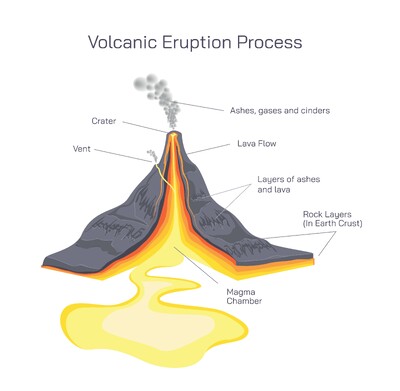
The breakup of Rodinia began during the mid to late Neoproterozoic era. This process was driven by internal heat from Earth’s mantle, which caused the continental crust to stretch, thin, and eventually fracture. Large rift systems developed within Rodinia, leading to volcanic activity and the formation of new ocean basins. As rifting progressed, the supercontinent gradually split apart into smaller landmasses. These fragments later reorganized into new continental groupings, eventually contributing to the formation of later supercontinents such as Gondwana and, much later, Pangaea.
Evidence for the existence and breakup of Rodinia comes from multiple geological sources. Paleomagnetic data provide clues about the positions of ancient continents relative to Earth’s magnetic field. Radiometric dating of rocks helps establish the timing of tectonic events. Similar rock formations, fossil assemblages, and mineral deposits found on widely separated continents today suggest that these landmasses were once connected. Together, these lines of evidence allow scientists to reconstruct Rodinia’s approximate shape and history, even though no direct surface remains of the supercontinent exist today.
Rodinia’s influence extended beyond tectonics and climate to include long-term changes in Earth’s surface processes. The formation of large sedimentary basins during its breakup created environments that preserved important records of early life and environmental change. Volcanic activity associated with rifting released gases into the atmosphere, influencing chemical cycles and ocean composition. These processes highlight the interconnected nature of Earth’s systems, where continental movement, climate, and life are tightly linked.
In the context of the supercontinent cycle, Rodinia represents a key stage in Earth’s repeating pattern of continental assembly and dispersal. Before Rodinia, earlier supercontinents may have existed, but evidence for them is more limited. After Rodinia’s breakup, Earth experienced further cycles of continental collision and separation, leading to the formation of new supercontinents over geological time. Studying Rodinia helps scientists understand how these cycles operate and how they influence long-term planetary evolution.
Rodinia can be explored even further by examining its deeper geodynamic significance, internal structure, and long-term influence on Earth’s interior processes, surface environments, and evolutionary trajectory. Beyond being a simple arrangement of continents, Rodinia represents a critical experiment in Earth history where large-scale tectonics, mantle dynamics, and surface conditions interacted in ways that profoundly reshaped the planet.
One of the most important but less obvious aspects of Rodinia is its relationship with Earth’s mantle. The assembly of such a massive supercontinent likely altered heat flow from Earth’s interior. When continents cluster together, they act as an insulating blanket over the mantle, trapping heat beneath them. This insulation can cause mantle temperatures to rise locally, increasing mantle convection and eventually leading to upwelling plumes. Many scientists believe that the breakup of Rodinia was strongly influenced by this buildup of internal heat, which weakened the lithosphere from below and promoted rifting. This connection between supercontinent assembly and mantle dynamics highlights how surface tectonics and deep Earth processes are tightly linked.
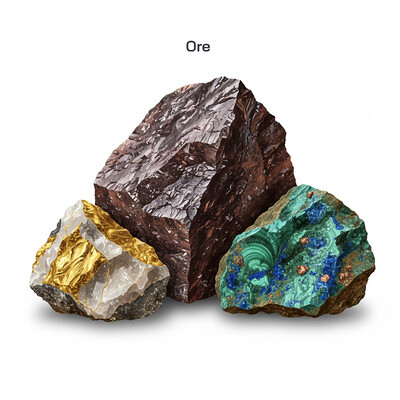
Rodinia also influenced the distribution of mineral resources that are important today. The immense mountain-building events during its assembly concentrated valuable minerals such as copper, gold, iron, and rare earth elements within the crust. These minerals formed as a result of intense pressure, heat, and fluid circulation during continental collisions. Many of the ancient mineral belts that are mined today have their origins in tectonic processes associated with Rodinia. Thus, the economic geology of modern continents is, in part, a legacy of Rodinia’s formation.
Another unique aspect of Rodinia lies in its impact on global sea levels. When continents collide and form a supercontinent, the total length of continental coastlines decreases dramatically. This reduction limits the area of shallow continental shelves, which are important zones for marine life and sediment deposition. During Rodinia’s existence, sea levels were likely lower on average due to reduced shelf area and increased continental elevation from mountain building. These changes influenced ocean chemistry, sedimentation patterns, and nutrient cycling, creating marine environments very different from those of later geological periods.
Rodinia’s configuration also affected weathering processes on land. The presence of vast mountain ranges increased physical and chemical weathering rates. Rainfall and erosion broke down exposed rock, releasing minerals into rivers and oceans. This enhanced weathering played a role in regulating atmospheric carbon dioxide by removing it through chemical reactions, potentially contributing to long-term cooling trends. Over millions of years, this process may have helped drive Earth toward the extreme glaciations of the Neoproterozoic.
From a biological perspective, Rodinia existed during a crucial transitional phase in the history of life. While complex animals had not yet evolved, microbial life was becoming increasingly diverse and ecologically influential. Shallow marine environments around Rodinia’s margins supported extensive microbial mats, including cyanobacteria that contributed to oxygen production. The breakup of Rodinia created new coastlines and shallow seas, expanding habitats that promoted biological innovation. These newly formed environments are thought to have played a role in setting the stage for the later emergence of multicellular organisms.
The supercontinent also influenced ocean circulation in subtle but important ways. With most land concentrated in one region, global ocean currents were constrained, potentially leading to stagnant deep ocean conditions. Reduced circulation may have caused oxygen-poor waters to develop in some regions, influencing marine chemistry and life distribution. These anoxic conditions are recorded in sedimentary rocks from the Neoproterozoic and provide evidence of how Rodinia reshaped the planet’s oceans.
Rodinia’s breakup was not a single, uniform event but a complex, multi-stage process. Different regions began to rift apart at different times, creating a mosaic of evolving landmasses and ocean basins. Some continental fragments drifted only short distances before re-colliding in later supercontinent cycles, while others traveled far across the globe. This staggered breakup explains why geological records from different continents show variations in timing and tectonic style, even though they were once part of the same supercontinent.
The study of Rodinia also highlights the challenges of reconstructing ancient geography. Unlike Pangaea, which existed relatively recently in geological terms, Rodinia predates abundant fossil evidence and well-preserved oceanic crust. Scientists rely heavily on indirect clues such as magnetic signatures locked in ancient rocks, isotopic compositions, and similarities in rock sequences across continents. Ongoing research continues to refine Rodinia’s reconstruction, and multiple models exist, each offering slightly different arrangements of continental blocks. This evolving understanding reflects the dynamic nature of geological science.
Rodinia’s legacy can also be seen in the supercontinent cycle itself. The cycle of assembly and breakup appears to occur roughly every 500 to 700 million years. Rodinia represents one of the earliest clearly recognized examples of this cycle, providing a framework for understanding how continents repeatedly come together and drift apart over deep time. Studying Rodinia helps scientists identify patterns in tectonic behavior and predict how Earth’s continents may evolve in the distant future.
In addition, Rodinia serves as a natural laboratory for studying extreme climate states. The link between its configuration and global glaciation offers insights into how continental positions influence climate stability. This knowledge is valuable not only for understanding Earth’s past but also for modeling climate behavior on other planets, where continental distribution could affect habitability.
Rodinia can be examined from an even broader and more integrated perspective by focusing on its role as a turning point in Earth’s long-term planetary evolution, where geological, chemical, and biological systems began interacting with increasing complexity. Rather than being viewed only as a supercontinent, Rodinia represents a phase in Earth history when internal planetary processes matured enough to drive profound surface transformations that permanently altered how the planet operates.
One of the most unique aspects of Rodinia is how it reflects the strengthening of plate tectonics as a dominant Earth process. Earlier in Earth’s history, continental fragments were smaller, hotter, and more unstable. By the time Rodinia formed, the lithosphere had cooled sufficiently to allow large, rigid continental plates to persist for long periods. This enabled continents to collide and remain welded together for hundreds of millions of years. Rodinia therefore marks a stage when Earth transitioned from a more chaotic tectonic regime to a more organized, cyclic system of supercontinent assembly and breakup that continues today.
The thickness of Rodinia’s continental crust is another important feature. Continental collisions during its formation created exceptionally thick crustal roots beneath mountain belts. These deep roots stabilized large portions of the supercontinent, making Rodinia resistant to immediate breakup. However, this same thickness contributed to gravitational instability over time. As heat accumulated beneath the supercontinent, these thick crustal regions became prone to collapse and extension, eventually leading to rifting. This internal contradiction—strength through thickness followed by weakness through overheating—demonstrates the self-limiting nature of supercontinents.
Rodinia also influenced Earth’s magnetic field behavior. Paleomagnetic studies indicate that during the Neoproterozoic, Earth may have experienced unusual magnetic field configurations, including rapid polar wander events. The redistribution of continental mass during Rodinia’s assembly and early breakup could have affected mantle flow patterns that, in turn, influenced the geodynamo in Earth’s core. Although still debated, this possibility suggests that supercontinents may indirectly affect Earth’s magnetic shielding, which is critical for protecting the atmosphere and surface life from solar radiation.
Another underappreciated contribution of Rodinia is its role in shaping Earth’s sedimentary record. During its long existence, vast interior regions of the supercontinent were far from the sea, creating extensive arid and semi-arid environments. These regions experienced limited sediment deposition, while coastal margins accumulated thick sequences of sediments derived from erosion of mountain belts. When Rodinia began to break apart, newly formed rift basins rapidly filled with sediments, preserving detailed records of tectonic, climatic, and chemical changes. Many of the most important Neoproterozoic sedimentary sequences studied today were formed during this transitional period.
Rodinia’s impact on atmospheric evolution is also significant. Increased weathering during its assembly and breakup altered the balance of greenhouse gases in the atmosphere. Enhanced chemical weathering of silicate rocks removed carbon dioxide over long timescales, contributing to cooling. At the same time, volcanic activity during rifting released gases such as carbon dioxide and sulfur compounds, creating complex feedback loops between warming and cooling. These opposing forces likely caused rapid and dramatic climate fluctuations, explaining the extreme environmental instability of the Neoproterozoic.
In terms of ocean chemistry, Rodinia played a role in reorganizing nutrient availability. The erosion of newly uplifted land delivered phosphorus, iron, and other essential nutrients into the oceans. These inputs stimulated microbial productivity, particularly among photosynthetic organisms. Increased biological activity affected oxygen levels and altered redox conditions in the oceans. These changes are recorded in chemical signatures preserved in ancient marine sediments, providing indirect evidence of Rodinia’s influence on ocean life.
Rodinia also affected the distribution of shallow marine habitats, which are critical for biological innovation. While much of the supercontinent interior lacked such environments, its margins hosted extensive continental shelves. When Rodinia fragmented, the number of continental margins increased dramatically, creating new shallow seas. These environments were ideal for ecological experimentation, allowing life to diversify and adapt to new conditions. This expansion of habitable marine space is thought to have been a key factor leading to the later emergence of complex multicellular organisms.
The supercontinent’s existence also influenced long-term hydrological cycles. Large continental interiors experience extreme seasonal variations in temperature and rainfall. Rivers flowing from Rodinia’s mountain belts transported enormous volumes of sediment across vast distances, shaping landscapes and influencing coastal systems. These ancient river systems contributed to the formation of extensive sedimentary plains and deltas, some of which later became important geological archives.
Rodinia’s breakup had lasting consequences for continental identity. Many of today’s continents retain structural “scars” from their time within Rodinia. Ancient fault zones, shear belts, and metamorphic regions continue to influence modern tectonic behavior. These inherited weaknesses often determine where later rifting or mountain building occurs, demonstrating how Rodinia’s legacy persists in shaping Earth’s surface even after hundreds of millions of years.
From a planetary science perspective, Rodinia provides a valuable comparison point for studying other terrestrial planets. Understanding how Earth’s continents assembled, stabilized, and fragmented helps scientists evaluate why Earth developed plate tectonics while planets like Mars and Venus did not. Rodinia’s history suggests that continental size, internal heat, and water availability are critical factors in sustaining long-term tectonic activity.
Rodinia also serves as a reminder that Earth’s habitability is not static but evolves through deep time. The environmental stresses associated with its existence—including extreme climate swings and tectonic upheaval—likely challenged early life forms. Yet these same stresses created opportunities for adaptation and innovation. Life that survived Rodinia’s harsh conditions emerged more resilient and diverse, capable of exploiting new environments created by continental breakup.
In summary, Rodinia represents a pivotal chapter in Earth history where continental-scale processes matured and began interacting with climate, oceans, atmosphere, and life in increasingly complex ways. Its formation strengthened the foundations of plate tectonics, its stability reshaped global systems, and its breakup unlocked new pathways for environmental and biological evolution. Rodinia was not merely an ancient supercontinent but a transformative phase that helped define the modern Earth system, leaving deep and lasting imprints that continue to influence the planet today. The Neoproterozoic supercontinent Rodinia was a foundational chapter in Earth’s deep history. Its formation through massive continental collisions, its impact on global climate and early life, and its eventual breakup through rifting and plate tectonics all had lasting consequences for the planet. Rodinia not only reshaped Earth’s surface but also influenced the development of the atmosphere, oceans, and biosphere. By studying Rodinia, scientists gain valuable insight into the processes that have governed Earth’s evolution for over a billion years and continue to shape the dynamic planet we inhabit today. Rodinia was far more than a static landmass of the ancient Earth. It was a dynamic system that reshaped mantle convection, controlled climate extremes, influenced ocean chemistry, guided early biological evolution, and left lasting imprints on the crust that persist today. Its assembly and breakup demonstrate the profound interconnectedness of Earth’s interior, surface, atmosphere, and biosphere. By studying Rodinia, scientists gain a deeper understanding of how our planet functions as an integrated system over geological time, revealing the foundations upon which later continents, climates, and life forms were built.