Black holes are among the most extreme and fascinating structures in the universe, defined not by a solid surface but by regions where gravity warps spacetime to extraordinary degrees. Although they cannot be observed directly, scientists understand black holes through their main parts, each of which plays a critical role in how these objects interact with their surroundings. The structure of a black hole is not like that of a planet or star; instead, it is a hierarchy of gravitational boundaries and energetic regions shaped by mass, rotation, and relativistic physics.
The most well-known and defining part of a black hole is the event horizon. This boundary represents the point at which gravity becomes so strong that escape is impossible. Once any object, including light, crosses the event horizon, it cannot return to the outside universe. The event horizon does not mark a physical surface but a limit in spacetime itself. To a distant observer, objects approaching this boundary appear to slow down and fade due to extreme gravitational time dilation. The size of the event horizon depends entirely on the mass of the black hole and is mathematically described by the Schwarzschild radius.
At the very center of a black hole lies the singularity core. This region is where all the black hole’s mass is thought to be compressed into an incredibly small volume, resulting in infinite density according to current physical theories. The singularity is not directly observable and represents a breakdown of known laws of physics. It is the ultimate consequence of gravitational collapse, where spacetime curvature becomes infinite. Understanding the singularity remains one of the greatest challenges in modern astrophysics and theoretical physics.
Surrounding the event horizon is the photon sphere, a remarkable region where gravity is strong enough to force light into circular orbits. Photons can theoretically travel around the black hole multiple times before either escaping or falling inward. This phenomenon contributes to the dramatic visual appearance of black holes, including the bright rings captured in telescope images. The photon sphere plays a major role in gravitational lensing, where light from distant objects is bent around the black hole, magnifying and distorting their appearance.
Another major component of an active black hole is the accretion disk. This disk forms when gas, dust, or even stars are pulled toward the black hole but do not fall in immediately. Instead, the material spirals inward, flattening into a rotating disk due to conservation of angular momentum. As matter within the accretion disk rubs together, it heats up to extreme temperatures, emitting enormous amounts of radiation. In many cases, the accretion disk becomes brighter than entire galaxies, producing strong X-ray emissions that allow astronomers to detect black holes indirectly.
In rotating black holes, an additional region known as the ergosphere exists outside the event horizon. Within the ergosphere, spacetime itself is dragged along by the black hole’s rotation, a phenomenon called frame dragging. Objects inside this region cannot remain stationary relative to the universe and are forced to move in the direction of rotation. The ergosphere enables unique energy processes, theoretically allowing energy to be extracted from the black hole’s rotation. This region highlights how rotation dramatically alters black hole structure and behavior.
Some black holes also feature relativistic jets, which are narrow beams of high-energy particles launched from regions near the event horizon along the rotational poles. These jets are not emitted from inside the black hole but are powered by interactions between the accretion disk, magnetic fields, and rotational energy. Jets can extend for thousands or even millions of light-years, influencing star formation and galactic evolution. Their presence demonstrates that black holes can be powerful engines shaping their cosmic environment.
Another concept associated with black holes is the inner horizon, a theoretical boundary predicted for certain rotating or charged black holes. This region lies deeper than the event horizon and is not yet fully understood. Its existence raises complex questions about stability, causality, and the nature of spacetime under extreme conditions. While still theoretical, the inner horizon is an important part of advanced black hole models.
Black holes are also associated with Hawking radiation, a quantum effect predicted to occur near the event horizon. According to theory, black holes can emit tiny amounts of radiation due to quantum processes, leading to extremely slow mass loss over vast timescales. While this radiation has not yet been directly observed, it connects black hole physics with quantum mechanics and suggests that black holes are not entirely eternal.
Each of these parts contributes to the observable and theoretical identity of a black hole. The event horizon defines its boundary, the singularity anchors its mass, the photon sphere and accretion disk reveal its presence, the ergosphere and jets demonstrate rotational power, and quantum effects hint at deeper physical laws. Together, these components form a complete picture of black holes as dynamic, structured objects rather than simple voids.
Black holes are not isolated oddities floating passively through space; they are deeply connected to the structure, evolution, and behavior of the universe itself. To understand them more fully, it helps to look beyond their individual parts and consider how black holes interact with spacetime, matter, time, and even the future of physics. When studied this way, black holes stop being mysterious “cosmic monsters” and instead become natural, though extreme, consequences of gravity acting over immense scales.
One of the most profound aspects of black holes is how they reshape spacetime far beyond their immediate boundaries. Gravity near a black hole does not simply pull objects inward; it bends the geometry of space and time so strongly that usual notions of distance, direction, and duration no longer behave normally. Clocks near a black hole run slower compared to clocks far away, and this effect increases continuously as one approaches the event horizon. This means that black holes create natural laboratories for testing Einstein’s theory of general relativity in its most extreme form. Every precise measurement of motion near a black hole, such as stars orbiting the center of our galaxy, provides confirmation that spacetime behaves exactly as predicted under intense gravitational stress.
Black holes also challenge our understanding of causality, which is the idea that causes precede effects. Outside the event horizon, information can move freely in and out, constrained only by the speed of light. Inside the event horizon, however, all possible paths through spacetime lead inward toward the singularity. This means that the future direction of time itself points deeper into the black hole. From that point onward, falling into the singularity is not a choice but a certainty, much like time moving forward is unavoidable for us. This strange reversal of intuition shows that black holes are not just objects in space; they redefine what “future” and “direction” even mean.
Another critical role black holes play is in the growth and evolution of galaxies. Nearly every large galaxy is believed to host a supermassive black hole at its center. These black holes formed very early in cosmic history and grew alongside their host galaxies. Observations reveal a strong connection between the mass of a galaxy’s central black hole and the properties of the galaxy itself, such as the speed of stars orbiting the galactic core. This suggests that black holes and galaxies evolve together, influencing one another over billions of years. Without black holes, galaxies might grow too quickly, form stars uncontrollably, or collapse into chaotic structures.
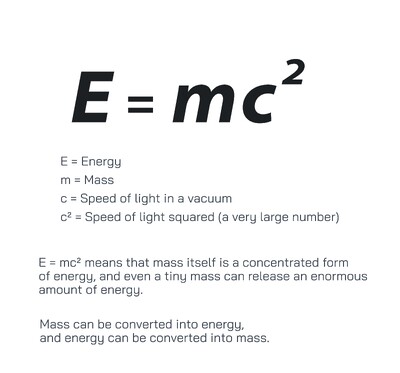
Accretion processes around black holes are also central to understanding cosmic energy flow. When matter falls toward a black hole, gravitational energy is converted into heat and radiation with extraordinary efficiency. In fact, accretion onto black holes can release far more energy per unit mass than nuclear fusion inside stars. This makes active black holes some of the brightest objects in the universe. Quasars, for example, are powered by supermassive black holes consuming matter at high rates, producing light visible across billions of light-years. These luminous phases help astronomers map the early universe and understand how matter assembled into large-scale structures.
The interaction between black holes and magnetic fields adds another layer of complexity. Magnetic fields threading the accretion disk and the space near the event horizon can become twisted and amplified by rotation. These fields are essential for launching relativistic jets, which act like cosmic exhaust streams. Jets transport energy far from the black hole, redistributing matter and heat across interstellar and intergalactic space. Over time, this energy injection can suppress or trigger star formation, showing that black holes play both destructive and creative roles in cosmic evolution.
On a deeper theoretical level, black holes expose cracks in our current understanding of physics. General relativity describes gravity extremely well on large scales, while quantum mechanics governs the behavior of particles on very small scales. Inside black holes, these two frameworks collide. The prediction of singularities with infinite density indicates that general relativity is incomplete, not that nature literally contains infinities. This has motivated decades of research into quantum gravity, an as-yet-unfinished theory that could unify gravity with quantum mechanics. Black holes are therefore not just astrophysical objects but gateways to deeper physical laws.
The concept of information inside black holes is another major frontier. According to quantum theory, information cannot be destroyed, yet classical descriptions of black holes suggest that information falling in may be lost forever. Hawking radiation complicates this picture by implying that black holes slowly evaporate. This raises a profound question: what happens to the information about everything that ever fell into a black hole? Resolving this paradox has led to revolutionary ideas about spacetime, holography, and the nature of reality itself. Some theories suggest that information is encoded on the event horizon, turning it into a kind of cosmic memory surface.
Black holes also vary greatly in size and origin, adding richness to their study. Stellar-mass black holes form from collapsing massive stars and are scattered throughout galaxies. Supermassive black holes reside in galactic centers and dominate their environments. There may also be intermediate-mass black holes and even hypothetical primordial black holes formed shortly after the Big Bang. Each type offers different clues about cosmic history, stellar evolution, and the conditions of the early universe.
Despite their fearsome reputation, black holes are not cosmic vacuum cleaners indiscriminately consuming everything around them. From a distance, they behave like any other object of the same mass, allowing stable orbits and long-lived structures to exist nearby. Only when matter ventures extremely close do the dramatic effects become unavoidable. This balance between ordinary gravitational behavior and extreme relativistic effects makes black holes both familiar and alien at the same time.
Black holes also force us to rethink what it means to observe and measure reality. Unlike stars or planets, a black hole cannot be seen directly because it emits no light of its own. Everything we know about black holes comes from how they affect their surroundings. This indirect nature makes black holes a powerful reminder that science often works not by seeing objects themselves, but by carefully interpreting their influence. When astronomers observe stars moving at extreme speeds around an invisible center, or detect bursts of X-rays from hot gas spiraling inward, they are effectively “reading” the fingerprints of a black hole imprinted on the universe.
One of the most fascinating aspects of black holes is how they distort light and vision itself. Near a black hole, spacetime curvature bends light so strongly that the usual rules of perspective break down. An observer close to a black hole could, in theory, see light from behind themselves, wrapped around by gravity. This extreme lensing effect means black holes act like cosmic mirrors and magnifying glasses combined. The images produced are not simple silhouettes but complex distortions shaped by motion, spin, and gravity. This is why black hole images are not photographs in the everyday sense, but reconstructions based on precise modeling of how light behaves near extreme gravity.
Black holes also offer a unique way to study time. In everyday life, time feels universal and consistent, but near a black hole, time becomes deeply personal and location-dependent. The closer something is to a black hole, the slower its time passes relative to distant observers. This is not an illusion or trick of measurement; it is a real physical effect. In extreme cases, someone falling toward a black hole could experience only minutes or hours while thousands of years pass in the outside universe. This dramatic separation of time highlights that time is not a background stage on which events happen, but a dynamic feature shaped by gravity.
Another important but often misunderstood concept is that black holes are not static. They grow, evolve, and interact with their environment. A black hole that is actively feeding on surrounding matter behaves very differently from a dormant one. When supply runs low, accretion disks fade, jets weaken, and the black hole becomes nearly invisible. Over cosmic timescales, black holes can switch between quiet and active phases many times. This variability plays a role in regulating galaxies, turning black holes into long-term managers of cosmic ecosystems rather than short-lived destroyers.
Black holes also play a role in shaping the chemical richness of the universe. While black holes themselves do not create elements, their influence on stars and gas clouds affects where and how heavy elements are distributed. Jets and energetic outflows can spread material across galaxies, enriching regions far from their original source. In this indirect way, black holes help determine where planets form and where complex chemistry becomes possible. Their influence reaches far beyond gravity alone, extending into the story of how matter becomes organized and diverse.
From a theoretical perspective, black holes serve as testing grounds for ideas that may redefine physics itself. Concepts such as holography suggest that the information contained within a volume of space might be encoded on its boundary, much like a three-dimensional image stored on a two-dimensional surface. This idea emerged directly from attempts to understand black hole information. If true, it implies that the universe itself may operate under principles radically different from our intuitive understanding. Black holes thus act as gateways to entirely new ways of thinking about space, information, and reality.
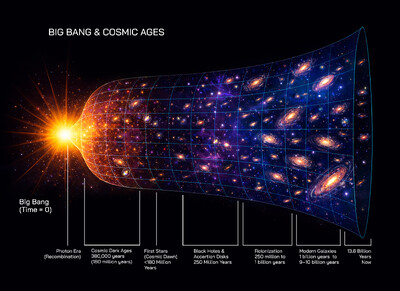
The study of black holes also connects deeply to the early universe. Conditions shortly after the Big Bang were extreme enough that small black holes may have formed naturally. These hypothetical primordial black holes could still exist today and might even contribute to dark matter. If confirmed, they would link black hole physics directly to cosmology, uniting the universe’s birth with its most extreme gravitational objects. Even the absence of such black holes provides valuable information, narrowing down what the early universe was like.
Despite their dramatic nature, black holes are governed by surprisingly simple rules. In classical physics, a black hole is fully described by just a few properties: mass, spin, and electric charge. Everything else about the matter that formed it appears to be hidden. This simplicity is both elegant and unsettling. It suggests that nature discards enormous amounts of detail when matter collapses into a black hole, reducing complexity to minimal descriptors. Understanding why this happens may reveal deep principles about order, chaos, and information in the universe.
Black holes also challenge emotional and philosophical perspectives. They confront us with boundaries that cannot be crossed, regions forever hidden from observation. Yet they are also objects that can be studied, predicted, and understood through logic and mathematics. This dual nature—simultaneously knowable and unknowable—makes black holes uniquely compelling. They remind us that the universe contains limits, but also that those limits can be approached, explored, and partially understood through human curiosity.
In the grand story of the cosmos, black holes are not anomalies but natural outcomes of gravity acting without restraint. They are born from stars, grow with galaxies, influence cosmic structure, and may even evaporate in the far future. Their existence ties together astrophysics, relativity, quantum mechanics, and cosmology into a single narrative. By studying black holes, we are not merely learning about strange objects in distant space; we are learning how reality behaves when pushed to its absolute extremes.
In the end, black holes represent the ultimate expression of gravity’s power. They connect the smallest scales of quantum physics with the largest structures in the universe. They influence how galaxies form, how energy flows through space, and how time itself behaves under extreme conditions. Far from being simple holes in space, black holes are dynamic, information-rich, and deeply woven into the fabric of the cosmos. Studying them is not just about understanding exotic objects, but about understanding the fundamental nature of reality itself.
In conclusion, the main parts of a black hole represent different layers of gravitational influence and physical behavior. From the invisible singularity at the center to the luminous accretion disk and powerful jets, each region plays a distinct role in shaping how black holes interact with the universe. Understanding these parts is essential for exploring gravity, spacetime, and the fundamental nature of reality itself.