Rutherford’s gold foil experiment is regarded as one of the most influential experiments in the history of science because it completely transformed the way atoms were understood. Before this experiment, atoms were imagined as compact or uniformly filled objects with no internal structure worth questioning. The idea that atoms might contain vast empty regions and a concentrated center of mass was not part of mainstream scientific thinking. By demonstrating that atoms possess a tiny, dense, positively charged nucleus surrounded by mostly empty space, the gold foil experiment reshaped both physics and chemistry and set science on an entirely new path.
At the dawn of the twentieth century, scientific knowledge of atomic structure was limited and largely theoretical. The most accepted explanation was the plum pudding model, which proposed that positive charge was spread evenly throughout the atom, with negatively charged electrons embedded within it. According to this view, the atom was relatively soft and uniform, offering little resistance to particles passing through it. This model appeared to explain electrical neutrality and some basic properties of matter, but it lacked experimental confirmation at the deepest level. The gold foil experiment was designed precisely to test whether this picture of the atom was correct.
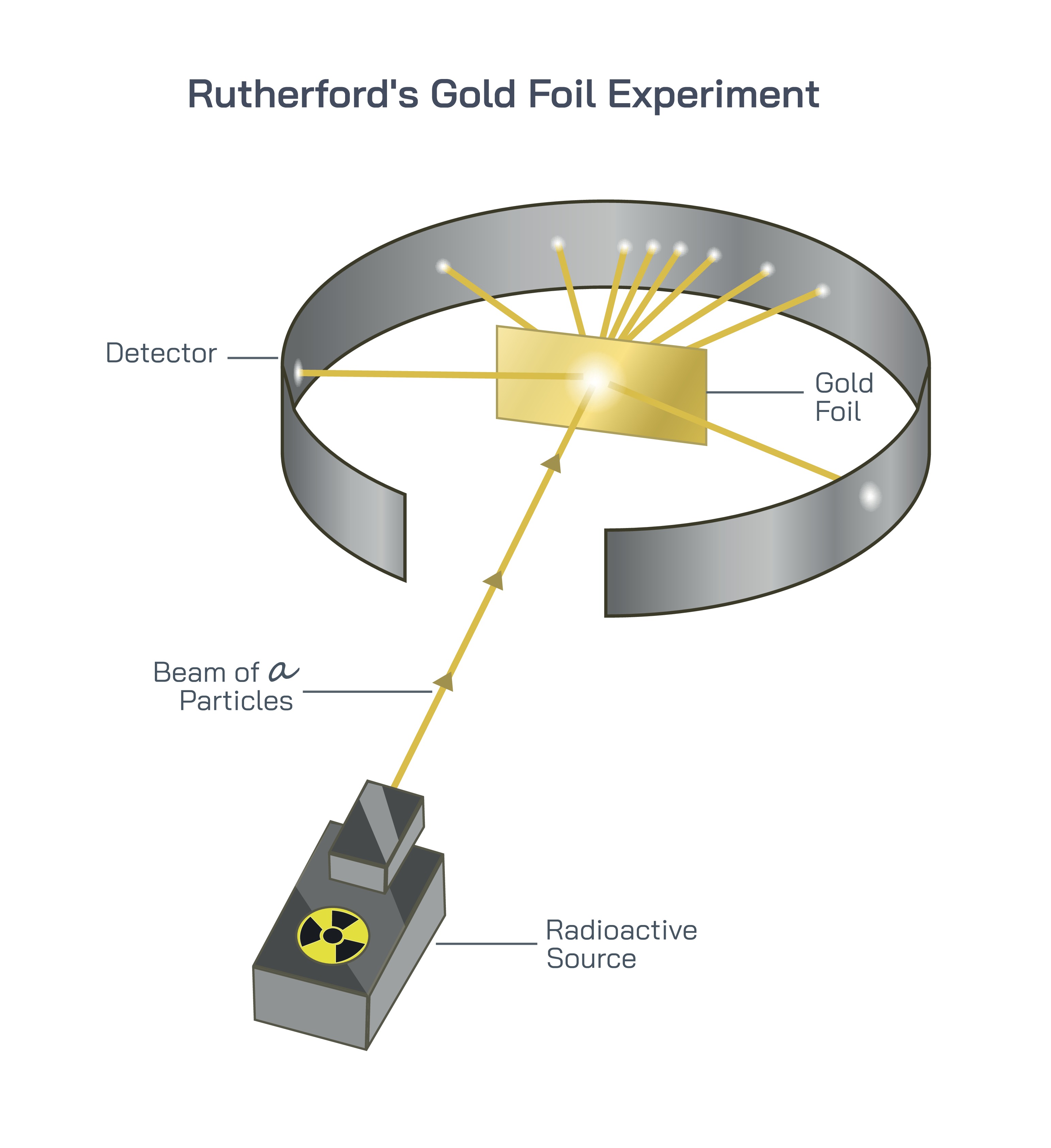
The experiment was carried out under the direction of Ernest Rutherford, whose approach combined careful experimentation with bold interpretation. Alpha particles were chosen as probes because they were massive and positively charged, making them ideal for testing how charge and mass were distributed inside atoms. A radioactive source emitted these particles toward an extremely thin sheet of gold foil, only a few atoms thick. Surrounding the foil was a fluorescent screen that emitted small flashes of light whenever struck by an alpha particle, allowing scientists to track their paths.
If the plum pudding model had been correct, alpha particles would have passed through the gold foil with only slight and predictable deviations. In reality, while most alpha particles did pass straight through, a small fraction were deflected at surprisingly large angles, and an extremely small number bounced almost directly backward. These observations were astonishing because they suggested that the atom was not a diffuse object but contained a region capable of exerting very strong repulsive forces on the incoming particles. This single observation challenged years of accepted theory.
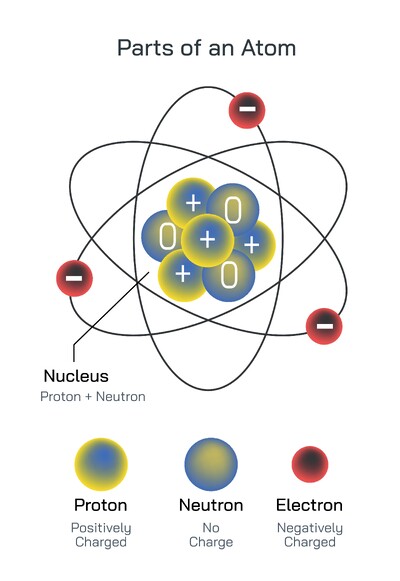
From these results, Rutherford inferred that nearly all of an atom’s positive charge and mass must be concentrated in a very small central region. This region, later called the nucleus, occupied only a tiny fraction of the atom’s total volume. The fact that most alpha particles passed through without deflection indicated that the remainder of the atom was largely empty space. This conclusion was revolutionary because it overturned the long-held belief that matter was dense and continuous at the atomic level.
The nuclear model proposed by Rutherford described the atom as a miniature solar system, with electrons moving through space around a central nucleus. Although this model could not yet explain why electrons did not collapse into the nucleus, it successfully accounted for the scattering results and provided a realistic framework for future research. The idea that atoms have internal structure opened the door to studying subatomic particles and forces, fundamentally changing the scope of physics.
One of the most important consequences of the gold foil experiment was its influence on later atomic theories. Once the nucleus was established as a real physical entity, scientists began investigating its composition and behavior. This led to the identification of protons and later neutrons, as well as a deeper understanding of atomic mass and charge. The nuclear model also made it possible to explain why each element has unique properties based on the number of protons in its nucleus, a concept that later became known as atomic number.
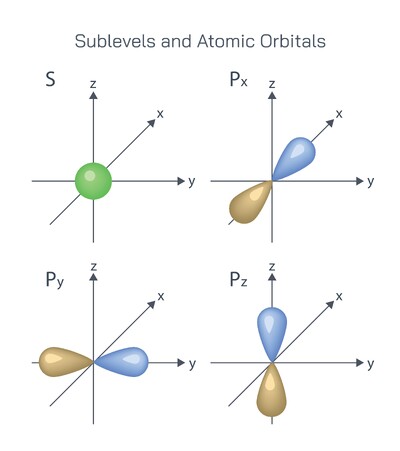
In chemistry, the discovery of the nucleus clarified why elements combine in specific ratios and why chemical reactions involve electrons rather than nuclei. It provided a solid physical basis for the periodic table and helped explain trends in chemical behavior. Without Rutherford’s experiment, the connection between atomic structure and chemical properties would have remained unclear and incomplete.
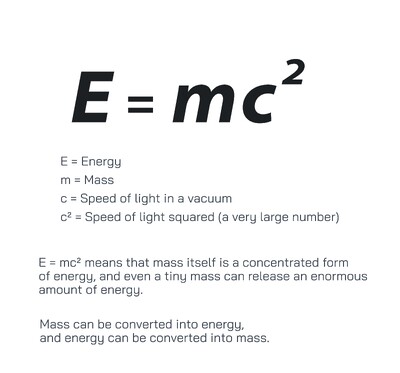
The experiment’s impact extended far beyond academic theory. In physics, it laid the groundwork for nuclear science, leading eventually to the study of radioactivity, nuclear reactions, and atomic energy. Technologies such as nuclear power generation, radiation therapy, and medical imaging can all trace their origins to the realization that atoms have dense nuclei capable of releasing enormous amounts of energy under the right conditions.
The gold foil experiment also stands as a powerful example of the scientific method in action. It shows how experimental evidence can challenge even the most widely accepted ideas and force scientists to rethink fundamental assumptions. Rutherford did not ignore the unexpected results; instead, he embraced them and used logical reasoning to construct a new model that better explained the observations. This willingness to question established views is one of the defining features of scientific progress.
From an educational perspective, the experiment remains a cornerstone of physics and chemistry teaching. It illustrates how simple experimental setups can yield profound insights and how indirect evidence can reveal hidden structures. Students learn not only about atomic structure but also about the importance of critical thinking, careful measurement, and open-minded interpretation.
In a broader sense, Rutherford’s gold foil experiment changed humanity’s perception of matter itself. It revealed that the solid world we experience is built upon structures that are mostly empty space, held together by invisible forces. This realization altered philosophical as well as scientific views of reality, showing that appearances can be misleading and that nature often hides its deepest truths beneath the surface.
In conclusion, Rutherford’s gold foil experiment was far more than a single scientific test; it was a turning point that reshaped the understanding of atoms, matter, and energy. By revealing the nucleus and disproving earlier atomic models, it laid the foundation for modern physics, chemistry, and many technological advances. Its legacy continues to influence science today, making it one of the most important experiments ever conducted in the study of the natural world.