The classical cyclotron stands as one of the most influential scientific inventions of the twentieth century, marking the beginning of modern particle acceleration and transforming experimental physics, nuclear research and medical isotope production. Its brilliance does not lie in complexity, but rather in the elegant use of magnetic and electric fields working in harmony to accelerate charged particles along a continuously expanding circular path. Long before the development of gigantic synchrotrons and linear accelerators, the classical cyclotron provided scientists with a powerful yet compact way to explore the structure of matter and unlock the mechanisms of the atomic world.
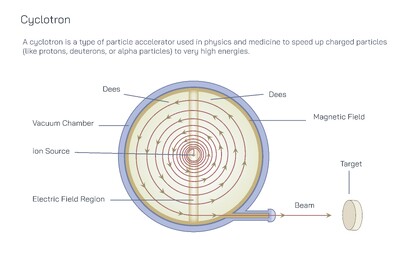
At its core, the classical cyclotron is built around the interaction between two fundamental forces: the magnetic force that bends a moving charged particle into a circular path, and an alternating electric field that accelerates the particle each time it crosses a gap between electrodes. The cyclotron structure consists of two hollow, semi-circular metallic chambers called “dees” because of their D-shaped appearance. These dees are placed inside a vacuum chamber and positioned between the poles of a powerful magnet. The magnetic field is oriented perpendicular to the plane of the dees. When a charged particle such as a proton or alpha particle enters the cyclotron, the magnetic field forces it to follow a circular trajectory rather than flying in a straight line.
The acceleration mechanism begins when a radio-frequency power source supplies an alternating electric potential between the two dees. Each time the particle moves across the narrow gap between the dees, the electric field accelerates it by increasing its kinetic energy. Inside the hollow interior of the dees, there is no electric field, so the particle travels in a semicircular arc under the sole influence of the magnetic field. By the time it returns to the gap, the electric field has reversed direction due to its alternating nature, accelerating the particle again. With each crossing, the particle gains speed, and because a faster particle experiences a greater radius of circular motion within the same magnetic field, its path gradually spirals outward toward the edge of the cyclotron.
The key property that enables the classical cyclotron to function so efficiently is that the time required for a charged particle to complete one semicircle of motion does not change as its speed increases — provided the particle remains non-relativistic. This means the particle’s orbital frequency matches the frequency of the alternating electric field independent of speed, a phenomenon known as resonance. This synchronization allows the electric field to accelerate the particle perfectly at each pass across the gap, building particle energy in rapid stages. This simplicity gave early cyclotrons powerful acceleration ability while requiring relatively small structures compared to later types of accelerators.
The vacuum chamber inside the cyclotron plays an essential role in maintaining particle momentum. Without a vacuum, particles would collide with air molecules and lose energy before completing spiral motion. The magnetic field strength, dee voltage, and operating frequency determine how much energy the cyclotron can impart to particles. Larger cyclotrons with stronger magnets and higher frequencies can accelerate particles to higher energies. Once the particle reaches the outer rim of the cyclotron’s spiral, a deflector system guides the beam out of the chamber, allowing it to strike a target or be directed into experimental apparatus.
When the classical cyclotron was first introduced, it revolutionized scientific research. It provided access to energies high enough to study nuclear structure, trigger nuclear reactions and produce previously unavailable isotopes. The cyclotron played an essential role in early particle physics and contributed to discoveries in fields ranging from nuclear chemistry to radiobiology. Industrial and medical applications followed quickly. By directing proton beams onto suitable targets, cyclotrons enabled the production of medical radioisotopes used in cancer diagnosis, imaging and treatment. Even today, compact cyclotrons are widely used in hospitals for producing short-lived isotopes needed for PET scans.
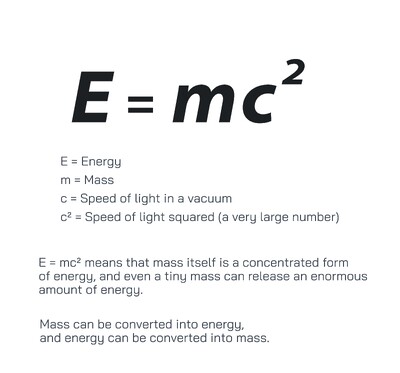
However, the classical cyclotron has an inherent limitation rooted in the nature of relativity. As the particle approaches extremely high speeds, its effective mass increases and the orbital frequency no longer remains constant. Because the acceleration mechanism relies on synchronization between the electric field frequency and the particle’s circular motion, relativistic mass increase disrupts this timing and prevents the cyclotron from accelerating particles beyond a particular threshold. For this reason, the classical cyclotron is most effective for accelerating relatively light charged particles — such as protons or alpha particles — to moderate energies. To overcome this constraint, later versions such as the synchrocyclotron and isochronous cyclotron were developed, each modifying magnetic or radio-frequency conditions to maintain acceleration at relativistic speeds.
In spite of newer accelerator technologies, the classical cyclotron remains a historically and scientifically significant achievement. It embodies the idea that profound discoveries sometimes emerge from designs that merge simplicity with physical principles. The cyclotron demonstrated that strong magnetic fields combined with alternating electric potentials could produce a controllable high-energy particle beam in a relatively compact device. This innovation laid the foundation for modern high-energy physics, nuclear medicine and advanced accelerator designs that push the boundaries of scientific understanding.
Beyond its scientific role, the cyclotron represents an important educational tool. Because its principles are easy to visualize and mathematically approachable, it helps students and researchers understand electromagnetism, particle motion and resonance. The spiral trajectories of particles within the cyclotron illustrate how energy builds gradually, how frequency synchronization operates and how electromagnetic fields can be used to manipulate matter. By examining the classical cyclotron, one gains a deeper appreciation of how physics can convert abstract principles into tools for exploring the invisible world of atoms and nuclei.
The legacy of the classical cyclotron continues today in laboratories, universities and medical facilities around the world. It remains a symbol of the transition from purely observational science to experimental physics driven by controlled high-energy investigations. From enabling the production of radioisotopes that save lives to paving the way for the colossal accelerators that probe the fabric of the universe, the classical cyclotron is a testament to human ingenuity and the power of theoretical understanding applied to practical engineering.