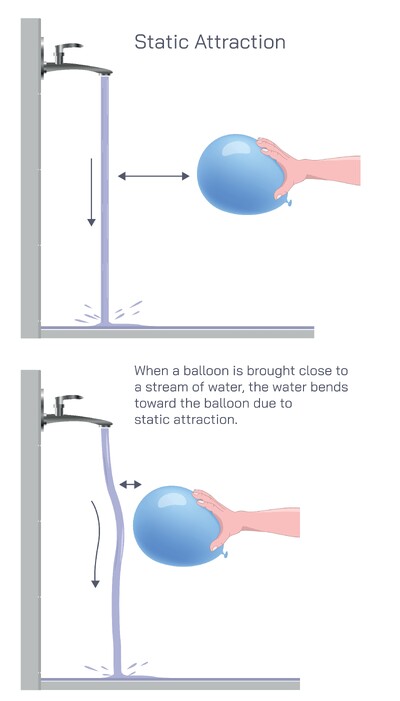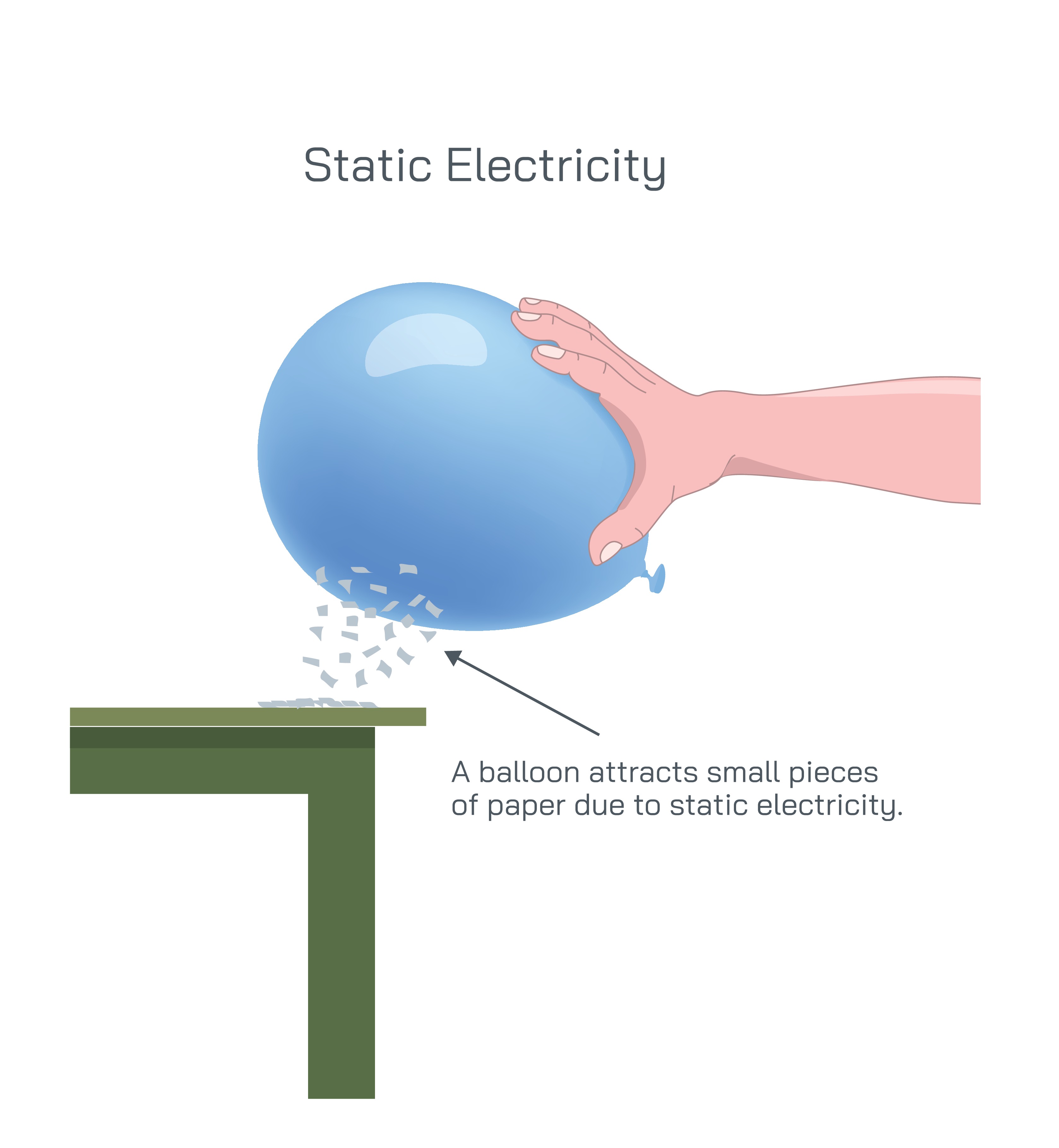
Static electricity is a common physical phenomenon that occurs when electric charges accumulate on the surface of an object. Unlike current electricity, where electric charges flow continuously through a conductor, static electricity involves charges that remain at rest for a short period of time. One of the simplest and most familiar demonstrations of static electricity is the balloon and pieces of paper experiment. This experiment clearly shows how electric charges can be transferred, how objects become electrically charged, and how charged objects can attract neutral materials without direct contact.
In everyday life, static electricity is often observed when clothes stick together, when a small shock is felt after touching a metal surface, or when dust particles cling to plastic objects. The balloon and paper pieces example is especially useful because it requires no complex equipment and visually demonstrates invisible electrical forces in an easy-to-understand way. This makes it a popular activity in classrooms, science demonstrations, and introductory physics lessons.
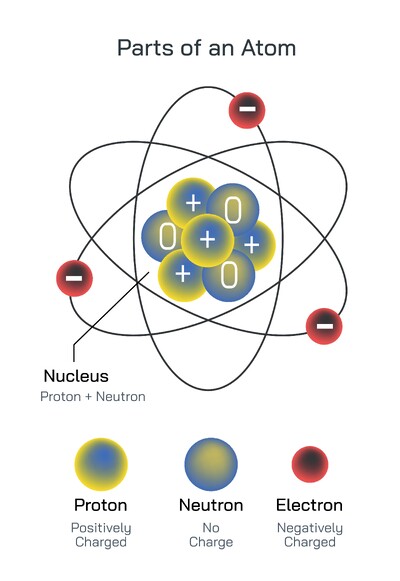
The experiment begins with an ordinary balloon and small, lightweight pieces of paper. The balloon is first rubbed against dry hair, wool, or a similar material. This rubbing process is known as charging by friction. When two different materials are rubbed together, electrons can move from one material to the other. Electrons are tiny negatively charged particles that orbit the nuclei of atoms. Some materials hold onto electrons more strongly than others, which allows electron transfer to occur during friction.
In the case of the balloon, rubbing it against hair or wool causes electrons to transfer from the hair to the balloon. As a result, the balloon gains extra electrons and becomes negatively charged. The hair, having lost electrons, becomes positively charged. This imbalance of electric charges is the foundation of static electricity. The charges remain on the surface of the balloon because air and rubber are poor conductors, preventing the electrons from flowing away easily.
After charging the balloon, it is brought close to small pieces of paper placed on a table. Initially, the paper pieces are electrically neutral, meaning they have equal numbers of positive and negative charges. Even though the paper is neutral, it still responds to the charged balloon. This happens because electric charges within the paper can rearrange themselves when influenced by a nearby charged object.
When the negatively charged balloon approaches the paper pieces, it repels the electrons in the paper. These electrons move slightly away from the balloon, toward the opposite side of each paper piece. As a result, the side of the paper closest to the balloon becomes slightly positively charged, while the far side becomes slightly negatively charged. This separation of charges within the paper is known as polarization.
Because opposite charges attract, the positively charged side of the paper is attracted to the negatively charged balloon. This attraction is stronger than the repulsion experienced by the farther negative charges in the paper. As a result, the paper pieces are pulled upward and stick to the surface of the balloon. This visible movement clearly demonstrates the force of electrostatic attraction acting at a distance.
The attraction between the balloon and the paper pieces continues until the charges equalize or until gravity overcomes the electrostatic force. Sometimes, after touching the balloon, the paper pieces may fall back down. This happens because some electrons may transfer from the balloon to the paper, reducing the charge difference. Once the paper becomes similarly charged, it may experience repulsion instead of attraction.
This simple experiment highlights several important concepts in physics. First, it shows that electric forces can act without direct contact. The balloon does not need to touch the paper initially for attraction to occur. Second, it demonstrates that neutral objects can be attracted to charged objects through charge redistribution. Third, it provides a clear example of how friction can produce static electricity by transferring electrons between materials.
The balloon and paper pieces experiment also helps explain why static electricity is more noticeable in dry conditions. Moist air contains water molecules that help dissipate excess charges by allowing electrons to move away more easily. In dry air, charges remain on surfaces for longer periods, making static electricity effects stronger and easier to observe. This is why the experiment works best in dry environments.
From an educational perspective, this experiment is valuable because it connects abstract concepts such as electric charge and force to everyday experiences. Students can easily relate to balloons, paper, and hair, making the learning process more engaging. The experiment encourages observation, questioning, and explanation, which are essential components of scientific thinking.
Static electricity plays an important role in many practical applications. Photocopiers and laser printers use electrostatic charges to transfer toner onto paper. Air purifiers rely on static electricity to trap dust and particles. Industrial processes use electrostatic forces for spray painting and material separation. Understanding simple demonstrations like the balloon and paper experiment provides a foundation for appreciating these advanced technologies.
It is also important to understand the limitations of static electricity. The charges involved are usually small and temporary. Once the charges are neutralized, the effects disappear. This is why the paper pieces eventually fall off the balloon and why the balloon may need to be rubbed again to restore the effect.
The balloon and paper pieces example clearly distinguishes static electricity from electric current. In this experiment, there is no continuous flow of charges through a wire or circuit. Instead, charges build up and remain localized, creating attractive and repulsive forces. This distinction helps learners understand different forms of electrical phenomena.
In scientific terms, the forces observed in this experiment are governed by the laws of electrostatics. Charged objects exert forces on each other based on the amount of charge and the distance between them. While the mathematical description of these forces may be complex, the balloon and paper experiment provides a clear and intuitive demonstration of these principles in action.
In conclusion, the static electricity example using a balloon and pieces of paper is a powerful and simple demonstration of electrostatic phenomena. Rubbing the balloon transfers electrons and creates a charge imbalance. When the charged balloon is brought near neutral paper pieces, charge redistribution within the paper causes electrostatic attraction, lifting the paper toward the balloon. This experiment effectively illustrates fundamental concepts such as charge transfer, polarization, and electrostatic force. By observing this everyday phenomenon, learners gain a deeper understanding of static electricity and its role in both natural occurrences and modern technology.