The concept of neutral atoms, cations, and anions forms the foundation of chemistry and helps explain how matter behaves, reacts, and forms compounds. Every substance around us, from the air we breathe to the food we eat and the materials we use, is built from atoms. Understanding how these atoms gain or lose electric charge allows us to understand chemical reactions, electricity in solutions, biological processes, and even industrial manufacturing. The distinction between a neutral atom, a cation, and an anion is based entirely on the balance between tiny subatomic particles inside the atom.
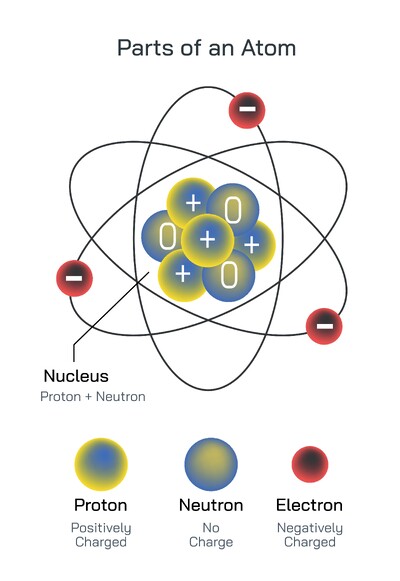
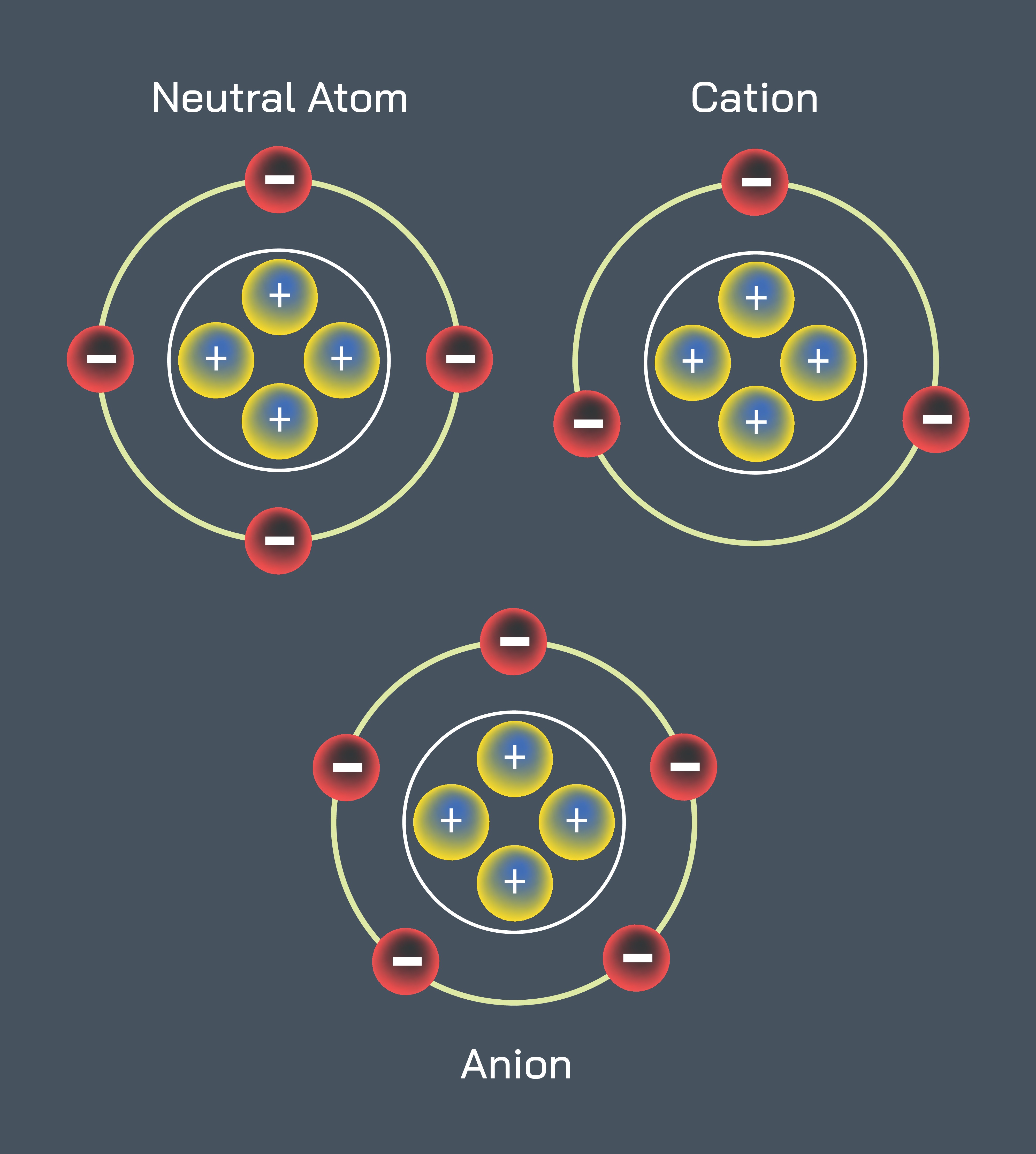
A neutral atom is the most basic and stable form of matter. It consists of three fundamental particles: protons, neutrons, and electrons. Protons carry a positive electrical charge and are located in the nucleus at the center of the atom. Neutrons have no electrical charge and also reside in the nucleus, contributing to atomic mass and stability. Electrons carry a negative electrical charge and move around the nucleus in specific energy levels or shells. In a neutral atom, the number of protons is exactly equal to the number of electrons. Because positive and negative charges cancel each other, the overall electrical charge of the atom is zero. This electrical neutrality is why such atoms do not naturally attract or repel other neutral atoms through electrical forces alone.
Neutral atoms are the building blocks of elements found in the periodic table. For example, a neutral hydrogen atom has one proton and one electron, while a neutral carbon atom has six protons and six electrons. Although neutral atoms may participate in chemical reactions, they begin with no net charge. The stability of a neutral atom depends largely on its outermost electrons, commonly called valence electrons. These electrons determine how an atom interacts with others and whether it tends to lose, gain, or share electrons to achieve a more stable configuration.
When an atom loses one or more electrons, it no longer remains neutral and becomes a cation. A cation is a positively charged ion formed because the atom now contains more protons than electrons. Since protons are positively charged and electrons are negatively charged, losing electrons removes negative charge from the atom. The remaining positive charge is what defines a cation. This process often occurs in atoms that have only a few electrons in their outer shell, especially metals. These atoms can achieve stability more easily by giving up electrons rather than gaining them.
The formation of a cation is closely linked to energy changes. Removing an electron requires energy, but once the electron is lost, the atom often becomes more stable because it achieves a filled or nearly filled outer shell. For example, a sodium atom normally has one electron in its outermost shell. By losing that single electron, it becomes a sodium ion with a positive charge. This positively charged ion is far more stable than the neutral atom because its electron arrangement resembles that of a noble gas. Cations play a vital role in chemistry and biology. In the human body, positively charged ions such as sodium, potassium, and calcium are essential for nerve signals, muscle contraction, and maintaining fluid balance.
An anion is formed when an atom gains one or more electrons, resulting in a negatively charged ion. This happens because the number of electrons becomes greater than the number of protons. Since electrons carry negative charge, gaining extra electrons gives the atom an overall negative charge. Anions are commonly formed by nonmetals, which typically have nearly full outer electron shells. These atoms achieve stability by gaining electrons rather than losing them.
The process of anion formation is usually accompanied by the release of energy, as the atom becomes more stable with a complete outer shell. For instance, a chlorine atom has seven electrons in its outer shell. By gaining one electron, it becomes a chloride ion with a negative charge. This newly formed anion is much more stable and readily interacts with positively charged ions. Anions are crucial in many chemical reactions and natural systems. In everyday life, negatively charged ions such as chloride, sulfate, and nitrate are found in salts, fertilizers, water supplies, and biological fluids.
The interaction between cations and anions is one of the most important principles in chemistry. Because opposite charges attract, positively charged cations and negatively charged anions are drawn toward each other by strong electrostatic forces. This attraction leads to the formation of ionic bonds, which hold ionic compounds together. Common table salt is a classic example of an ionic compound formed from the attraction between sodium cations and chloride anions. This attraction creates a stable, repeating structure known as an ionic lattice.
The behavior of neutral atoms, cations, and anions also explains many observable properties of substances. Ionic compounds tend to have high melting points because strong electrical attractions hold their ions tightly together. When dissolved in water or melted, these compounds can conduct electricity because their ions are free to move. In contrast, neutral atoms and molecules generally do not conduct electricity because they lack charged particles that can flow.
In chemical reactions, the transformation from neutral atoms to ions is often described in terms of oxidation and reduction. When an atom loses electrons and becomes a cation, it is said to be oxidized. When an atom gains electrons and becomes an anion, it is reduced. These processes always occur together because electrons lost by one atom must be gained by another. This exchange of electrons is the driving force behind countless chemical reactions, from the rusting of iron to the generation of energy in batteries.
The importance of understanding neutral atoms, cations, and anions extends beyond textbooks and laboratories. In biology, ions regulate heartbeat, transmit nerve impulses, and control muscle movement. In environmental science, ionic forms of elements determine water quality and soil fertility. In industry, controlling ionic reactions allows the production of metals, chemicals, and electronic components. Even in everyday household products such as soaps, detergents, and batteries, the principles of ion formation and charge balance are constantly at work.
The concepts of neutral atoms, cations, and anions are not only introductory ideas in chemistry but also powerful tools for understanding how the physical and biological world operates at the most fundamental level. These three forms of matter explain why substances combine, why some materials conduct electricity while others do not, and why living organisms depend so heavily on precise charge balance. At the heart of these ideas lies the behavior of electrons and the natural tendency of atoms to reach a stable and low-energy state.
A neutral atom represents the starting point of all chemical behavior. In this state, the atom contains equal numbers of protons and electrons, resulting in no overall electrical charge. This balance does not mean the atom is inactive; rather, it exists in a delicate equilibrium. The nucleus, dense with protons and neutrons, anchors the atom, while electrons occupy regions of space around it. These electrons are not randomly placed but are arranged in energy levels that determine how tightly they are held. The electrons in the outermost shell experience the weakest attraction to the nucleus, making them the primary participants in chemical change. Even though a neutral atom has no charge, it still possesses chemical potential, meaning it can interact with other atoms through electron sharing or transfer.
Atomic stability is closely linked to the arrangement of electrons. Atoms tend to be most stable when their outermost shell is complete. This principle explains why noble gases rarely react and why other elements undergo ion formation. When a neutral atom does not have a stable electron arrangement, it seeks stability through interaction. Some atoms achieve this by losing electrons, while others do so by gaining them. This natural drive toward stability is the fundamental reason cations and anions exist.
A cation forms when a neutral atom loses one or more electrons, creating an imbalance between positive and negative charges. Because electrons are relatively light and mobile compared to protons, they are far easier to remove. Once an electron is lost, the atom retains the same number of protons but fewer electrons, resulting in a net positive charge. The strength of this positive charge depends on how many electrons are lost. This process is common among metallic elements, which generally have loosely held outer electrons. Metals tend to form cations because losing electrons allows them to reach a more stable internal structure with less energy.
Cations are central to many physical and biological processes. In solids, positively charged metal ions form orderly arrangements that give metals their strength and conductivity. In aqueous solutions, cations move freely and enable electrical conduction. In living organisms, cations are indispensable. Sodium and potassium ions regulate nerve impulses by creating electrical signals across cell membranes. Calcium ions control muscle contraction, blood clotting, and enzyme activity. Without controlled cation movement, essential life processes would cease to function properly.
Anions arise when a neutral atom gains electrons, increasing its negative charge. This typically occurs in nonmetallic elements that are only one or two electrons short of a full outer shell. By gaining electrons, these atoms reduce their energy and achieve greater stability. The added electrons increase repulsion among electrons, but the overall energy decrease from achieving a stable configuration outweighs this effect. The resulting anion has a stronger attraction to positively charged species, making it highly reactive with cations.
Anions play equally important roles in nature and technology. Chloride ions help regulate fluid balance and digestion in the human body. Phosphate and nitrate ions are essential nutrients for plant growth and are fundamental to agriculture. In environmental systems, the presence or absence of certain anions determines water quality and soil health. In industrial chemistry, controlling anion behavior allows the production of acids, bases, fertilizers, and countless synthetic materials.
The interaction between cations and anions explains the formation of ionic compounds and many of their distinctive properties. Opposite charges attract with strong electrostatic force, leading to the formation of rigid, repeating structures. These structures are responsible for the hardness, brittleness, and high melting points of ionic solids. When such compounds dissolve in water, the ions separate and become mobile, allowing electrical current to flow. This principle underlies the operation of batteries, electrolysis, and many analytical techniques in chemistry.
Neutral atoms, ions, and their transformations are also deeply connected to energy changes. Ion formation is never random; it is governed by the balance between energy required to remove or add electrons and the energy released when stability is achieved. This balance explains why some elements form ions easily while others resist change. It also explains why chemical reactions release or absorb energy, influencing temperature, light emission, and electrical output.
Beyond chemistry, the principles of atomic charge influence physics, biology, medicine, and engineering. Modern electronics rely on controlled movement of charged particles. Medical diagnostics and treatments depend on ion behavior in cells and tissues. Environmental monitoring uses ionic concentrations to assess pollution and ecosystem health. Every one of these applications traces back to the simple yet profound distinction between a neutral atom, a cation, and an anion.
Understanding these forms of matter provides a unified explanation for how substances interact, how energy is transferred, and how order emerges from microscopic particles. Neutral atoms represent balance, cations represent loss and positive charge, and anions represent gain and negative charge. Together, they form the invisible framework that governs chemical reactions and sustains both the natural world and modern technology.
The concepts of neutral atoms, cations, and anions form the backbone of chemistry because they explain how matter acquires structure, reactivity, and functionality. While the basic definitions focus on the balance of protons and electrons, the true importance of these ideas becomes clearer when we explore how atomic charge influences energy, bonding, physical properties, and natural systems. From the microscopic behavior of particles to large-scale industrial and biological processes, the presence or absence of electric charge determines how matter behaves.
A neutral atom is best understood as a state of electrical balance rather than inactivity. In this state, the positive charge of protons is exactly balanced by the negative charge of electrons. However, this balance does not imply that the atom is chemically inert. Neutral atoms contain stored potential energy within their electron arrangements. The electrons occupy distinct energy regions, and their distribution determines whether the atom is stable or chemically reactive. Atoms with incomplete outer shells are naturally inclined to interact with other atoms in order to reduce their energy and achieve greater stability. This tendency is universal and drives nearly all chemical change.
The nucleus of a neutral atom plays a crucial role beyond simply housing protons and neutrons. Its positive charge attracts electrons, creating an internal force that holds the atom together. The strength of this attraction varies depending on atomic size and nuclear charge, which explains why some atoms hold electrons tightly while others release them easily. This variation is what makes some elements more likely to form ions than others. Even among neutral atoms, differences in nuclear attraction influence melting points, electrical behavior, and reactivity.
When a neutral atom loses electrons, it becomes a cation, and this change dramatically alters its behavior. The loss of electrons reduces electron-electron repulsion and increases the effective pull of the nucleus on the remaining electrons. As a result, cations are usually smaller in size than their neutral counterparts. This decrease in size increases charge density, making cations highly influential in determining the structure and strength of ionic compounds. The higher the positive charge on a cation, the stronger its ability to attract surrounding negative ions or molecules.
Cations are especially significant in aqueous environments, where water molecules surround and stabilize them. This interaction allows ions to move freely, enabling electrical conductivity in solutions. This principle explains why saltwater conducts electricity while pure water does not. In biological systems, the controlled movement of cations across membranes creates electrical signals. These signals are essential for thought, movement, heartbeat regulation, and sensory perception. Without the precise balance and flow of cations, complex life would not be possible.
Anions, formed when atoms gain electrons, also experience profound changes in size and behavior. Gaining electrons increases electron-electron repulsion, often making anions larger than their neutral forms. This expansion affects how anions interact with other particles and solvents. Anions tend to be strong participants in chemical reactions because their excess negative charge makes them highly responsive to positive species. Their behavior explains the acidity, basicity, and reactivity of many substances.
In environmental chemistry, anions play a decisive role in determining water and soil quality. Excess nitrate or phosphate ions can disrupt ecosystems, while appropriate levels support plant growth. In medicine, anions help maintain pH balance in blood and cells, ensuring enzymes function correctly. In industry, anion control is essential in processes such as electroplating, water purification, and chemical synthesis.
The attraction between cations and anions results in ionic bonding, one of the strongest and most predictable forms of chemical interaction. Ionic bonds are not directional but extend in all directions, forming rigid, repeating patterns. These patterns explain why ionic solids are often brittle yet strong, and why they require significant energy to melt. The same forces that hold ionic crystals together also allow them to dissolve in polar solvents, where the ions separate and move independently.
Neutral atoms, cations, and anions are also central to understanding energy transfer and chemical change. The formation of ions is always associated with energy exchange, either absorbed or released. This energy exchange is the basis of oxidation and reduction processes, which power batteries, fuel cells, corrosion reactions, and metabolic pathways. Every time energy is stored or released chemically, electrons are being transferred between atoms.
In modern technology, the manipulation of charged particles has become essential. Semiconductor devices rely on controlled ion formation to regulate electrical flow. Medical imaging and radiation therapies depend on ion interactions with tissues. Industrial production of metals involves converting neutral ores into ions and then back into neutral atoms. Even household appliances such as rechargeable batteries operate through the repeated conversion of neutral atoms into cations and anions.
Ultimately, the distinction between a neutral atom, a cation, and an anion represents three different states of the same matter, defined by electron balance. These states determine how atoms connect, how substances conduct electricity, how reactions proceed, and how energy is transferred. Understanding these concepts provides insight into the invisible forces shaping everything from atomic-scale reactions to the functioning of living organisms and advanced technologies. Far from being simple definitions, neutral atoms, cations, and anions form a unified framework that explains the behavior of matter across science, industry, and everyday life.
In summary, a neutral atom is electrically balanced with equal numbers of protons and electrons, resulting in no overall charge. A cation forms when an atom loses electrons and becomes positively charged, while an anion forms when an atom gains electrons and becomes negatively charged. These simple yet powerful concepts explain how atoms interact, why compounds form, and how matter behaves at the most fundamental level. Mastering the differences between neutral atoms, cations, and anions provides a clear gateway to understanding chemistry, physics, biology, and the material world around us.