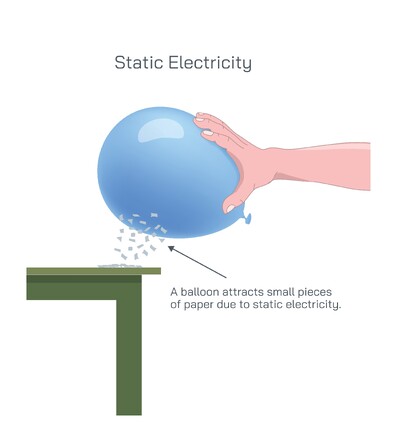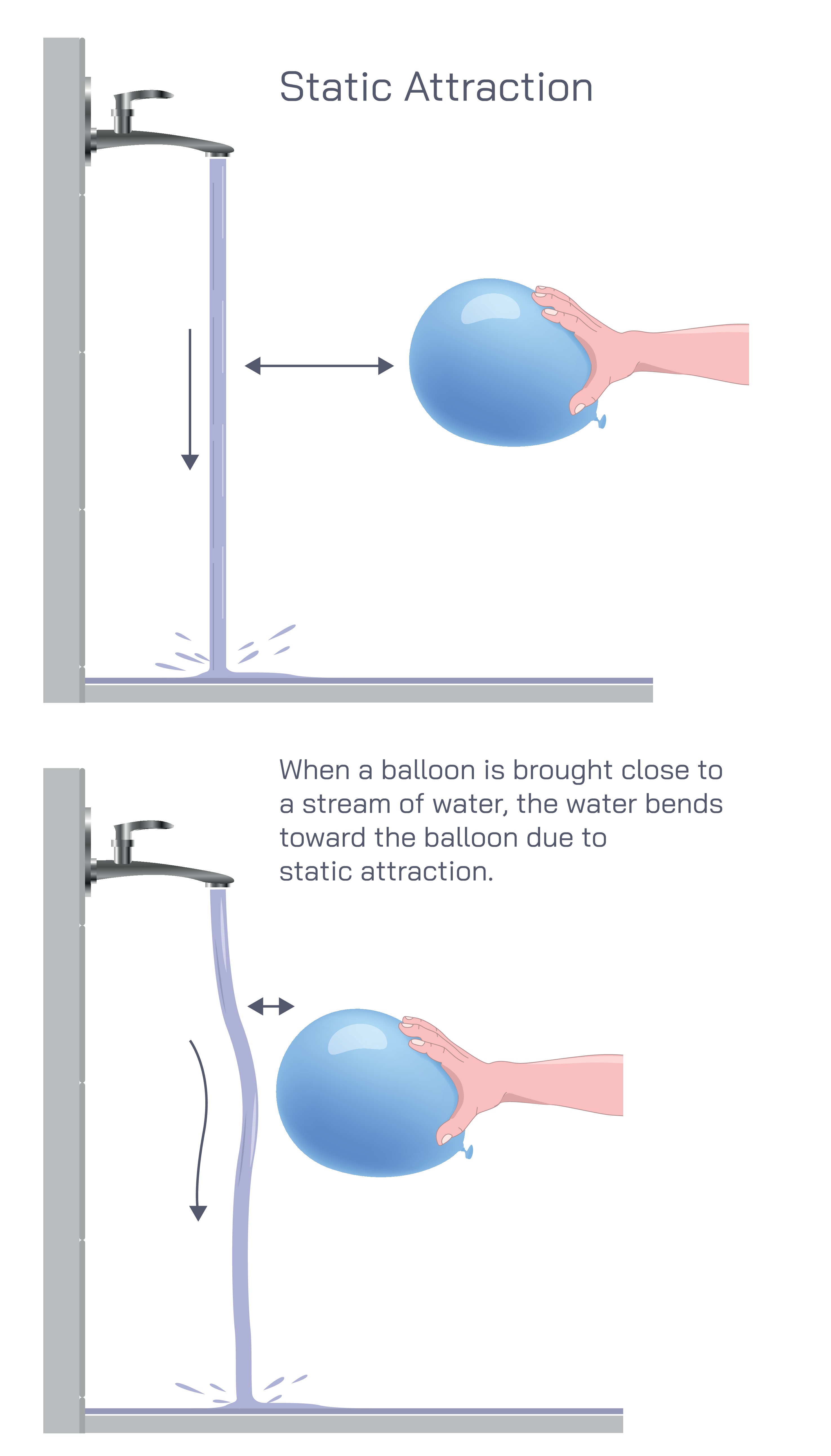
Static electricity is a fascinating physical phenomenon in which electric charges accumulate on the surface of an object and remain temporarily at rest. One of the most striking and easy-to-understand demonstrations of static electricity is the experiment in which a balloon is brought close to a thin stream of water, causing the water to bend toward the balloon. Although the balloon never touches the water, the stream curves noticeably in its direction. This simple observation reveals important principles of electrostatics, molecular behavior, and electric forces acting at a distance.
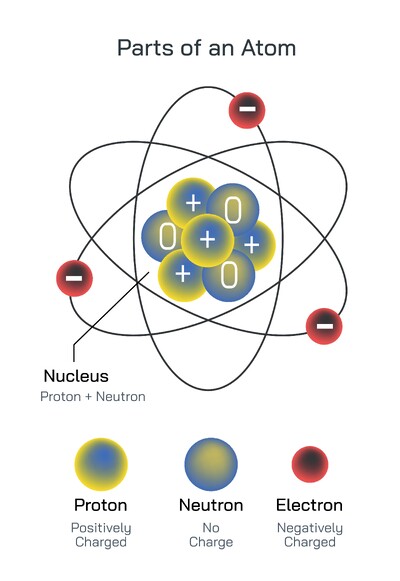
The experiment begins with an ordinary balloon and a narrow, steady stream of water flowing from a tap. The balloon is first rubbed against dry hair, wool, or a similar material. This rubbing process creates static electricity through friction. During friction, electrons are transferred from one material to another. In this case, electrons move from the hair or fabric to the balloon. As a result, the balloon gains extra electrons and becomes negatively charged, while the hair or fabric becomes positively charged. Because rubber is a good insulator, the excess electrons remain on the surface of the balloon instead of flowing away.
Once the balloon is charged, it is slowly brought close to the thin stream of water without touching it. Almost immediately, the water stream bends toward the balloon. This bending occurs even though water is electrically neutral overall. The explanation for this behavior lies in the internal structure of water molecules and how they respond to electric charges.
Water molecules are polar in nature. This means that although the molecule as a whole is electrically neutral, it has a slight separation of charges within it. One end of a water molecule has a slight positive charge, while the other end has a slight negative charge. This polarity is due to the uneven distribution of electrons between the atoms within the molecule. Because of this property, water molecules are highly responsive to electric fields.
When the negatively charged balloon is brought near the stream of water, it creates an electric field around itself. This electric field influences the water molecules in the stream. The negative charge on the balloon repels the negatively charged side of the water molecules and attracts the positively charged side. As a result, the water molecules rotate and rearrange themselves so that their positively charged ends face the balloon.
This rearrangement of charges within the water stream is known as polarization. Even though the water remains neutral overall, the side of the stream closest to the balloon becomes slightly more positive, while the far side becomes slightly more negative. Because opposite charges attract, the positively polarized side of the water experiences an attractive force toward the negatively charged balloon.
The attraction between the balloon and the polarized water molecules is strong enough to overcome the natural downward motion of the water caused by gravity. As a result, the stream curves toward the balloon instead of flowing straight downward. The closer the balloon is to the water stream, the stronger the electric field and the greater the bending effect observed.
This experiment demonstrates that electric forces can act without direct contact. The balloon does not need to touch the water for the attraction to occur. The electric field produced by the charged balloon extends through the surrounding air and influences nearby objects. This concept is fundamental in electrostatics and helps explain how charged objects can interact across empty space.
The bending of water toward a charged balloon also highlights the difference between static electricity and electric current. In this experiment, there is no continuous flow of electrons through a circuit. Instead, charges remain localized on the balloon and influence nearby matter through electrostatic forces. This is why the effect is temporary. Over time, the balloon may lose its charge to the air, reducing the strength of the attraction and causing the water stream to return to its normal path.
Environmental conditions play an important role in the effectiveness of this experiment. Static electricity effects are stronger in dry air because moisture in the air allows excess charges to dissipate more quickly. In humid conditions, the balloon may lose its charge faster, and the bending of the water stream may be less noticeable. This explains why static electricity demonstrations work best in dry weather.
From an educational perspective, this experiment is especially valuable because it connects abstract concepts of electric charge and electric fields to a visible and memorable effect. Students can easily observe the bending of the water stream and relate it to the presence of static electricity. This makes the concept of electrostatic attraction easier to understand than purely theoretical explanations.
The balloon and water stream demonstration also helps explain real-world phenomena. Similar electrostatic effects occur in industrial processes such as inkjet printing, electrostatic spray painting, and air filtration systems. Even natural phenomena, such as the behavior of charged particles in the atmosphere, are governed by the same principles illustrated by this simple experiment.
Another important concept illustrated by this experiment is the role of molecular structure in physical behavior. The polarity of water molecules is the key reason why water responds so strongly to electric fields. Nonpolar liquids do not bend as noticeably in the presence of a charged object, highlighting the unique properties of water.
Safety is an additional advantage of this demonstration. The experiment uses everyday materials and involves very small amounts of charge, making it safe for classroom and home demonstrations. It provides a powerful visual effect without requiring specialized equipment or electrical power sources.
The experiment also encourages curiosity and scientific inquiry. By varying factors such as the distance between the balloon and the water, the thickness of the water stream, or the material used to charge the balloon, learners can explore how different conditions affect electrostatic attraction. This promotes deeper understanding through observation and experimentation.
In conclusion, when a charged balloon is brought close to a stream of water, the water bends toward the balloon due to static attraction. This occurs because the balloon carries excess electric charge that creates an electric field, which polarizes the water molecules in the stream. The positively charged sides of the water molecules are attracted to the negatively charged balloon, causing the stream to curve toward it. This simple yet powerful demonstration clearly illustrates the principles of static electricity, charge polarization, and electrostatic force acting at a distance. Understanding this phenomenon provides valuable insight into the behavior of electric charges and their influence on matter in both everyday life and advanced scientific applications.