Coup and contrecoup injury refers to a distinctive pattern of traumatic brain injury that occurs when the head experiences a sudden impact or rapid acceleration and deceleration. These injuries are commonly observed in road traffic accidents, falls, sports-related trauma, and violent assaults. The terms “coup” and “contrecoup” describe two different sites of brain injury that result from the same traumatic event. Understanding this injury pattern is essential in medicine, neurology, forensic science, and emergency care because it explains how damage can occur on opposite sides of the brain even when the external impact appears localized.
Meaning of Coup and Contrecoup Injury
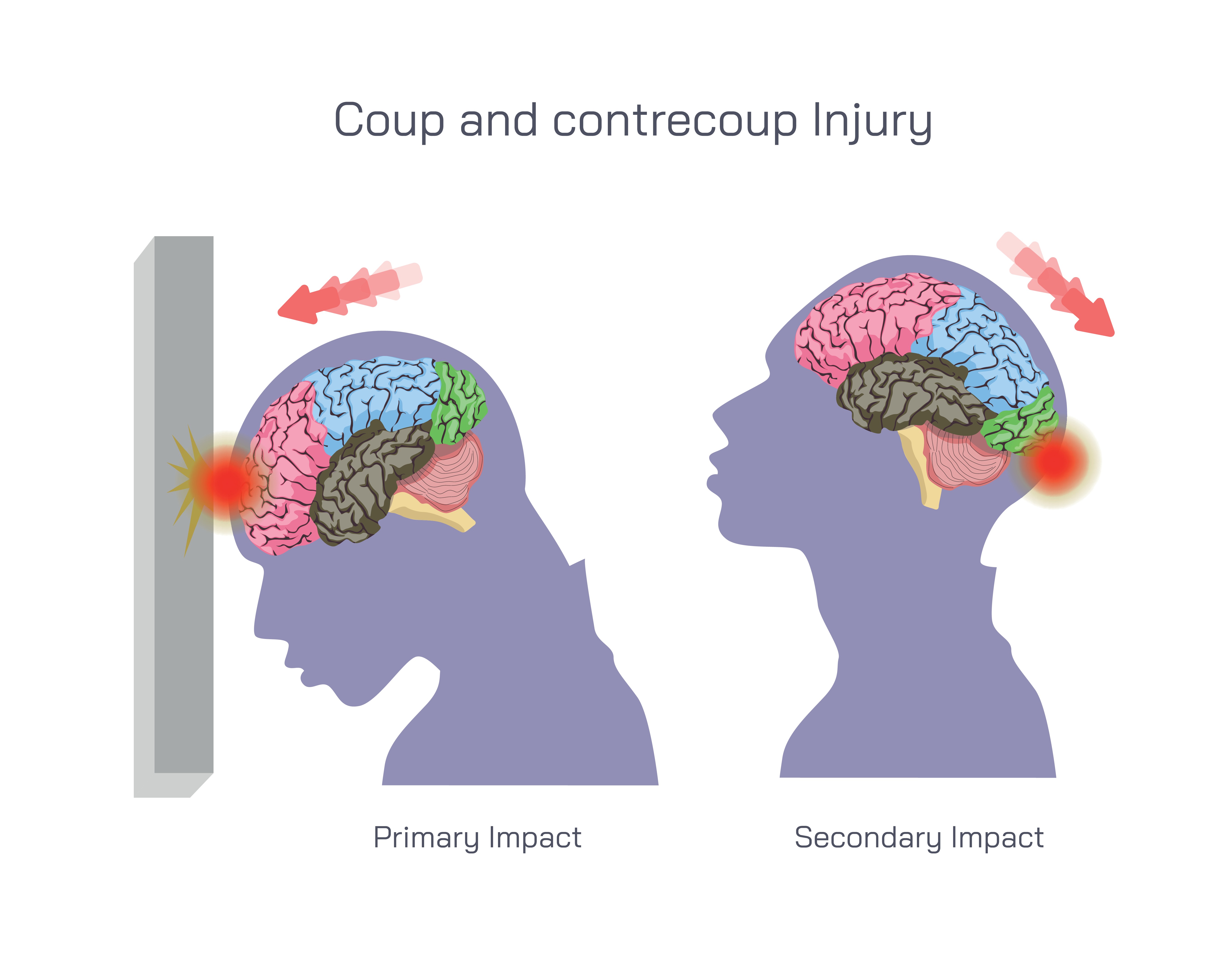
A coup injury is the brain damage that occurs directly beneath the point of impact on the skull. When the head strikes a stationary object or is struck by a moving object, the skull stops abruptly, but the brain continues to move due to inertia. As a result, the brain collides with the inner surface of the skull at the site of impact, causing bruising or contusion. This direct injury site is known as the coup lesion.
A contrecoup injury, on the other hand, occurs on the opposite side of the brain from the initial impact. After the brain strikes the skull at the impact site, it rebounds and moves toward the opposite side, where it collides again with the inner skull surface. This secondary collision causes additional brain damage, referred to as the contrecoup lesion. Together, coup and contrecoup injuries illustrate how internal brain movement plays a critical role in traumatic brain damage.
Mechanism Behind Coup and Contrecoup Injuries
The primary mechanism behind coup and contrecoup injuries is inertia. The brain is a soft, semi-solid organ suspended in cerebrospinal fluid inside the rigid skull. When the head undergoes sudden movement, the skull may stop abruptly, but the brain continues moving momentarily. This relative motion between the brain and skull results in internal collisions.
In a coup injury, the brain impacts the skull at the site of external force. In a contrecoup injury, the brain rebounds and strikes the skull on the opposite side. Rapid acceleration and deceleration are especially important in producing contrecoup injuries. These forces are common in high-speed vehicle collisions, falls from height, and situations where the head moves suddenly and violently.
Types of Trauma Causing Coup and Contrecoup Injuries
Coup and contrecoup injuries are most commonly associated with blunt head trauma. In road accidents, sudden braking or collision can cause the head to strike the dashboard, steering wheel, or ground. In falls, the back or side of the head may hit a hard surface, leading to injury on both the impact side and the opposite side of the brain. In sports such as boxing, football, or hockey, repeated blows to the head can result in similar injury patterns.
Unlike penetrating injuries, coup and contrecoup injuries involve closed head trauma, where the skull remains intact but significant internal damage occurs. This makes them particularly dangerous because external signs may underestimate the severity of brain injury.
Brain Damage Patterns in Coup and Contrecoup Injury
The areas of the brain most commonly affected in coup and contrecoup injuries are the frontal and temporal lobes. These regions are especially vulnerable because of the irregular, rough inner surfaces of the skull in these areas. When the brain collides with these bony ridges, tissue damage is more severe.
The injury may manifest as cerebral contusions, which are bruises in brain tissue, or as microscopic damage to nerve fibers. In severe cases, swelling, bleeding, and increased pressure inside the skull can develop, leading to life-threatening complications.
Clinical Importance of Coup and Contrecoup Injuries
From a clinical perspective, coup and contrecoup injuries are significant because they often result in widespread brain damage rather than localized injury. Patients may experience loss of consciousness, confusion, memory problems, headaches, dizziness, or neurological deficits. The presence of injury on opposite sides of the brain complicates diagnosis and treatment.
Medical imaging plays a crucial role in identifying coup and contrecoup injuries. Brain scans often reveal contusions or hemorrhages at both the impact site and the opposite side, confirming the diagnosis. Early recognition is vital for preventing secondary brain injury caused by swelling or reduced blood flow.
Forensic and Medico-Legal Significance
Coup and contrecoup injuries are highly important in forensic medicine. The pattern of brain injury can help determine the direction and nature of the force applied to the head. This information is useful in reconstructing accidents, assaults, or falls. Forensic experts analyze these injury patterns to distinguish between different types of trauma and to assess whether injuries are consistent with reported events.
In legal investigations, the presence of contrecoup injuries may indicate high-energy trauma and can support conclusions about the severity and mechanism of injury.
Difference Between Coup and Contrecoup Injury
Although coup and contrecoup injuries occur together in many cases, they differ in their location and cause. Coup injury occurs at the site of direct impact, while contrecoup injury occurs at the opposite side due to rebound forces. Coup injuries are more common when the head is struck by a moving object, whereas contrecoup injuries are more prominent when the head strikes a stationary surface. Understanding this distinction helps clinicians and forensic specialists interpret injury patterns accurately.
Prevention and Safety Considerations
Because coup and contrecoup injuries are caused by rapid head movement and impact, preventive measures focus on reducing acceleration forces. Seat belts, helmets, airbags, and protective sports gear play a crucial role in minimizing head movement during accidents. These safety measures help absorb energy and reduce the likelihood of severe brain displacement within the skull.
Public awareness of head injury risks and the importance of protective equipment is essential in reducing the incidence and severity of traumatic brain injuries.
Educational Importance in Medical and Anatomy Studies
Coup and contrecoup injuries are fundamental concepts in anatomy, neurology, and emergency medicine education. They provide a clear example of how physical forces interact with biological structures. Visual diagrams are commonly used to help students understand how the brain moves within the skull during trauma and why injuries can occur far from the point of impact.
Conclusion
Coup and contrecoup injuries represent a characteristic and clinically important pattern of traumatic brain injury caused by sudden head movement and impact. The coup injury occurs at the site of direct impact, while the contrecoup injury results from the brain rebounding and striking the opposite side of the skull. Together, they demonstrate how internal brain motion contributes to damage during head trauma. Understanding these injuries is essential for accurate diagnosis, effective treatment, forensic analysis, and injury prevention, highlighting the delicate relationship between the brain, skull, and physical forces acting on the human body.