The complex plane is a powerful mathematical concept used to visually represent complex numbers in a clear and intuitive way. It provides a geometric interpretation of numbers that contain both real and imaginary parts and helps learners understand abstract algebraic ideas through spatial representation. The complex plane is also known as the Argand plane, named after the mathematician who popularized this method of representation. By using two perpendicular axes, the complex plane transforms complex numbers into points and vectors, making their behavior easier to analyze and interpret.
Concept and Purpose of the Complex Plane
In mathematics, complex numbers extend the idea of real numbers by including an imaginary component. While real numbers alone can be represented on a single number line, complex numbers require a two-dimensional framework. The complex plane fulfills this need by combining the real number line with an imaginary number line, arranged at right angles to each other. This allows every complex number to be represented uniquely as a point in a plane.
The main purpose of the complex plane is to convert abstract numerical expressions into geometric objects. This geometric viewpoint makes it easier to understand relationships between complex numbers, such as their relative positions, distances, and directions. It also plays a crucial role in advanced mathematics, physics, engineering, and signal analysis.
Structure of the Complex Plane
The complex plane consists of two perpendicular axes. The horizontal axis is called the real axis and represents the real part of a complex number. The vertical axis is called the imaginary axis and represents the imaginary part. The point where these two axes intersect is the origin, which represents the complex number with both real and imaginary parts equal to zero.
Each point in the complex plane corresponds to one unique complex number. The horizontal distance of the point from the origin represents the real component, while the vertical distance represents the imaginary component. Positive values are measured to the right on the real axis and upward on the imaginary axis, while negative values extend to the left and downward respectively.
Representation of Complex Numbers
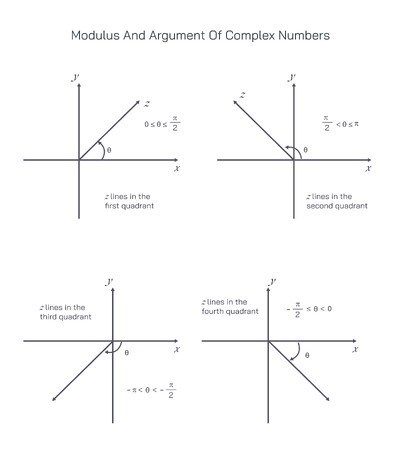
A complex number is represented in the complex plane as a point whose coordinates correspond to its real and imaginary parts. This point can also be viewed as a directed line segment, or vector, starting from the origin and ending at the point representing the complex number. This vector representation provides additional insight into the magnitude and direction associated with the number.
By plotting complex numbers in this way, it becomes possible to visually compare them. Numbers with the same real part appear aligned vertically, while numbers with the same imaginary part appear aligned horizontally. This simple observation helps in understanding patterns and symmetries within sets of complex numbers.
Geometric Interpretation and Visualization
One of the greatest advantages of the complex plane is its ability to provide geometric meaning to algebraic concepts. The distance of a point from the origin represents the size or magnitude of the complex number. The direction of the line joining the origin to the point indicates the orientation of the number in the plane. Together, these two ideas help explain how complex numbers behave when combined or transformed.
For example, movements to the right or left correspond to changes in the real component, while movements upward or downward correspond to changes in the imaginary component. Rotations and scaling in the complex plane can be understood visually, making the plane an essential tool for understanding transformations.
Importance in Algebra and Geometry
The complex plane forms a bridge between algebra and geometry. Algebraic operations involving complex numbers can be interpreted geometrically as movements, rotations, or stretches in the plane. This dual interpretation deepens understanding and makes abstract ideas more tangible. Students often find it easier to grasp complex number behavior when they can see it represented visually rather than symbolically.
The plane also supports the study of geometric properties such as symmetry, alignment, and distance. These properties become especially important in advanced topics where complex numbers are used to describe waves, oscillations, and rotating systems.
Educational and Practical Significance
In education, the complex plane is a foundational concept in higher-level mathematics. It helps students transition from basic number systems to more abstract mathematical thinking. Visual learning through the complex plane strengthens conceptual clarity and improves problem-solving skills.
Beyond education, the complex plane has wide applications in science and engineering. It is used to model electrical circuits, analyze signals, describe alternating current behavior, and study physical systems involving rotation and vibration. In these fields, the geometric interpretation provided by the complex plane simplifies analysis and communication of complex ideas.
Relationship with Coordinate Geometry
The complex plane closely resembles the two-dimensional coordinate plane used in coordinate geometry. The key difference lies in interpretation rather than structure. While coordinate geometry treats points as pairs of numerical values, the complex plane treats each point as a single number with two components. This subtle difference allows complex numbers to be manipulated algebraically while still benefiting from geometric intuition.
This relationship makes the complex plane a natural extension of earlier mathematical concepts, helping learners build on existing knowledge rather than starting from scratch.
Conclusion
The complex plane is an elegant and essential mathematical tool that transforms complex numbers into visual objects. By combining the real and imaginary axes, it provides a clear framework for representing, analyzing, and understanding complex numbers. Its geometric interpretation brings clarity to abstract algebraic ideas and supports learning across mathematics, science, and engineering. Through the complex plane, complex numbers become not just symbols, but meaningful points and directions in a structured mathematical space.