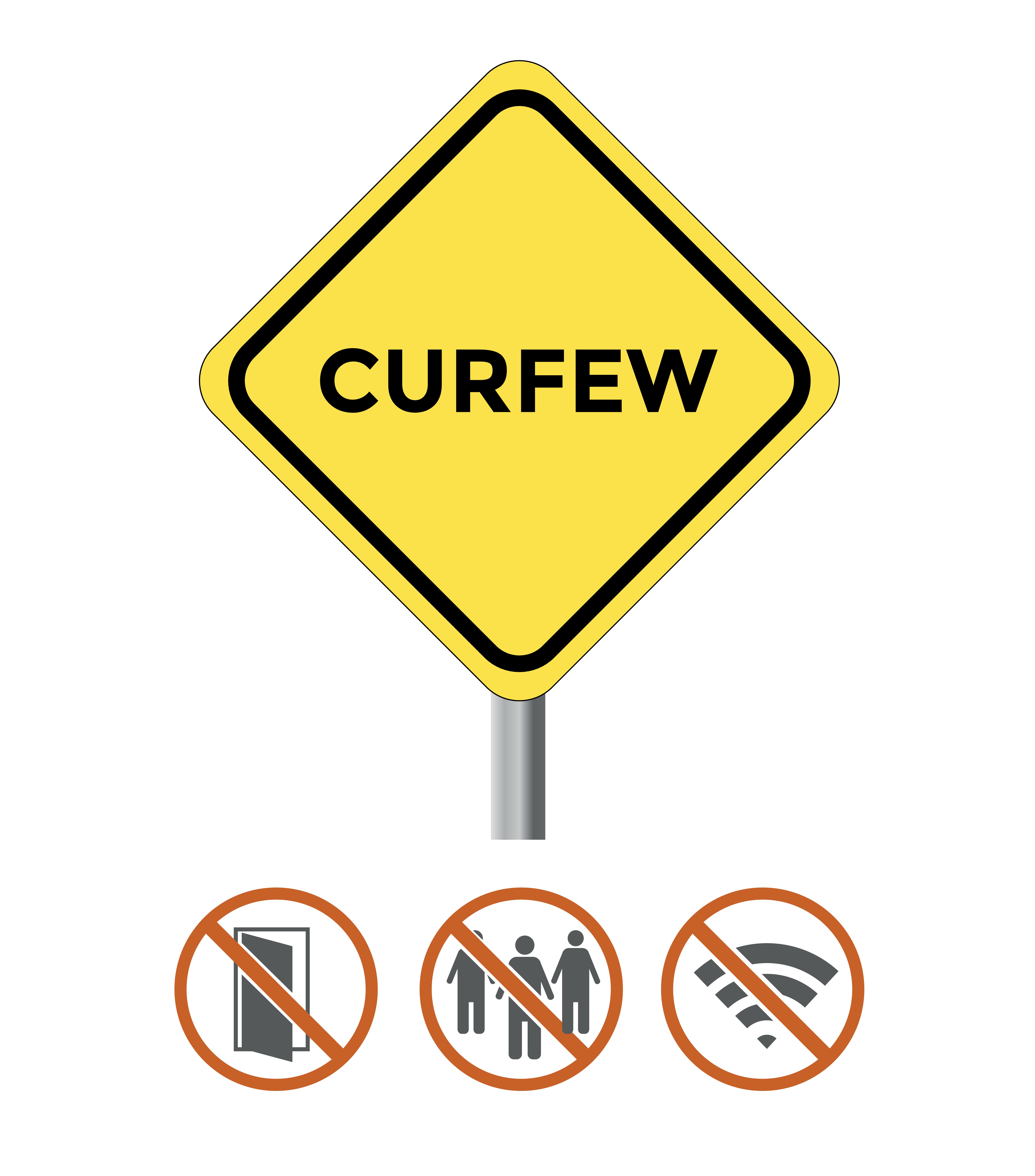
Curfew is a strict administrative measure imposed by the government to restrict public movement in a specific area for a defined period of time. It is usually enforced during situations of serious public disorder, riots, large-scale violence, or threats to public safety. The primary objective of imposing a curfew is to prevent the escalation of unrest, protect lives and property, and restore peace and order. Curfew is not a routine law enforcement tool but an emergency response used when normal policing methods are insufficient to control a volatile situation.
Meaning and Concept of Curfew
The term curfew refers to an official order that requires people to remain indoors during designated hours, except for essential services or individuals with special permission. During a curfew, public gatherings are prohibited, shops are closed, and movement on roads is heavily restricted or completely banned. The decision to impose a curfew is taken by civil authorities when they assess that uncontrolled movement of people could worsen violence, spread rumors, or encourage further rioting.
Curfew differs from general restrictions because it grants the administration stronger powers to enforce compliance. These powers are exercised under legal provisions that allow authorities to take immediate action in the interest of public safety. Curfew is meant to be temporary and is lifted once the situation stabilizes and normalcy begins to return.
Why Governments Impose Curfew During Riots
Riots often involve large crowds, emotional tension, misinformation, and spontaneous violence. In such environments, the presence of crowds can quickly turn peaceful protests into violent confrontations. Governments impose curfew to physically separate people, reduce crowd density, and eliminate opportunities for mobs to assemble. By restricting movement, authorities limit the spread of violence from one area to another and prevent external groups from joining the unrest.
Another important reason for curfew is to give security forces operational control. When streets are empty, law enforcement agencies can identify troublemakers more easily, conduct patrols safely, and respond quickly to emergencies. Curfew also helps in cutting off logistical support to rioters, such as weapons, stones, fuel, or inflammatory materials.
Government Actions Taken During Curfew
Once a curfew is imposed, the government initiates a coordinated response involving civil administration, police forces, and sometimes additional security agencies. One of the first actions is the large-scale deployment of police personnel at sensitive locations. Checkpoints are established, roadblocks are set up, and continuous patrolling is conducted to ensure compliance. Entry and exit points of affected areas are closely monitored.
Authorities issue clear public announcements through television, radio, mobile alerts, and social media to inform citizens about curfew rules, timings, and penalties for violations. This communication is crucial to avoid panic and misinformation. Emergency helplines are activated to assist citizens with medical needs, food supply, or essential travel permissions.
To control riots effectively, the government may temporarily suspend public transport services and close educational institutions, markets, and offices. Internet or mobile data services may also be restricted in extreme cases to prevent the spread of rumors, fake news, or inflammatory content that could incite further violence. These actions are taken cautiously and are reviewed regularly to balance security with civil needs.
Use of Law Enforcement and Crowd Control Measures
During curfew, police are empowered to take firm action against violations. This includes dispersing unlawful gatherings, detaining individuals who defy orders, and seizing weapons or illegal materials. Non-lethal crowd control methods may be used to prevent violence while minimizing harm. The presence of law enforcement serves both as a deterrent and a reassurance to law-abiding citizens.
Special attention is given to protecting critical infrastructure such as hospitals, fire stations, power facilities, communication centers, and food supply chains. Ensuring uninterrupted operation of these services is a top priority during curfew enforcement.
Role of Civil Administration and Local Authorities
Civil administration plays a vital role in managing curfew situations. District officials coordinate with police and emergency services to assess ground conditions and adjust strategies accordingly. Relief measures are planned to support vulnerable populations, including the elderly, children, and those requiring medical care. Authorities may arrange controlled supply of essential goods to prevent shortages and panic buying.
Local leaders and community representatives are sometimes involved in dialogue to calm tensions and encourage public cooperation. Restoring trust between authorities and citizens is an important step toward lifting the curfew.
Impact of Curfew on Public Life
While curfew is effective in controlling riots, it significantly affects daily life. Economic activities slow down, mobility is restricted, and social routines are disrupted. Therefore, governments aim to keep curfew duration as short as possible. Regular reviews are conducted to evaluate whether restrictions can be relaxed in phases once peace is restored.
Public cooperation is crucial for the success of a curfew. When citizens understand that the measure is meant for their safety, compliance improves, and the situation stabilizes faster.
Restoration of Normalcy After Curfew
As conditions improve, the government gradually relaxes curfew restrictions. Limited movement is allowed, businesses reopen in phases, and public transport services resume. Security presence may continue for some time to ensure that peace is maintained. Investigations are conducted to identify those responsible for violence, and legal action is taken to prevent recurrence.
Conclusion
Curfew is a powerful emergency tool used by governments to control riots and restore public order during severe unrest. By restricting movement, dispersing crowds, and enabling effective law enforcement, curfew helps prevent further violence and protects lives and property. Government actions during curfew focus on maintaining security, ensuring essential services, controlling misinformation, and calming public emotions. Although curfew temporarily restricts freedoms, it plays a crucial role in stabilizing society and creating conditions for lasting peace when used responsibly and lawfully.