Mitochondria Structure and Its Functional Importance in Cellular Energy Production
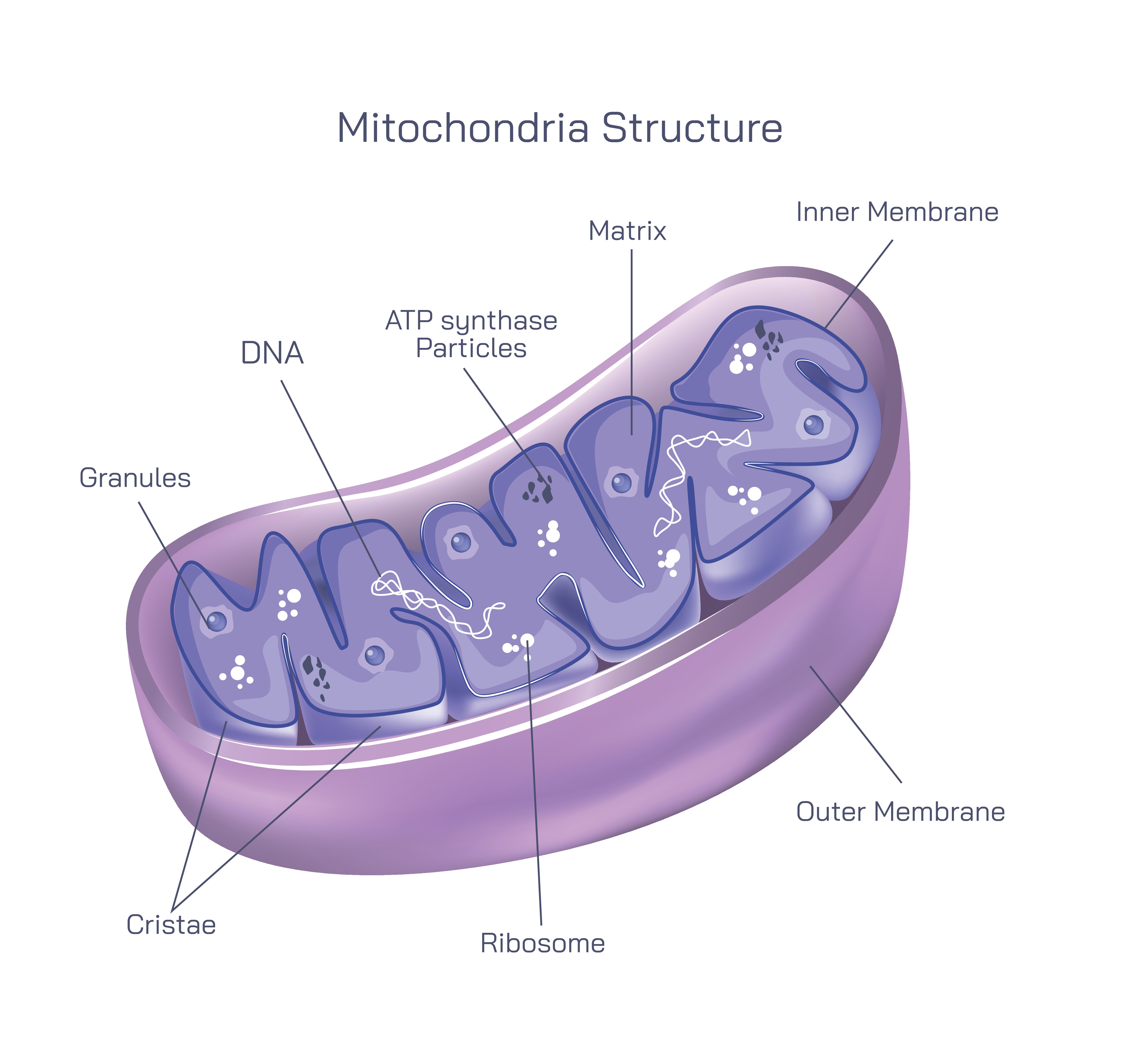
The mitochondrion is often called the “powerhouse of the cell” because it is the primary site of ATP generation, the molecule that powers nearly all cellular activities. However, its structure is much more complex than a simple energy unit. The diagram reveals multiple layers and specialized internal components, each contributing to the remarkable efficiency of cellular respiration. Understanding the structure of mitochondria is essential for grasping how cells convert nutrients into usable energy, regulate metabolic processes, and maintain overall cellular health.
Outer Membrane: The Protective Boundary
The outer membrane of the mitochondrion forms the first structural boundary between the organelle and the cytoplasm. This membrane is smooth and relatively permeable due to the presence of protein channels called porins. These allow ions, nutrients, and small molecules to pass easily into the space between the membranes. The outer membrane not only protects the inner components but also participates in lipid metabolism and communication between mitochondria and other cellular structures. It plays an essential role in regulating mitochondrial shape, fusion, and division.
Inner Membrane: The Functional Core of Energy Production
Beneath the outer membrane lies the inner membrane, a highly specialized and selectively permeable layer. Unlike the outer membrane, it restricts the passage of most molecules and contains a vast number of proteins involved in electron transport, ATP synthesis, and metabolite movement. The inner membrane dramatically increases its surface area by folding inward, forming the cristae. These folds create a large working surface for biochemical reactions, enhancing the organelle’s ability to produce ATP efficiently. The inner membrane also maintains the proton gradient essential for energy conversion.
Cristae: Folded Structures for Efficient ATP Synthesis
Cristae are the internal folds of the inner membrane, and they play a crucial role in maximizing ATP production. By increasing the surface area, cristae allow more space for electron transport chain complexes and ATP synthase enzymes. These structures work together to generate a proton gradient, which drives ATP synthesis during oxidative phosphorylation. The shape and density of cristae can vary between cell types depending on the energy demand. For example, muscle cells have mitochondria with densely packed cristae to support continuous energy production.
Matrix: The Internal Fluid Filled With Enzymes and Genetic Material
The matrix is the innermost compartment of the mitochondrion, enclosed by the inner membrane. It contains a rich mixture of enzymes responsible for the Krebs cycle (citric acid cycle), fatty acid oxidation, and portions of amino acid metabolism. These reactions break down metabolic fuels into molecules that feed the electron transport chain. The matrix also contains mitochondrial DNA (mtDNA), ribosomes, and granules. Its enzyme-rich environment supports extensive biochemical processes that contribute to the cell’s energy supply.
Mitochondrial DNA: Genetic Information Independent of the Nucleus
Mitochondria possess their own DNA, distinct from nuclear DNA. This circular mtDNA encodes some of the proteins required for mitochondrial function, although most are produced in the cytoplasm. The presence of mitochondrial DNA supports the theory that mitochondria evolved from ancient prokaryotic cells through endosymbiosis. Because mtDNA is inherited mostly from the maternal line, it provides valuable information about ancestry and genetic diseases. The independent genetic system within mitochondria also allows them to replicate independently of the cell cycle.
Ribosomes: Sites for Mitochondrial Protein Synthesis
Mitochondria contain their own ribosomes, similar in structure to bacterial ribosomes. These ribosomes synthesize specific proteins needed for the electron transport chain and other internal processes. Although most mitochondrial proteins are synthesized in the cytoplasm and imported into the organelle, these internal ribosomes ensure that critical components can be produced directly where they are needed.
ATP Synthase Particles: Engines of Energy Production
ATP synthase particles, located on the inner membrane and cristae, are the molecular machines responsible for producing ATP. As protons flow back into the matrix through ATP synthase, the enzyme rotates and catalyzes the conversion of ADP and phosphate into ATP. These particles are the heart of oxidative phosphorylation, transforming chemical gradients into usable energy. Their strategic placement on cristae ensures maximum efficiency in capturing proton flow.
Granules: Storage Particles in the Matrix
Granules found within the matrix serve as storage depots for ions such as calcium and magnesium. These granules help regulate mitochondrial and cellular ion balance, playing roles in signaling, metabolic control, and overall energy regulation. In addition to ion storage, they may contribute to structural organization within the matrix.
Functional Integration of All Mitochondrial Components
The structure of the mitochondrion is intricately designed to support its role in energy production. Nutrients are broken down in the matrix; electrons pass through the inner membrane’s transport chain; protons accumulate across the membrane; ATP synthase uses this gradient to create ATP. Each structural component contributes to this process, from the permeability of the outer membrane to the folded complexity of the cristae.
The dual-membrane system ensures compartmentalization, allowing different reactions to occur in controlled environments. The presence of mtDNA and ribosomes underscores mitochondrial independence and evolutionary history. Together, these structural elements create an efficient, self-regulated organelle that powers cellular processes.
Conclusion
Mitochondria are extraordinary organelles whose structure is perfectly aligned with their role in energy conversion. Their membranes, cristae, matrix, ribosomes, DNA, and ATP synthase particles work in harmony to generate ATP, support metabolism, and sustain cellular function. Understanding mitochondrial structure offers insight into life’s energy foundation and provides essential knowledge for studying cell biology, genetics, physiology, and disease.