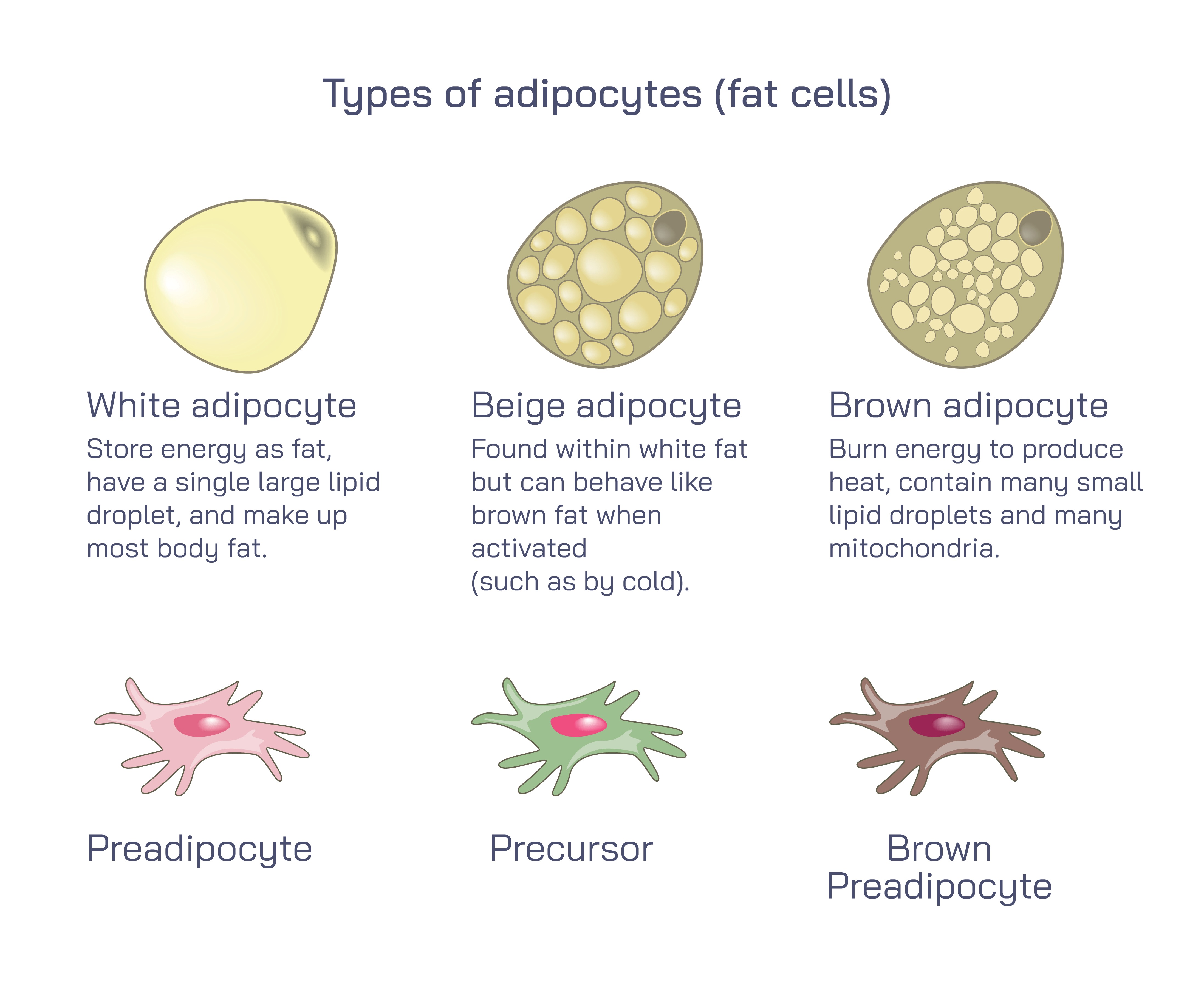
Types of Adipocytes.
Understanding Adipocytes and Their Metabolic Diversity
Adipocytes, or fat cells, form an essential component of the body's energy management system, but they are far more complex than simple storage units for excess calories. Modern physiology recognizes that adipose tissue is a dynamic, endocrine-active organ capable of converting energy, regulating hormones, and adjusting to environmental stressors. Three major adipocyte types—white, beige, and brown—each possess unique characteristics that influence how the body stores fat, burns energy, and generates heat. Their behavior shifts in response to temperature, diet, hormones, neural stimulation, and physical activity. This diversity in structure and function allows adipose tissue to remain adaptable while maintaining overall metabolic stability.
White Adipocytes: Central Players in Energy Storage
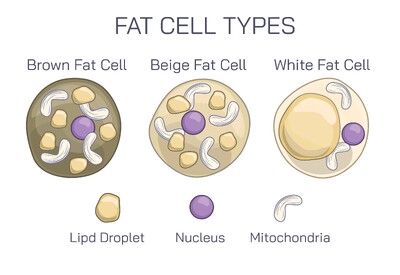
White adipocytes represent the predominant form of fat cells in adults. Their structure is dominated by a single, large lipid droplet that occupies most of the cell’s interior. Because their primary role is energy storage, white adipocytes contain relatively few mitochondria and lack thermogenic protein expression. These cells release fatty acids when the body needs fuel and secrete hormones that influence appetite, insulin sensitivity, and inflammation. Factors such as high-fat diets and low thermogenic demand strengthen the characteristics of white adipocytes, maintaining their energy-reserve role. While essential for survival, excessive accumulation of white adipose tissue is associated with metabolic disorders, emphasizing the importance of balanced adipocyte function.
Brown Adipocytes: Specialized Thermogenic Fat Cells
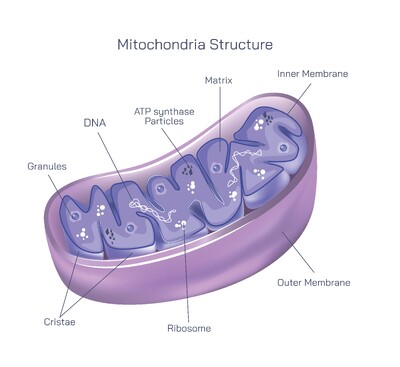
Brown adipocytes act as the body's biological heat generators. Their defining feature is a high density of mitochondria capable of producing heat rather than storing energy. This thermogenic ability stems from UCP1, a protein embedded in the mitochondrial membrane that uncouples energy production from ATP synthesis, releasing energy as heat. Unlike white adipocytes, brown fat cells contain multiple small lipid droplets, allowing rapid mobilization of stored energy. Brown adipocytes respond primarily to cold exposure and neural signals, particularly those involving the sympathetic nervous system. In infants, brown fat plays a vital role in maintaining core temperature, while in adults, smaller pockets persist around the neck, spine, and chest, contributing to metabolic efficiency.
Beige Adipocytes: Adaptive Fat Cells That Can Transform
Beige adipocytes occupy an intermediate space between white and brown fat. They originate within white fat depots but retain the ability to acquire brown-like properties when stimulated. Under conditions such as cold exposure, increased sympathetic activity, specific hormones, or exercise-related signals, beige adipocytes upregulate UCP1 and increase their mitochondrial content. This process, known as adipocyte browning or beiging, transforms energy-storing cells into energy-burning cells. When environmental or metabolic demands decrease, beige adipocytes may revert toward a white-like state, demonstrating remarkable plasticity. Their capacity to change function makes them a promising target in metabolic research aimed at enhancing energy expenditure and improving metabolic health.
How Cold Exposure Triggers Browning and Thermogenesis
Cold environments activate the sympathetic nervous system, which sends signals through β-adrenergic pathways to adipose tissue. These signals stimulate transcription factors such as PGC1α, which upregulate genes involved in mitochondrial formation and thermogenesis. As beige and brown adipocytes respond, they increase UCP1 expression, converting chemical energy into heat. This thermogenic process helps maintain body temperature and simultaneously increases caloric expenditure. Neural involvement, particularly through norepinephrine release, orchestrates this cascade by coordinating cellular responses across adipose depots.
The Role of Transcription Factors in Adipocyte Identity
Key transcription factors, including PGC1α, Prdm16, PPARγ, and EBF2, regulate the development and metabolic behavior of adipocytes. PGC1α enhances mitochondrial biogenesis and thermogenic capacity, making it central to browning and brown fat activation. Prdm16 directs precursor cells toward brown fat lineage and supports thermogenic gene expression. PPARγ, a master regulator of adipogenesis, influences both white and beige fat identity. EBF2 contributes to brown fat commitment and mitochondrial specialization. Together, these factors create a regulatory network that determines whether a fat cell stores energy or burns it.
Mitochondrial Density as a Marker of Thermogenic Potential
The metabolic distinction among adipocyte types becomes most apparent when examining their mitochondrial content. White adipocytes contain low mitochondrial density because they store energy efficiently with minimal metabolic turnover. Beige adipocytes increase their mitochondria during activation, but not to the same extent as brown adipocytes, which are densely packed with these energy-transforming organelles. The mitochondria of brown and activated beige adipocytes contain UCP1, enabling them to convert stored lipids into heat. This difference explains why brown fat burns calories rapidly and why beige fat can shift between storage and thermogenic roles depending on environmental input.
How Diet and Lifestyle Influence Adipocyte Behavior
Dietary choices, exercise habits, and temperature exposure strongly influence adipocyte activity. High-fat diets often promote white adipocyte expansion, while regular physical activity stimulates the release of hormones and myokines that encourage browning. Cold environments accelerate UCP1 expression in both beige and brown adipocytes, improving metabolic activity. Lifestyle patterns therefore directly affect the balance between energy storage and energy expenditure, shaping overall metabolic health.
Why Adipocyte Diversity Matters for Health
The interplay between white, beige, and brown adipocytes profoundly shapes metabolic performance. White adipocytes provide essential energy reserves but, when excessive, can contribute to obesity and metabolic disease. Brown and beige adipocytes increase energy expenditure, enhance glucose handling, and support metabolic resilience. Their ability to convert energy into heat improves metabolic flexibility and reduces the burden of excess calories. Understanding how these fat cell types develop, transform, and function reveals new possibilities for maintaining metabolic health and managing obesity-related conditions.
The Future of Adipocyte Research and Therapeutic Potential
The discovery of beige adipocytes and the mechanisms underlying browning has opened new avenues in medical research. Scientists are exploring ways to activate beige and brown fat to combat metabolic disease, enhance energy expenditure, and improve insulin sensitivity. By understanding how the body naturally regulates adipocyte identity, researchers aim to develop interventions that leverage the thermogenic capabilities of brown and beige fat. The metabolic adaptability of adipocytes continues to inspire new strategies for promoting long-term health and restoring metabolic balance in modern lifestyles.