Structure of a Bacterial Cell and Its Functional Components
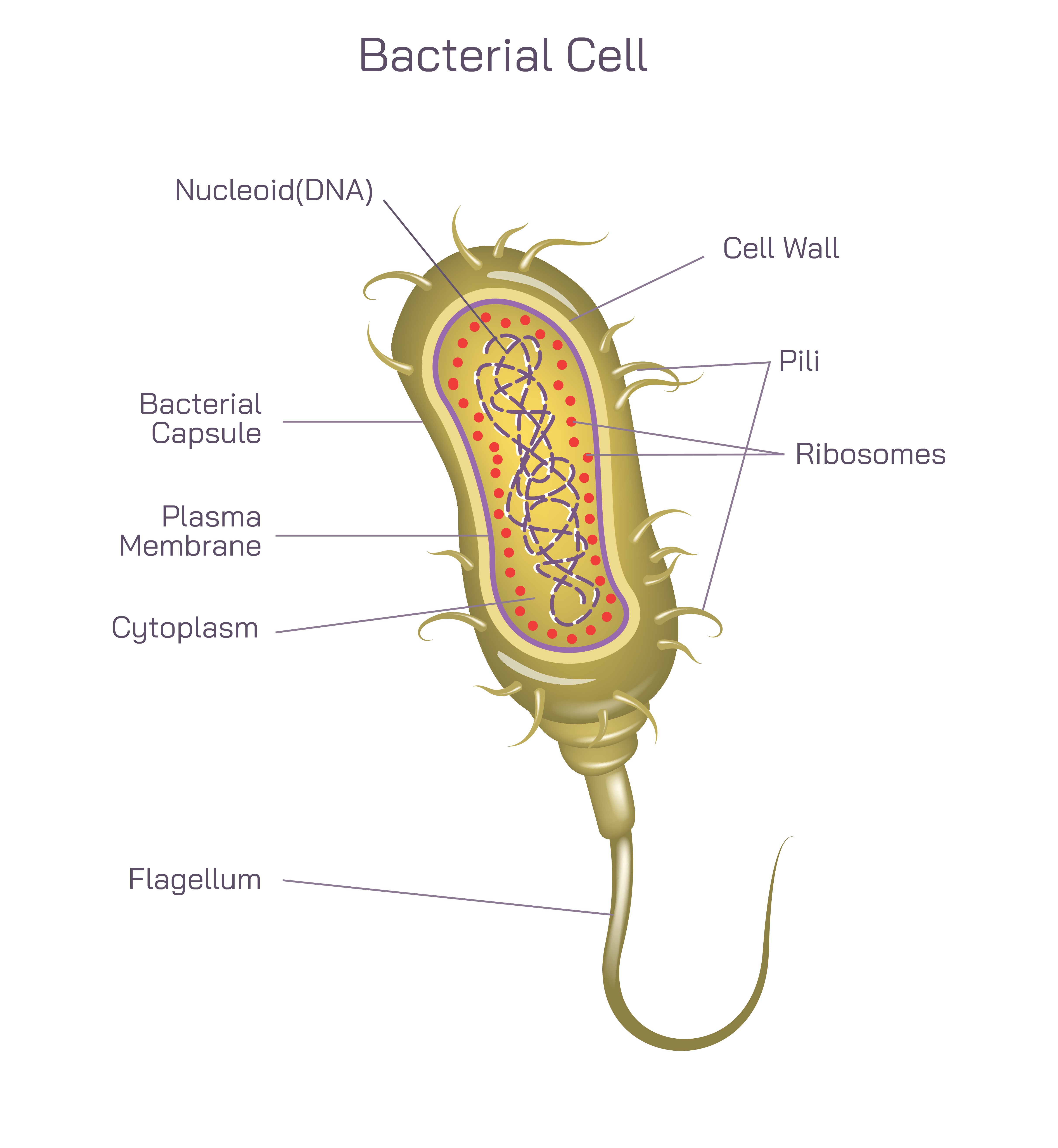
A bacterial cell represents one of the simplest yet most efficient biological systems found on Earth. Unlike eukaryotic cells, bacteria lack a true nucleus and membrane-bound organelles, but their streamlined structure allows them to survive in diverse environments, reproduce rapidly, and adapt to extreme conditions. The diagram highlights the main structural components of a bacterial cell, each performing crucial functions that enable growth, protection, metabolism, and interaction with the environment. Understanding the structure of a bacterial cell provides a deeper appreciation for how microorganisms operate, evolve, and influence ecosystems, human health, and industrial processes.
The Capsule: The Outer Protective Coating
Many bacterial cells possess an outermost layer known as the capsule, a thick, sticky covering composed of polysaccharides or proteins. This capsule acts as a protective shield, helping bacteria avoid desiccation, resist harmful chemicals, and escape detection by the immune system. In pathogenic bacteria, the capsule significantly enhances virulence by preventing immune cells from engulfing and destroying the microbe. It also allows bacteria to adhere to surfaces, forming biofilms that improve survival in harsh environments. The capsule's resilience and attachment properties make it an essential structural feature in bacterial defense and colonization.
The Cell Wall: Structural Support and Shape Maintenance
Beneath the capsule lies the cell wall, a rigid layer primarily made of peptidoglycan. This layer is responsible for maintaining the cell’s shape, preventing rupture caused by osmotic pressure, and providing overall structural support. Differences in cell wall thickness form the basis of Gram staining, separating bacteria into Gram-positive and Gram-negative groups. Gram-positive bacteria have a thick peptidoglycan wall, while Gram-negative bacteria possess a thinner layer with an additional outer membrane. Regardless of type, the cell wall is essential for protecting the bacterial cell from environmental stress and mechanical damage.
The Plasma Membrane: Selective Barrier and Metabolic Hub
The plasma membrane lies just inside the cell wall and functions as a selectively permeable barrier that regulates the entry and exit of molecules. Composed of a phospholipid bilayer with embedded proteins, this membrane plays a central role in respiration, energy production, nutrient uptake, and waste removal. Because bacteria lack internal organelles such as mitochondria, many metabolic reactions occur directly on or within the plasma membrane, making it a vital component for sustaining life.
The Cytoplasm: Internal Fluid Containing Cellular Machinery
The cytoplasm is a gel-like interior solution that fills the bacterial cell. It contains water, enzymes, dissolved nutrients, ions, and essential molecules required for metabolic activity. Unlike eukaryotic cells, bacterial cytoplasm does not contain complex organelles, but it houses key structures such as ribosomes, DNA, and storage granules. This fluid environment supports biochemical reactions, molecular transport, and the assembly of proteins necessary for cell survival.
Ribosomes: Protein-Synthesizing Units
Ribosomes in bacterial cells are smaller (70S) compared to those in eukaryotic cells (80S), but they perform the same essential function—protein synthesis. These ribosomes translate genetic instructions into proteins that regulate metabolism, cell structure, and replication. Because ribosomes differ structurally between bacteria and humans, many antibiotics are designed to target bacterial ribosomes specifically, inhibiting protein production without harming human cells.
The Nucleoid: Region Containing DNA
Bacterial DNA is not enclosed within a nucleus. Instead, it exists in a region called the nucleoid, where a single, circular chromosome is tightly coiled and compacted. This DNA carries the genetic instructions for all cellular functions, including metabolism, reproduction, and adaptation. The nucleoid’s loose organization allows rapid gene expression, enabling bacteria to respond quickly to environmental changes. Some bacteria also possess plasmids—small, circular DNA molecules that can carry antibiotic resistance genes or other useful traits.
Pili: Structures for Attachment and Genetic Exchange
Pili are hair-like appendages extending from the bacterial surface, primarily used for attachment to surfaces, host tissues, or other cells. Their ability to anchor bacteria to specific environments is essential for colonization and biofilm formation. Some specialized pili, known as sex pili, enable the process of conjugation in which bacteria exchange genetic material. This gene transfer contributes significantly to bacterial evolution and the spread of antibiotic resistance.
Flagellum: Structure for Movement and Navigation
The flagellum is a long, whip-like appendage used for locomotion. Powered by a rotary motor embedded in the cell membrane, the flagellum propels the bacterium through liquid environments. Movement may be directed toward nutrients or away from harmful substances, a behavior known as chemotaxis. Bacterial mobility plays a vital role in locating resources, escaping threats, infecting host tissues, and forming colonies. The flagellum’s efficient structure makes bacterial movement one of the most effective motility systems in biology.
Functional Integration of All Components
Each component of the bacterial cell works together to support survival, reproduction, and adaptation. The capsule and cell wall provide protection; the membrane manages internal chemistry; the cytoplasm hosts essential reactions; ribosomes create proteins; DNA governs cellular activities; pili assist in attachment and gene exchange; and the flagellum enables movement. This efficient and streamlined arrangement allows bacteria to thrive in an extraordinary range of environments—from deep oceans and hot springs to the human body and artificial surfaces.
Conclusion
The structure of a bacterial cell represents an elegant and highly efficient design optimized for survival, adaptability, and rapid growth. The combination of protective layers, internal machinery, genetic material, and movement systems allows bacteria to play crucial roles in ecosystems, industry, and medicine. Understanding these structures provides insight into how bacteria live, evolve, and sometimes cause disease, offering valuable knowledge for microbiology, biotechnology, and healthcare.