Sharks are among the most ancient and fascinating fish in the world’s oceans, known for their powerful bodies, sharp senses, and remarkable survival abilities. As marine predators that have existed for hundreds of millions of years, sharks represent one of the most successful evolutionary designs in aquatic life. The characteristics of shark fish reflect a perfect balance between strength, efficiency, and adaptation to diverse marine environments, from shallow coastal waters to the deepest parts of the ocean.
One of the most defining characteristics of shark fish is their body structure. Sharks have elongated, streamlined bodies that reduce resistance as they move through water. This hydrodynamic shape allows them to swim efficiently while conserving energy, even over long distances. Their bodies are designed for steady cruising as well as sudden bursts of speed during hunting. The smooth, tapered form plays a crucial role in making sharks effective predators.
Unlike most bony fish, sharks possess a skeleton made entirely of cartilage. This cartilaginous structure is lighter and more flexible than bone, giving sharks greater agility and buoyancy control. The reduced weight of cartilage allows sharks to move smoothly through the water without excessive energy expenditure. This skeletal feature is one of the key reasons sharks can grow large while remaining efficient swimmers.
The skin of a shark is another unique characteristic. Instead of typical fish scales, sharks are covered with tiny, tooth-like structures known as placoid scales or dermal denticles. These denticles are oriented in a way that reduces water turbulence along the body surface. As a result, shark skin decreases drag and enhances swimming efficiency. The rough texture of the skin also provides protection from parasites and injuries during encounters with prey or other sharks.
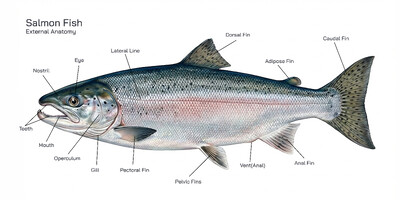
Shark fins are specialized structures that contribute to balance, propulsion, and control. The dorsal fin helps stabilize the body and prevents rolling during swimming. Pectoral fins provide lift and steering, allowing sharks to maneuver smoothly through the water. The caudal fin, or tail fin, is powerful and asymmetrical, generating strong forward thrust. This tail design supports continuous swimming and sudden acceleration when capturing prey.
Teeth are among the most recognizable characteristics of shark fish. Sharks have multiple rows of sharp teeth embedded in their jaws. These teeth are not fixed permanently; instead, they are continuously replaced throughout the shark’s life. When a tooth is lost or damaged, another moves forward to take its place. This constant replacement system ensures that sharks always have effective tools for grasping and cutting prey. Tooth shape varies depending on diet, reflecting adaptation to different feeding strategies.
The sensory abilities of sharks are exceptionally advanced. Their sense of smell is highly developed, allowing them to detect tiny traces of substances in the water from great distances. This helps sharks locate injured or distressed prey efficiently. Sharks also possess excellent hearing, capable of detecting low-frequency vibrations produced by struggling animals. These vibrations travel far through water and guide sharks toward potential food sources.
One of the most remarkable characteristics of shark fish is their ability to sense electrical signals. Specialized sensory organs located around the head allow sharks to detect weak electrical fields generated by the muscle movements of other animals. This ability enables sharks to locate prey even when it is hidden beneath sand or in low-visibility conditions. This sensory adaptation gives sharks a significant advantage in hunting.
Sharks also rely on a lateral line system that runs along the sides of their bodies. This system detects changes in water pressure and movement, helping sharks sense nearby objects and organisms. The lateral line allows sharks to navigate complex environments, avoid obstacles, and coordinate movements during hunting or migration.
In terms of respiration, sharks use gills to extract oxygen from water. Many shark species must keep swimming to ensure a continuous flow of water over their gills. This behavior, known as ram ventilation, ensures efficient oxygen uptake to support their active lifestyle. Some species can pump water over their gills while resting, but movement remains essential for most sharks.
Sharks occupy a wide range of habitats. They are found in oceans across the globe, from warm tropical seas to cold polar waters. Some species prefer shallow coastal regions, while others inhabit open oceans or deep-sea environments. This adaptability is a key characteristic that has allowed sharks to thrive in diverse ecological niches for millions of years.
Behaviorally, most sharks are solitary animals, although some species form groups during migration or feeding events. They are generally cautious and selective hunters, conserving energy by targeting vulnerable or injured prey. Sharks play a crucial role in maintaining the balance of marine ecosystems by controlling populations of other animals and preventing overpopulation.
Reproduction in sharks is slow compared to many other fish, which is an important characteristic affecting their survival. Some sharks lay eggs, while others give birth to live young. Gestation periods are often long, and the number of offspring is relatively small. This slow reproductive rate makes shark populations vulnerable to environmental threats and overfishing.
Sharks have long lifespans, with some species living for several decades. Their slow growth and late maturity reflect a life strategy focused on survival rather than rapid reproduction. These traits have helped sharks persist through major environmental changes over geological time.
Ecologically, sharks are essential to ocean health. As top predators, they help regulate food chains and maintain species diversity. The decline of shark populations can disrupt marine ecosystems, leading to imbalances that affect coral reefs, fish populations, and overall ocean stability.
Sharks can be understood not just as predators, but as highly refined biological systems shaped by deep evolutionary time. Their continued success in the oceans is the result of countless small adaptations working together to maximize survival in an environment where energy efficiency, sensory awareness, and resilience are essential. Unlike many modern fish that rely on speed alone, sharks represent a strategy based on precision, endurance, and environmental awareness, allowing them to dominate marine ecosystems for hundreds of millions of years.
One of the most distinctive yet often overlooked characteristics of shark fish is their energy management system. Sharks are remarkably efficient in how they use and store energy. Their large livers are rich in oils, which serve multiple purposes. These oils help regulate buoyancy, reducing the need for constant muscular effort to stay afloat, and also act as long-term energy reserves during periods of limited food availability. This adaptation allows sharks to survive long migrations and extended fasting periods, which is particularly important in open ocean environments where prey can be scarce.
Shark swimming mechanics are another area of unique specialization. Rather than relying on rapid, constant fin movement, many sharks use a slow, side-to-side motion of the tail that creates lift and forward momentum simultaneously. This form of locomotion minimizes drag and conserves energy. Some species are capable of adjusting swimming depth without active movement by subtly changing body angle and fin position, allowing them to glide through water layers efficiently. This ability is especially advantageous in deep or pelagic environments where conserving energy is critical.
The internal physiology of sharks reveals additional layers of adaptation. Their blood chemistry is uniquely balanced to retain water and salts, enabling them to maintain internal stability in a salty marine environment. Instead of excreting excess salt like many bony fish, sharks retain certain compounds in their bloodstream that prevent dehydration. This internal balance allows sharks to move between waters of varying salinity with minimal stress, expanding their usable habitat range.
Another unique feature of shark fish is their wound-healing capability. Sharks have a strong immune response and skin structure that reduces infection risk. Minor injuries that would be dangerous to other animals often heal quickly in sharks without serious complications. This resilience is essential for predators that regularly engage with struggling prey, sharp teeth, and rough environments. The protective nature of dermal denticles also limits the attachment of harmful organisms, further supporting overall health.
Shark intelligence is subtle but significant. While they do not exhibit intelligence in the same way as mammals, sharks demonstrate problem-solving ability, learning through experience, and memory retention. They can associate specific locations with food availability and remember migration routes across vast ocean distances. Some species show curiosity rather than aggression when encountering unfamiliar objects, indicating a cautious and evaluative approach to their surroundings rather than blind predation.
The feeding strategies of sharks are far more diverse than commonly assumed. While some species actively hunt fast-moving prey, others are opportunistic scavengers, filter feeders, or ambush predators. Certain sharks specialize in feeding on plankton, using modified gill structures to strain tiny organisms from the water. This diversity of feeding strategies reduces competition among shark species and allows many of them to coexist within the same ecosystem without exhausting shared resources.
Shark reproduction also reflects a high-investment survival strategy. Embryos in live-bearing species often develop advanced survival traits before birth, such as strong swimming ability and fully formed sensory organs. In some cases, developing embryos even compete with one another for resources before birth, ensuring that only the strongest offspring survive. While this limits population growth, it produces juveniles that are well-equipped to survive independently from an early stage.
Migration is another remarkable characteristic of shark fish. Many species travel thousands of kilometers across oceans, following seasonal changes in temperature, prey availability, and breeding conditions. These migrations demonstrate an advanced internal navigation system, likely guided by a combination of environmental cues such as magnetic fields, water temperature gradients, and ocean currents. This navigational ability allows sharks to exploit resources over vast areas without becoming dependent on a single location.
Sharks also play a stabilizing role in marine ecosystems through behavioral influence rather than direct predation alone. The mere presence of sharks can alter the behavior of other marine animals, preventing overgrazing of coral reefs and seagrass beds. This indirect ecological effect, sometimes referred to as a balance of fear, helps maintain habitat structure and biodiversity even when sharks are not actively feeding.
Despite their fearsome reputation, sharks are generally cautious animals. Most species avoid unnecessary confrontation and conserve energy by assessing risk carefully. Their slow, deliberate movements and investigative behavior reflect an evolutionary preference for survival over aggression. This cautious nature has contributed to their longevity as a group, allowing them to avoid wasteful energy expenditure and unnecessary injury.
In the context of environmental change, sharks are indicators of ocean health. Because they occupy high positions in the food web and have long lifespans, changes in shark populations often reflect deeper problems within marine ecosystems. Pollution, overfishing, and climate-related changes disrupt the delicate balance sharks depend on, making their decline a warning sign for broader ecological instability.
The characteristics of shark fish represent a masterclass in evolutionary efficiency. Every aspect of their biology, from skin texture to sensory perception, supports a life strategy centered on balance, endurance, and adaptation. Sharks are not relics of the past, but living proof that successful design does not require constant change. Their continued survival reminds us that resilience, specialization, and harmony with the environment are among the most powerful tools in nature’s arsenal.
Sharks represent one of the most refined examples of biological optimization in the natural world, not because they are aggressive hunters, but because every part of their anatomy and behavior is designed to minimize waste and maximize survival. Over hundreds of millions of years, sharks have evolved a life strategy that favors efficiency over excess, patience over speed, and awareness over brute force. This evolutionary philosophy is deeply embedded in how sharks move, feed, grow, and interact with their environment.
A lesser-known but critical characteristic of sharks is their flexible jaw structure. Unlike most fish, a shark’s upper jaw is not firmly attached to the skull. This allows the jaw to protrude outward during feeding, increasing reach and bite effectiveness. This protrusion happens in a fraction of a second and enables sharks to grasp prey more securely without relying on extreme force. The flexibility of the jaw reduces the risk of injury and improves feeding success, especially when capturing slippery or fast-moving prey.
The internal organ arrangement of sharks also contributes to their survival efficiency. Their massive liver can occupy up to a quarter of their body cavity and is packed with low-density oils. This organ functions as a buoyancy control system, energy storage unit, and metabolic regulator all at once. Because sharks lack swim bladders, the liver compensates by reducing overall body density, allowing sharks to hover or glide with minimal muscular effort. This adaptation is especially valuable for deep-sea species that must conserve energy in food-scarce environments.
Shark muscles are structured for endurance rather than constant acceleration. The red muscle tissue that powers long-distance swimming is distributed along the body close to the spine, allowing for smooth, sustained movement. White muscle tissue, used for short bursts of speed, is reserved for moments of attack or escape. This division enables sharks to travel vast distances while preserving energy for critical situations. As a result, sharks can patrol large territories without exhausting themselves.
Another unique feature of sharks is their ability to regulate depth without rapid pressure stress. Many species adjust their position in the water column gradually, allowing their bodies to adapt to pressure changes. This capability lets sharks move between surface waters and deeper zones without the physiological shock that affects many other marine animals. Some species regularly transition between shallow feeding areas and deep resting zones, expanding their usable habitat vertically as well as horizontally.
Sharks also exhibit advanced sensory integration rather than relying on a single dominant sense. Information from smell, hearing, electrical detection, vision, and the lateral line is processed together to create a detailed picture of the surrounding environment. This multisensory approach allows sharks to confirm the presence of prey before committing energy to pursuit. It also helps them avoid dangerous situations, such as unfamiliar objects or potential competitors, reducing unnecessary risk.
Sleep behavior in sharks is another fascinating adaptation. While sharks do not sleep in the same way mammals do, they enter periods of reduced activity where awareness remains partially active. Some species alternate brain hemisphere activity, allowing them to rest while still maintaining movement and environmental monitoring. This continuous low-level awareness is crucial for animals that must keep water flowing over their gills and remain alert to threats.
Juvenile sharks display behaviors that differ significantly from adults, reflecting a gradual learning process. Young sharks often inhabit shallow nursery areas where predator pressure is lower and food sources are abundant. These nurseries provide protection and allow juveniles to develop hunting skills, sensory coordination, and spatial awareness. As sharks mature, they expand their range and gradually adopt adult movement and feeding patterns, demonstrating a staged approach to independence.
Sharks also show remarkable adaptability in feeding timing. Some species adjust hunting behavior based on lunar cycles, tides, and prey activity patterns. Feeding may intensify during specific phases of the moon or during tidal changes that concentrate prey. This timing reduces energy expenditure and increases success rates, highlighting how sharks synchronize behavior with environmental rhythms rather than relying on constant hunting.
From a biomechanical perspective, shark skin plays a role beyond drag reduction. The microscopic ridges on dermal denticles channel water flow in ways that reduce noise and vibration. This silent movement helps sharks approach prey without triggering escape responses. The skin’s structure also reduces the attachment of algae and parasites, keeping the body surface clean and hydrodynamically efficient throughout the shark’s life.
Social behavior in sharks is more complex than commonly believed. While many species are solitary, they can recognize individual sharks and establish temporary dominance hierarchies during feeding or mating events. These interactions often involve posturing and spatial positioning rather than physical conflict, reducing the risk of injury. Such social awareness contributes to group stability when sharks gather in high-resource areas.
Sharks are also sensitive to environmental changes such as temperature shifts, oxygen levels, and water chemistry. Rather than tolerating extreme conditions indefinitely, many species actively move to maintain optimal internal balance. This responsiveness makes sharks effective indicators of ocean health, as changes in their distribution often reflect broader environmental stress.
Ultimately, sharks endure not because they are aggressive or dominant, but because they are exceptionally efficient. Their biology favors survival through balance, awareness, and conservation of energy. Every adaptation, from liver oil to jaw flexibility, reflects a system designed to function reliably over long periods rather than rapidly exploit short-term opportunities. In this way, sharks are not just predators of the sea, but living examples of evolutionary restraint, precision, and long-term success in one of the most demanding environments on Earth.
In conclusion, the characteristics of shark fish demonstrate extraordinary evolutionary success. Their streamlined bodies, cartilaginous skeletons, powerful fins, advanced senses, and efficient hunting strategies make them perfectly suited for life in the ocean. Sharks are not only symbols of strength and survival but also vital components of marine ecosystems. Understanding their characteristics highlights the importance of conserving these ancient and remarkable animals for the health of the world’s oceans.