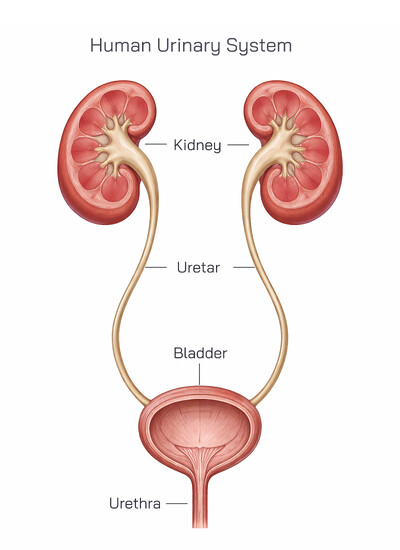
The nephron is the fundamental structural and functional unit of the kidney, responsible for the formation of urine and the regulation of water, electrolytes, and waste products in the human body. Each human kidney contains millions of nephrons, working continuously to filter blood and maintain internal balance. Understanding the nephron structure is essential for grasping how the kidneys perform vital functions such as filtration, reabsorption, secretion, and excretion. The nephron is a microscopic structure, yet its organization is highly specialized and precisely adapted to support efficient renal function.
Overall Organization of the Nephron
A nephron consists of two main parts: the renal corpuscle and the renal tubule. These components work together to process blood plasma and convert it into urine. The renal corpuscle is primarily responsible for filtration, while the renal tubule modifies the filtered fluid through selective reabsorption and secretion. Nephrons are located partly in the kidney cortex and partly in the medulla, allowing them to perform complex regulatory roles.
Renal Corpuscle Structure
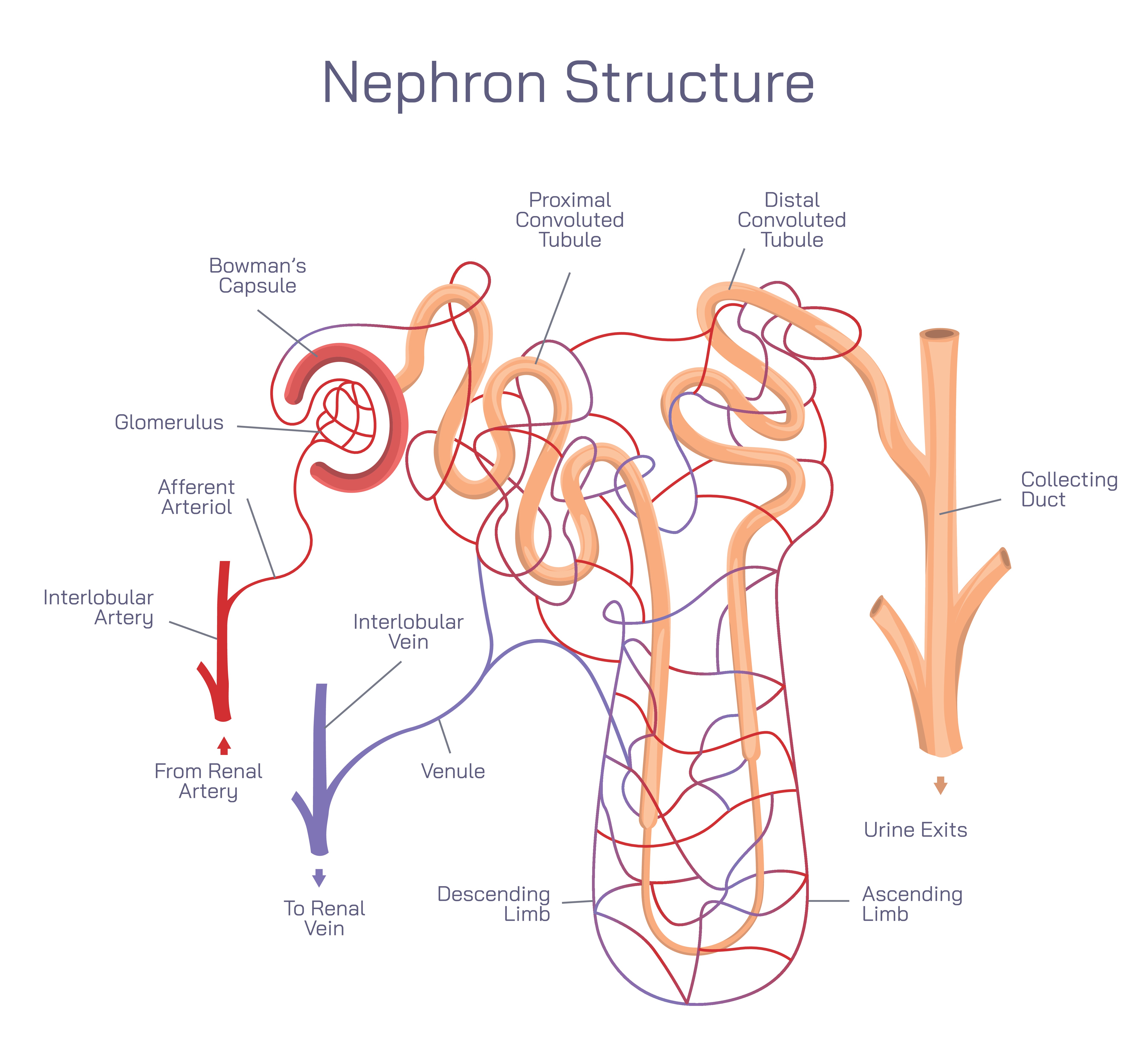
The renal corpuscle is the initial filtering unit of the nephron and is located in the cortical region of the kidney. It is composed of two main structures: the glomerulus and Bowman’s capsule. The glomerulus is a network of tiny blood capillaries formed from the afferent arteriole. These capillaries have thin, porous walls that allow water and small solutes to pass through while retaining blood cells and large proteins.
Surrounding the glomerulus is Bowman’s capsule, a double-walled cup-shaped structure. The inner layer of Bowman’s capsule closely covers the glomerular capillaries, while the outer layer forms a protective boundary. The space between these layers, known as the capsular space, collects the filtered fluid called glomerular filtrate. This filtrate contains water, salts, glucose, amino acids, and waste substances, which then pass into the renal tubule for further processing.
Afferent and Efferent Arterioles
Blood enters the glomerulus through the afferent arteriole and leaves through the efferent arteriole. The difference in diameter between these two vessels helps maintain high pressure within the glomerulus, which is essential for effective filtration. After leaving the glomerulus, the efferent arteriole forms a network of peritubular capillaries or vasa recta, which surround the renal tubules and play a crucial role in reabsorption and secretion.
Renal Tubule Structure
The renal tubule is a long, twisted structure that extends from Bowman’s capsule and is divided into several distinct segments. Each segment has a specialized structure and function that contributes to urine formation. The renal tubule includes the proximal convoluted tubule, the loop of Henle, the distal convoluted tubule, and the collecting duct.
Proximal Convoluted Tubule
The proximal convoluted tubule is the first segment of the renal tubule and lies in the kidney cortex. It has a highly folded structure with a brush border lining that increases surface area for reabsorption. This segment reabsorbs a large proportion of the filtered water, glucose, amino acids, and essential ions back into the bloodstream. The cells of the proximal tubule are rich in mitochondria, providing energy for active transport processes.
Loop of Henle
The loop of Henle extends from the cortex into the medulla and then loops back upward. It consists of a descending limb and an ascending limb. The descending limb is permeable to water but not to salts, allowing water to be reabsorbed into the surrounding medullary tissue. The ascending limb, on the other hand, is impermeable to water but actively transports salts out of the tubule. This unique arrangement creates a concentration gradient in the medulla, which is essential for urine concentration and water conservation.
Distal Convoluted Tubule
After the loop of Henle, the filtrate enters the distal convoluted tubule, which is located in the cortex. This segment plays a key role in regulating electrolyte balance and pH. It selectively reabsorbs sodium and water while secreting potassium and hydrogen ions. The distal tubule is also responsive to hormonal signals, allowing the body to adjust urine composition based on physiological needs.
Collecting Duct
The collecting duct receives filtrate from multiple nephrons and runs through the medulla toward the renal pelvis. It plays a critical role in determining the final concentration of urine. Depending on the body’s hydration status, the collecting duct reabsorbs varying amounts of water. This segment ensures efficient water balance and contributes to the elimination of waste products from the body.
Functional Significance of Nephron Structure
Each part of the nephron is structurally adapted to its specific function. The glomerulus enables efficient filtration, the proximal tubule maximizes reabsorption, the loop of Henle establishes concentration gradients, and the distal tubule and collecting duct fine-tune urine composition. The arrangement of nephrons within the cortex and medulla allows the kidney to regulate blood composition precisely and continuously.
Importance in Human Physiology and Education
The nephron is a central concept in human physiology and medical education. Disorders affecting nephron structure can lead to serious health problems, including impaired filtration, electrolyte imbalance, and waste accumulation. Understanding nephron anatomy helps explain the mechanisms behind kidney diseases and the importance of maintaining renal health.
Conclusion
The nephron is a highly specialized microscopic unit designed to perform complex and essential functions. Its structure, from the renal corpuscle to the collecting duct, enables efficient filtration, reabsorption, secretion, and excretion. By understanding the detailed structure of the nephron, one gains a deeper appreciation of how the kidneys maintain internal balance and support overall human health.