Difference Between Thick and Thin Skin: Structure, Features, and Functional Significance
Human skin is an extraordinary organ that adapts to various physical demands across the body, and one of the most important distinctions within this organ is the difference between thick skin and thin skin. Although both types share the basic structural layers of epidermis and dermis, their thickness, composition, presence of specialized structures, and functional roles vary significantly. These variations allow the skin to perform multiple tasks such as protection, sensation, flexibility, and resistance to mechanical stress. Thick skin and thin skin are distributed across different regions of the human body depending on the specific protective needs and the types of mechanical forces those areas routinely experience. Understanding this difference becomes especially important in fields such as biology, dermatology, anatomy, and medical education because the structure of the skin directly influences its capacity to protect the body, respond to stimuli, and interact with the environment.
Structural Basis of Thick and Thin Skin
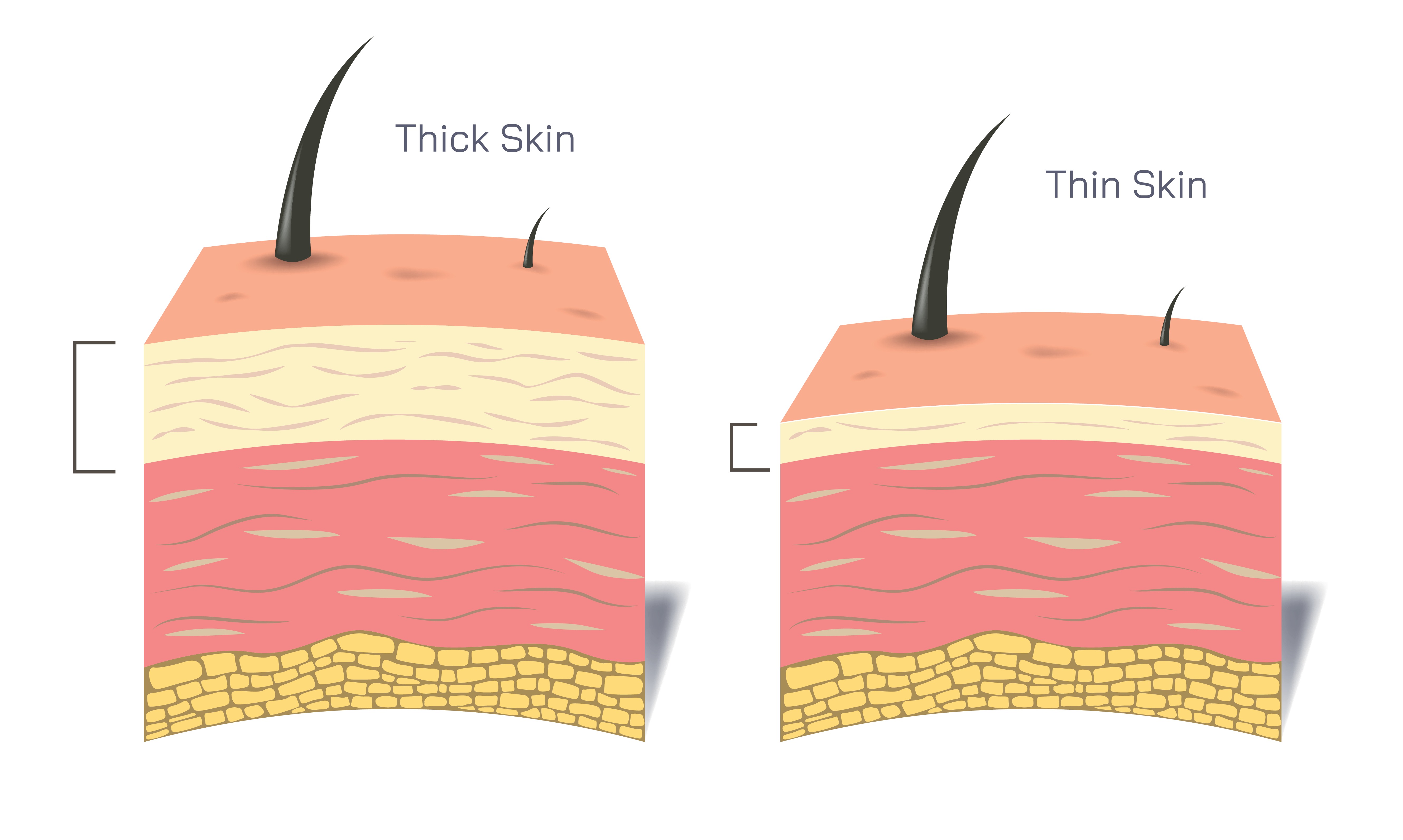
The epidermis is the major region where the difference between thick and thin skin becomes most visible. Thick skin has a much thicker epidermal layer dominated by densely packed keratinocytes, while thin skin contains a comparatively thinner epidermis. The epidermis itself is divided into multiple sublayers, and both types possess the same fundamental layers, but thick skin includes a very prominent additional layer called the stratum lucidum. This layer, present only in thick skin, gives the palms and soles their pale, glossy appearance and strengthens the protective barrier. In thin skin, the stratum lucidum is either absent or nearly invisible under a microscope, resulting in a more flexible and translucent surface.
The stratum corneum, which is the outermost layer of the epidermis, plays a crucial role in protection. In thick skin, this layer is dramatically thicker, consisting of many layers of flattened, dead keratinocytes tightly packed together. This substantial keratinization allows thick skin to withstand abrasion, pressure, and friction encountered in daily activities such as walking or grasping objects. Thin skin has a much thinner stratum corneum, making it softer and more pliable, which is ideal for areas requiring flexibility and fine movement rather than heavy mechanical protection.
Presence of Hair, Glands, and Other Appendages
One of the most noticeable differences between thick and thin skin is the presence of hair follicles. Thick skin completely lacks hair follicles; therefore, no hair grows on the palms of the hands or soles of the feet. This absence is essential because hair in these regions would interfere with grip, traction, and sensitivity. In contrast, thin skin contains numerous hair follicles distributed across almost all body surfaces except a few specialized regions. The presence of hair also brings associated sebaceous glands, which produce sebum—a natural oil that lubricates and protects the skin. Since thick skin lacks hair follicles, it also lacks sebaceous glands entirely.
Sweat glands are present in both thick and thin skin, but in thick skin, eccrine sweat glands are particularly numerous and play an essential role in thermoregulation and grip enhancement. The ducts of these glands extend through the thick epidermis and open onto the skin surface, helping maintain moisture and preventing slipping. Thin skin also contains sweat glands, but the density and structural arrangement are less specialized compared to those in thick skin.
Variation in Sensory Receptors and Skin Sensitivity
Thick skin contains a higher concentration of certain specialized sensory receptors because the palms and soles require heightened sensitivity to touch, pressure, texture, and vibration. These receptors help the body interact precisely with its surroundings, ensuring balance, grip, and spatial awareness. Mechanoreceptors, such as Meissner’s corpuscles and Pacinian corpuscles, are especially abundant in thick skin. Their increased density enables humans to detect subtle variations in textures while holding objects or walking on uneven surfaces.
Thin skin, although richly supplied with sensory nerves, has fewer specialized mechanoreceptors compared to thick skin. This makes thin skin more sensitive to pain and temperature but less specialized for detecting pressure or detailed tactile information. The variation in receptor distribution illustrates how each type of skin is adapted to its functional environment—thick skin for protection and mechanical sensitivity, and thin skin for flexible sensation and environmental interaction.
Dermal Differences and Overall Skin Flexibility
The dermis in both types of skin contains connective tissue, blood vessels, and nerves, but the arrangement and prominence of dermal papillae differ. Thick skin features deeply interlocked dermal papillae that form pronounced ridges. These ridges create fingerprints and footprints, which enhance grip and traction. The deep interlocking structure also strengthens the connection between the epidermis and dermis, preventing layers from separating under high mechanical stress.
In thin skin, dermal papillae are less prominent, leading to a smoother and more flexible surface. This allows thin skin to stretch more easily, which is essential for facial expression, body movement, and everyday touch interactions. The reduced interlocking structure reflects the lower mechanical stress experienced in thin skin regions while enhancing mobility and elasticity.
Locations and Functional Adaptations
Thick skin is found only in specific locations: the palms of the hands and the soles of the feet. These areas encounter continuous friction and pressure, requiring durable protection and enhanced tactile feedback. Thick skin is therefore structurally reinforced to withstand constant mechanical forces. Its design focuses on durability, friction resistance, and sensory specialization rather than flexibility.
Thin skin covers almost the entire remaining surface of the body, including the arms, legs, chest, back, face, and abdomen. These regions require flexibility, movement, and the ability to host hair follicles and sebaceous glands. Thin skin supports insulation, lubrication, facial expression, and overall tactile sensation, making it the more versatile form of skin across the human body.
Functional Significance of These Differences
The differences between thick and thin skin demonstrate how the human body adapts structurally to meet functional demands. Thick skin is suited for heavy-duty protection and precise mechanical interaction, whereas thin skin supports movement, expression, and general sensory functions. Thick skin must endure repetitive force, making its layered keratin structure necessary for protection against wear. Thin skin’s softness and elasticity allow it to mold over muscles and joints, contributing to mobility and communication through facial expressions.
The absence of sebaceous glands in thick skin prevents oily surfaces that would reduce friction on palms and soles. The presence of hair and oil glands in thin skin helps regulate temperature, protect against environmental factors, and maintain skin hydration. These differences illustrate the remarkable specialization that allows human skin to perform diverse functions across the body.
Conclusion
Thick and thin skin are not merely variations in thickness; they represent two specialized systems adapted to different functional needs. Thick skin protects and enhances grip in high-friction areas, while thin skin provides flexibility, sensitivity, and support for appendages like hair and glands. Understanding these differences deepens our knowledge of human biology and helps students, medical learners, and curious readers appreciate the complexity of the human body.