The basic structure of the foot forms the foundation of the human body and is responsible for supporting weight, maintaining balance, absorbing shock and enabling smooth movement during walking, running and daily activities. Although compact in appearance, the foot is one of the most complex biomechanical structures in the body, containing numerous bones, joints, ligaments, muscles, tendons and soft-tissue components that work together with remarkable precision. Every step a person takes begins with the foot's interaction with the ground, and the strength and stability of the foot determine how efficiently the body moves from one stride to the next. Understanding the fundamental structure of the foot provides insight into how posture, balance, comfort and athletic performance depend on the anatomical harmony within this system.
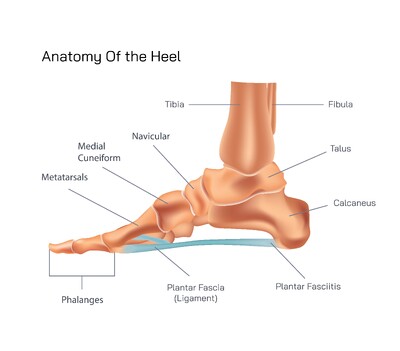
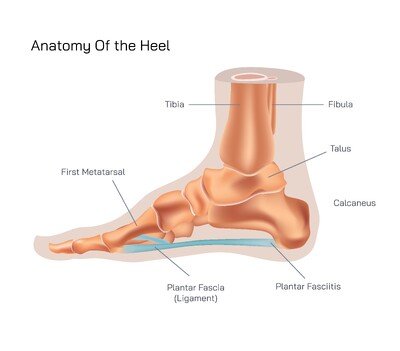
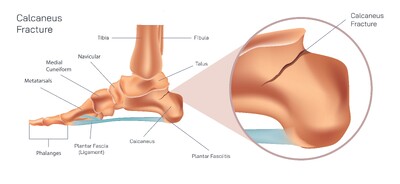
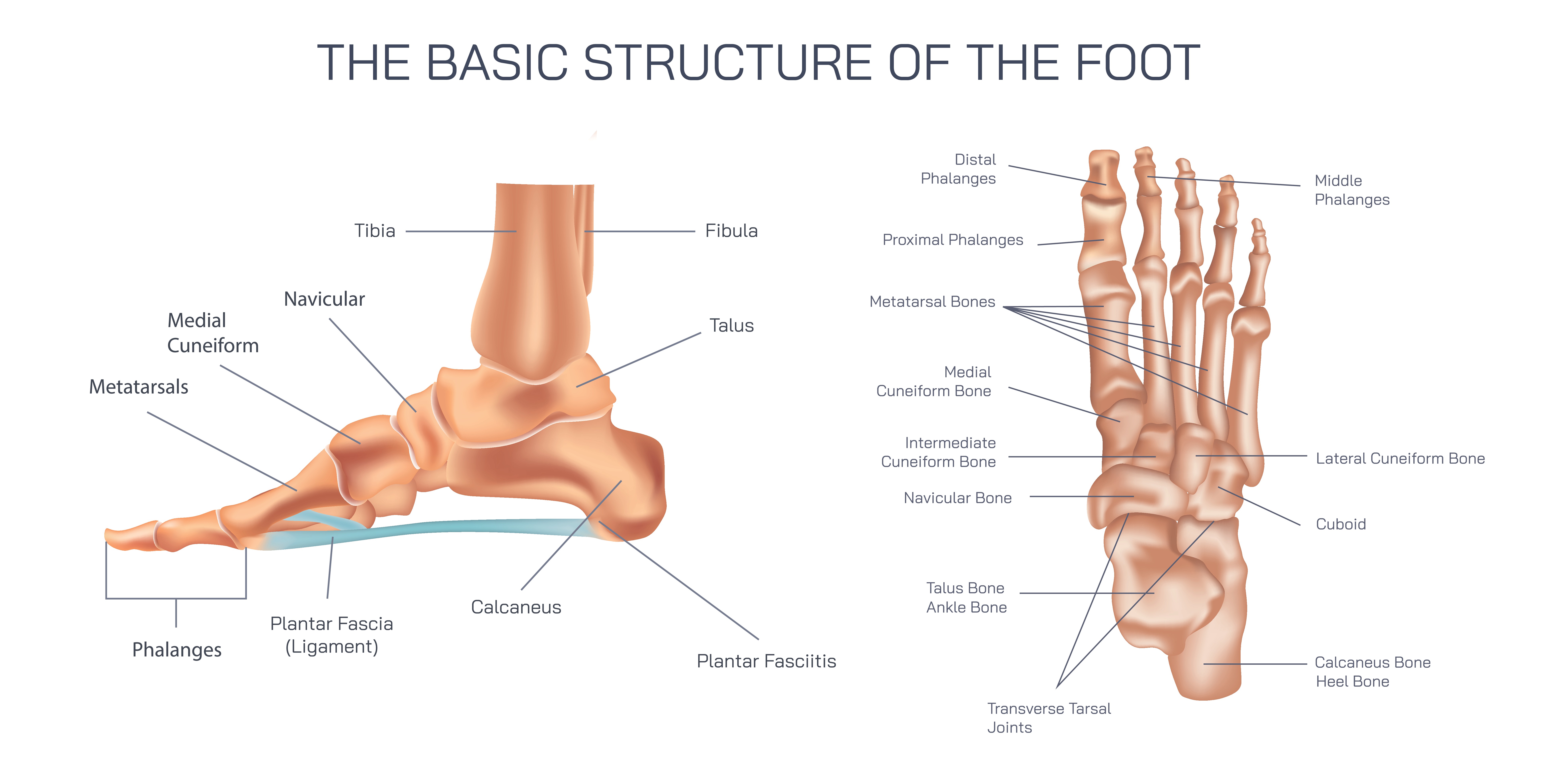
The skeletal framework of the foot consists of 26 bones that collectively form three structural regions: the hindfoot, midfoot and forefoot. The hindfoot includes the calcaneus (heel bone) and talus, which together absorb impact and link the foot to the lower leg through the ankle joint. The midfoot contains the navicular, cuboid and three cuneiform bones, forming the keystone of the arches that give the foot its characteristic shape. These bones act as a transition zone that transfers force from the hindfoot to the forefoot and allows the foot to adapt to uneven walking surfaces. The forefoot consists of five metatarsal bones and 14 phalanges that form the toes and play an essential role in propulsion. When the heel leaves the ground during walking, the forefoot provides the final push-off that drives the body forward.
In addition to bones, the arches of the foot are among its most defining features. They transform a rigid structure into a spring-like system capable of absorbing, storing and releasing energy. The medial longitudinal arch runs along the inside edge of the foot and provides the greatest height and elasticity, crucial for distributing downward pressure. The lateral arch on the outer edge of the foot provides additional balance and stability. The transverse arch runs across the midfoot and maintains the width and structural platform of the foot. These arches adapt continuously during motion, flattening slightly under body weight to disperse pressure and recoiling during push-off to create efficient forward movement.
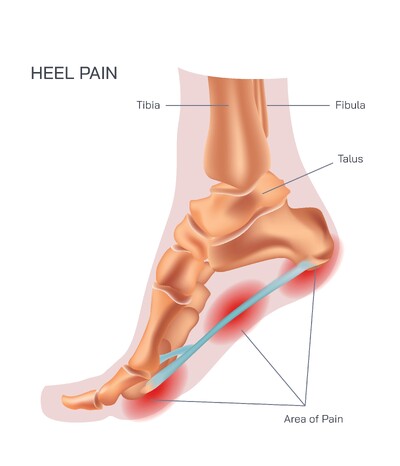
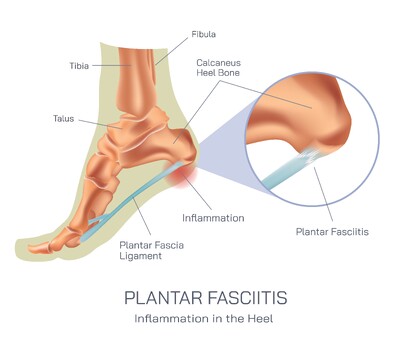
Muscles and tendons are equally important in the foot’s structural design. The extrinsic muscles originate in the lower leg and insert into the foot, controlling major movements such as pointing and flexing the toes, raising the heel and stabilizing the ankle. The intrinsic muscles lie within the foot and handle fine-tuned control such as toe spacing, arch support and balance adjustments. The Achilles tendon, the strongest tendon in the human body, attaches the calf muscles to the heel and allows powerful propulsion during walking and running. The plantar fascia, a thick band of connective tissue running from the heel to the forefoot, supports the medial arch and resists excessive flattening under load. When the arches shift too far or the plantar fascia becomes overstressed, the resulting strain can lead to heel pain and changes in gait.
Ligaments act as stabilizers and hold the skeletal elements of the foot in proper alignment. They prevent excessive motion that could damage joints while still allowing controlled flexibility for shock absorption. The subtalar and ankle joints play a major role in this movement, making it possible for the foot to adapt to uneven surfaces by rolling slightly inward or outward. This adaptive quality is essential for preventing falls, especially when walking on slopes, gravel or uneven ground.
The neurological design of the foot is equally impressive. Nerve endings provide constant sensory feedback to the brain, enabling precise control of balance and movement. The foot senses changes in ground texture, slope and pressure instantly and sends information that allows the body to adjust posture in real time. This sensory system makes it possible to stand upright, move with confidence and maintain athletic agility. Meanwhile, an extensive network of blood vessels ensures oxygen and nutrients reach the tissues while supporting recovery and endurance during daily activity.
The foot performs an enormous amount of work every day. While walking alone, the body weight passes across the foot thousands of times. During running and jumping, the forces placed on the foot can multiply several times beyond body weight. Despite these intense demands, the foot maintains durability, flexibility and stability through the combined action of bones, joints, muscles, connective tissues and nerves working in a synchronized system.
When any part of this structure becomes overloaded or misaligned — whether due to poor footwear, prolonged standing, sports injury, aging, weak muscles, excess body weight or biomechanical abnormalities — discomfort may develop. Common complications include plantar fasciitis, Achilles tendon irritation, stress fractures, metatarsalgia, arch collapse and joint inflammation. These issues demonstrate how crucial it is to maintain the strength and functional balance of the foot. Foot health can be improved through supportive footwear, strengthening and stretching programs, good posture habits and awareness of movement patterns.
The basic structure of the foot is not only a mechanical foundation but also a marvel of natural engineering. It has evolved to protect the body from impact, return energy during movement, support upright posture and adapt effortlessly to terrain. Whether walking casually, participating in sports or performing labor-intensive tasks, the foot adjusts continuously without conscious effort. When properly supported and cared for, it provides a lifetime of movement, balance and mobility. Understanding its design is the first step in protecting long-term foot health and sustaining comfort through every step of life.