Decussate Leaf Arrangement — Structure, Pattern, and Botanical Significance
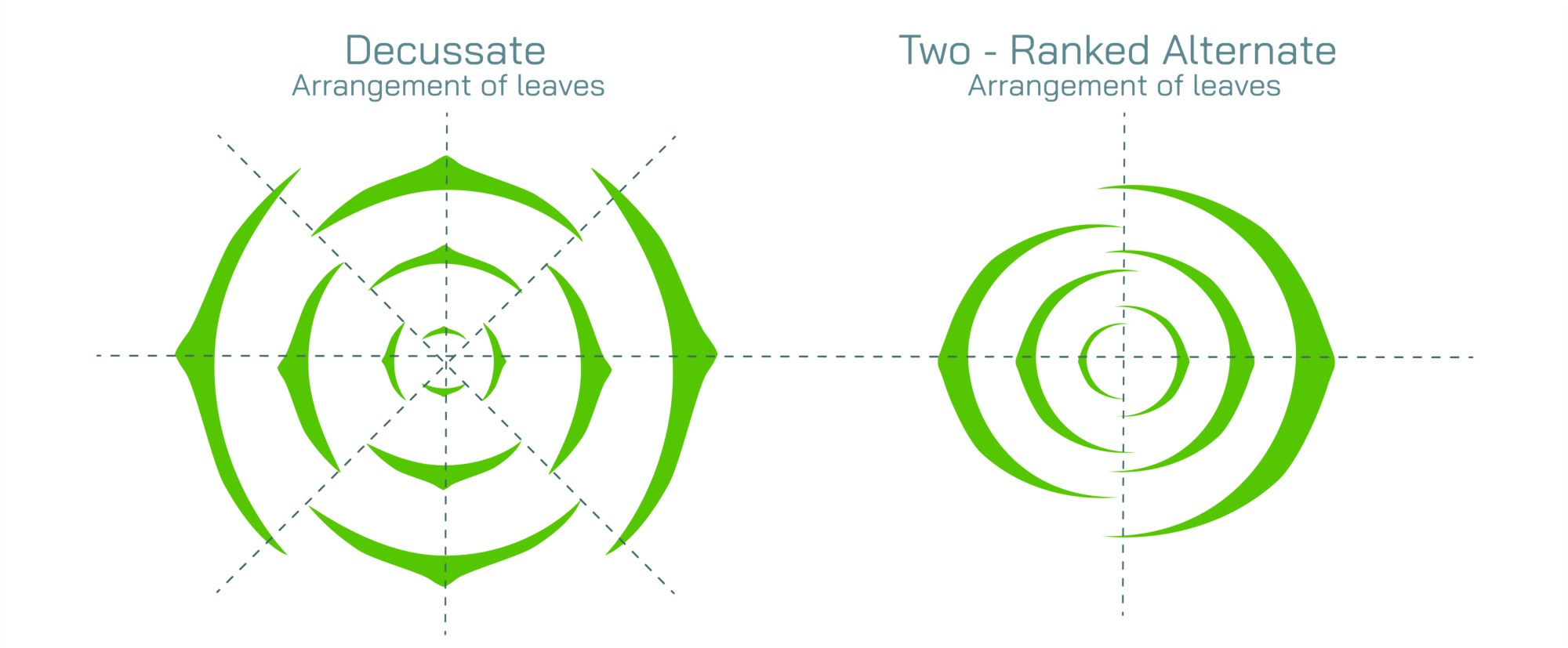
The decussate arrangement of leaves represents one of the most visually distinctive and structurally efficient placement patterns found in plants. In this arrangement, leaves grow in pairs at each node, and every successive pair is oriented at a right angle to the one above and below it. This creates a cross-like sequence along the stem, giving the plant a balanced, geometric, and highly organized appearance. The term “decussate” originates from the Latin word decussis, meaning the numeral ten in Roman notation, shaped like an X. This X-shaped crossing is the central defining feature of the pattern and plays an important role in understanding how plants use space, distribute light, and maintain mechanical stability.
A decussate leaf sequence is not merely a decorative botanical trait; it is an adaptive design seen in multiple plant families. Species from groups such as Lamiaceae, Rubiaceae, and Crassulaceae often display this structure, enabling observers to identify certain plants purely from the characteristic crossing of paired leaves. When viewed from above, the stem reveals four distinct vertical lines of leaves spiraling upward in a perfectly balanced arrangement. This makes the plant appear as though it has been engineered to maximize exposure to sunlight and airflow, and this impression is not far from biological truth. The perpendicular orientation of the pairs ensures that each leaf receives a relatively unobstructed share of light, reducing shading and improving photosynthetic potential.
The structural logic of decussate arrangement also contributes to mechanical advantages. Because leaves are evenly spaced around the stem, the plant maintains better weight distribution, reducing the tendency for one side to become heavier or more shaded. This uniformity supports smoother growth, particularly in species that thrive in environments where light direction changes throughout the day. The alternating pattern also creates channels for air to move more freely through the foliage, reducing the chances of fungal buildup and moisture-related damage. These aerodynamic benefits, though subtle, contribute to long-term plant health and resilience.
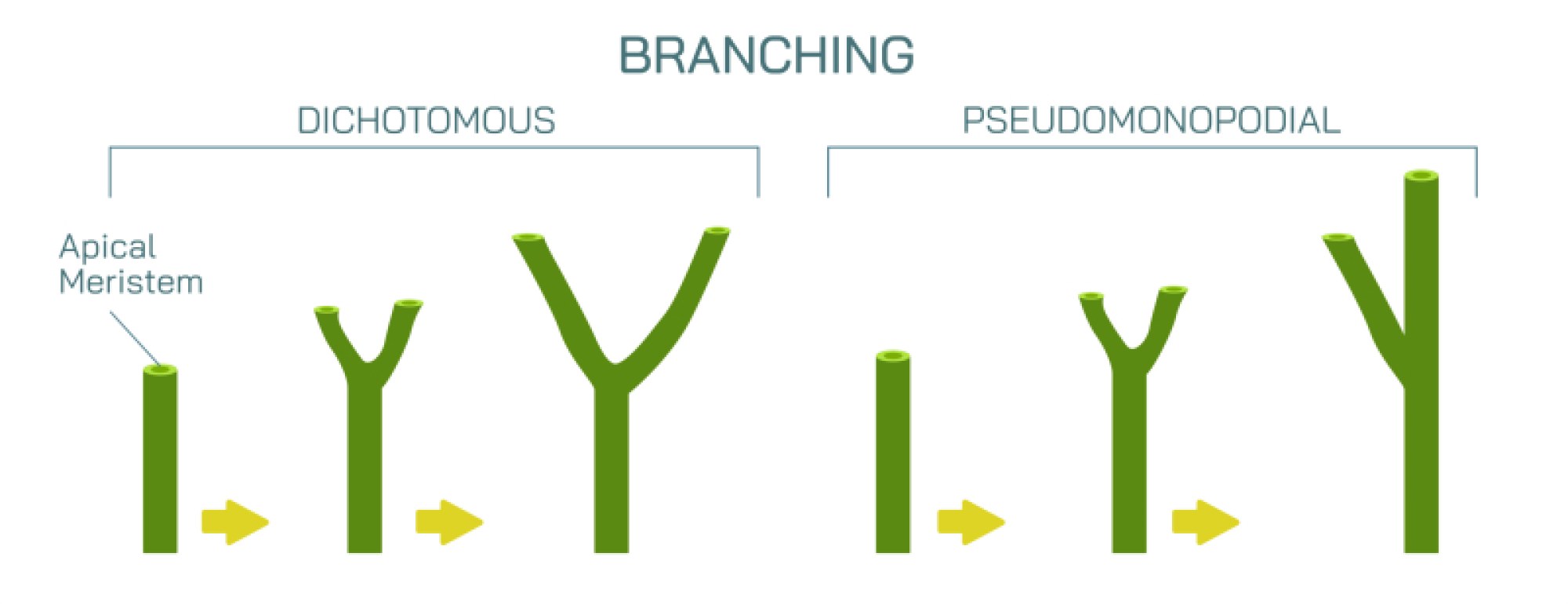
From a developmental perspective, decussate growth reflects how plant meristems regulate spacing and angle through genetic and hormonal signaling. The apical meristem dictates the positioning of each leaf primordium in a controlled rotational order. A pair develops, and the next pair emerges after a quarter-turn shift, maintaining the 90-degree difference. This reveals fascinating insights into morphogenesis, the shaping forces that guide the physical form of plant organs. It demonstrates how tiny shifts in growth direction yield major differences in overall appearance and ecological function.
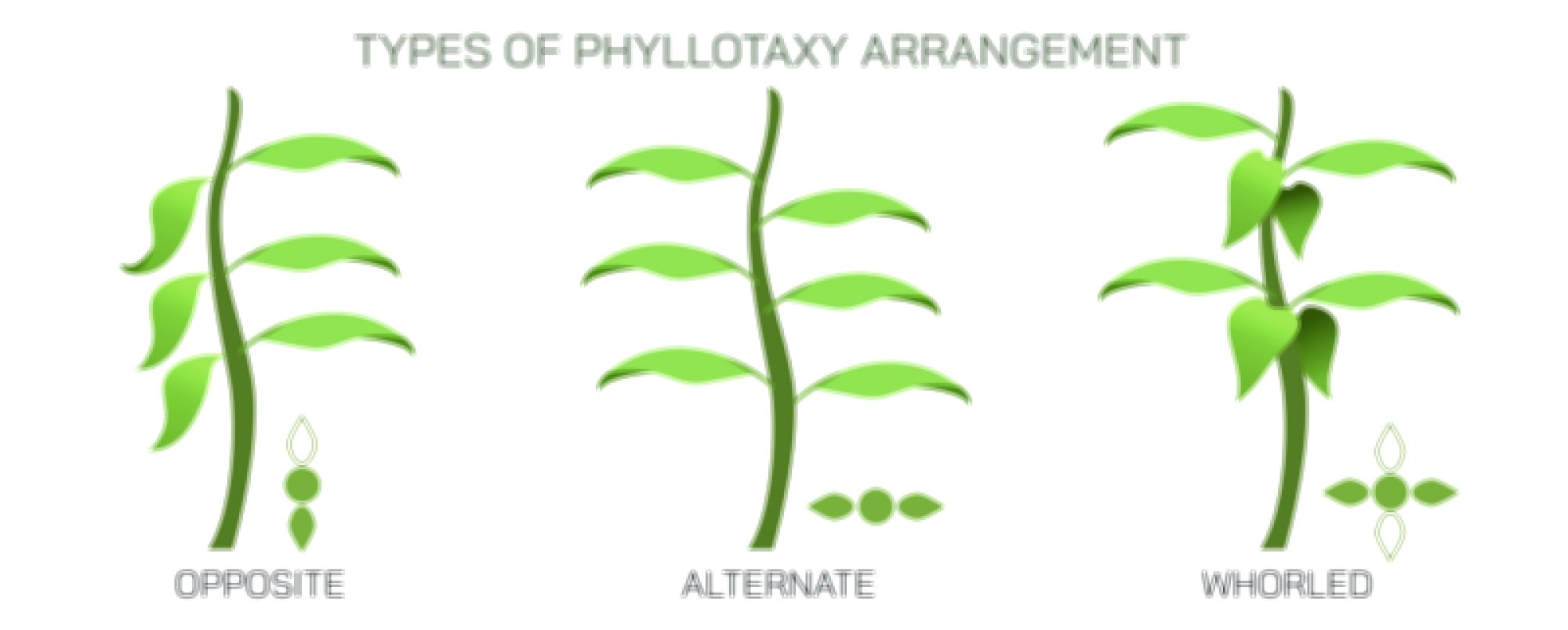
For students of botany or plant illustration, the decussate arrangement offers a clear example of how plants combine symmetry, spacing, and modular development into a coherent growth system. Artists often depict decussate stems to teach beginners about spatial orientation and node structure because the pattern is visually intuitive yet scientifically rich. Teachers also rely on this arrangement to introduce beginners to phyllotaxy, the study of leaf placement. Decussate patterns contrast easily with alternate and whorled patterns, making it easier to identify similarities and differences among various plants.
In real-world examples, many herbs, shrubs, and trees show decussate sequences as part of their natural form. Basil, mint, and several garden plants display the pattern clearly enough that even casual learners can observe the perpendicular pair rotation. This makes the concept practical for field studies, home gardening lessons, and botanical documentation. Because the arrangement is simple to spot, it allows learners to develop classification skills and gain confidence in plant identification.
Beyond scientific study, the decussate structure has aesthetic qualities that influence botanical art, garden design, and ornamental planning. Many growers appreciate how these leaf pairs create rhythmic lines along stems, enhancing symmetry in visually pleasing ways. Landscape designers use plants with decussate arrangements to produce structured patterns in gardens, highlighting vertical and horizontal alignments.
Overall, the decussate arrangement of leaves is more than a structural detail—it is a blend of functional engineering, evolutionary efficiency, and natural beauty. By organizing leaf pairs in perpendicular orientation, plants achieve optimal spacing, enhanced light capture, improved airflow, and striking visual order. Understanding this arrangement deepens our appreciation of plant architecture and reveals how simple rules produce complex and harmonious living forms.