Pollination — Cross Pollination vs Self Pollination
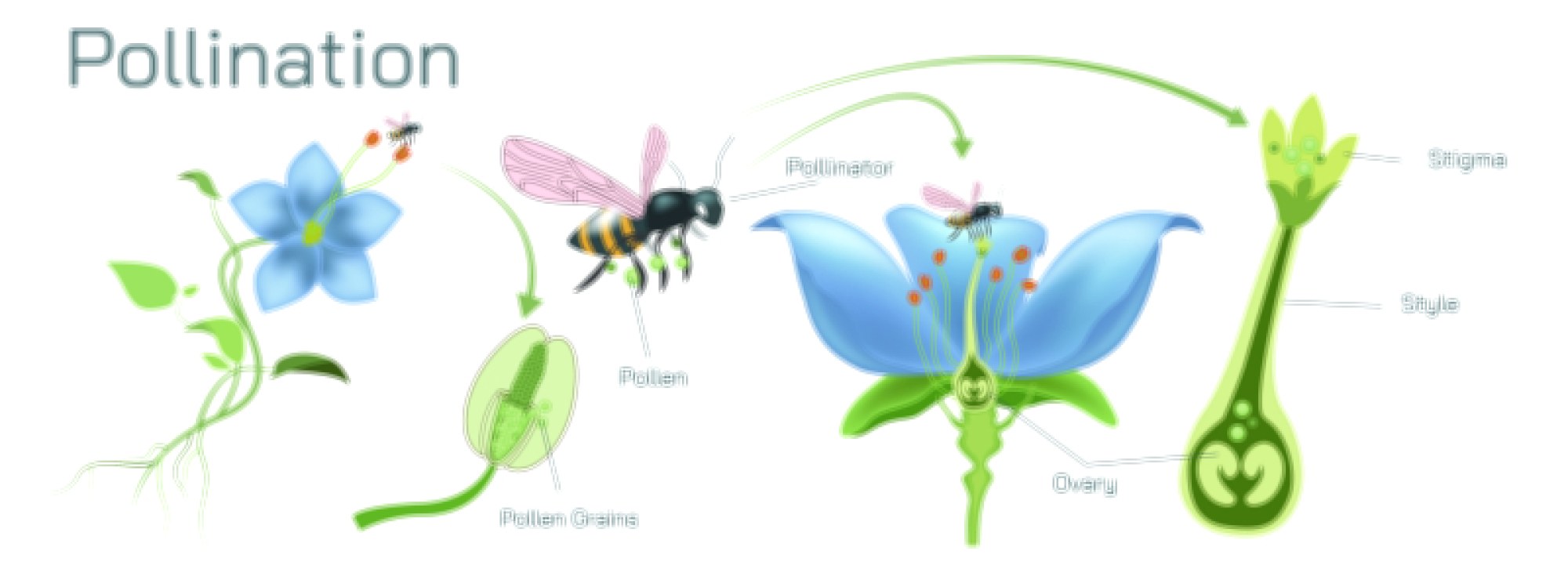
Pollination is the biological process by which pollen grains are transferred from the male reproductive organ (anther) to the female reproductive organ (stigma) of flowers, enabling fertilization and seed formation. It is a crucial step in plant reproduction and can occur in two main forms: cross pollination and self pollination, each with distinct mechanisms and implications for plant growth and genetic diversity.
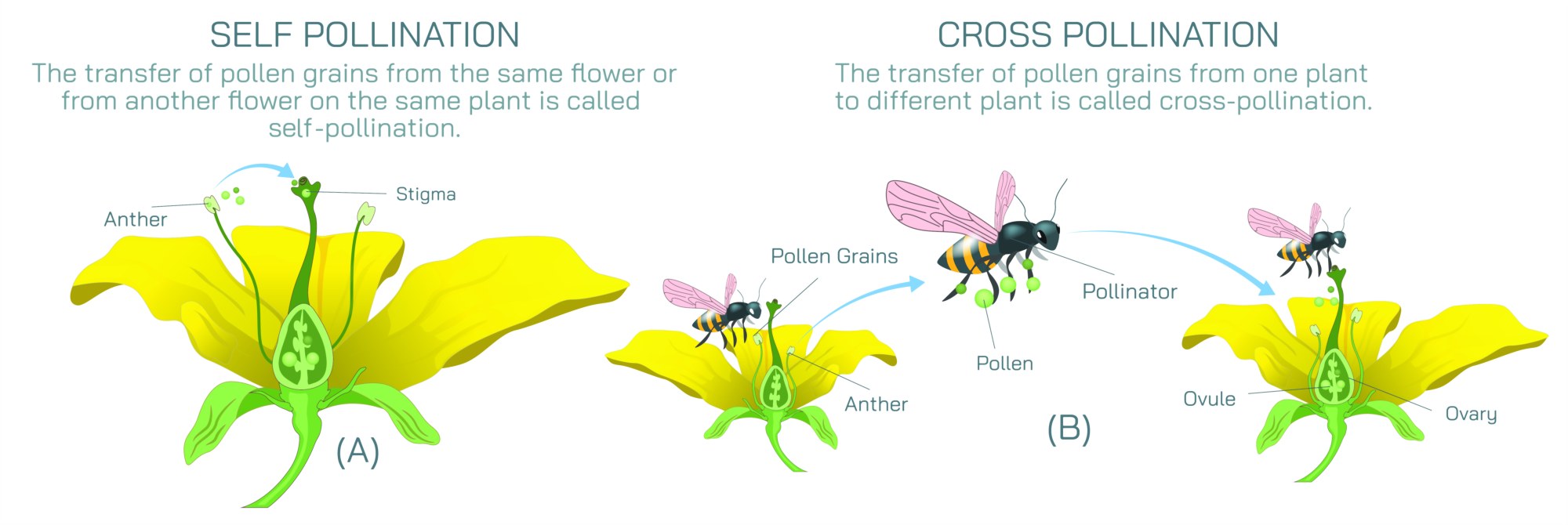
Self pollination occurs when pollen from the anther of a flower is transferred to the stigma of the same flower or another flower on the same plant. This type of pollination ensures fertilization even in the absence of external pollinators, making it advantageous for plants growing in isolated or stable environments. Self pollination leads to uniform offspring that are genetically similar to the parent, preserving desirable traits but reducing genetic variation. Many crops, such as wheat, rice, and peas, rely on self pollination to maintain consistent yields and traits.
In contrast, cross pollination involves the transfer of pollen from the anther of one plant to the stigma of a flower on a different plant of the same species. This process promotes genetic variation, resulting in offspring with diverse traits, which can enhance adaptability, resistance to diseases, and evolutionary potential. Cross pollination is facilitated by external agents such as insects, birds, wind, or water. Flowers adapted for cross pollination often exhibit bright colors, nectar, scent, or structures that attract pollinators. Examples include maize, sunflower, and hibiscus, which rely on insects or wind for effective pollen transfer.
Both types of pollination play important roles in ecosystems and agriculture. Self pollination ensures reproductive success when conditions are unfavorable or pollinators are scarce, while cross pollination enhances genetic diversity and resilience in plant populations. Understanding these mechanisms is vital for plant breeding, crop improvement, and ecological studies. By studying cross and self pollination, scientists and farmers can optimize plant reproduction, improve crop yields, and maintain biodiversity.
In conclusion, pollination is essential for plant reproduction, with self pollination providing reproductive assurance and uniformity, and cross pollination promoting genetic diversity and adaptability. The balance between these mechanisms ensures the survival, growth, and evolution of plant species, highlighting their importance in agriculture, ecology, and natural ecosystems.