Brownian Motion — Random Particle Movement and Its Scientific Importance
Brownian motion refers to the erratic, random movement of microscopic particles suspended in liquids or gases, resulting from collisions with fast-moving molecules of the surrounding medium. Named after the botanist Robert Brown, who first observed this phenomenon in 1827 while studying pollen grains in water, Brownian motion provides critical evidence for the existence and motion of atoms and molecules. This phenomenon bridges microscopic particle behavior and macroscopic observable effects, forming a cornerstone in statistical mechanics, physics, and chemistry.
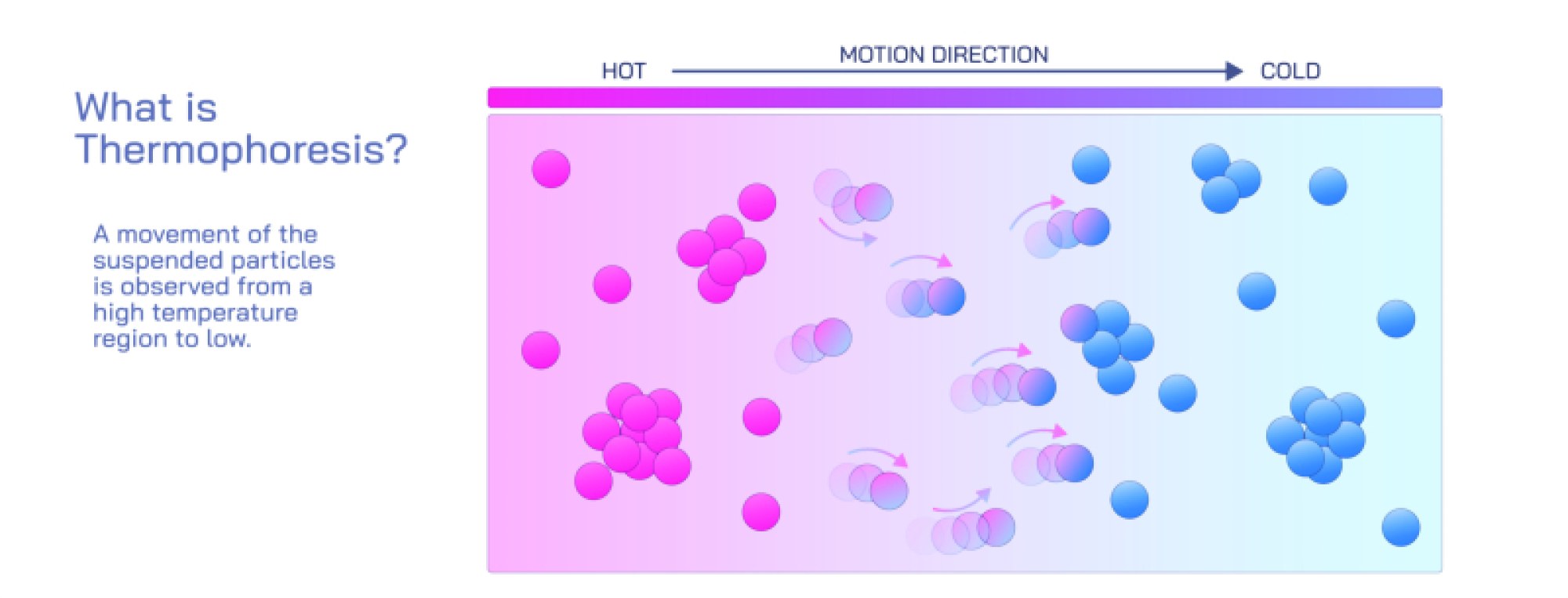
The underlying cause of Brownian motion is the constant, unpredictable collision of fluid molecules with suspended particles. In liquids, molecules vibrate and move randomly due to thermal energy, striking particles from various directions. The uneven distribution and timing of these collisions lead to the observable jittery, zigzag movement of particles. The magnitude of Brownian motion depends on temperature, particle size, and fluid viscosity. Higher temperatures increase molecular kinetic energy, enhancing particle motion, while larger particles or more viscous fluids reduce movement.
Brownian motion has far-reaching applications across science and engineering. In physics, it confirms the molecular theory of matter and underpins diffusion processes, linking microscopic interactions to observable macroscopic behavior. In chemistry, it explains molecular mixing, reaction kinetics, and the dispersal of solutes in solutions. In biology, understanding Brownian motion aids in studying cell dynamics, intracellular transport, and the behavior of microorganisms. Mathematically, Brownian motion is modeled as a stochastic process, forming the basis of modern probability theory and financial mathematics for modeling random fluctuations in stock prices and other complex systems.
Experimentally, Brownian motion is observed using microscopes to track particles suspended in fluid, recording their trajectories over time. Quantitative analysis allows calculation of diffusion coefficients, particle size, and viscosity of the medium. Technological advances, such as optical tweezers and particle tracking software, enable precise measurements and simulations, further enhancing the understanding of molecular interactions.
In conclusion, Brownian motion is a fundamental scientific phenomenon revealing the dynamic nature of microscopic particles and molecular motion. Its discovery provided direct evidence of atoms and molecules in motion, forming a critical link between theory and observable reality. Understanding Brownian motion not only advances physics, chemistry, and biology but also informs practical applications in material science, nanotechnology, and even finance. Studying this random movement highlights the intricate interplay between particles and their environment, offering insights into the microscopic forces that shape macroscopic behavior.