Structure of Stomata — A Detailed Explanation of Guard Cells, Pores, and Leaf Surface Organization
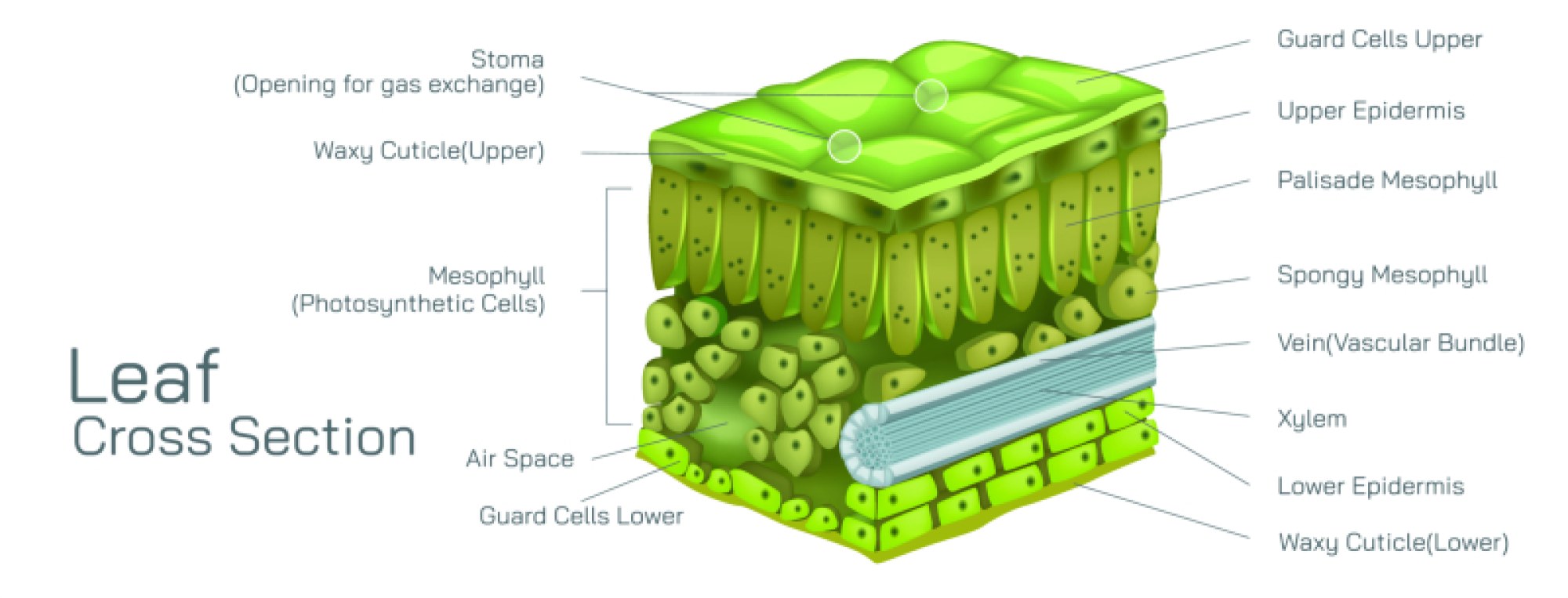
Stomata are microscopic openings found primarily on the surface of leaves. These specialized structures function as gateways for essential exchanges between the plant and its surroundings. Each unit consists of a central pore controlled by two guard cells. These cells regulate when the pore opens and when it closes, allowing the plant to maintain balance between gas movement and water control. The structure is uniquely arranged to handle environmental changes that impact plant life.
The outer surface of the leaf contains a protective layer known as the epidermis. Within this layer, stomata are arranged in patterns that vary among plant groups. The position and density of these openings influence the plant’s ability to exchange gases effectively. Each stomatal unit is embedded in this layer, ensuring proper alignment with internal tissue that carries water and nutrients. The overall design allows the plant to control flow without damaging delicate inner regions.
Guard cells form the most distinctive part of the structure. These cells differ from surrounding cells because they contain higher levels of internal support and specialized curves. Their curved shape helps create a controlled pore at the center. Each guard cell pairs perfectly with the other, creating a balanced structure that responds to internal changes. When internal pressure increases, the cells bend outward, which widens the pore. When pressure decreases, they relax and come closer together, causing the pore to close.
The inner walls of guard cells are thicker compared to their outer walls. This difference plays a key role in the bending behavior that opens the pore. When water enters the cells, they become firm, and this firmness triggers bending due to the uneven thickness. Because the outer wall is thinner, it expands more easily, pulling the pore wider. When water leaves the cells, they shrink, returning the pore to a closed state. This physical behavior ensures that the opening action is controlled and efficient.
Surrounding cells, often called subsidiary cells, assist in maintaining the stability of the guard cells. These cells support the overall structure and help distribute pressure changes. They also influence the movement of water and ions toward the guard cells. Without these supporting cells, the system would not function smoothly. These supporting structures ensure that every opening and closing event remains balanced and does not stress the leaf surface.
The pore itself is the central feature of the stomatal unit. This microscopic passage is the path through which gases enter and exit the leaf. When the pore is open, carbon dioxide enters, enabling essential processes such as food formation. Oxygen and water vapor exit through this same opening. Because the pore is small, the plant can precisely control how much gas leaves the system. This control is crucial for preventing excess water loss, especially during warm and dry conditions.
The structural grouping of guard cells and subsidiary cells forms a system that reacts to internal and external signals. Light, water level, and internal signals all influence the opening of stomata. When light increases, guard cells take in ions and water, which widens the pore. When darkness arrives, the flow reverses, reducing cell firmness and causing closure. The structure is designed to respond quickly and reversibly, allowing the plant to adapt to rapid environmental shifts.
Because stomata cover large areas of leaf surfaces, their structural efficiency has major effects on overall plant health. Plants with well-spaced stomata can move gases efficiently without losing excessive water. Those with dense stomatal placement may excel in environments with ample water and high light levels. Structural differences among plant species reflect evolutionary adjustments to different climates and conditions.
Inside the leaf, the pathway connects the pore with deeper tissue involved in food formation. This organization allows gases entering through the pore to reach inner regions quickly. The structure ensures minimal resistance along this path. At the same time, the arrangement prevents harmful loss of internal moisture. The design balances two key functions: movement and protection. Both rely deeply on the precise form of each stomatal unit.
Even though stomata are tiny, their structure represents one of the most advanced designs in plant biology. The coordination between guard cells, subsidiary cells, and pore design creates an effective valve system that protects and sustains life. By responding dynamically to environmental changes, the stomatal structure supports proper daily activity and long-term survival. The form and function of each component demonstrate how organized plant systems can be, even at the smallest scale.