Stock Market Reversal Fibonacci Levels: Retracement and Extension Trading Explained
Fibonacci levels in the stock market form one of the most widely used frameworks for identifying potential reversal points, areas of value, and zones where market psychology shifts between profit-taking and renewed momentum. Although Fibonacci numbers originate from mathematics and nature, their popularity in trading does not come from numerical theory alone. Rather, Fibonacci retracements and extensions capture patterns of behavior that repeatedly appear in markets because buying and selling decisions are influenced by crowd expectations, memory of price, and the tendency of traders to react predictably during pullbacks and rallies. Fibonacci levels are not mechanical triggers that force the market to reverse; instead, they highlight regions where investors and institutions commonly reassess risk, take profits, initiate fresh positions, or hunt for liquidity before the next major move. When applied to reversal trading, Fibonacci levels provide structure to price action and help traders understand the rhythm of impulses and corrections—how trends pause before accelerating again, and how corrections unfold before new legs of price discovery begin.
A trending market does not move in a straight line. When price advances in a bullish trend, it eventually reaches a point where early buyers take profit, short sellers attempt countertrend positions, and cautious investors hold back to wait for lower entry opportunities. This collective behavior produces a retracement, a temporary pullback against the trend. In a bearish trend, the opposite happens—downward movement eventually pauses as opportunistic buyers enter, short sellers reduce exposure, and liquidity shifts temporarily toward the upside. Retracements are not threats to the trend but essential pauses that supply the market with liquidity to continue moving. Fibonacci retracement levels help map where these pauses may settle before the trend resumes. Retracement traders pay careful attention to the structure of price, looking for where the retracement ends rather than whether it begins, because the conclusion of a retracement signals the moment when the dominant trend prepares for its next impulse. This is why Fibonacci retracement levels—whether shallow or deep—carry psychological significance: they highlight where market participants may collectively decide whether the previous trend remains valid or whether reversal pressure might gain control.
The most commonly referenced retracement levels correspond to shallow, medium, and deep corrections. When the market pulls back only slightly from a strong impulse and then resumes quickly, traders see a shallow retracement as a sign of durable trend strength, meaning sellers did not have enough conviction to drive price lower in a bullish trend, or buyers could not meaningfully lift price in a bearish trend. When price retraces deeper, the market is testing conviction more seriously, shaking out weak hands, gathering liquidity, and tempting opposing traders to take positions prematurely. The depth of retracement reflects both the strength of the previous impulse and the psychological resilience of the trend. Traders look for price reaction at these retracement levels not because the levels themselves have magic power, but because the majority of participants expect others to react there. This self-reinforcing behavior is one reason Fibonacci retracement levels often develop as turning points—market participants act at those levels precisely because they believe others will act as well.
Once a retracement has completed and the price resumes its direction, the market often enters an extension phase, where price travels beyond the previous high or low and continues seeking new liquidity. Fibonacci extension levels provide reference points for where momentum may reach overextension and where profit-taking or partial liquidation may occur. These extension levels also play a vital role for traders holding positions from the retracement, because they offer realistic targets that do not depend on emotional guesses or arbitrary price selection. In bullish trends, extension levels are where traders ask whether buyers will continue pushing higher or whether greed may peak, inviting corrective behavior. In bearish trends, extension levels are where exhaustion and fear compete to determine whether sellers will continue driving price lower or whether opportunistic buyers will begin to absorb. Extension levels therefore highlight not just where price might go, but where trader psychology may undergo decisive change.
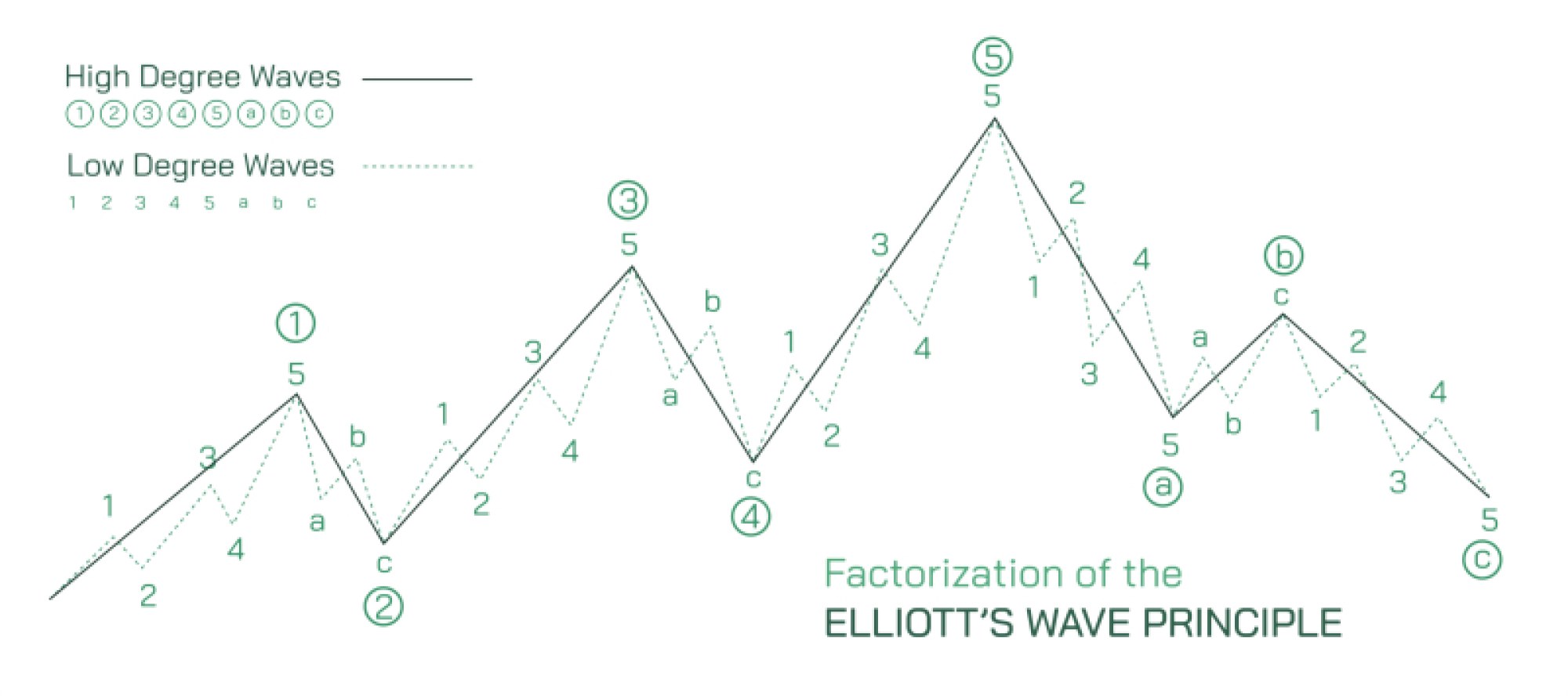
A complete Fibonacci cycle involves an impulse move, a retracement, and a continuation toward extension targets. This rhythmic structure mirrors the emotional waves inside the market. In the impulse phase, enthusiasm for continuation dominates as traders pile into the trend. In the retracement phase, doubt and hesitation emerge, causing a temporary price reversal that gives the impression of trend weakening. In the extension phase, the market either reconfirms the trend and reaches new highs or lows, or exhaustion and emotional saturation cause transition into consolidation or reversal. The interplay between these phases allows traders to read more than price direction; it allows them to infer whether the crowd is accumulating, distributing, fearful, greedy, or uncertain. Because trends often resume after retracements—and because many traders wait to see confirmation before entering—retracement completion becomes a trigger point that magnifies both demand and supply depending on trend direction. This is why reversals at Fibonacci levels often occur in dramatic fashion, producing decisive candles that mark renewed confidence or accelerating panic.
In practice, traders combine Fibonacci retracement and extension levels with market structure rather than using the levels alone. A bullish retracement that reacts strongly at a retracement zone while forming a higher low, rejecting downward wicks, or producing increases in volume confirms that buyers remain in control. Conversely, a bearish retracement that encounters resistance at a retracement zone while forming a lower high, rejecting upward wicks, or showing weakening buying strength signals that sellers remain dominant. When retracement reversals align with extension targets from previous legs, the probability of responsiveness increases further because multiple groups of traders focus on the same areas—trend followers awaiting continuation, profit-takers planning exits, countertrend traders seeking traps, and liquidity-driven algorithms looking for unfinished business. Extension reversals are not the end of the trend by definition, but they serve as checkpoints where momentum may fade and the next transitional phase of the cycle may begin.
The psychological dimension of Fibonacci trading explains its longevity. The levels resonate with human behavior because market participants rarely commit emotionally at extreme highs or lows; they prefer to act during pauses when uncertainty temporarily displaces euphoria or fear. Retracement levels represent emotional uncertainty—moments when traders question recent moves and wait for confirmation before re-entering. Extension levels represent emotional excitement—moments when traders believe in continuation and push price toward new extremes. The duality of hesitation during retracement and ambition during extension illustrates how Fibonacci levels reveal not pure mathematics but the rhythm of crowd sentiment as it oscillates between caution and conviction. This rhythmic tension becomes even more visible when markets accelerate sharply from retracement points and break decisively from structure, because the completion of retracement removes doubt and triggers urgency for those who delayed earlier decisions.
The value of Fibonacci levels does not lie in rigid belief that price must reverse precisely at a specific percentage, but in recognizing the zones of emotional decision-making where institutional orders cluster and where market psychology transitions. Traders who rely solely on levels without context may enter prematurely or exit too quickly; traders who integrate Fibonacci into broader analysis—trend strength, volume, structure, liquidity behavior, and momentum—gain a strategic advantage. Retracement becomes an opportunity rather than a threat. Extensions become planning tools rather than guessing targets. Trend reversals become contextual rather than speculative. Over time, traders discover that Fibonacci levels serve not as predictors of the future but as guides to identifying zones where the next major decision between fear and greed is likely to unfold. When understood this way, Fibonacci analysis transforms from a mechanical exercise into a window into how markets breathe, pause, expand, and reset through the perpetual negotiation of value between buyers and sellers.