LED Colorful Light Therapy Vector Illustration Showing Red, Blue, and Green Light Effects on Skin for Rejuvenation and Acne Treatment
LED light therapy is a widely used non-invasive skincare treatment that utilizes specific wavelengths of light to target various skin concerns such as acne, hyperpigmentation, and aging. The therapy employs colored LED lights, including red, blue, and green, each penetrating the skin at different depths and producing distinct physiological effects. A vector illustration of LED light therapy typically integrates skin layers, light beam penetration, target tissues, and therapeutic effects, providing a clear and educational representation of how colorful light can be used for skin rejuvenation and acne management. By combining labeled skin layers, colored light beams, and visual indicators of treatment effects, such illustrations allow learners to understand both the mechanism and benefits of LED therapy.
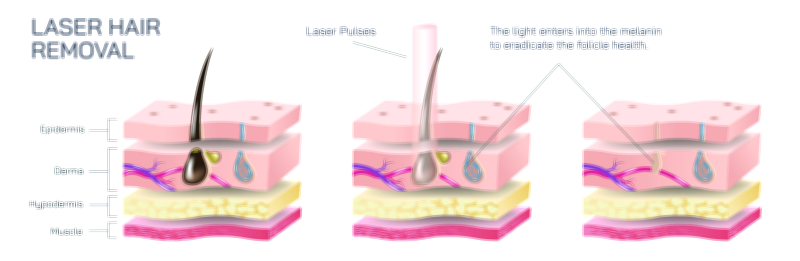
At the center of the illustration is a cross-sectional view of human skin, showing the primary layers: epidermis, dermis, and subcutaneous tissue. Color gradients and shading differentiate each layer, with labels emphasizing their structural and functional roles. The epidermis is identified as the outer protective layer, the dermis contains collagen, fibroblasts, and blood vessels, and the subcutaneous layer is shown with adipose tissue. Arrows indicate the direction and depth of LED light penetration, demonstrating how each wavelength interacts with specific skin layers.
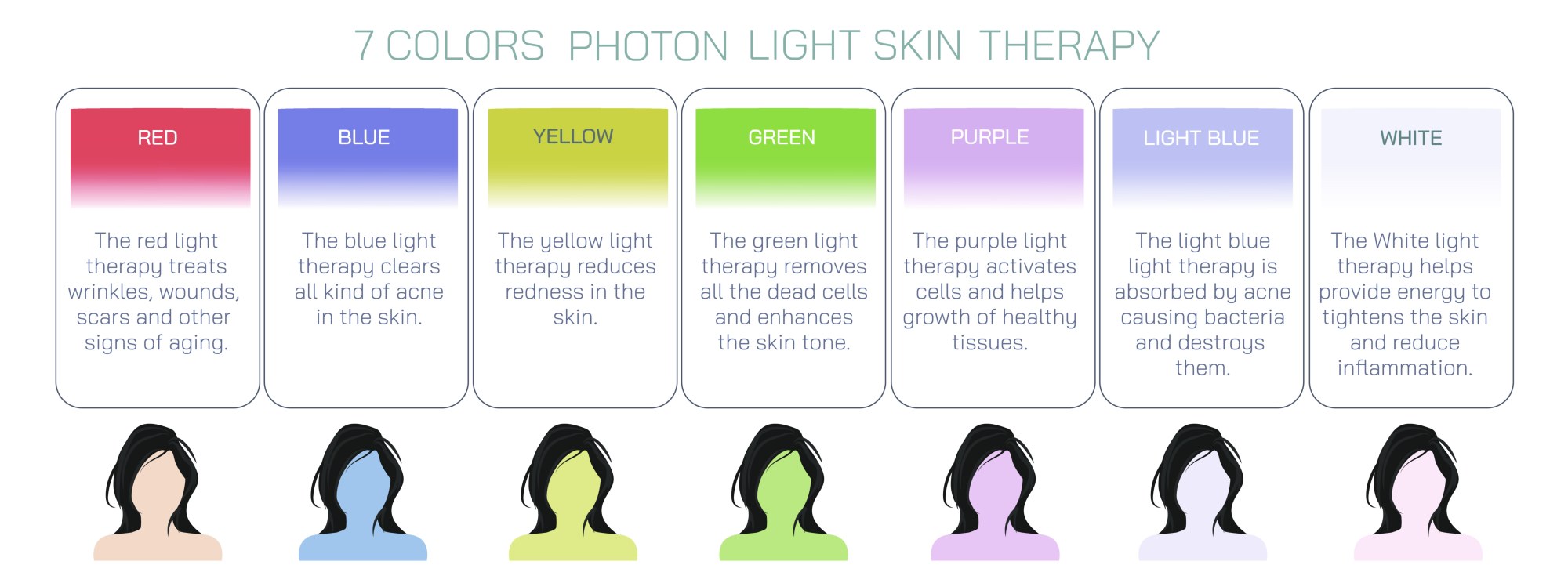
Red light therapy is illustrated with deep-penetrating red beams, reaching the dermis. Labels highlight its effects, such as stimulating collagen production, enhancing fibroblast activity, and promoting skin rejuvenation. Arrows may indicate increased cellular activity, improved blood circulation, and enhanced repair processes. Color intensity gradients along the beam show the depth and energy absorption, visually linking wavelength to therapeutic effect. Magnified insets may illustrate fibroblast stimulation and collagen synthesis at the cellular level.
Blue light therapy is depicted with shorter-wavelength blue beams targeting the epidermis, particularly the sebaceous glands. Labels indicate its role in killing acne-causing bacteria (Propionibacterium acnes), reducing inflammation, and minimizing breakouts. Arrows illustrate the antibacterial mechanism and localized skin penetration, while magnified insets may depict bacterial cells being neutralized by absorbed light energy. Color-coded gradients reinforce that blue light primarily affects superficial layers, emphasizing targeted treatment.
Green light therapy is illustrated as medium-penetrating green beams, focusing on melanin and pigmentation regulation. Labels highlight its effects, such as reducing hyperpigmentation, calming redness, and balancing skin tone. Arrows indicate melanin absorption and modulation, while overlays demonstrate calming effects on vascular components in the dermis. Magnified insets may show pigment dispersal or suppression, providing a microscopic perspective on light-skin interaction.
The illustration often includes combined LED treatment panels, showing the simultaneous or sequential use of multiple light colors. Arrows indicate overlapping penetration zones, highlighting how layered treatment addresses multiple skin concerns. Labels and color-coded paths demonstrate that red light stimulates deep dermal repair, blue light combats surface bacteria, and green light modulates pigmentation, giving learners a comprehensive view of multi-wavelength therapy.
Vector diagrams may also include skin surface features, such as pores, sebaceous glands, and collagen fibers, to contextualize the effects of light therapy. Arrows or heat maps may indicate energy absorption, skin response, and therapeutic outcomes, reinforcing the connection between applied light and biological effect. Comparative insets may show before-and-after treatment results, such as reduced acne lesions, smoother skin texture, and improved tone, visually demonstrating efficacy.
Additional educational features may include treatment guidelines and safety annotations. Labels may indicate optimal distances between LED devices and skin, recommended duration per session, and energy intensity thresholds. Arrows may indicate safe penetration limits to prevent epidermal damage while ensuring adequate dermal stimulation. Color coding and legends further enhance clarity, providing a practical reference for clinical or home use scenarios.
By combining skin layers, colored light beams, target tissues, cellular insets, and therapeutic outcomes, a vector illustration of LED light therapy provides a comprehensive, visually engaging explanation of multi-wavelength skin treatment. Color coding, directional arrows, labeled structures, and magnified panels clarify how red, blue, and green lights interact with different skin layers to achieve rejuvenation, acne reduction, and pigmentation control.
Ultimately, a vector illustration of LED colorful light therapy demonstrates the precise mechanisms and benefits of red, blue, and green light on human skin, linking anatomical layers to physiological effects. Through labeled skin structures, colored light trajectories, target tissue annotations, and outcome indicators, the diagram transforms abstract dermatological principles into an educational, visually engaging, and intuitive tool for medical, cosmetic, and wellness learning.