The Fitzpatrick Scale Vector Illustration Showing Six Skin Type Classifications Based on Tone, Sun Sensitivity, and Pigmentation Response
The Fitzpatrick scale is a widely recognized skin classification system used in dermatology, aesthetic medicine, and photobiology to categorize human skin based on pigmentation, natural skin tone, and reaction to ultraviolet (UV) exposure. This scale helps predict sunburn risk, tanning response, and suitability for various cosmetic or laser treatments. A vector illustration of the Fitzpatrick scale typically presents six distinct skin types, ranging from very fair to deeply pigmented, with labels indicating sun sensitivity, tanning potential, and pigmentation characteristics, offering a clear and educational reference for professionals and learners in health and skincare disciplines.
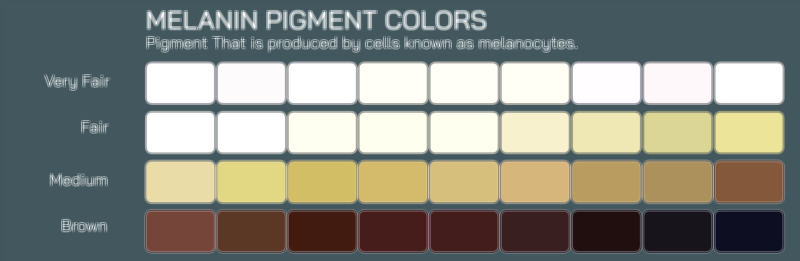
At the center of the illustration are the six skin types, usually represented as a gradient or discrete panels showcasing varying melanin levels and tone. Each type is assigned a Roman numeral from I to VI, progressing from lightest to darkest. The vector illustration emphasizes visual differentiation of skin tone, using subtle color shading and gradients to accurately depict the natural hues of each classification. Labels indicate the typical melanin content, providing context for differences in pigmentation and UV absorption among skin types.
Type I skin is characterized as very fair, pale, or albino, often with freckles, light eyes, and red or blonde hair. The vector diagram may include annotations indicating extreme sensitivity to sunlight, minimal tanning capacity, and high risk of sunburn. Arrows or callouts can highlight skin features such as translucent epidermis and high UV susceptibility, illustrating why this skin type requires rigorous sun protection.
Type II skin represents fair skin with slight pigmentation, commonly with light eyes and hair. The vector illustration shows moderate UV sensitivity, occasional sunburn, and limited tanning. Labels indicate that individuals with Type II skin may burn easily but can gradually develop a light tan. Arrows may illustrate gradual melanin production and the body’s adaptive response to UV exposure.
Type III skin corresponds to medium or beige skin tone, with moderate pigmentation, brown hair, and eyes. The illustration highlights average sun sensitivity, occasional mild burning, and gradual, moderate tanning. Arrows and gradient shading indicate a balanced pigmentation response, showing the ability of the skin to produce melanin efficiently without immediate damage from sunlight.
Type IV skin is olive or light brown, with higher melanin content and reduced sunburn susceptibility. The vector illustration emphasizes quick tanning, minimal burning, and increased UV protection compared to lighter skin types. Labels highlight the adaptive advantage of higher melanin levels, while color coding shows enhanced pigmentation and deeper basal layer protection.
Type V skin represents moderately brown skin with low sunburn risk and high tanning capacity. The vector illustration may include deeper pigmentation in the epidermis and dermis layers, showing how melanin absorbs and dissipates UV energy. Arrows can indicate efficient tanning response and lower UV-induced damage, visually emphasizing the protective effect of melanin.
Type VI skin is characterized as deeply pigmented or dark brown to black skin, with the highest melanin content and minimal risk of sunburn. The illustration highlights the natural photoprotective properties, rapid tanning, and minimal UV damage. Vector diagrams may show dense melanin distribution within the epidermis, explaining the biological basis for sun resistance and reduced susceptibility to UV-induced skin damage. Labels provide context for pigmentation density and photoprotection mechanisms.
Vector illustrations frequently include comparative panels or gradient scales to show the transition between types, allowing viewers to visualize the continuum of skin tones. Arrows and labels may indicate sun sensitivity, tanning speed, and melanin levels, integrating structural and functional information in one cohesive diagram. Color gradients help communicate the subtle differences between adjacent skin types while maintaining clarity and accessibility for learners.
Additional elements in the vector diagram may include textual descriptors for each skin type, such as hair color, eye color, freckles, or tanning patterns, providing a comprehensive reference for aesthetic and dermatological applications. Magnified insets may depict epidermal melanin concentration to connect visual tone with underlying physiological mechanisms. The illustration can also show UV exposure impact, with color-coded arrows indicating risk levels, emphasizing practical implications for sunscreen use, photoprotection, and laser treatment planning.
By combining six distinct skin types, color gradients, UV sensitivity indicators, tanning response, and melanin distribution, a Fitzpatrick scale vector illustration provides a complete visual framework for understanding skin classification. It clearly communicates differences in pigmentation, sun response, and protective characteristics, making complex dermatological concepts accessible to students, clinicians, and cosmetic professionals.
Ultimately, a vector illustration of the Fitzpatrick scale demonstrates the relationship between skin tone, melanin content, and ultraviolet response, visually connecting biological, clinical, and aesthetic considerations. Through labeled skin types, gradient shading, arrows for sun sensitivity, and detailed descriptors, the diagram transforms an abstract classification system into a visually engaging and educational tool, enabling accurate interpretation of skin phototypes for health, cosmetic, and research applications.