Leaf Vector Illustration Showing Detailed Structure, Shape, and Vein Pattern for Biology and Design Education
Leaves are the primary organs of plants responsible for photosynthesis, gas exchange, and energy production, and their structural diversity reflects both functional adaptation and aesthetic appeal. A vector illustration of a leaf designed for biology and design education typically integrates external morphology, vein patterns, and internal structural hints, providing a comprehensive understanding of leaf form and function while also offering inspiration for design applications. By combining labeled features, shape variations, and vein network representation, such illustrations allow learners to explore both scientific and artistic dimensions of leaf anatomy.
At the core of the illustration is the overall leaf shape, which can vary widely across plant species. Vector diagrams often include examples of simple leaves with a single lamina, as well as compound leaves with multiple leaflets. Common shapes such as ovate, lanceolate, elliptical, palmate, and pinnate are depicted with clear outlines and smooth or serrated margins, allowing learners to distinguish among the many natural forms. Labels identify the apex, base, margin, and petiole, providing structural context. For design education, these shapes can be stylized or abstracted, with smooth curves and symmetry emphasizing aesthetic proportions and balance.
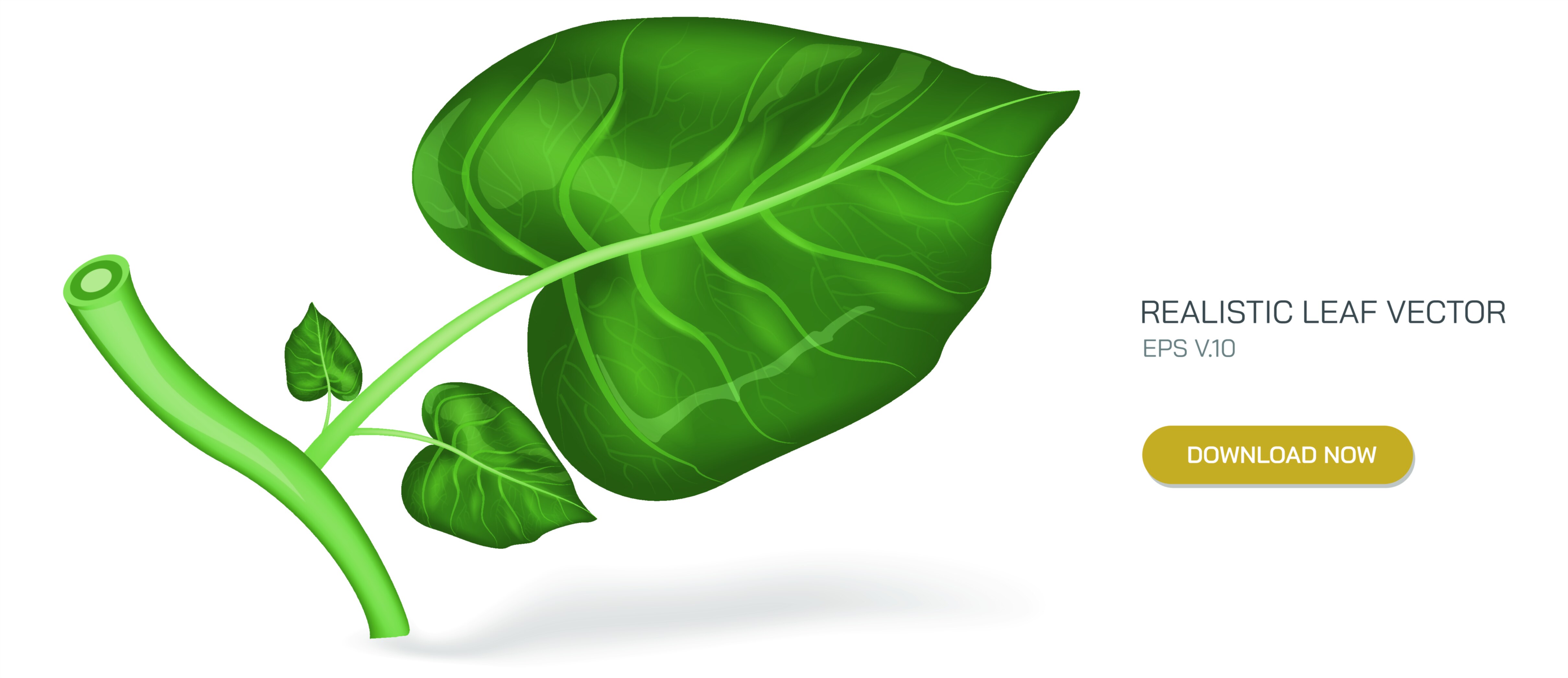
The venation pattern is a key feature highlighted in vector illustrations. The diagram often depicts primary veins, branching secondary veins, and finer tertiary veins to demonstrate the hierarchical vascular network within the leaf. Pinnate venation, with a single midrib and lateral branches, and palmate venation, with several main veins radiating from the base, are commonly illustrated. Each vein may be color-coded or styled differently to emphasize structural importance and guide the viewer’s attention from the main vein to smaller veinlets. Arrows or gradient lines may indicate the direction of nutrient and water transport, connecting the visual network to its biological function.
Vector illustrations may also include internal anatomy hints, such as light shading to indicate areas of thicker mesophyll or subtle outlines suggesting major vascular bundles. While primarily focused on external structure, these internal cues help learners understand how veins provide mechanical support, facilitate fluid transport, and optimize photosynthetic efficiency. In some diagrams, magnified insets show cross-sections of veins, highlighting xylem and phloem arrangement within the leaf, bridging external form with internal function.
Leaf margins and edges are depicted with precision, showing variations such as entire, serrate, dentate, lobed, or undulate. Labels and magnified views may highlight specific patterns, demonstrating how leaf edge morphology contributes to species identification and ecological adaptation. For design applications, these margins can be stylized to create visual rhythm and texture, providing a bridge between biological accuracy and artistic interpretation.
Vector illustrations often include comparative panels showing multiple leaves side by side. This may include leaves from different species or different stages of development, highlighting variation in size, shape, and vein density. Color gradients, opacity variations, and shading can be used to create depth, making the leaf appear three-dimensional while retaining vector clarity. Labels for petiole, midrib, secondary veins, and apex guide the learner’s attention to key features, ensuring that both biological and visual aspects are communicated effectively.
For educational purposes, arrows and annotations may indicate the functional significance of structural features, such as how midribs provide support, secondary veins distribute water and nutrients, and fine venation supports photosynthetic tissue. Highlighting symmetry and proportion in vein distribution also aids in teaching design principles, showing how natural structures can inform visual aesthetics and pattern creation. This dual-purpose approach makes the illustration valuable for biology students learning anatomy as well as designers exploring biomimicry or decorative patterns.
Vector illustrations can also depict leaf tip and base diversity, including acute, obtuse, rounded, and cordate forms, further enriching understanding of botanical classification. The petiole’s connection to the stem may be shown with subtle shading or perspective cues to indicate leaf orientation. Additionally, veins may be stylized into geometric patterns or color gradients for design-focused diagrams, maintaining scientific accuracy while enhancing visual appeal.
By combining leaf shape, margin, detailed vein pattern, and structural labeling, a vector illustration provides a comprehensive framework for exploring leaf morphology. It demonstrates how external form relates to internal structure, how vein networks support physiological function, and how natural forms can inspire artistic and design applications. Comparative layouts, shading, and labeling ensure that learners can identify critical features and appreciate both functional and aesthetic qualities of leaves.
Ultimately, a leaf vector illustration serves as both a biological reference and a design tool, illustrating the integration of structure, shape, and vein pattern. Through precise outlines, labeled features, and visually engaging vein networks, the diagram transforms complex botanical information into an accessible, educational, and visually appealing format, fostering understanding of plant anatomy while also inspiring creative applications in art and design.