Clockwise and Anticlockwise Showing Rotational Directions, Arrows, and Circular Motion in Physics
The concept of clockwise and anticlockwise rotation appears deceptively simple when we see curved arrows around a circle, yet the underlying idea is connected to some of the most fundamental principles of physics and motion. When a vector illustration shows clockwise and anticlockwise rotational directions, it not only depicts the path of rotation but teaches how the human brain conceptualizes circular movement and how science formalizes that movement for measurement, calculation, and understanding. In daily life we recognize rotation instinctively when we view gears turning, wheels rolling, fans spinning, or clocks ticking, but physics builds a deeper language around these motions, defining direction, angular displacement, angular velocity, torque, and forces that govern rotation. What begins as a simple arrow around a circle becomes a gateway toward understanding dynamics, symmetry, timekeeping, mechanical advantage, and even electromagnetic behavior. A visual representation of clockwise and anticlockwise rotation therefore becomes more than a diagram; it becomes an introduction to how motion can be observed, quantified, and predicted.
Clockwise motion refers to rotation following the same direction as the hands of a traditional analog clock—first moving upward on the right side of the circle, curving over the top, descending on the left side, and returning to the bottom. In a vector illustration this movement is typically shown with an arrow curving downward on the right side and continuing in a loop until it completes a full circle. Clockwise rotation is immediately intuitive to most people because clocks have been a universal reference for hundreds of years. The clock, acting as a visual standard, has embedded a consistent interpretation of rotational direction in culture, science, engineering, and everyday communication. In physics scenes, clockwise rotation is often associated with a negative sign convention when representing angular displacement or angular velocity on a two-dimensional plane using Cartesian coordinates, although this convention depends on the system of analysis. Regardless of sign, clockwise is always identified by the same directional curve, and that consistency is what allows physics to describe rotational motion systematically across disciplines.
Anticlockwise rotation (also called counterclockwise) moves in the opposite direction, ascending on the left side of the circle, arching across the top, descending along the right side, and completing a full turn at the bottom. Illustrations show this clearly with a curved arrow rising on the left and circling across the top. Just as clockwise motion borrowed its name from clocks, anticlockwise motion defines itself relative to that human standard in a perfect mirror pattern. In physics, anticlockwise rotation is typically associated with the positive direction of angular displacement in two-dimensional planes, again depending on chosen conventions. The choice of positive for anticlockwise and negative for clockwise is not arbitrary; it matches the right-hand rule in vector mathematics, where curling the fingers of the right hand in the anticlockwise direction leads the thumb to point outward from the plane, marking the positive angular direction. This convention is widespread in engineering, mathematics, and physical sciences because it provides a stable framework for representing circular motion with precision.
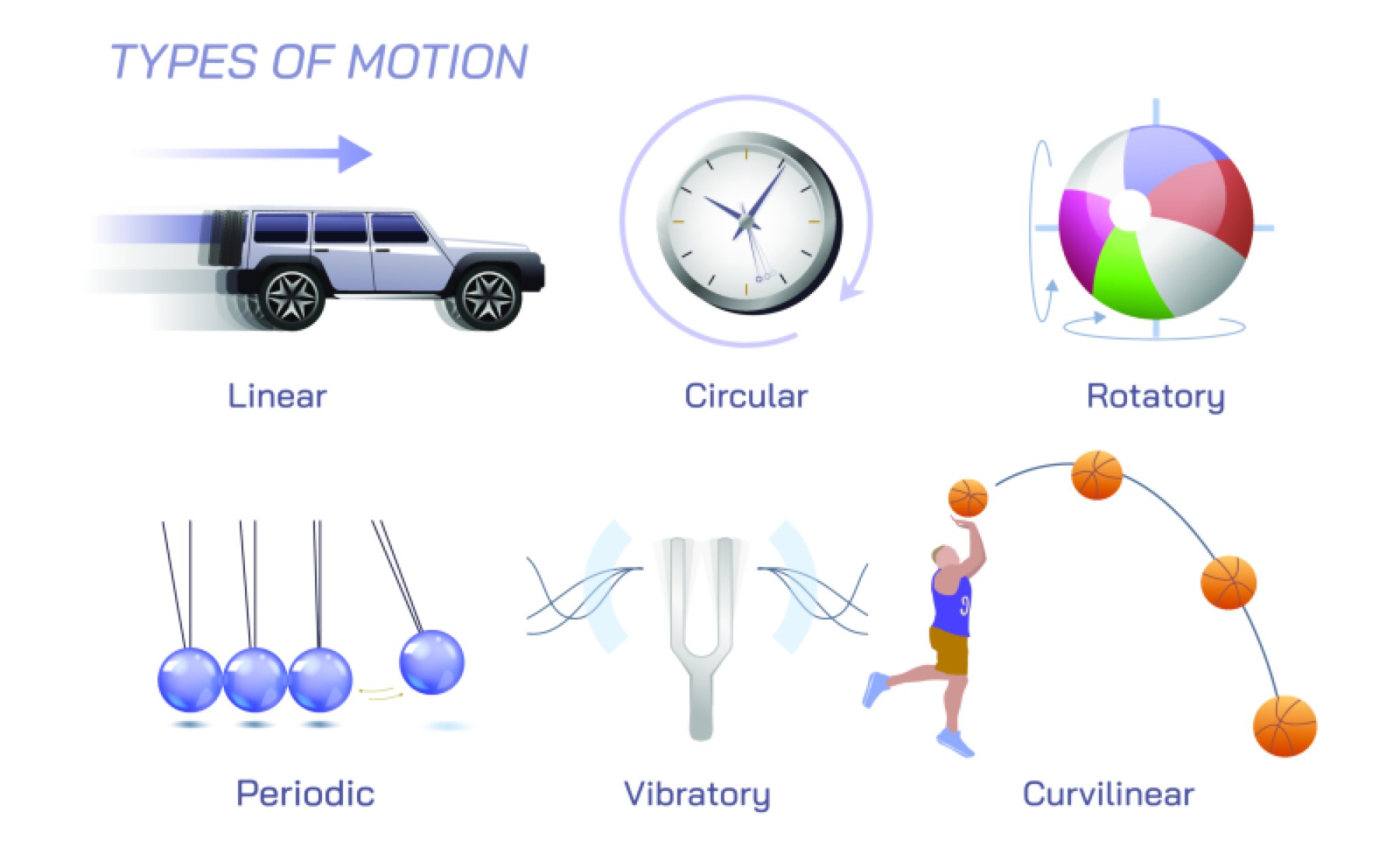
Circular motion itself arises whenever an object moves around a fixed point or axis, and whether its rotation is clockwise or anticlockwise depends on orientation and frame of reference. A wheel turning forward on a car looks anticlockwise when observed from the left side of the vehicle, but the same wheel appears clockwise when observed from the right. Thus, the idea of rotation is not absolute but depends on where the observer stands. Graphics in physics often clarify this by placing the viewer in a fixed perspective, marking clockwise or anticlockwise direction with arrows that indicate motion along the circumference. This helps reduce ambiguity when describing movement in rotating machinery, orbital paths, gyroscopic systems, or electron spin patterns.
Arrows are essential in these vector illustrations because they express not just direction but continuity of motion. A straight arrow shows simple translation, while a curved arrow wrapping around a center illustrates motion that constantly changes direction. By pointing either clockwise or anticlockwise, the arrow makes it clear which way the rotation proceeds and how time relates to movement. A simple arrow curving around a circle contains the meaning of angular displacement (how far something rotates), angular velocity (how fast it rotates), and angular acceleration (how the speed of rotation increases or decreases). Students and professionals reading such diagrams learn to understand that circular arrows can represent rotational symmetry, torque direction, or even the direction of induced electric current in an electromagnetic coil, which reverses depending on whether rotation is clockwise or anticlockwise relative to the magnetic field.
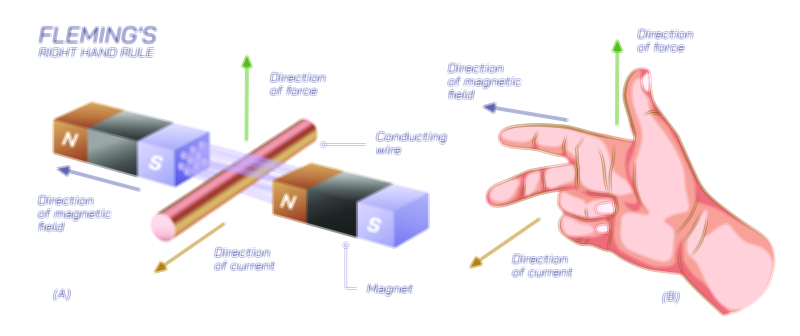
The forces required to generate rotation also depend on direction, and a vector illustration showing clockwise and anticlockwise rotation often implies this association. Torque, the turning effect of a force, depends on the direction in which force is applied. A wrench turning a bolt clockwise tightens it, while turning anticlockwise loosens it, depending on thread orientation. This tightening and loosening effect is so pervasive in hardware design that clockwise and anticlockwise have become mechanical standards, ensuring that repeated motion always produces the intended structural result. In physics, torque direction follows the right-hand rule, where curling the fingers indicates the direction of rotation and the thumb indicates the direction of the torque vector. Even though the torque vector is not drawn in simple rotational diagrams, the curved arrow communicates the rotational effect that torque produces.
The concept of rotation also influences how we record and experience time itself. The human connection to clockwise direction emerged not by chance but because ancient sundials cast shadows that moved in what we now call the clockwise direction for observers in the Northern Hemisphere. This historical accident eventually determined how clocks were designed mechanically, and mechanical clocks later determined the symbolic meaning of clockwise. Since physics and engineering use symmetry and conventions to maintain reliability across measurement systems, this cultural origin became a scientific reference. Anticlockwise movement therefore became defined not as an independent symbol but as the mirror of the one time had already established. The vector illustration of rotational directions teaches not only motion but the cultural evolution of scientific language.
Circular motion is also deeply connected to angular momentum, a conserved quantity in physics that depends on both rotational speed and the mass distribution of the rotating object. Whether an object spins clockwise or anticlockwise, the direction of angular momentum matters because it determines how rotating bodies interact when they come into contact or try to change orientation. A spinning bicycle wheel resists changes to its axis because of angular momentum; a rotating planet maintains its rotation for billions of years for the same reason. When two rotating objects collide or influence each other, the rotational direction determines whether their angular momenta reinforce each other or oppose each other. Clockwise and anticlockwise directions recorded in vector diagrams therefore become essential building blocks for understanding gyroscopes, orbits, planetary spin, magnetic moments, and quantum mechanical behaviors.
Even at the smallest scales in physics, the distinction between clockwise and anticlockwise movement continues to play a role. When alternating current generators spin coils in a magnetic field, the direction of rotation decides the direction of induced current. When electrons circulate in atoms and produce magnetic fields, their spin orientation is described using conventions rooted in rotational direction. When storms form on planets, the direction of their rotation depends on the Coriolis effect, which splits clockwise and anticlockwise movement depending on hemisphere. All these phenomena rely on circular motion that begins with the same conceptual arrow in an illustration.
In everyday life, clockwise and anticlockwise directions allow us to make sense of how objects behave and how to manipulate them intuitively. Opening a jar, winding a spring, steering a vehicle, tightening bolts, turning keys, opening or closing valves, adjusting knobs, and operating machinery all depend on rotational direction. Designers of tools and interfaces rely on the idea that clockwise motion is familiar and interpreted consistently. Vector diagrams showing curved arrows are the bridge between lived experience and the mechanical structure of instruction. A person reading an illustration instinctively understands how motion should proceed because the arrow embodies a physical sensation that has already been learned through contact with objects.
Thus, the vector illustration of clockwise and anticlockwise rotation does much more than distinguish two opposite directions. It becomes an educational link between intuitive motion and the mathematical language of physics. The arrows show how rotation progresses through time; the curved paths describe circular motion; the labeling of clockwise and anticlockwise brings clarity to angular measurement and physical conventions. Beneath the simplicity of the graphic lies an entire architecture of scientific meaning that supports mechanical engineering, physics, timekeeping, navigation, electromagnetism, and even the intuitive movements of daily life. Understanding these rotational directions means understanding how nature builds motion into systems large and small, from spinning wheels on Earth to spinning galaxies across the universe.