Linear Motion Vector Illustration – Understanding Straight-Line Movement in Physics
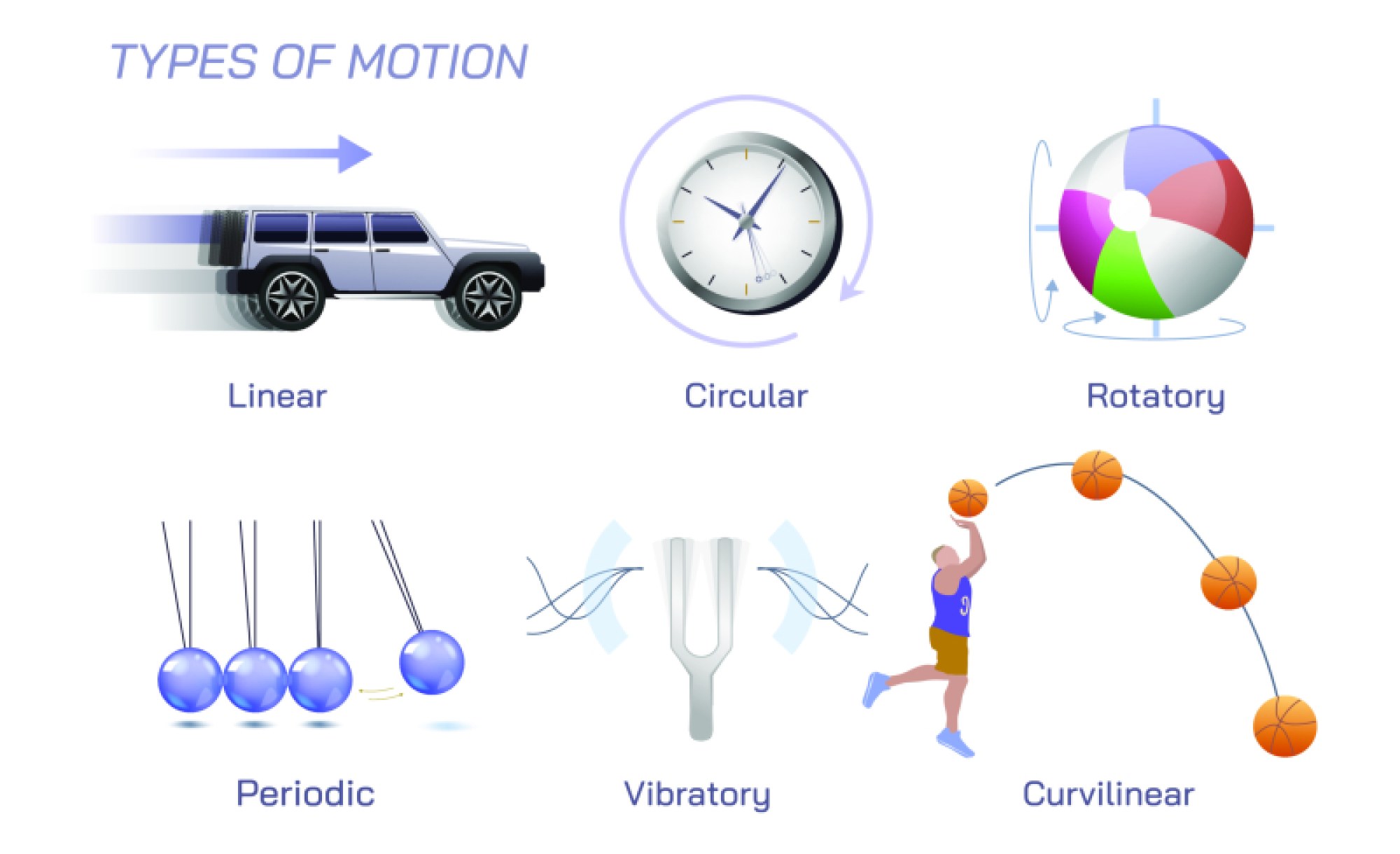
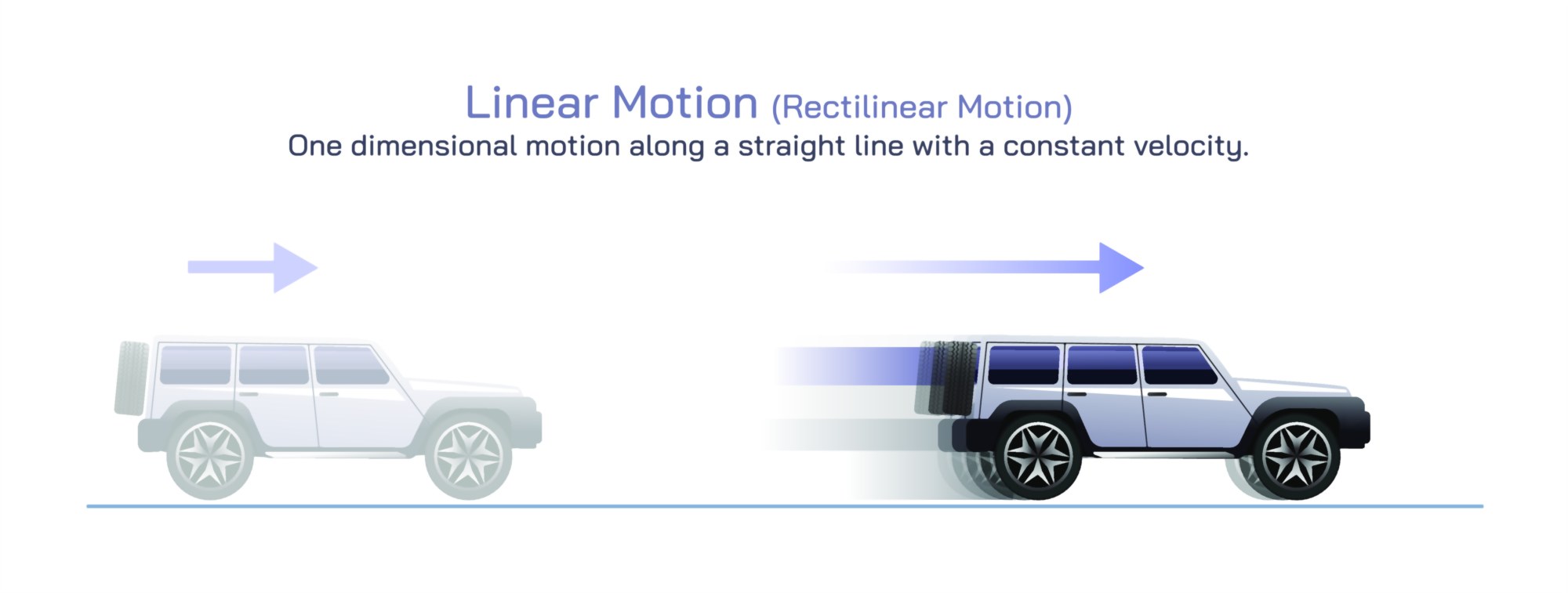
A linear motion vector illustration is a visual tool used to explain the movement of objects along a straight path. In physics and engineering, linear motion describes motion that occurs in one direction, making it one of the simplest yet most important concepts to understand. By using vectors, such illustrations clearly show both the direction and magnitude of movement, helping learners grasp how objects move in a straight line in an intuitive and visually engaging way.
The illustration typically depicts objects on a straight path with arrows representing the movement’s direction and speed. Longer arrows indicate faster movement, while shorter arrows indicate slower motion. This visual representation allows students and viewers to understand motion without relying on numbers or calculations. Objects can be shown moving at a constant pace, or with changing speed to demonstrate accelerated movement, offering a clear visual of different motion scenarios.
Linear motion vector illustrations are widely used in educational materials, such as textbooks, digital learning platforms, and classroom presentations. They help students understand basic concepts like forward and backward movement, direction changes, and relative positioning of objects. These illustrations also support interactive learning, where learners can manipulate vectors or move objects along a straight path to see how direction and movement change in real time.
In addition to education, linear motion vector illustrations are important in engineering and scientific applications. Engineers and designers use these visuals to plan and analyze the movement of mechanical parts, machinery, or vehicles. By representing motion with vectors, complex processes can be simplified, allowing easier analysis of forces, movement paths, and object interactions. They are also helpful in robotics, animation, and simulation, where accurate depiction of linear movement is required.
These illustrations are ideal for building conceptual understanding because they combine abstract ideas with visual clarity. Learners can easily see relationships between objects, direction of motion, and speed variations without needing to interpret numerical data. This method strengthens spatial reasoning, observational skills, and comprehension of fundamental physics principles.
In summary, a linear motion vector illustration provides a clear and effective way to visualize straight-line movement. By showing objects with arrows indicating direction and speed, it enhances understanding of motion concepts in physics, engineering, and scientific studies. These illustrations are engaging, versatile, and essential tools for learners, educators, and professionals who want to represent linear motion in an accessible and visually appealing manner.