Types of Pimples and Their Skin Characteristics – Understanding Acne Lesions, Their Root Causes, Appearance, Development Patterns, Severity Levels, and Impact on Skin Health
Pimples are among the most common dermatological concerns across all age groups, but especially during adolescence and young adulthood. Although they may appear similar on the surface, not all pimples are the same—each type has its own mechanism of formation, visual characteristics, severity, and healing pattern. Pimples result from the interaction of excess sebum, dead skin cells, bacterial overgrowth, inflammation, and hormonal triggers within the skin’s pores. When follicles become clogged or irritated, they develop different lesions depending on whether the pore remains open or closed, whether infection occurs, whether inflammation spreads deeper, and whether tissue damage becomes severe. The complexity of acne formation explains why some pimples resolve quickly while others become painful, persistent, cystic, or leave scars. Learning the different types of pimples and their specific skin characteristics helps individuals understand their skin better, choose the right treatment approach, manage flare-ups effectively, and prevent long-term tissue damage or discoloration.
Whiteheads and Blackheads – Non-Inflammatory Pimples Formed by Blocked Pores
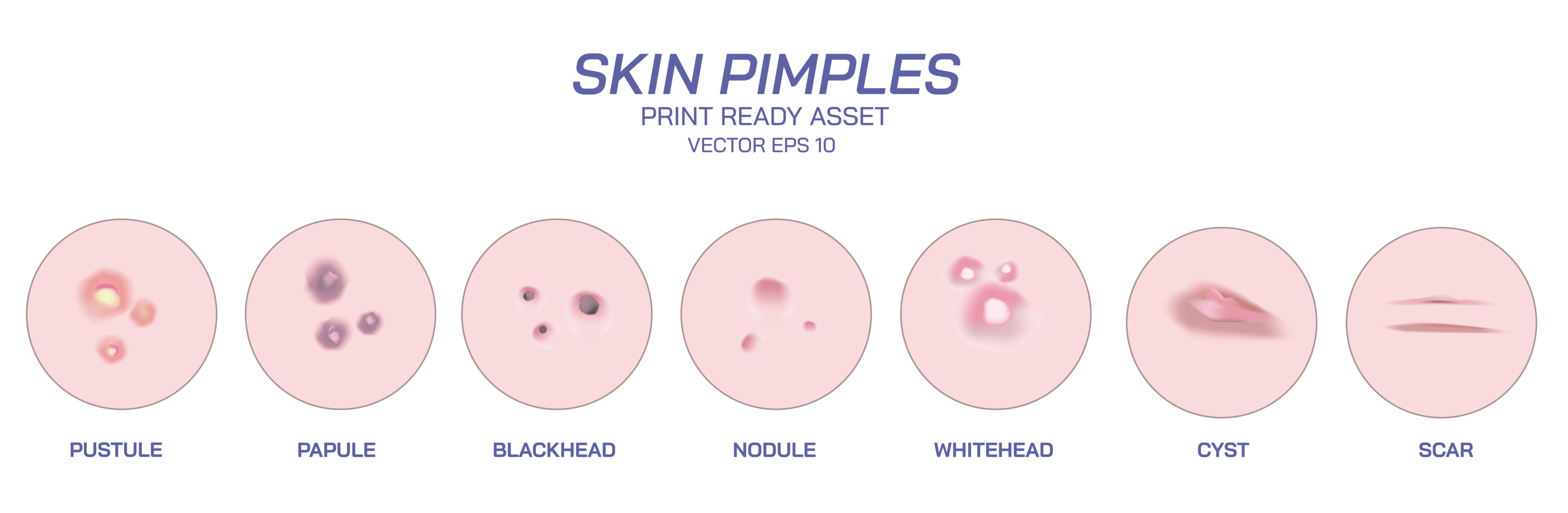
The simplest and most common forms of acne are whiteheads and blackheads. They are called non-inflammatory lesions because they do not involve deep infection or significant swelling. A whitehead forms when a pore becomes blocked by excess sebum and dead skin cells while the pore remains closed at the surface. This produces a tiny, round bump that appears white or flesh-colored because the trapped contents are sealed inside. In contrast, a blackhead forms when a clogged pore stays open, allowing air to oxidize the surface of the trapped oil and dead skin cells. This oxidation creates a black or dark brown appearance—not because the pore is filled with dirt, but because of a chemical reaction on the surface. Both whiteheads and blackheads tend to occur in oily areas such as the nose, forehead, chin, and cheeks. They are mild and often not painful, but if left untreated, they may evolve into inflammatory acne as bacteria accumulate. Their presence suggests that exfoliation, oil control, and pore-cleansing routines are essential for managing the skin effectively.
Papules and Pustules – Inflammatory Pimples Caused by Irritation and Bacterial Activity
Papules and pustules represent the next stage of acne severity, where inflammation begins. A papule occurs when the pore becomes clogged and bacteria irritate the surrounding skin tissue, causing redness, swelling, and sensitivity. It appears as a small, firm pink or red bump without visible pus. If inflammation continues and white blood cells accumulate, the papule transitions into a pustule. Pustules look similar to whiteheads but are surrounded by redness and swelling and contain visible yellow or white pus at the center. They are often mildly painful or tender to the touch. These inflammatory pimples are commonly triggered by hormonal fluctuations, stress, sensitivity to products, or habitually touching and picking at the skin. While papules and pustules tend to heal without complications if left alone, squeezing or popping them can push bacteria deeper into the skin, increasing the risk of scarring and hyperpigmentation.
Nodules and Cysts – Deep, Painful Pimples Associated with Severe Acne
Nodular and cystic pimples are among the most severe and painful forms of acne. A nodule is a large, solid, deeply seated inflammatory lesion that develops when bacteria, sebum, and dead skin breach the deeper layers of the skin. These nodules are firm, painful to the touch, and do not come to a visible head. They can persist for weeks or months and often leave dark marks or scars due to the extent of tissue damage. A cyst, on the other hand, is a deeper, fluid-filled acne lesion that forms when inflammation becomes extreme and the infection spreads within the dermis. Cystic acne produces large, soft, and painful lumps filled with pus and can cluster into multiple breakouts in the same area. Cysts carry the highest risk of permanent scarring, which may appear as pitted, boxcar, or rolling scars after healing. Both nodules and cysts often involve hormonal imbalances and genetic predisposition. Because over-the-counter treatments are rarely sufficient for this level of severity, dermatological intervention is typically required.
Blind Pimples and Fungal Acne – Less Visible but Highly Irritating Variants
Some pimples are difficult to diagnose because they do not resemble the usual patterns. Blind pimples form beneath the skin surface and do not develop a visible head. They are essentially deep papules or early nodules that cause pain and swelling without breaking through the skin. Blind pimples are common around the jawline, chin, and temples and are often triggered by stress or hormonal fluctuations. They are tempting to pick at because they feel like a hard swelling, but squeezing them only worsens inflammation and drives bacteria deeper. Fungal acne, in contrast, is not traditional acne at all, although it mimics pustular breakouts. It is caused by an overgrowth of yeast (Malassezia) rather than bacteria and often appears as clusters of tiny itchy bumps, especially on the forehead, chest, upper back, and shoulders. Fungal acne responds poorly to standard acne products but improves with antifungal ingredients. These examples show that not every pimple shares the same biological mechanism and that treatment must match the condition.
Hormonal, Stress-Related, and Cosmetic Pimples – Patterns Based on Triggers and Lifestyle
Many pimples can also be categorized by the triggers that influence their development. Hormonal pimples typically appear around the lower cheeks, jawline, chin, and neck—areas rich in oil glands sensitive to hormonal changes. They often worsen during menstrual cycles, puberty, pregnancy, or conditions like polycystic ovary syndrome. Stress-related pimples result from elevated cortisol, which stimulates oil production and increases inflammation; these breakouts tend to form on the forehead, temples, and hairline during periods of emotional or physical strain. Cosmetic pimples, sometimes called acne cosmetica, occur when makeup, skincare, sunscreens, or hair products clog pores or irritate the skin. They commonly appear on the cheeks, forehead, or areas in contact with beauty products. Understanding whether pimples arise from hormones, stress, lifestyle, or product sensitivity helps people adapt routines and reduce flare-ups more effectively.
Why Different Pimple Types Matter for Treatment and Skin Health
Recognizing the type of pimple present on the skin is essential because each category requires a different treatment approach. Whiteheads and blackheads respond best to ingredients that encourage exfoliation and unclogging of pores. Papules and pustules benefit from anti-inflammatory and antibacterial care that reduces swelling and prevents infection. Nodules and cysts require active professional treatment and should never be squeezed due to the high risk of scarring. Blind pimples respond to soothing, non-irritating ingredients that reduce inflammation. Fungal acne improves with antifungal treatments rather than antibacterial ones. Hormonal acne responds to both topical treatment and internal hormonal balance strategies. The key to improving skin health lies not in treating all pimples the same way, but in identifying their individual causes and characteristics and responding accordingly.
Ultimately, the diversity of pimple types demonstrates that acne is not a single condition but a spectrum of skin responses influenced by genetics, hormones, lifestyle habits, immune reactions, and environmental factors. Learning the differences helps individuals approach skincare with clarity instead of frustration, prevents unnecessary irritation caused by the wrong treatments, reduces the risk of scarring, and builds confidence in managing breakouts over time. Whether dealing with mild blackheads or severe cystic lesions, informed understanding of the skin’s characteristics empowers better healing and long-term skin health.