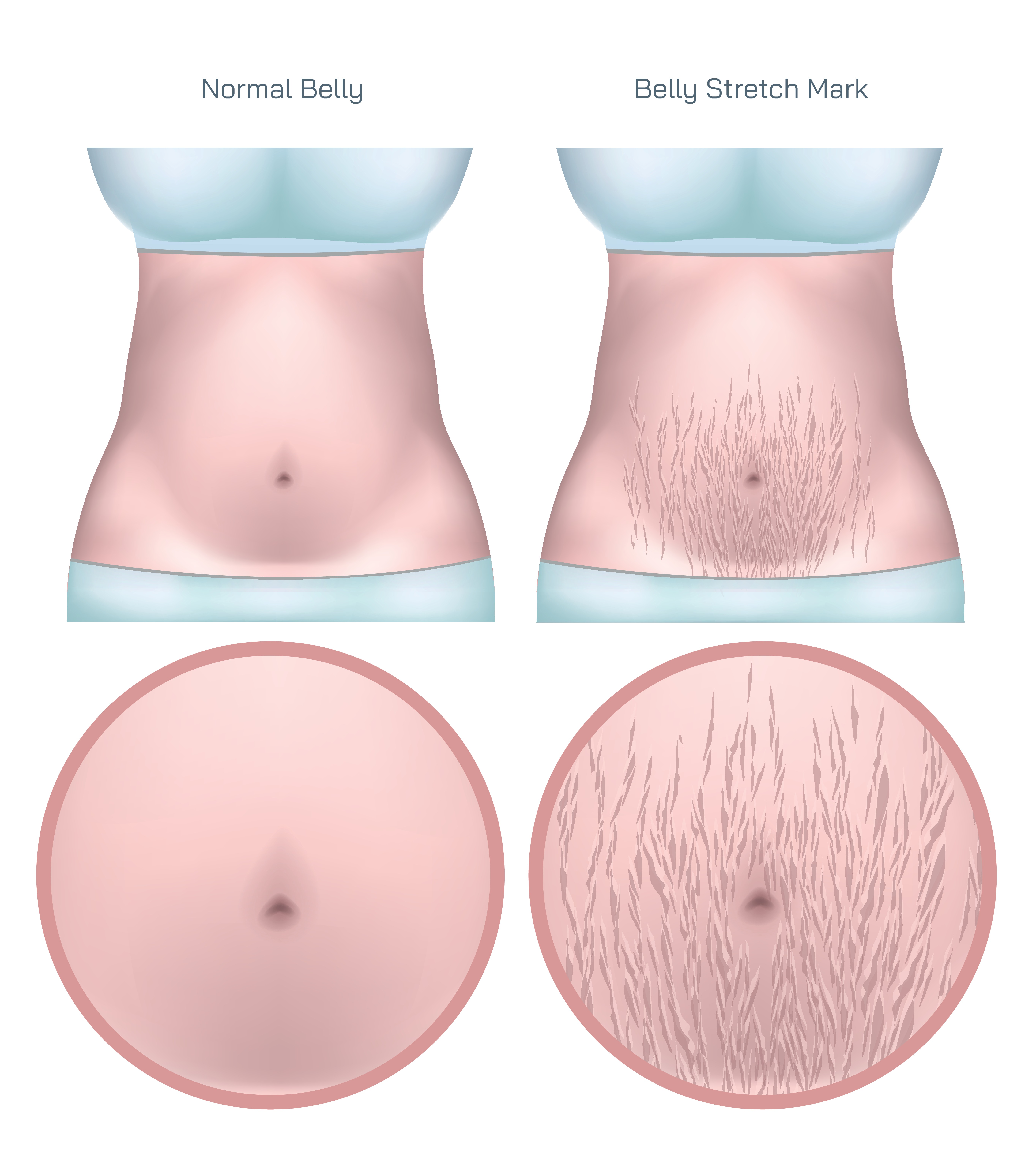
Belly stretch marks are a very common skin condition that appears as linear streaks or bands on the abdominal region. Medically known as striae, these marks develop when the skin is stretched beyond its natural elasticity, leading to microscopic damage within the deeper layers of the skin. Although stretch marks are harmless and non-infectious, they often cause cosmetic concern and emotional discomfort, especially when they appear suddenly or prominently. Understanding the reasons, causes, symptoms, treatment options, dietary role, and daily care measures is essential for managing belly stretch marks effectively.
The primary reason belly stretch marks form is excessive stretching of the skin over a short period of time. Human skin is elastic due to the presence of collagen and elastin fibers within the dermis. These fibers allow the skin to expand and contract while maintaining strength and resilience. When the skin is forced to stretch rapidly, these supportive fibers can tear or weaken, resulting in visible marks on the surface. The abdomen is particularly prone to stretch marks because it frequently undergoes changes in size and tension.
One of the most common causes of belly stretch marks is pregnancy. During pregnancy, the abdomen expands continuously to accommodate the growing fetus. Hormonal changes during this period also reduce skin elasticity, making collagen fibers more vulnerable to damage. As a result, stretch marks often appear during the later months of pregnancy and are commonly referred to as pregnancy marks. These marks usually begin as reddish or purplish streaks and gradually fade over time.
Rapid weight gain is another major cause of abdominal stretch marks. When body weight increases quickly, the skin does not have enough time to adapt gradually. Sudden expansion places stress on the dermal layer, causing structural damage. Similarly, rapid weight loss can also make existing stretch marks more noticeable, as the skin loses underlying support and appears loose or thinned.
Hormonal imbalance plays a significant role in stretch mark development. Hormones such as cortisol affect collagen production and skin strength. Elevated cortisol levels, whether due to stress, medical conditions, or prolonged steroid use, weaken connective tissue and increase susceptibility to stretch marks. Adolescence is another stage where hormonal shifts and rapid body growth contribute to the appearance of stretch marks on the abdomen.
Genetic predisposition also influences whether a person develops belly stretch marks. Some individuals inherit skin characteristics that make them more prone to collagen breakdown under stress. Even with similar weight changes or pregnancy experiences, one person may develop prominent marks while another may not, highlighting the role of genetic factors.
The symptoms of belly stretch marks are mainly visual and sensory. In the early stage, stretch marks often appear as red, pink, or purple lines. These early marks may feel slightly raised and can be accompanied by itching or mild irritation as the skin stretches. Over time, the color fades, and the marks become lighter, turning white or silvery. At this stage, they may appear slightly sunken or wrinkled compared to surrounding skin.
Stretch marks do not cause pain or medical complications, but they can affect self-esteem and body image. The texture of the affected skin may feel different, appearing thinner or less firm. These changes are permanent to some degree, although their appearance can improve with proper care and treatment.
There is no absolute cure that completely removes belly stretch marks, but several treatments can significantly reduce their visibility and improve skin texture. Early intervention yields better results, particularly when stretch marks are still in their reddish stage. Topical treatments containing ingredients that support collagen production are commonly used. These products help improve skin hydration, elasticity, and overall appearance.
Medical treatments performed under professional supervision can further enhance results. Laser-based procedures work by stimulating collagen remodeling within the dermis, leading to smoother skin over time. Microneedling involves controlled micro-injuries that trigger the skin’s natural repair response, promoting collagen synthesis. Other advanced methods focus on tightening skin and improving texture through energy-based technologies. These treatments usually require multiple sessions and gradual improvement.
Diet plays a crucial role in supporting skin health and minimizing the appearance of stretch marks. A balanced diet rich in nutrients that promote collagen formation is essential. Protein intake is important because amino acids serve as building blocks for skin repair. Vitamin C supports collagen synthesis and protects skin from oxidative stress. Zinc contributes to tissue healing and skin regeneration, while healthy fats support cell membrane integrity.
Adequate hydration is equally important for maintaining skin elasticity. Drinking sufficient water helps keep skin supple and resilient, reducing dryness and improving overall texture. While hydration alone cannot prevent stretch marks, it supports the skin’s natural repair mechanisms.
Daily care practices significantly influence how belly stretch marks look over time. Regular moisturizing helps maintain skin flexibility and reduces itching associated with stretching. Gentle massage improves blood circulation and may enhance the absorption of topical products. Using mild cleansers and avoiding harsh scrubbing protects the skin barrier and prevents further irritation.
Sun protection is an often overlooked aspect of stretch mark care. Exposure to sunlight can darken stretch marks and make them more noticeable compared to surrounding skin. Applying appropriate sun protection to the abdominal area helps maintain even skin tone and prevents pigmentation changes.
Weight management is another important preventive strategy. Gradual weight gain or loss allows the skin time to adjust, reducing the risk of sudden fiber damage. Maintaining a stable weight supports long-term skin integrity and minimizes the formation of new stretch marks.
Emotional care is also important when dealing with belly stretch marks. These marks are extremely common and represent natural changes in the body rather than flaws. Understanding their biological basis helps reduce self-blame and unrealistic expectations. Many people find confidence through acceptance combined with healthy skincare routines.
Beyond the commonly discussed causes and treatments, belly stretch marks also reflect deeper changes occurring within the skin’s biological structure over time. When stretch marks form, the damage does not occur at the surface but within the dermis, the middle layer of the skin responsible for strength, elasticity, and repair. Once collagen and elastin fibers are disrupted, the skin heals in an altered pattern, producing visible lines that differ in texture and color from surrounding skin. This altered healing response explains why stretch marks behave more like scars than simple pigmentation changes.
The progression of belly stretch marks follows a fairly predictable pattern. In the initial phase, known as the inflammatory stage, the skin responds to rapid stretching with increased blood flow and cellular activity. This is why early stretch marks appear red, pink, or purple. During this phase, the skin is more responsive to treatment because collagen production is still active and tissue remodeling is ongoing. As time passes, inflammation subsides, blood vessels shrink, and the stretch marks enter a mature phase where they appear pale, silvery, or white. At this stage, the marks are more resistant to change, although texture and depth can still be improved.
Skin thickness and elasticity vary between individuals and even across different areas of the same body. The abdominal skin is particularly vulnerable because it undergoes repeated cycles of stretching and relaxation throughout life. Factors such as posture, core muscle strength, and abdominal fat distribution influence how tension is applied to the skin. Weak abdominal muscles can increase pressure on the skin, making stretch marks more pronounced, whereas stronger core support may reduce excessive strain on the dermis.
Hormonal influence on belly stretch marks extends beyond pregnancy and adolescence. Chronic stress can elevate cortisol levels, which directly interfere with collagen synthesis and skin repair. This means that long-term stress may indirectly worsen skin elasticity and slow the fading of existing stretch marks. Managing stress through sleep, relaxation, and balanced routines therefore plays a subtle but meaningful role in skin health.
Skin care habits over long periods significantly affect how stretch marks age. Consistent moisturizing does more than improve surface appearance; it helps maintain barrier function and reduces dryness that can exaggerate skin texture differences. Oils and creams that support skin softness may not eliminate stretch marks, but they can make the skin feel smoother and look more uniform. Regular, gentle massage encourages blood flow to the area, supporting nutrient delivery and cellular turnover.
Physical activity also influences the appearance of belly stretch marks. Exercise that strengthens abdominal and core muscles improves overall skin support and posture. Better muscle tone beneath the skin can reduce sagging and improve how stretch marks blend with surrounding tissue. Low-impact strength training, stretching, and controlled movements help maintain muscle balance without placing excessive strain on the skin.
The role of long-term nutrition extends beyond individual vitamins or minerals. Consistent intake of whole foods that support tissue repair helps maintain skin resilience over time. Diets lacking sufficient protein or micronutrients may slow the skin’s ability to remodel damaged fibers. Healthy fats support skin cell membranes, while antioxidants protect against environmental stress that accelerates skin aging. Nutritional consistency matters more than short-term supplementation.
Cultural and psychological perspectives on belly stretch marks have also evolved. Once viewed strictly as imperfections, stretch marks are increasingly recognized as natural signs of growth, life changes, and bodily adaptation. Pregnancy marks, in particular, are often associated with strength and transformation. This shift in perspective has helped many individuals move toward acceptance while still caring for their skin in healthy ways.
Medical research continues to explore new methods to improve stretch mark appearance. Advances in dermatological technology aim to enhance collagen regeneration with fewer side effects and shorter recovery times. Combination therapies that address both texture and pigmentation are showing promise, especially when tailored to individual skin types. While no method can completely erase stretch marks, ongoing innovation continues to expand options for those seeking improvement.
It is also important to set realistic expectations. Stretch marks do not indicate poor health or inadequate self-care; they reflect the skin’s natural limits when adapting to rapid change. Improvement is often gradual and subtle rather than dramatic. Measuring progress in terms of smoother texture, better tone blending, and increased skin comfort leads to more satisfying outcomes than expecting complete disappearance.
In summary, belly stretch marks are the visible result of complex biological, hormonal, mechanical, and genetic influences acting on the skin over time. Their formation involves deep structural changes that cannot be instantly reversed, but their appearance can evolve positively with consistent care, healthy lifestyle choices, and appropriate treatments. Understanding stretch marks as part of the body’s adaptive response helps reduce frustration and promotes a balanced approach focused on skin health, confidence, and long-term well-being.
In conclusion, belly stretch marks develop due to rapid skin stretching, collagen and elastin damage, hormonal influences, and genetic factors. They commonly appear during pregnancy, weight changes, and growth phases. Symptoms include colored streaks that gradually fade but may remain visible. While complete removal is not possible, modern treatments, supportive diet, proper hydration, and consistent skincare can greatly improve their appearance. With informed care and realistic expectations, belly stretch marks can be managed effectively while maintaining healthy and resilient skin.