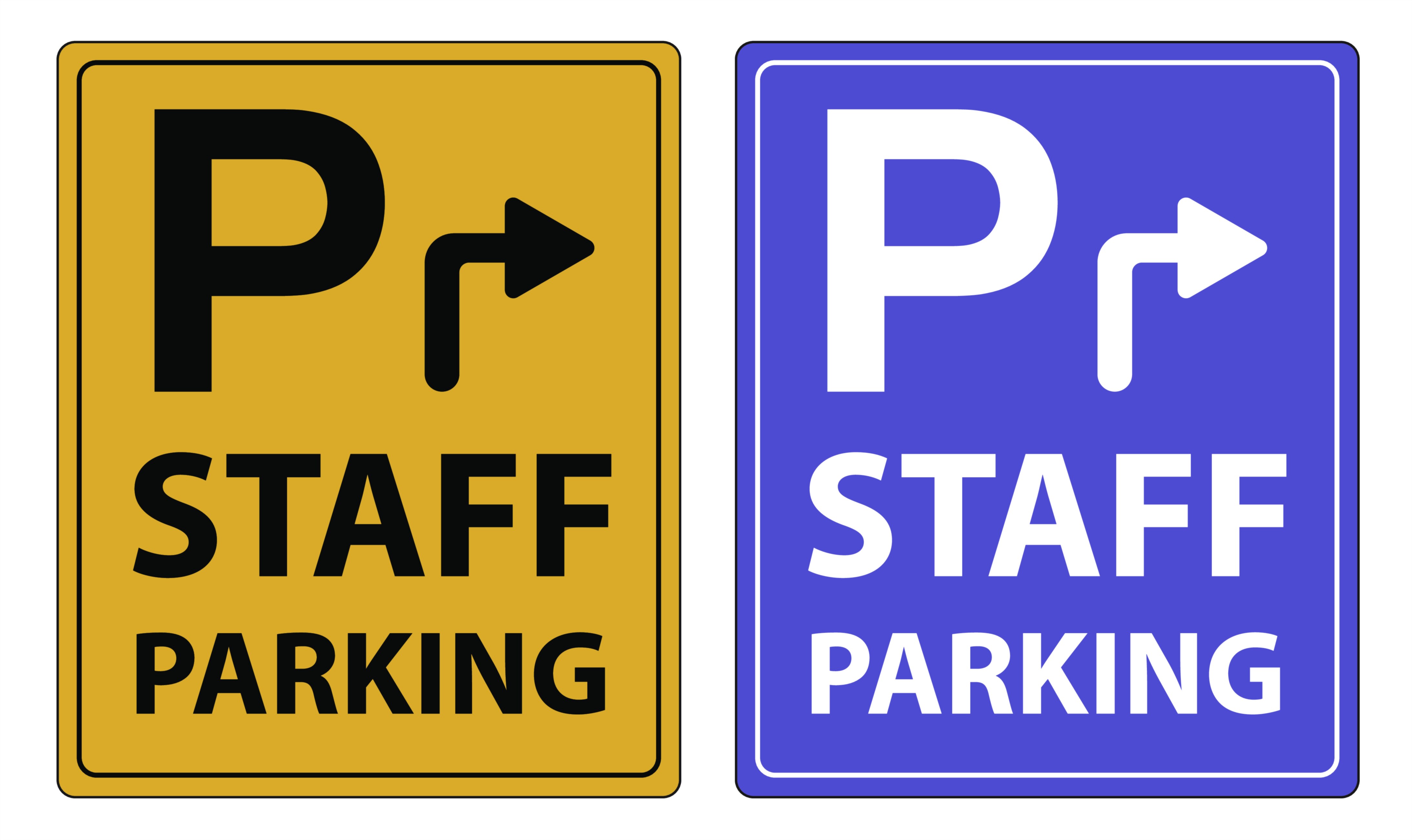
Staff Parking Lot — Reserved Employee Vehicle Zone
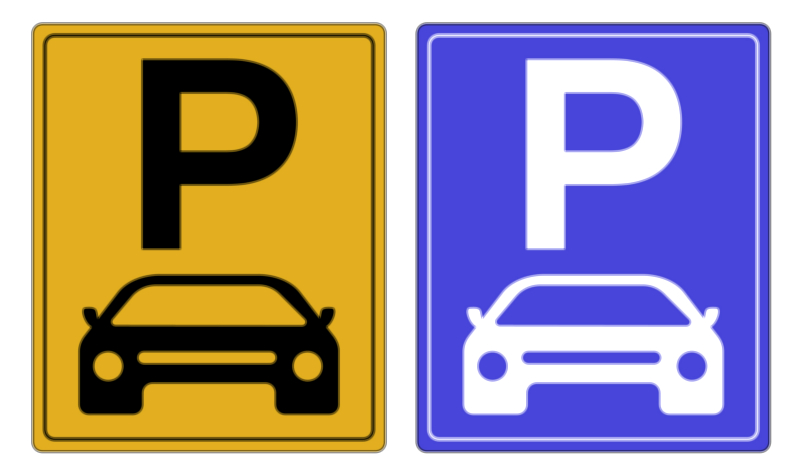
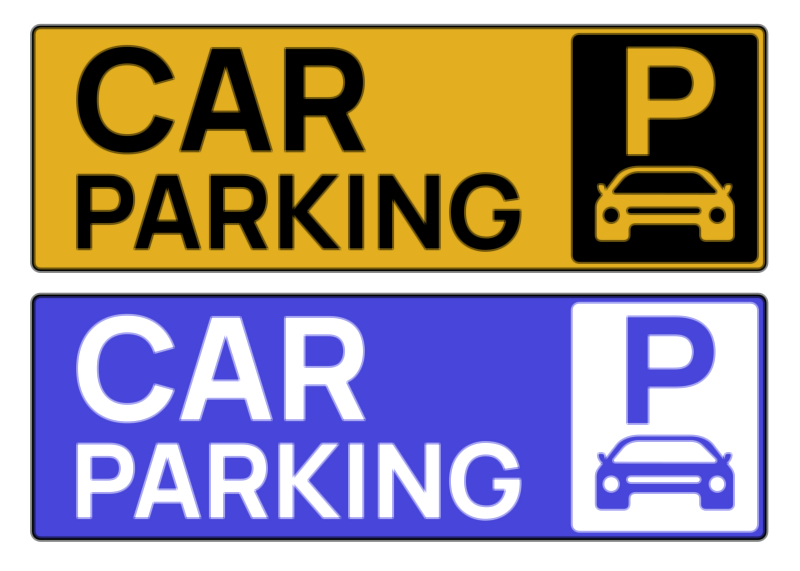
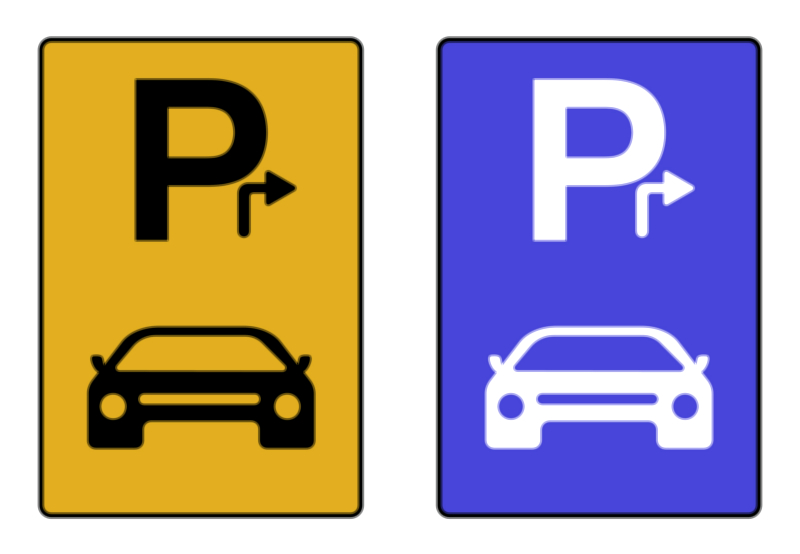
A Staff Parking Lot sign, often illustrated in vector form with a distinct car symbol accompanied by the words “Staff Parking” or a visual designation that communicates exclusivity for employees, embodies far more than reserved vehicle placement. It represents a subtle yet highly important aspect of workplace infrastructure, organizational efficiency, employee morale, and responsible spatial planning. Although the sign may appear visually minimal, containing nothing more than the silhouette of a vehicle, a parking symbol, and a label indicating staff exclusivity, its meaning radiates deeply into how people interact with their workplace, how buildings welcome those who run them, and how mobility integrates smoothly into the daily rhythm of professional environments. A reserved employee parking zone is not just a convenience; it is a structural affirmation that the time, comfort, and contribution of staff members matter, and that their day should begin and end without avoidable friction created simply by the placement of their vehicle. In modern professional environments where productive time, personal convenience, and psychological well-being are interconnected, a Staff Parking Lot sign becomes not merely a logistical marker but a quiet support system that helps workplaces operate smoothly.
In many offices, corporate campuses, schools, factories, hospitals, research facilities, government departments, call centers, hotels, and commercial complexes, working professionals arrive in large numbers each day. Without a designated staff parking zone, these employees must compete with visitors, customers, patients, parents, delivery personnel, and external contractors to find a place for their vehicles. The morning rush becomes filled with uncertainty as workers circle the premises, looking for available space in crowded, high-demand areas. This lack of predictability does not simply cause delay; it creates unnecessary mental stress even before the workday begins. Employees who arrive already anxious or frustrated because parking was chaotic lose early momentum, and their sense of belonging is diminished. A Staff Parking Lot sign eliminates this daily struggle by offering employees a dedicated space that acknowledges their role in the workplace community. It allows them to arrive, park, and begin work with clarity and calm rather than competition and irritation. While this reduction in stress may seem small to an outside observer, its cumulative emotional and psychological effect across hundreds of days makes a significant difference to staff satisfaction and productivity.
The sign also performs a protective function for visitors and customers. In workplaces where parking is not clearly designated, employees often take the most convenient spaces closest to the building, which forces visitors to park farther away. This not only makes it harder for newcomers to identify where to enter but creates a perception of inconvenience and disorganization. Guests arriving for scheduled appointments, interviews, consultations, business meetings, training sessions, or service requests may feel neglected if their first experience is a struggle to find parking. A Staff Parking Lot — Reserved Employee Vehicle Zone ensures that employees park in their designated section, leaving the prime visitor parking spaces clearly available for those who are unfamiliar with the building and require immediate wayfinding clarity. This separation improves both staff convenience and visitor experience simultaneously, creating a structured flow where guests receive intuitive access while employees retain reliable parking.
Within industries where employees work in shifts — such as hospitals, factories, call centers, hotels, transportation hubs, and retail establishments — the meaning of staff parking becomes even more important. Workers arriving for a night shift, for example, should not be forced to walk long distances from far-off parking lots late at night, especially in poorly lit areas. A reserved staff parking space close to employee entrances enhances workplace safety by ensuring employees do not have to navigate isolated locations during vulnerable hours. Similarly, when medical professionals, emergency responders, or technical specialists are called in urgently outside regular duty hours, their ability to access the building quickly without searching for parking can directly impact operational performance and sometimes even life-saving outcomes. The Staff Parking Lot sign reinforces readiness and workplace safety by ensuring that those responsible for operations can enter efficiently and confidently at any time of day.
The reserved parking sign also functions as an equalizer of fairness among employees. In parking areas without structured staff zones, workers who arrive earlier simply take the most convenient spaces, leaving those who travel from farther away or start later in the day to struggle for placement. This dynamic creates quiet resentment and an inequitable workplace culture. A clearly marked Reserved Employee Vehicle Zone eliminates these tensions by ensuring equal access to a defined group rather than turning parking into a competitive race. Employees understand the boundaries, and the system removes the need for unspoken competition or informal claims over parking spaces. Clear organization supports workplace harmony not because of its rule but because of its fairness.
Beyond individual convenience, staff parking supports circulation planning for buildings that require strict internal movement control. Many office complexes, manufacturing units, research laboratories, and healthcare institutions have intentionally separated employee entrances from public entrances for reasons ranging from data security to confidentiality, patient privacy, or operational flow. Staff parking placed near employee-only entrances helps maintain controlled access without the need for constant monitoring or traffic direction. The sign itself therefore becomes a part of internal security design, ensuring that people naturally approach the correct areas without enforcement or confusion.
The sign also protects operational efficiency, especially in environments that rely on punctuality. Teachers arriving at schools need to be in the classroom when students arrive. Doctors and nurses need to be at their stations on time to relieve the previous shift. Airline, metro, and transport staff must be punctual to keep timetables intact. Manufacturing teams in assembly lines need consistent shift changeovers to maintain production flow. Delays due to unpredictable parking availability compound into departmental disruptions. A Staff Parking Lot stabilizes punctuality not by enforcing attendance but by removing a preventable source of delay that might otherwise affect entire workflows.
It is also important to recognize the effect that parking infrastructure has on employee morale and identity. A staff-only parking area communicates a subtle but meaningful message: the workplace values and makes space for its employees. Many organizations invest heavily in workplace décor, training programs, cafeterias, and recreation rooms, yet the employee experience begins long before reaching those spaces — it begins in the parking lot. When staff arrive to find a reserved, reliable space waiting for them, the simple act reinforces that their presence is anticipated rather than tolerated. This improves the psychological association employees form with the workplace, enhancing a sense of belonging and professional respect.
The reserved parking sign also enhances organizational order. Without separation of parking types, lots become unpredictable patterns of movement: visitors looking for space, staff circling for availability, delivery trucks searching for unloading zones, and service vehicles maneuvering around stationary cars. Order breaks down not because drivers are irresponsible but because the environment gives them no guidance. When designated staff parking is properly marked, movement becomes intuitive; vehicles are no longer competing for the same limited space but are distributed logically according to purpose and frequency of use. This reduces honking, congestion, idling, and confusion — a transformation that may seem minor but dramatically improves the overall feel of a workplace campus.
In modern smart workplaces, the Staff Parking Lot sign also links into digital systems. Parking access control, RFID-based entry, mobile parking apps, automated gate lifts, and occupancy tracking software often rely on physical signage to reinforce digital rules. The vector symbol becomes a universal marker recognizable to both humans and machine-vision systems, streamlining automated parking validation and eliminating disputes. Hybrid work models, flexible schedules, and shared parking systems can be implemented more successfully when signage keeps the physical environment aligned with digital allocation.
Finally, at a deeper social level, the Staff Parking Lot sign represents reciprocity between the employer and the employee. It solves a small but important part of an employee’s day by ensuring that the workplace does not consume unnecessary energy before work even begins. Employees who park easily begin their day calmly; employees who struggle for space begin their day stressed. When a workplace chooses to place a sign that guarantees staff parking access, it is not merely managing vehicles — it is taking responsibility for the tone of the employee experience. And in return, employees who feel considered are more likely to show care and responsibility in their work and toward the organization.
Thus, the Staff Parking Lot — Reserved Employee Vehicle Zone vector illustration, though visually straightforward, carries within it a complete philosophy of workplace efficiency, safety, fairness, respect, and operational calm. It removes conflict between staff and visitors, protects pedestrian comfort, supports accessibility, reinforces punctuality, improves workplace security and circulation, and uplifts morale by acknowledging that the workforce deserves stability in the details of daily life. Beneath the minimalist design lies an infrastructure of care — a reminder that a workplace functions best not only through rules and schedules but through thoughtful organization that respects the people who keep it running.