Two Wheeler Motorcycle Parking Lot — Organized Bike Parking Area
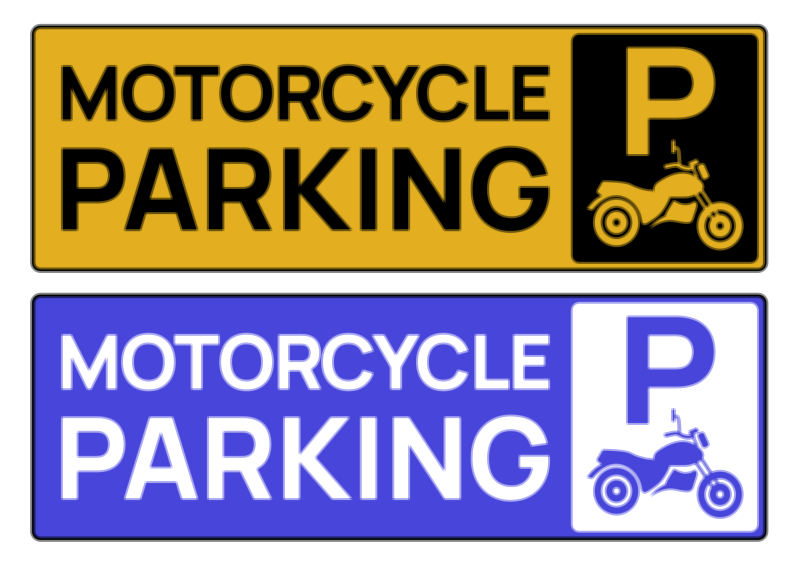
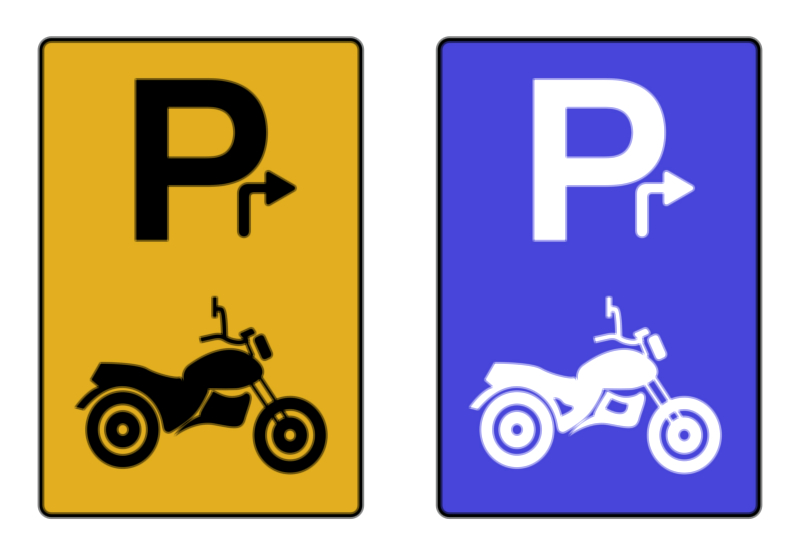
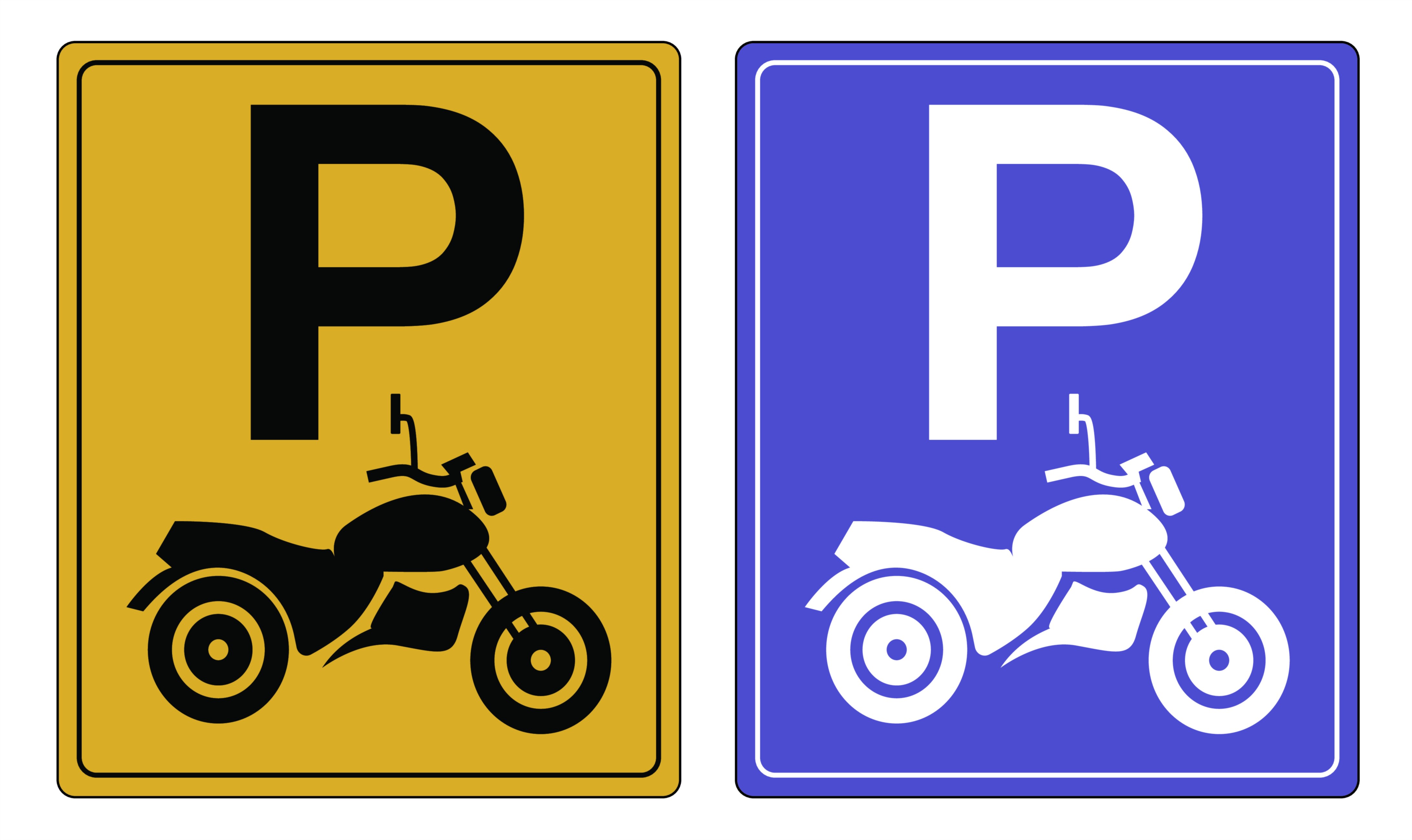
A designated motorcycle parking lot, visually represented in vector illustration form with a bold “P” symbol and the unmistakable silhouette of a bike or scooter, may look like nothing more than a simple graphical marker, yet the meaning and purpose hidden inside that small icon affect nearly every aspect of public space, transportation planning, and human interaction within urban environments. A clean parking symbol communicates permission rather than restriction, guiding riders not away from space but toward the exact area intentionally designed to accommodate two-wheelers without disrupting the comfort and safety of others. Motorcycles and scooters are popular in cities because they are fast, flexible, and efficient in dense traffic, but the same agility that makes them convenient while riding can create serious challenges when parking is left uncontrolled. Riders tend to follow convenience rather than spatial planning, stopping wherever the nearest opportunity appears — in front of shops, at building entrances, on sidewalks, across tactile walkways, next to school gates, near hospital drop-off lanes, or at the access points of bus and metro stations. These informal habits transform areas meant for safe walking and organized flow into spaces that feel congested, visually cluttered, and unpredictable. The Two Wheeler Motorcycle Parking Lot sign prevents this pattern by providing riders with an intentionally selected and thoughtfully positioned space where motorcycles may gather without interfering with pedestrians, businesses, accessibility features, emergency systems, or road circulation. Because two-wheelers are so numerous and so intertwined with everyday urban transportation, the presence of this sign is not an optional convenience — it is one of the quiet mechanisms through which modern cities remain socially functional and safe.
The heart of the sign’s importance lies in its role in preserving pedestrian comfort and safety. Sidewalks, building entrances, and pedestrian corridors are designed so that people of all ages and physical conditions can move without fear, interruption, or conflict with machines. When motorcycles take up these spaces, the separation between pedestrian zones and vehicular zones collapses. Even a single bike parked across a footpath forces pedestrians to step onto the street, exposing them immediately to moving traffic, while a group of bikes clustered outside a school or market entrance can hide small children from oncoming drivers, dramatically increasing the risk of collision. Elderly individuals walking with reduced mobility, visually impaired people depending on tactile floor surfaces for orientation, parents with strollers, and people carrying shopping bags or heavy belongings all require predictable, unobstructed walkways to maintain dignity and safety. A clearly marked two-wheeler parking lot sign invites riders into a safe alternative area designed for them in such a way that pedestrians do not lose their protected space. The sign ensures that sidewalks remain walkable, entrances remain welcoming, and public life unfolds without constantly navigating around parked motorcycles. In a single visual instruction, the parking icon reinforces the fundamental idea that public space must first and foremost support human movement before vehicle storage.
The sign is also essential for protecting the intended function of building entrances and drop-off zones. Entrances are not simply doors; they are architectural experiences and operational zones that receive and guide thousands of people daily. A hospital entrance that becomes surrounded by parked motorcycles does not simply look untidy — it becomes harder for patients to reach the emergency room, more stressful for families carrying loved ones, and more dangerous for stretchers and medical staff who require an immediate and unobstructed approach. At schools, where children are among the most vulnerable pedestrians, bikes clustered at the gate force students into narrow passages and create unpredictable movement patterns that reduce safety. At residential buildings, motorcycles crowding the doorway make it difficult for residents carrying groceries, suitcases, or infants to enter comfortably. At commercial complexes, multiple bikes at the entrance interfere with queue organization, bag checks, and security clearances. The vector sign for a designated motorcycle parking area ensures none of this obstruction occurs, because it directs bikes toward a zone that satisfies their need to stop without compromising the spatial logic of entrance architecture. When riders follow the sign, entrances remain dignified, comfortable, safe, and accessible — the way designers intended them to function.
Commercial districts benefit equally from the presence of a well-recognized motorcycle parking sign. Markets, shopping streets, restaurants, malls, and retail corridors rely on sightlines, easy entry, and smooth pedestrian flow to attract customers. Motorcycles parked at the edge of storefronts block signage, reduce display visibility, discourage browsing, and create pockets of congestion that lead to negative customer experience. Delivery workers face difficulty unloading goods when building entrances are blocked by parked two-wheelers, and shop employees struggle to move supplies through pathways reduced by informal parking. When motorcycles are guided by signage to a designated cluster point, shops become more approachable, storefronts remain visible from a distance, and the pedestrian rhythm of shopping feels spacious rather than contested. Riders also benefit economically because designated parking supports fair turn-taking and ensures that passengers can locate rickshaws or bikes reliably rather than searching through scattered vehicles. In this way, the Two Wheeler Motorcycle Parking Lot sign becomes a quiet but important supporter of healthy business ecosystems and effective commercial flow.
Another deeply meaningful dimension of this parking sign is its role in protecting accessibility for people with disabilities. Inclusive infrastructure — wheelchair ramps, tactile paving for visually impaired navigation, curb-cut sidewalks, wide approach platforms, and smooth gradients — exists to guarantee independence and dignity for individuals who might otherwise face daily barriers. When a motorcycle parks across a ramp or tactile symbol line, it eliminates accessibility rather than reducing it. A wheelchair user cannot simply steer around a motorbike blocking their ramp; they lose access entirely. A visually impaired person following tactile cues cannot adapt suddenly when the route becomes blocked by a parked vehicle; they lose orientation and safety. A parent pushing a stroller or someone recovering from injury should not be forced into the roadway because motorcycles have taken the space intended for them. The designated motorcycle parking sign prevents this pattern by offering an appealing alternative — a parking area that meets the rider’s needs without hijacking the features built to support others. Every time a rider parks in a designated lot instead of on a ramp or walkway, they protect the independence and comfort of people who rely on those features to live freely.
Safety infrastructure, especially during emergencies, also depends on the significance of this sign. Ambulance zones, fire hydrants, rescue entrances, evacuation gates, and disaster-response routes cannot tolerate obstructions of any kind. A scooter parked near a hydrant may delay a fire team for seconds, but those seconds matter. A motorcycle blocking an ambulance transfer route forces medical staff to maneuver equipment under pressure. A cluster of bikes near an evacuation gate transforms an organized exit route into a bottleneck during emergencies. A clearly marked motorcycle parking area lowers the likelihood of such critical mistakes by directing bikes toward zones where emergency access will not be compromised. The sign’s value is quiet in day-to-day life, but monumental in moments of urgency.
From a traffic-engineering standpoint, the sign stabilizes predictable driver and rider behavior. In busy towns and cities, riders searching for improvised parking slow unexpectedly, weave between cars, pull up too close to pedestrian crossings, or stop halfway along a lane — movements that contribute to minor crashes, sudden braking chains, and traffic jams. A designated motorcycle parking sign solves this upstream problem by eliminating uncertainty. Riders know exactly where to head, so they no longer behave unpredictably while searching. The road becomes smoother, quieter, and more fuel-efficient because circling, hesitation, honking, and spontaneous maneuvering dramatically decrease. A simple vector icon becomes a trigger for a civilized and stable flow of vehicles.
In the age of digital and smart mobility, the sign is even more powerful. Navigation apps, shared-mobility platforms, delivery-fleet routing systems, and parking-management software increasingly incorporate motorcycle parking zones into their guidance. A delivery driver using GPS will be directed to the designated two-wheeler stand instead of parking at a storefront. A ride-hailing passenger will receive instructions to meet their bike or scooter at the official pickup stand rather than at random points on the roadside. Sensor-based enforcement systems and computer-vision parking monitors recognize the symbol to detect violations and maintain order. The clarity of the vector icon ensures that both humans and artificial-intelligence systems interpret the symbol instantly and without confusion. In this way, the sign does not merely belong to physical space — it belongs to a larger ecosystem where urban mobility is shared between people, devices, vehicles, algorithms, and autonomous systems.
Yet the deepest meaning of the Two Wheeler Motorcycle Parking Lot — Organized Bike Parking Area sign is social rather than technological. It represents respect — respect for strangers, respect for children walking to school, respect for elderly pedestrians who deserve confidence and ease, respect for businesses that rely on accessible entrances, respect for patients arriving at clinics and hospitals, respect for the right of disabled people to navigate without depending on others, and respect for emergency responders whose work depends on open space rather than blocked access. When a rider ignores the sign and parks wherever they prefer, they save themselves a small inconvenience but impose difficulty, risk, or delay on others. When a rider follows the sign, they contribute silently to a space that functions smoothly and safely for everyone, even though the people who benefit may never know that the rider made that thoughtful choice.
Therefore, while the vector illustration of a motorcycle within a parking symbol appears visually simple, it embodies a vast philosophy of shared space, mobility balance, and civic responsibility. It sustains the walkability of sidewalks, preserves the usability of entrances, protects accessibility features from disruption, improves commercial comfort and visibility, upholds emergency readiness, supports predictable and safe road behavior, and promotes mutual respect among all users of public space. Beneath the clean geometric lines of the icon lies the framework of a city that depends on cooperation: a city in which motorcycles remain welcome not as obstacles to human life, but as well-integrated contributors to a safe, functional, and harmonious urban experience.