Motorcycle Parking Two Wheeler — Designated Bike Parking Area
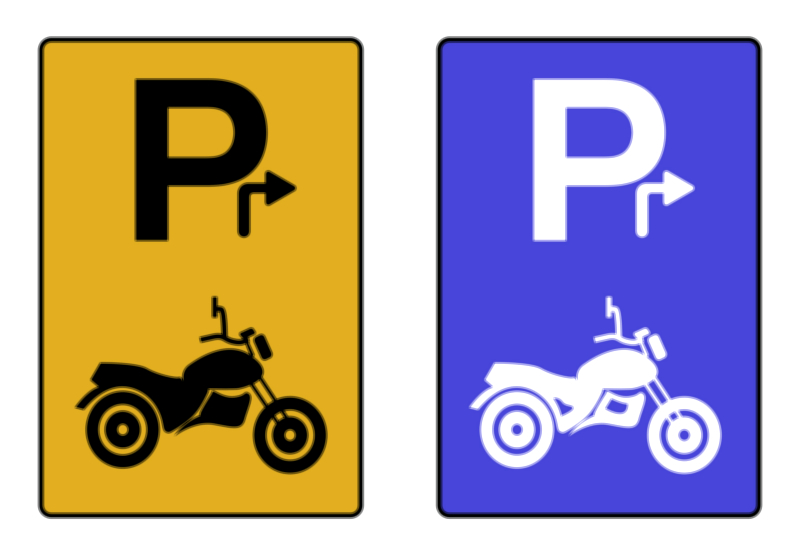
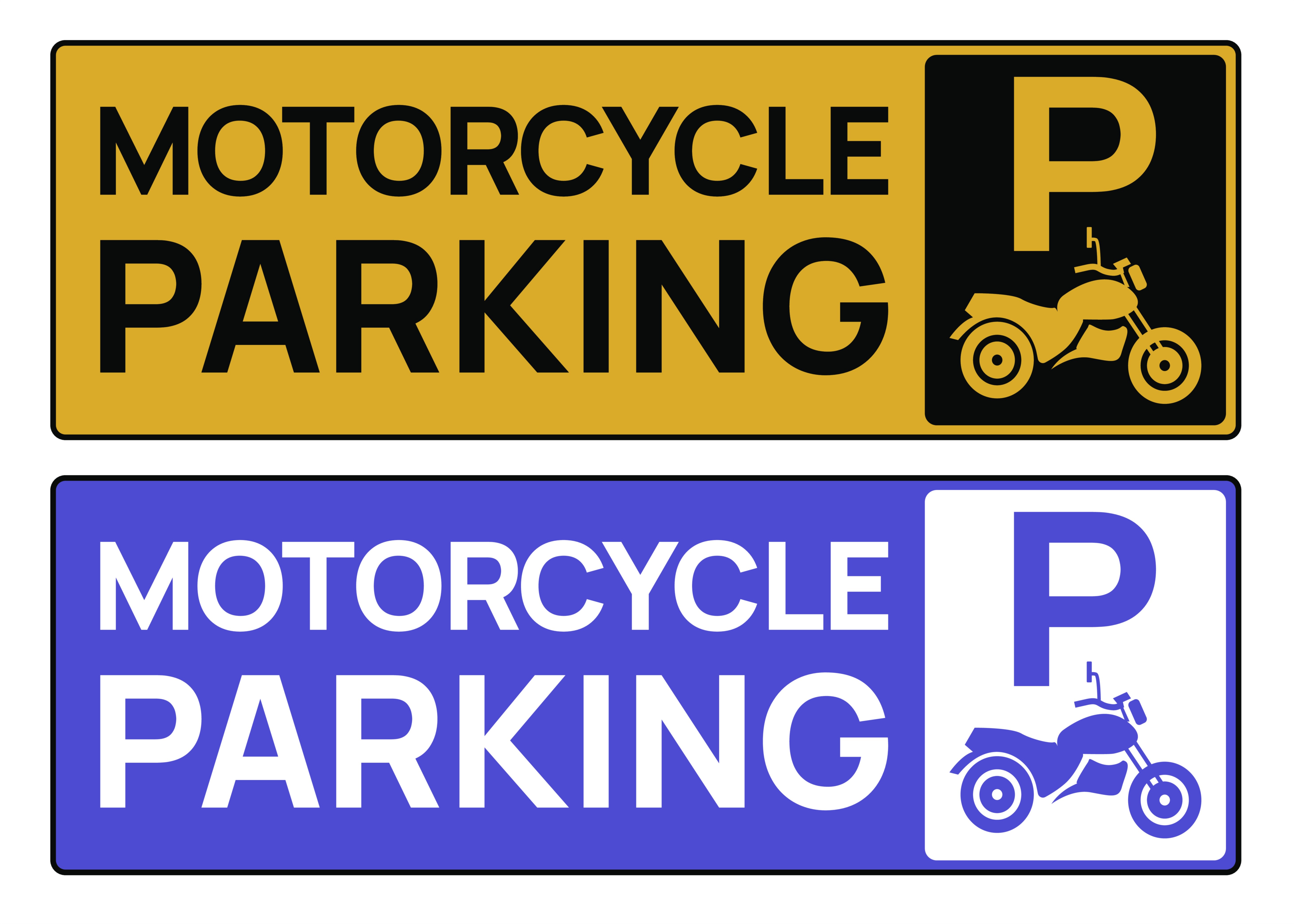
A designated motorcycle parking area, often represented in vector illustrations through a bold “P” symbol paired with the silhouette of a motorbike or scooter, might appear simple in visual form, yet the concept behind it supports far more than just a place for riders to leave their vehicles. It represents a carefully structured interaction between mobility, infrastructure, safety, urban flow, commercial convenience, accessibility, and human behavior. Two-wheelers are among the most widely used vehicles in many parts of the world because they are affordable, agile, fuel-efficient, and capable of navigating dense urban networks where larger vehicles cannot. But the same flexibility that makes motorcycles and scooters advantageous on the road also creates challenges when parking is not organized. Riders instinctively choose the nearest or easiest location to stop, which is often near shop entrances, school gates, hospital drop-off points, sidewalks, bus stops, railway stations, pedestrian crossings, public plazas, and building thresholds. While this may seem harmless in the short term, even a single improperly parked two-wheeler can interrupt pedestrian flow, obstruct visibility, limit accessibility, and create small but continuous safety risks that accumulate throughout crowded urban spaces. The sign for a designated motorcycle parking area therefore does not simply indicate where parking is allowed; it identifies a space engineered to welcome two-wheelers without letting them interfere with the movement and safety of others.
The presence of a clear motorcycle parking symbol contributes directly to pedestrian safety and comfort by ensuring that sidewalks and entrances remain walkable and obstacle-free. Pedestrian corridors are designed around predictable movement and uninterrupted walking space, and a two-wheeler parked on a footpath or across a tactile walkway instantly disrupts that predictability. Children coming out of schools often need clear sightlines to locate parents or guardians, and when bikes crowd entrances, small children are hidden behind vehicles and become difficult for approaching cars on the road to detect. Senior citizens and individuals with limited mobility are especially vulnerable when parked motorcycles force them to navigate uneven paths or step into active traffic lanes. Parents pushing strollers, people carrying heavy bags, and individuals with temporary medical limitations all depend on clear pedestrian routes to maintain dignity, safety, and calm movement. A designated parking area sign resolves those risks by attracting motorcycles to a cluster point that satisfies their need to park without sacrificing the needs of pedestrians. When riders follow the symbol, sidewalks remain spaces for people, not storage areas for machines.
The sign also plays an important role in protecting building entrances and their intended function. Entrances are not designed to be visual or structural afterthoughts; they orchestrate circulation between public and private space. A well-designed access point allows residents, patients, workers, customers, students, and visitors to transition comfortably from outside to inside. When motorcycles line the approach, the intended architecture of arrival becomes stressed. In hospitals, patients may have difficulty reaching the entrance quickly or stretchers may be forced to navigate around bikes. In schools, children must squeeze through lines of motorbikes to meet waiting adults. In residential complexes, residents arriving with groceries, luggage, or mobility aids must move around parked scooters that should never have been near the entry in the first place. In commercial areas, motorcycles clustered outside shops reduce the welcoming quality of storefronts and hide them behind a maze of vehicle handles and mirrors. A clear motorcycle parking lot sign directly ensures that the architectural design of the entrance remains unobstructed and functional, preserving comfort, safety, and aesthetic atmosphere for all who arrive on foot.
Commerce and business productivity benefit significantly from the presence of a designated motorcycle parking sign. Shop owners depend on visibility, foot accessibility, and convenience to attract customers. Yet in many markets and city centers, motorcycles accumulate directly outside store entrances because riders want fast access. This unintentionally hides storefronts from people walking or driving nearby and creates small bottlenecks of pedestrian traffic that discourage customers from approaching the business. Delivery workers may also struggle to access store entrances if the entire frontage is lined with parked bikes. When motorcycles instead follow a sign to a dedicated parking location, the commercial corridor regains clear visibility and accessibility. Customers feel more comfortable entering shops, employees experience smoother daily operations, and business districts appear more welcoming rather than congested. Even markets and shopping streets with extremely high footfall experience reduced chaos when parking is structured rather than improvised.
The sign is also a silent defender of accessibility and inclusion, preserving independence for individuals who rely on support infrastructure to move safely. Modern pedestrian design includes wheelchair ramps, lower curb angles, grab rails, braille strips, and tactile paving blocks intended to support visually impaired individuals. A motorcycle parked across a ramp might not seem like a major disruption to the person who left it there, but for the person who actually needs that ramp to live independently, the obstruction becomes a complete barrier rather than a minor inconvenience. When motorcycles cluster on tactile paths, visually impaired pedestrians lose essential guidance and are forced to rely on disorientation and physical risk. A designated motorcycle parking area is not merely convenient for riders; it protects the rights of people whose access cannot be compromised. When the sign is respected, equality of movement becomes more than a theoretical design goal—it becomes a daily reality.
Emergency access offers another critical reason the designated motorcycle parking sign exists. Ambulance bays, fire hydrants, emergency exits, and evacuation access points require absolute openness. Motorcycles parked even briefly near these zones can delay stretcher transfer, obstruct access to fire hoses, or slow down emergency response. During emergencies, seconds matter. A simple sign directing motorcycles away from entrances and toward their own dedicated space prevents a pattern of casual but dangerous parking habits that could have life-or-death consequences. The value of this sign is most visible during crises, yet its protective effect is present every day as long as riders follow it and keep emergency zones unobstructed.
Predictability on the road is another major benefit of designated motorcycle parking signage. In areas with high two-wheeler traffic, drivers searching for unmarked parking create abrupt stopping movements, sudden turns, mid-lane hesitation, and spontaneous curb maneuvers that increase collision risk. When a motorcycle parking area is clearly indicated, riders know where to go long before reaching their destination, which promotes smoother, more stable vehicle flow. Less circling, less honking, fewer impulsive U-turns, and reduced idling all contribute to a calmer, safer environment for every road user. This traffic stability is especially important near transit hubs, schools, and markets where high volumes of vehicles and pedestrians meet.
With the rise of smart mobility, the sign now extends into digital systems as well. Navigation apps guide riders directly to designated motorcycle parking areas rather than generic street corners. Ride-sharing platforms recommend secure two-wheeler stands for pickups and drop-offs to prevent roadside chaos. Delivery-fleet algorithms calculate optimal drop-off routes based on available parking spaces that do not interfere with pedestrian or emergency areas. Municipal surveillance systems and parking-violation analytics recognize the sign in both physical and digital formats, enabling better enforcement and automated parking guidance. As electric scooters and shared fleets expand, dedicated parking becomes even more important to prevent scattered vehicle storage behavior. The simplicity of the vector illustration ensures that both humans and machine-vision systems interpret it instantly, reinforcing clarity in both physical and algorithmic mobility networks.
Beyond infrastructure, policy, and technology, the motorcycle parking sign carries an important social meaning. A rider who parks responsibly in the designated area rather than blocking a shop entrance, a sidewalk, or a ramp protects the comfort and safety of people they will never meet. They quietly make the city kinder for an elderly person walking slowly, safer for a child crossing the street, easier for someone carrying groceries, more accessible for a person with a disability, quicker for an ambulance arriving with an emergency, and more welcoming for a customer approaching a shop. That simple choice contributes to a collective framework of respect, cooperation, and shared responsibility that defines the quality of everyday urban life. Cities do not become comfortable, safe, and well-organized only through rules; they become that way when individuals understand how their personal convenience affects everyone else and choose the shared good.
Thus, even though the Motorcycle Parking Two Wheeler — Designated Bike Parking Area sign consists only of a stylized bike symbol enclosed within a parking graphic, the philosophy embedded within it is deep and far-reaching. It creates an environment in which movement is not chaotic but thoughtful, in which accessibility is not fragile but protected, in which buildings greet people rather than vehicles, in which commercial areas remain vibrant and inviting, in which emergency systems operate without interruption, and in which public life unfolds in a way that respects the safety and comfort of everyone. Beneath the clean lines of the vector illustration lies a commitment to urban harmony, proving that a simple parking sign can be one of the quiet foundations that hold together the smooth functioning of a shared world.