Car Parking Lot — Organized Four Wheeler Parking Area Design
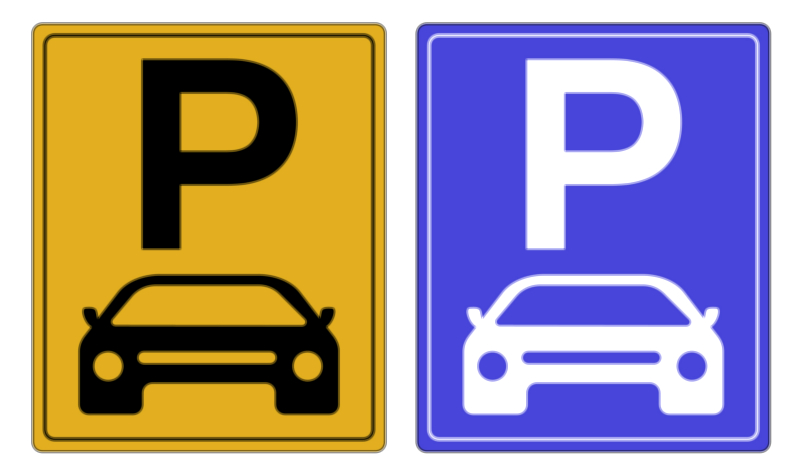
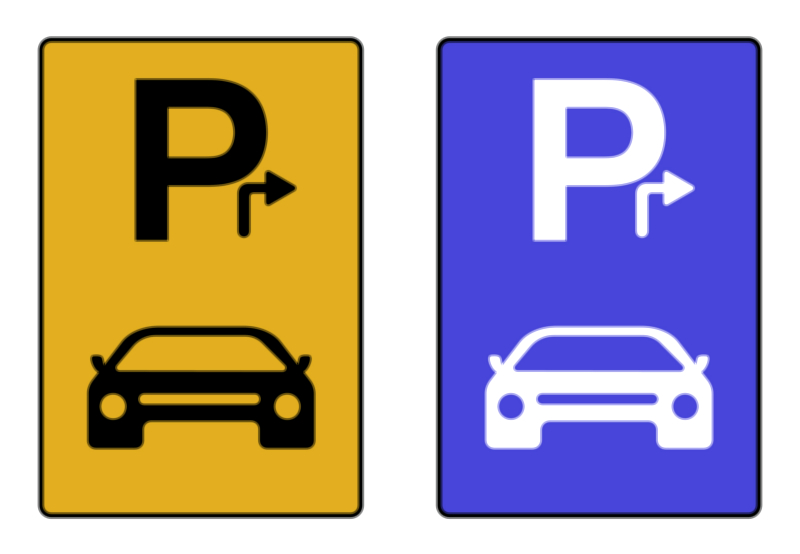
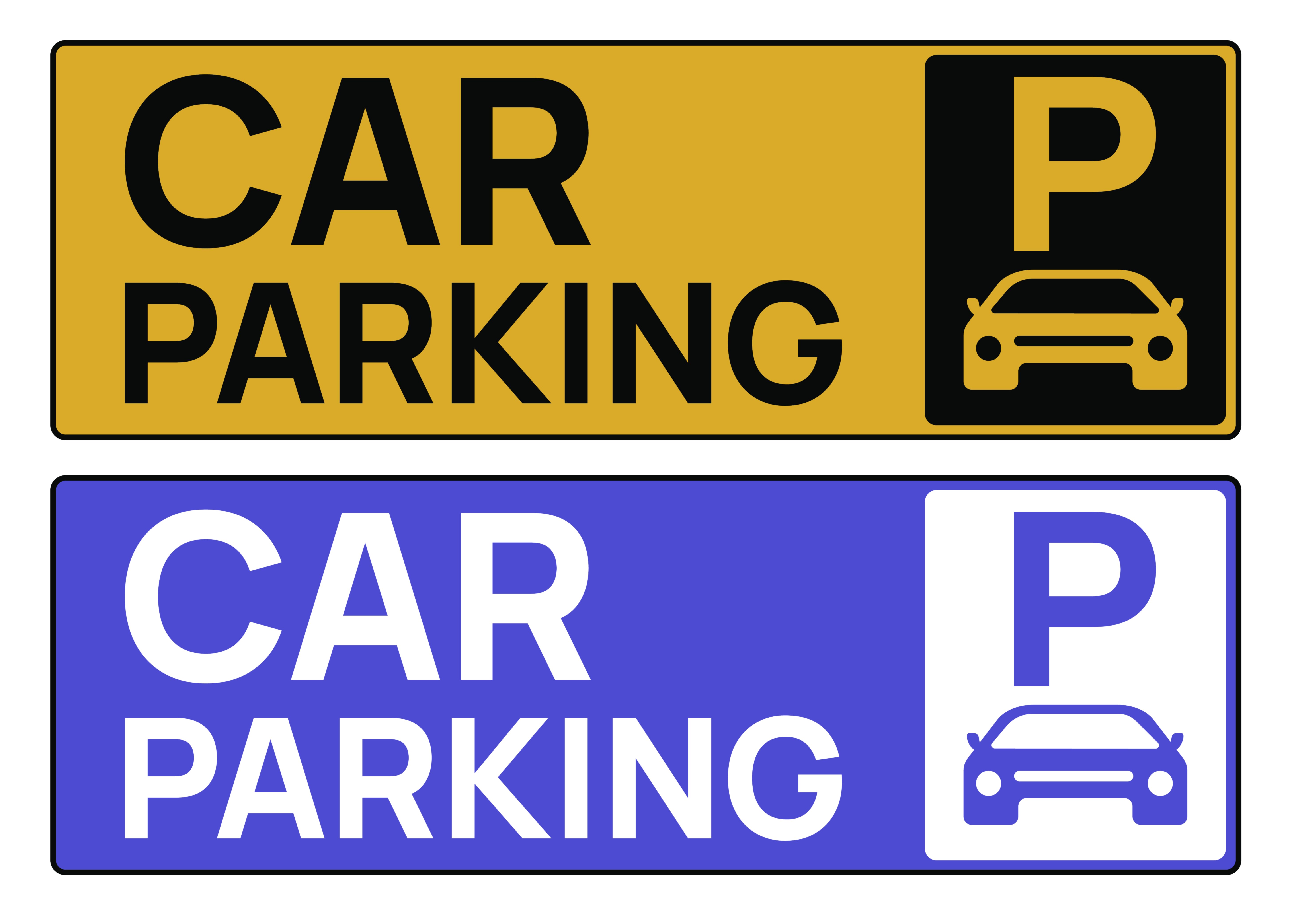
A Car Parking Lot sign, typically shown in vector illustration form with a bold “P” symbol paired with a clearly recognizable silhouette of a car, looks visually minimal, yet it represents a powerful structural component of how cities and buildings manage movement, safety, and spatial comfort. Although the icon contains only a few clean lines, its message carries deep practical meaning: this is the authorized and purpose-built space for four-wheeled vehicles to remain stationary without disrupting pedestrian access, commercial visibility, emergency operations, architectural entrances, or road flow. Cars, jeeps, vans, and SUVs require far more space than other vehicles, and the presence or absence of a properly allocated parking zone determines whether a public space functions with harmony or descends into improvisational congestion. The sign is therefore not simply decorative—it is a precise instruction designed to direct a high-impact vehicle class toward a location that supports safety and urban order rather than competing with human movement.
Without designated parking guidance, car drivers naturally gravitate toward the most personally convenient stopping points: right in front of shop entrances, along building thresholds, across sidewalks, near school gates, next to hospital drop-off bays, or at the edge of narrow roads that were never intended to serve as storage spaces for vehicles. Although temporarily leaving a car in these spaces may feel harmless to the driver, it immediately transforms environments built for safe circulation into areas of obstruction and conflict. A car parked across a building entrance forces everyone arriving—children, senior citizens, wheelchair users, patients, office workers, shoppers—to navigate around the vehicle rather than approach the doorway freely. A car parked along a narrow internal street turns a two-lane road into a single-lane bottleneck, pushing oncoming vehicles into unpredictable lane shifts. A car parked across a sidewalk forces pedestrians into active traffic lanes, dramatically increasing accident risk. A Car Parking Lot sign prevents these problems before they occur by offering drivers a clearly defined location where parking is legal, safe, and respectful to the shared public space around them.
The sign also safeguards the emotional experience of arrival. Entering a school, hospital, workplace, or shopping center should feel calm, intuitive, and comfortable. Clusters of cars parked right at the entrance transform a welcoming space into a contested one, disrupting the sense of clarity and safety. A designated parking zone draws the vehicles away from the entry façade and ensures that the first experience of the building is one shaped by accessibility and ease rather than engine fumes and blocked pathways. Children walking out of a school see their parents across an open approach rather than stepping between parked cars. Patients arriving at a hospital reach the door without navigating around stationary vehicles. Customers entering a business experience the storefront as a space designed for them rather than for engines and metal frames.
From a commercial standpoint, the sign plays an essential role in supporting economic efficiency. Shopfronts and business entrances depend heavily on visibility and easy access, yet when cars park immediately in front of these spaces, sightlines become blocked and entry points become cluttered. Customers may hesitate to enter stores when forced to squeeze between parked vehicles, and businesses suffer financially when their frontage becomes obscured. Delivery trucks and utility workers lose direct access to loading docks when cars occupy the intended corridor. A clearly marked Car Parking Lot shifts vehicles to a dedicated zone where drivers still enjoy convenient access, but pedestrian flow and commercial operations remain uninterrupted. Businesses, workers, and customers all benefit simply because the sign prevents car storage from intruding on commercial circulation.
The sign is also a silent guardian of urban accessibility and inclusion. Infrastructure such as wheelchair ramps, tactile guidance flooring for visually impaired individuals, stroller-friendly pathways, curb-cut entrances, and widened door approaches exist to protect the dignity and independence of vulnerable pedestrians. A single car blocking these zones—even for a short period—eliminates access completely rather than partially. A wheelchair user cannot navigate around a vehicle blocking a ramp. A visually impaired person loses safe orientation when tactile pathways are interrupted. Parents pushing a stroller cannot climb or bypass obstacles placed across access routes. The Car Parking Lot sign keeps parked vehicles away from architectural features designed to ensure equality of movement, guaranteeing that the independence of people with mobility challenges is respected rather than sacrificed.
Emergency readiness is another dimension the icon protects with surprising power. Ambulance zones, fire lanes, hydrant access points, evacuation gates, and rescue entrances must remain unobstructed at all times. A private car left in one of these areas forces paramedics to delay stretcher transfers or firefighters to reroute hoses, even if only briefly, and those delays can have irreversible consequences. A properly placed parking lot sign drastically lowers the likelihood that drivers will occupy emergency corridors because it provides a clear alternative that satisfies parking needs without interfering with life-safety requirements. Invisible to most people on an ordinary day, this single sign becomes critically meaningful during extraordinary moments.
From a traffic-engineering perspective, the sign helps maintain the predictability that keeps roads safe. Cars searching for unmarked parking brake suddenly, change lanes abruptly, make opportunistic U-turns, or remain in ambiguous half-parked positions while drivers look for space—movements that generate collision risk and trigger congestion. When drivers know where they are expected to park well in advance, they approach their destination calmly, reducing fuel waste, decreasing noise pollution, and improving traffic efficiency. A Car Parking Lot sign stabilizes the behaviour of an entire roadway segment simply by eliminating uncertainty.
In today’s smart transportation landscape, the influence of the sign has expanded beyond physical space. Navigation systems, ride-sharing services, delivery apps, and parking-management platforms integrate these designated parking locations into route planning. Drivers are guided directly to the proper parking area without searching manually, decreasing the likelihood of unplanned stopping. Digital enforcement systems identify the icon to monitor zone violations automatically. Autonomous and semi-autonomous vehicles rely on standardized sign shapes to determine where stopping is legally permitted. A high-contrast vector icon ensures clarity for both human and machine vision, allowing the sign to function consistently in both traditional and digital mobility ecosystems.
Finally, at its deepest level, the Car Parking Lot sign embodies cooperation within shared public space. While parking inside a restricted entrance may save a driver a little effort, it transfers frustration, discomfort, and danger onto others who did not choose that inconvenience. Parking inside the designated lot instead protects strangers—children leaving school, elderly pedestrians navigating slowly, shop owners relying on entry access, emergency responders racing to a call, and people with disabilities who need unobstructed passage to maintain their independence. The sign silently invites each driver to contribute to the smooth functioning of the space they share with thousands of others.
In essence, the vector illustration for the Car Parking Lot — Organized Four Wheeler Parking Area Design may consist only of a stylized car and a “P” symbol, but within those clean lines exists a complete blueprint for safety, accessibility, predictability, architectural usability, pedestrian comfort, commercial efficiency, emergency readiness, and urban harmony. The sign organizes the presence of cars without limiting mobility, ensuring that the benefits of vehicle transport do not interfere with the freedom and safety of people on foot. Through a combination of visual clarity and thoughtful placement, it helps transform a potentially chaotic environment into one that feels orderly, comfortable, and mutually respectful for everyone who uses it.