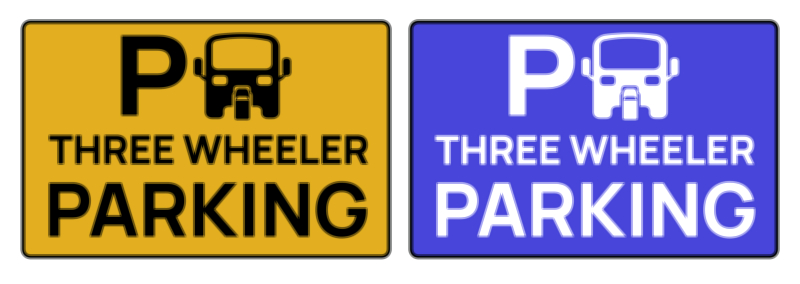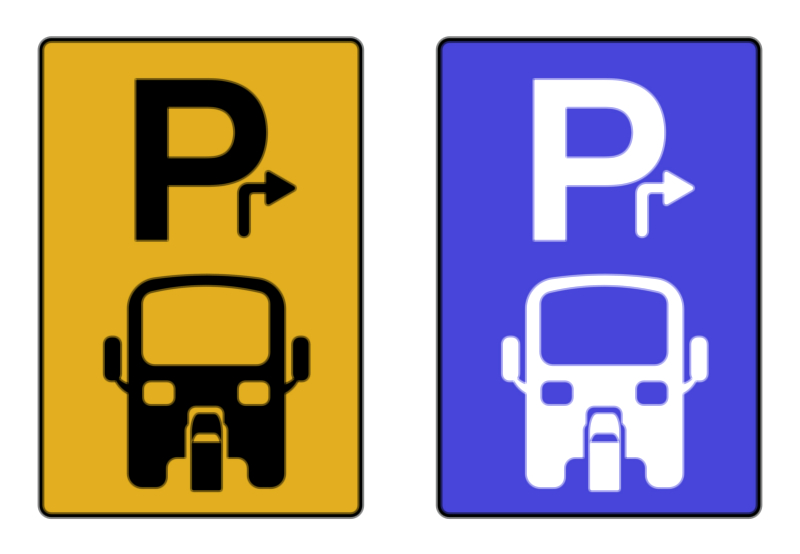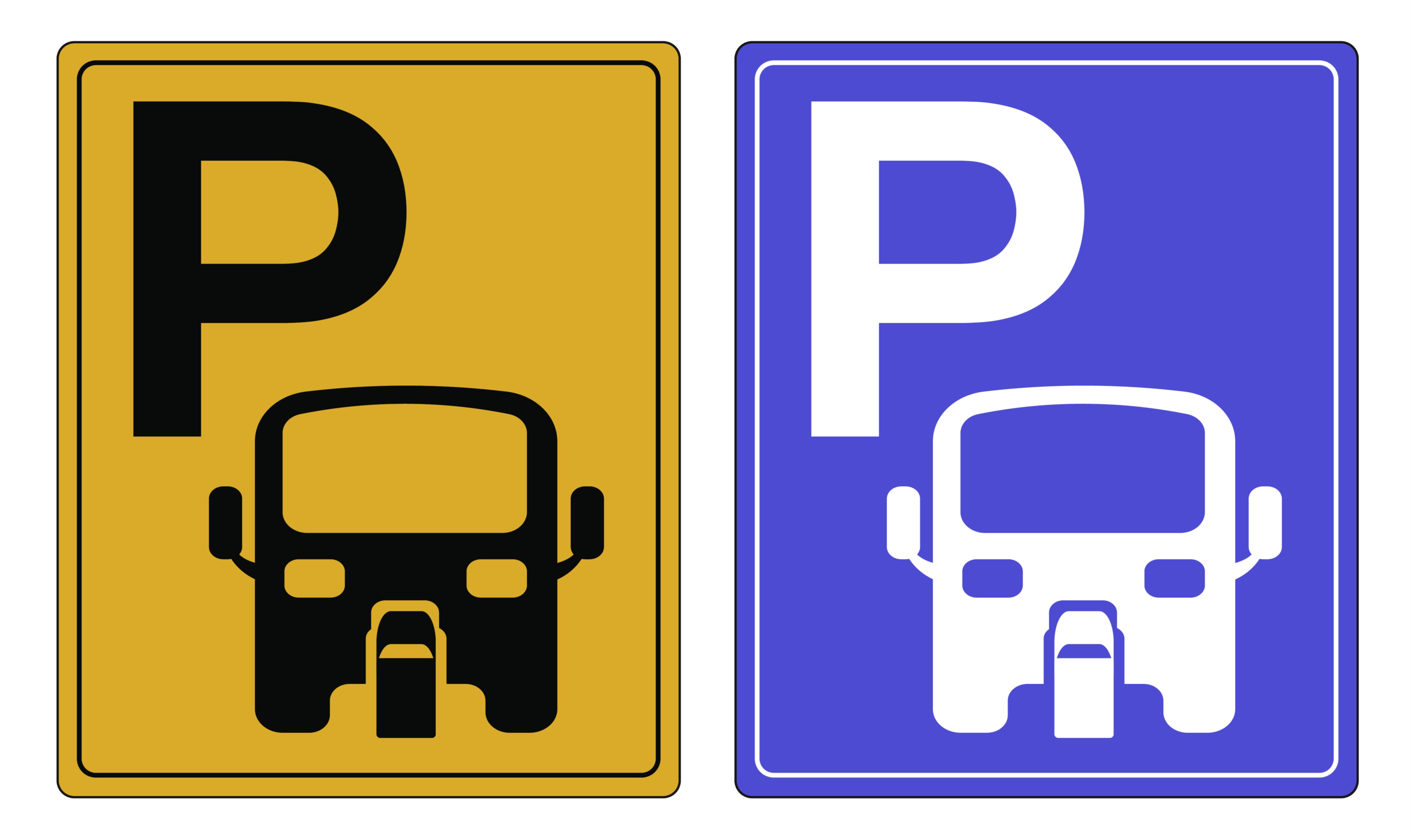
Auto Rickshaw Parking Sign Board — Three Wheeler Parking Zone
An Auto Rickshaw Parking Sign Board, especially when represented through a clear vector illustration showing the silhouette of a three-wheeler alongside a parking symbol or the wording that confirms the zone, serves a far more sophisticated purpose than simply marking a spot for vehicles to stop. It is a structural component of how modern cities protect mobility, organize public space, and manage the shared use of roads, walkways, and building entrances. Auto rickshaws, tuk-tuks, and other three-wheel passenger vehicles occupy a unique space in transportation systems because they bridge the gap between short-distance public travel and on-demand personalized convenience. Their flexibility, affordability, and availability make them important to millions of passengers every single day, yet their convenience can turn into disorder without clearly defined areas for stopping and waiting. The Auto Rickshaw Parking Sign Board exists to direct three-wheelers toward the exact physical space designed to accommodate them safely, comfortably, and efficiently, and away from parts of the environment that depend on open access for pedestrians, emergency teams, commercial movement, and architectural entrances. Although the vector artwork appears minimal, its function is deep: it creates order without confrontation, cooperation without pressure, safety without policing, and social harmony without noise.
Every city that relies heavily on auto rickshaws understands the tension between fast access for passengers and congestion around places where people gather. Without a designated parking sign, rickshaws naturally cluster at the most convenient points for drivers and passengers alike, such as school gates, market entrances, malls, cinema exits, hospitals, metro and bus stations, office complexes, public event venues, and narrow commercial streets filled with shoppers. These are exactly the locations where crowding has the most negative impact. When three-wheelers stop directly in front of entrances, they transform the access zone from a passage for people into a waiting area for vehicles. That change forces pedestrians to navigate around machines instead of walking freely through open space. Children walking out of school find themselves weaving between vehicles rather than spotting their parents safely across a visible and open path. Elderly people who move slowly or rely on hand support are required to adjust their movement to avoid bumpers and handlebars. Pregnant women, individuals carrying bags or children, and people recovering from surgeries or illness face unnecessary difficulty just to reach the doorway. Even though each driver may stop only briefly, the cumulative effect becomes visual clutter, safety risk, and continuous obstruction. A Three Wheeler Parking Zone sign board prevents this cascade of disruption by offering drivers a strategically placed alternative that satisfies their need to wait for passengers while ensuring that entrances remain designed for humans rather than vehicles.
Beyond protecting entrances, the sign plays a critical role in maintaining pedestrian dignity. Footpaths, walkways, stroller-friendly surfaces, wheelchair approaches, and pedestrian crossings are designed with the assumption that people must be able to move without interference. Rickshaws parked along sidewalks push pedestrians into the roadway, where flowing traffic becomes a danger rather than a background system. A child stepping into the street because the footpath is filled with vehicles becomes harder for oncoming cars to detect in time. A visually impaired pedestrian following tactile flooring loses directional safety when a three-wheeler occupies the tactile strip. A wheelchair user facing an auto parked across a ramp does not simply encounter inconvenience; they lose their access completely because the ramp is the only usable approach point available to them. The Auto Rickshaw Parking Sign Board prevents the misuse of these delicate walking-critical spaces by guiding drivers to a dedicated zone where their presence aligns with urban safety rather than undermining it. When drivers follow the sign, pedestrians experience calm, flow, clarity, and safety rather than stress, risk, and obstacles.
Commercial spaces benefit enormously from the presence and correct use of this sign. Shopfronts and business entrances do not merely exist to house a doorway; they serve as the visual identity and access point of the business. When rickshaws accumulate immediately outside stores, they block signage, windows, and product displays. Customers hesitate to enter a shop when they must squeeze between parked vehicles because the storefront no longer feels open, visible, or comfortable. In busy markets, this becomes a chain reaction where vehicles trigger congestion, congestion reduces dwell time for customers, and the reduced foot comfort results in lower purchasing activity. The auto rickshaw parking zone sign separates transport convenience from business disruption by keeping three-wheelers close enough for passengers yet far enough not to block visibility, walkability, or commercial access. Shops remain approachable, walkways feel open rather than crowded, and delivery workers do not lose access to loading zones because someone has parked in the nearest visible gap. A business ecosystem thrives when mobility is disciplined, and the sign quietly supports this discipline without restricting economic flow.
Emergency access becomes dramatically more reliable when sign-directed parking replaces improvisational parking. Rescue corridors, ambulance bays, hospital entrances, fire hydrants, and evacuation routes must be accessible at all times. A rickshaw parked close to a hospital entrance may delay a stretcher; one in front of a hydrant may delay fire suppression; one blocking an evacuation gate may create panic during urgent crowd movement. These risks are rarely intentional; they occur simply because the driver stopped where the passenger needed to board. The placement of an Auto Rickshaw Parking Zone sign removes the temptation to occupy such critical spaces by offering a sanctioned alternative nearby. When rickshaws gather in the correct location rather than the closest doorway, emergency systems remain protected and uninterrupted. Although the benefit is most visible in dramatic moments, it is built daily through simple, repeated decisions made by drivers who follow the sign.
The sign also directly contributes to traffic flow and predictability. Rickshaw drivers searching for informal parking tend to slow unexpectedly, block lanes while evaluating options, turn suddenly toward sidewalks, or hover near entrances waiting for passengers. These micro-behaviors may look small, but when multiplied across thousands of drivers, they create stop-and-start waves that ripple into full-scale traffic congestion. A Three Wheeler Parking Zone sign eliminates uncertainty by revealing the correct place to stop before the driver reaches the front of the building. As a result, the entire road segment becomes calmer and more legible, lane changes become smoother, honking decreases, idling reduces, and vehicles accelerate and decelerate more uniformly. The net effect is cleaner traffic not only in the parking zone itself but throughout the surrounding street network.
The rise of smart mobility systems has made the sign more relevant than ever. Navigation apps and ride-booking services now integrate auto rickshaw stands into their map layers, enabling digital instructions such as “Your pickup point is at the Auto Stand” instead of “Wait somewhere near the entrance.” Delivery apps route drivers to parking zones so they no longer block storefronts to complete orders. Fleet-management platforms for electric rickshaws depend on these locations for charging infrastructure and orderly dispatch. Vision-based enforcement systems use the standard iconography of vector sign boards to determine whether vehicles are inside assigned zones or violating pedestrian or emergency spaces. The clarity of the vector helps both humans and automated systems recognize the meaning instantly, allowing the sign to serve simultaneously as a physical and digital tool.
Perhaps the most meaningful aspect of an auto rickshaw parking sign board is not functional but social. Public spaces work only when people behave in ways that respect both convenience and responsibility. A driver who ignores the sign and parks at a doorway might reduce their walk by a few steps, but they impose discomfort and risk on the schoolchildren who lose visibility, on the elderly person who cannot walk around a bumper, on the person with a disability who loses their only ramp, on the shop owner whose entrance becomes hidden, and on the emergency responder who needs an unhindered route. A driver who follows the Auto Rickshaw Parking Zone sign does more than follow rules; they protect the comfort and safety of countless strangers they will never meet. Because of that one choice, a parent reaches a school calmly, a pedestrian crosses safely, a business receives customers without obstruction, a patient enters a hospital smoothly, and an emergency worker moves without delay. That is why such a small sign holds such a large impact — it transforms the personal convenience of vehicle parking into a shared ethic of public responsibility.
Ultimately, the vector illustration for an Auto Rickshaw Parking Sign Board — Three Wheeler Parking Zone represents an entire philosophy of organized urban mobility within a clean and uncomplicated symbol. It ensures that auto rickshaws continue to serve as efficient connectors in the transportation network without interrupting the movement of the people and systems that depend on the same space. It keeps entrances welcoming rather than congested, sidewalks safe rather than contested, accessibility features reliable rather than vulnerable, commercial districts flowing rather than choked, emergency operations ready rather than hindered, and streets predictable rather than stressful. Beneath the simplicity of its graphic design lies a profound commitment to collective safety, shared efficiency, and everyday harmony — proving that a small sign is often one of the strongest foundations of a well-functioning city.